1.
Stainless steel pipe fittings have superior corrosion resistance: One of the main advantages of stainless steel pipe fittings is their excellent corrosion resistance. This is because stainless steel contains chromium, which forms a dense chromium oxide passivation film on the surface of the pipe fitting, preventing oxygen and other corrosive media from contacting the internal metal matrix, thus protecting the stainless steel pipe fitting from corrosion. Different stainless steel materials, such as 304 and 316, have different corrosion resistance. 316 stainless steel pipe fittings contain molybdenum, which performs better in resisting chloride corrosion and is suitable for marine environments, chemical industries, and other corrosive environments containing chloride ions; while 304 stainless steel pipe fittings are widely used in general corrosive environments, such as food processing and building water supply and drainage.
2. Stainless steel pipe fittings have better strength and toughness: Stainless steel pipe fittings have good strength and toughness and can withstand certain pressure and impact forces. Their strength mainly depends on the material composition and processing technology. For example, the strength of stainless steel pipe fittings will be improved after cold working. This strength and toughness allow stainless steel pipe fittings to maintain structural integrity in complex piping systems, even under conditions of fluid pressure changes and pipeline vibration, preventing cracking and leakage.
3. Stainless steel pipe fittings exhibit superior high and low temperature resistance: Some stainless steel pipe fittings can operate normally over a wide temperature range. For example, some austenitic stainless steel pipe fittings can be used in high-temperature environments, withstanding high thermal stress, and are commonly used in high-temperature piping systems such as heat exchangers and steam pipelines. Simultaneously, in low-temperature environments, stainless steel pipe fittings maintain good toughness and do not exhibit brittle fracture, making them suitable for cryogenic fluid transportation (such as liquid nitrogen transportation) and outdoor piping systems in cold regions.
4. Stainless steel pipe fittings offer superior hygiene: For piping systems in industries such as food, beverage, and pharmaceuticals, the hygiene performance of stainless steel pipe fittings is crucial. Stainless steel itself is not prone to bacterial growth, has a smooth surface, and is easy to clean, meeting the hygiene requirements of these industries and ensuring the quality and safety of transported products.

 Threeway Steel is known as a professional supplier engaged in manufacturing and distributing a wide range of steel pipe, and our headquarter located the central part of China – Hunan and six associated factories throughout China.
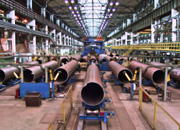 Threeway Steel is known as a professional supplier engaged in designing, manufacturing and distribution of a wide range of steel products with the headquarter located the central part of China – Hunan and six associated factories throughout China.
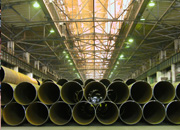 Threeway Steel is known as a professional supplier engaged in designing, manufacturing and distribution of a wide range of steel products with the headquarter located the central part of China – Hunan and six associated factories throughout China.
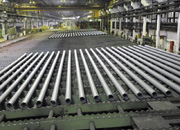 Threeway Steel is known as a professional supplier engaged in designing, manufacturing and distribution of a wide range of steel products with the headquarter located the central part of China – Hunan and six associated factories throughout China.
 Threeway Steel is known as a professional supplier engaged in designing, manufacturing and distribution of a wide range of steel products with the headquarter located the central part of China – Hunan and six associated factories throughout China.