Square and rectangular steel tubes, also known as hollow structural sections (HSS), are essential for modern building construction. Their closed-section design offers superior resistance to axial loads, bending, and torsion, making them ideal for columns, beams, and roof trusses. Square tubes provide symmetrical strength for multi-directional loads, while rectangular tubes offer geometric flexibility for specific architectural needs. Beyond structural efficiency, these tubes allow for streamlined fabrication, including cutting, welding, and drilling, which accelerates project timelines.
What Are Square and Rectangular Steel Tubes?
Square and rectangular steel tubes are hollow structural sections (HSS) with closed cross-sectional profiles. They are widely used in building construction, industrial structures, bridges, machinery frames, and other applications requiring strength, stiffness, and efficient steel use.
Quick Overview
Manufacturing Methods
Selection depends on: dimensions, steel grade, standard, mechanical properties, project requirements.
Common Standards and Steel Grades
Common grades: Carbon structural steels with specified yield and tensile strength requirements.
Tip: Select grade by structural loads and applicable design standard—not by grade name alone.
Important Tube Specifications
Why Specifications Matter
Applications of Square and Rectangular Tubes in Building Frames
Square and rectangular steel tubes are widely used in building frames for their closed cross-sections, strength, stiffness, and compact profile. They serve as columns, beams, braces, supports, and secondary framing members.
Applications at a Glance
Key Details
1. Use in Primary and Secondary Frames
2. Bracing and Lateral Stability
3. Benefits for Fabrication and Connections
4. Architectural and Space-Saving Applications
5. Selection Considerations
Applications of Square and Rectangular Tubes as Structural Columns
Square and rectangular steel tubes are widely used as structural columns in commercial buildings, industrial facilities, warehouses, and agricultural structures. Their closed cross-sections efficiently carry vertical loads with a compact, uniform profile.
Key Considerations at a Glance
Key Details
1. Load-Bearing Applications
2. Buckling Considerations
Tip: Column may fail through instability before reaching full material strength. Verify through structural calculations.
3. Advantages in Building Construction
4. Connections and Fabrication
5. Corrosion and Fire Protection
Selection Factors
Applications of Square and Rectangular Tubes in Roof and Building Trusses
Square and rectangular steel tubes are widely used in roof and building trusses for their strength, stiffness, and fabrication flexibility. They serve as top chords, bottom chords, vertical members, and diagonal web members.
Key Applications at a Glance
Key Details
1. Use as Truss Chords
2. Diagonal and Vertical Web Members
3. Roof Truss Applications
4. Connection Design
5. Selection and Protection
Key Factors When Selecting Square and Rectangular Tubes for Building Structures
Select based on structural performance, fabrication, durability, and procurement efficiency.
Selection Factors
Key Points
Our Recommended Square and Rectangular Tube Products and Global Shipping Services
We supply certified
square and rectangular hollow structural sections (HSS) tailored for building frames, columns, and roof trusses. Compliant with global standards like ASTM A500 and EN 10219, our inventory covers diverse dimensions, wall thicknesses, and steel grades to match your specific load-bearing and architectural needs.
We ensure rigorous quality control, providing full Mill Test Certificates (MTCs) and traceability for every batch. Whether you require standard specifications or custom lengths and surface treatments, our team verifies all technical details—from dimensional tolerances to weld integrity—before shipment.
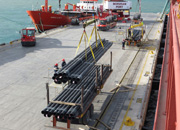
Leveraging our expertise in international steel export, we provide end-to-end global shipping solutions. From secure export bundling to coordinated logistics, we ensure your materials arrive safely and on schedule at any destination. Contact us today with your project specifications for a competitive quotation.
Conclusion:
Selecting square and rectangular hollow structural sections (HSS) requires balancing structural efficiency with total project cost. While square tubes offer symmetrical strength for columns, rectangular tubes provide directional flexibility for beams and trusses. The optimal choice depends on axial capacity, buckling resistance, and fabrication needs rather than dimensions alone. Compliance with standards like ASTM A500 or EN 10219 is critical for ensuring safety and performance in building frames.
FAQ:
1. Why are square and rectangular tubes commonly used in building structures?
They provide good strength-to-weight efficiency, structural stiffness, and convenient fabrication for frames, columns, and trusses.
2. Can square and rectangular tubes be used as structural columns?
Yes. They can be used as load-bearing columns when their size, wall thickness, steel grade, buckling resistance, and connections meet design requirements.
3. Are rectangular tubes suitable for building trusses?
Yes. They can be used for top and bottom chords, diagonal braces, and vertical truss members.
4. What standards are commonly used for structural square and rectangular tubes?
ASTM A500 and EN 10219 are common standards, but the applicable standard depends on the project and market.
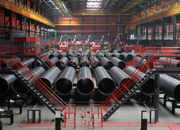 Threeway Steel is known as a professional supplier engaged in manufacturing and distributing a wide range of steel pipe, and our headquarter located the central part of China – Hunan and six associated factories throughout China.
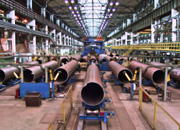 Threeway Steel is known as a professional supplier engaged in designing, manufacturing and distribution of a wide range of steel products with the headquarter located the central part of China – Hunan and six associated factories throughout China.
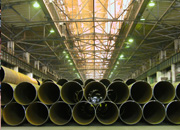 Threeway Steel is known as a professional supplier engaged in designing, manufacturing and distribution of a wide range of steel products with the headquarter located the central part of China – Hunan and six associated factories throughout China.
 Threeway Steel is known as a professional supplier engaged in designing, manufacturing and distribution of a wide range of steel products with the headquarter located the central part of China – Hunan and six associated factories throughout China.
 Threeway Steel is known as a professional supplier engaged in designing, manufacturing and distribution of a wide range of steel products with the headquarter located the central part of China – Hunan and six associated factories throughout China.