Round steel pipes are hollow cylindrical steel products widely used for fluid transportation, structural support, and mechanical systems. They are specified by outside diameter, wall thickness, material grade, and manufacturing standard, with common materials including carbon steel, stainless steel, and alloy steel. Main manufacturing types are seamless, ERW, LSAW, and SSAW, each offering different dimensional ranges, pressure capability, and application suitability. The circular cross-section distributes internal pressure evenly, reduces weight compared with solid bars, and supports welding, flanged, threaded, or mechanical connections. Typical applications include oil and gas pipelines, water supply and drainage, construction, manufacturing, power, and chemical systems. Selecting the right round steel pipe requires matching diameter, wall thickness, grade, manufacturing process, applicable standards, and inspection requirements to the project’s pressure, environment, and service conditions.
What Is a Round Steel Pipe? Definition and Basic Characteristics
A round steel pipe is a hollow cylindrical steel product with a circular cross-section. It can be made of carbon steel, stainless steel or alloy steel, widely used for fluid transport, structural works, mechanical fabrication and industrial piping. Its hollow design balances strength, material usage and weight.
Different from solid round bars, round steel pipes have an inner bore for fluid delivery and can also serve as structural supports and protective sleeves.
Key Dimensions of Round Steel Pipes
-
Outside Diameter (OD): Outer circular size, critical for connection and installation
-
Wall Thickness (WT): Decides pressure rating, weight and mechanical performance
-
Inside Diameter (ID): Inner flow bore, calculated as OD minus 2×WT
-
Pipe Length: Supplied in fixed lengths or custom cut lengths
All dimensions shall match working conditions and relevant standards.
Common Materials for Round Steel Pipes
|
Material Type
|
Core Features
|
Typical Applications
|
|
Carbon Steel
|
Good strength, weldability and cost-effective
|
Water pipelines, building structures, general industrial piping
|
|
Stainless Steel
|
Excellent corrosion resistance and long service life
|
Food industry, chemical and marine projects
|
|
Alloy Steel
|
Superior high-temperature and high-pressure performance
|
Power boilers, petrochemical equipment
|
Material selection depends on medium, temperature, pressure, corrosion and design lifespan.
Main Manufacturing Types
-
Seamless Steel Pipe: Pierced and rolled from solid billets, no weld seam
-
ERW Steel Pipe: Electric resistance welded from steel coils
-
LSAW Steel Pipe: Longitudinal submerged arc welded from steel plates
-
SSAW Steel Pipe: Spiral submerged arc welded for large-diameter pipelines
Production method is chosen based on size, material and project specs.
Core Features of Round Steel Pipes
-
Circular cross-section: Even hoop stress distribution under internal pressure
-
Reliable structural strength: Resists pressure, bending and compression with proper design
-
Material saving: Lighter than solid round bars with the same OD
-
Flexible connection: Weld, flange, thread or mechanical coupling available
-
Wide specification range: Multiple materials, processes, OD and WT options
Cross-Sectional Advantages of Round Steel Pipes
The circular cross-section is the core strength of round steel pipes. Compared with square, rectangular or irregular hollow sections, they deliver better performance in stress distribution, structural capacity, fluid flow and material economy. Actual performance relies on steel grade, wall thickness, fabrication quality and project design.
Uniform Stress Distribution Under Internal Pressure
Circular shapes evenly spread internal pressure across the pipe wall, creating predictable hoop and longitudinal stress.
Thin-wall formulas:
Hoop stress: \(\sigma_h=PD/(2t)\)
Longitudinal stress: \(\sigma_l=PD/(4t)\)
Ideally, hoop stress is about twice the longitudinal stress. This stable stress characteristic makes round pipes ideal for pressure piping. Thick-wall and high-pressure scenarios need detailed engineering calculation.
Excellent Structural Stability
The circular profile distributes loads evenly and offers good resistance against bending, compression and torsion.
Round pipes are widely applied as columns, bracings, bridge and building frame members. Load capacity depends on OD, wall thickness, steel grade, span and load direction.
High Material Efficiency & Lightweight Design
The hollow structure delivers reliable strength while using less steel than solid round bars of the same outer diameter.
It cuts component weight, material cost, freight and installation labor, bringing cost advantages for long pipelines and large steel structures.
Smooth Fluid Conveyance
The round inner bore has no sharp corners, lowering flow resistance and supporting stable fluid transmission.
It fits water, drainage, oil & gas, chemical and industrial circulation systems. Flow performance is affected by ID, inner roughness, flow speed and pipeline layout.
Easy Connection & Installation
Round steel pipes support multiple standard connection types:
-
Welding: permanent joints for industrial piping and structures
-
Flange: easy disassembly and maintenance
-
Thread: for small-diameter, low/medium-pressure lines
-
Mechanical coupling: fast onsite assembly
Standard circular dimensions match common fittings such as elbows, tees and reducers.
Advantages Overview Table
|
Advantage
|
Core Benefit
|
Typical Application
|
|
Pressure Distribution
|
Predictable hoop stress
|
Oil, gas and water transmission pipelines
|
|
Structural Stability
|
Resist bending, compression and torsion
|
Columns, support frames and bridge structures
|
|
Material Efficiency
|
Lighter than solid steel sections
|
Construction and mechanical components
|
|
Flow Efficiency
|
Low flow resistance
|
Liquid and gas transport systems
|
|
Connection Flexibility
|
Compatible with standard fittings
|
Municipal and industrial piping
|
Main Types of Round Steel Pipes and Their Manufacturing Processes
Round steel pipes are categorized by fabrication methods, materials and structural features. The four mainstream types are seamless, ERW, LSAW and SSAW steel pipes. Each has unique size capacity, production features and application boundaries. This guide supports engineers and buyers to select pipes based on pressure, diameter, wall thickness, material and project standards.
Seamless Round Steel Pipes
Seamless pipes have no weld seam. They start from solid round billets, which are heated, pierced into hollow shells, then rolled, sized and heat-treated as required.
Workflow: billet inspection & heating → hot piercing → rolling & sizing → heat treatment → final inspection.
Typical uses: oil & gas service, boilers, pressure vessels and mechanical parts with strict mechanical requirements. Available in carbon and alloy steel grades.
ERW Round Steel Pipes
ERW (Electric Resistance Welding) pipes are made from steel coils. Strip edges are roll-formed into a circle, heated by resistance current and pressed together to form welds.
Workflow: coil preparation → edge trimming → roll forming → resistance welding → sizing & cutting.
Typical uses: water delivery, structural frames, fencing and general industrial piping. Pressure service eligibility depends on standards, steel grade and inspection.
LSAW Round Steel Pipes
LSAW (Longitudinal Submerged Arc Welding) pipes are fabricated from steel plates. Plates are formed via UOE or JCOE, then double-sided submerged arc welded along the longitudinal seam.
Workflow: plate inspection & edge preparation → forming → inner & outer SAW welding → expansion → NDT and final check.
Typical uses: large-diameter oil & gas pipelines, water transmission and heavy structural projects, fit for heavy-wall specs.
SSAW Round Steel Pipes
SSAW (Spiral Submerged Arc Welding) pipes adopt continuous spiral forming from steel coils, with double-sided submerged arc welding on the helical seam.
Workflow: coil inspection → edge preparation → spiral forming → welding → cutting and QC.
Core advantage: adjustable forming angle supports flexible diameter production from the same coil width.
Typical uses: large-diameter water pipelines, drainage, foundation piles and infrastructure. Qualified SSAW can be used for oil & gas pipelines when meeting specs.
Pipe Type Comparison Table
|
Pipe Type
|
Manufacturing Process
|
Key Features
|
Typical Applications
|
|
Seamless
|
Hot piercing & rolling
|
Weld-free, high integrity
|
Boilers, pressure piping, mechanical components
|
|
ERW
|
Electric resistance welding
|
High output, economical
|
Water pipelines, general structures, industrial piping
|
|
LSAW
|
Longitudinal submerged arc welding
|
Plate formed, large & heavy-wall
|
Oil & gas trunk lines, water transmission, heavy structures
|
|
SSAW
|
Spiral submerged arc welding
|
Flexible diameter from coils
|
Water pipelines, piling, drainage, municipal infrastructure
|
Selection Guide
No single pipe type fits all scenarios. Buyers need to evaluate OD, wall thickness, steel grade, working pressure, temperature and service environment.
Seamless pipes are preferred for boilers and high-demand mechanical systems; ERW suits general structural and low-pressure piping. LSAW and SSAW are mainstream large-diameter options, subject to technical specs and QC standards.
Before purchase, verify manufacturing standards, weld NDT reports, mechanical test data and dimensional tolerances.
Applications of Round Steel Pipes in Steel Pipe Systems
Round steel pipes are widely adopted in industry, construction and infrastructure. Their circular cross-section, high structural strength and flexible specifications support both fluid transport and load-bearing uses. The suitable pipe type depends on material, fabrication method, OD and wall thickness.
Oil and Gas Transportation
Round steel pipes deliver crude oil, natural gas and refined oil between wells, processing plants, storage terminals and distribution networks.
Available options: seamless, ERW, LSAW and SSAW pipes.
Key considerations: working pressure, medium, steel grade, wall thickness, weld quality and anti-corrosion coating. API 5L is the common line pipe standard for long-distance pipelines.
Water Supply and Drainage Systems
They serve municipal water supply, industrial circulation, irrigation and wastewater discharge.
Large-diameter LSAW and SSAW are the mainstream for water transmission; small welded or seamless pipes are used for branch lines.
Epoxy lining, cement mortar lining or 3PE coating is applied to resist corrosion and extend service life.
Construction and Structural Engineering
Round steel pipes act as columns, bracings, truss members and bridge components.
The circular section offers good compression, bending and torsion resistance, with lighter weight than solid steel bars of the same OD.
Designers must check steel grade, dimension, connection detail and load conditions.
Industrial Piping Systems
Process pipes in chemical plants, refineries and power stations carry steam, compressed air, chemicals and fuels.
Carbon steel for general service; stainless steel for corrosive media; alloy steel for high-temperature and high-pressure conditions.
Pipes must match design codes, pressure, temperature and fluid characteristics.
Mechanical Engineering and Equipment Manufacturing
Precision round tubes are used for hydraulic cylinders, pneumatic parts, machine frames, auto and agricultural machinery components.
Seamless or precision welded tubes are selected for tight tolerance and smooth surface requirements.
Application Summary Table
|
Application
|
Common Pipe Types
|
Key Selection Factors
|
|
Oil & Gas Transport
|
Seamless, ERW, LSAW, SSAW
|
Pressure, steel grade, wall thickness, pipeline standards
|
|
Water Supply & Drainage
|
ERW, LSAW, SSAW
|
Diameter, pressure, corrosion protection
|
|
Construction & Structures
|
Welded & seamless structural pipes
|
Strength, dimension, load requirements
|
|
Industrial Process Piping
|
Seamless, ERW, alloy / stainless steel
|
Temperature, pressure, medium compatibility
|
|
Mechanical Manufacturing
|
Seamless & precision welded tubes
|
Dimensional tolerance, surface finish, mechanical property
|
Round Steel Pipes vs. Square and Rectangular Steel Pipes
Round, square and rectangular steel pipes are popular hollow steel sections for construction, machinery and infrastructure. Although all are hollow, their cross-section shapes create different structural features, connection options and suitable use cases. Round pipes dominate fluid and pressure systems; square and rectangular tubes are widely used for structural frames.
Cross-Section Shape Differences
Round steel pipes feature a smooth circular profile with no sharp corners, ideal for pressure containment and fluid flow.
Square steel pipes have four equal sides with flat faces and right-angle corners.
Rectangular steel pipes have two sets of unequal side lengths and flat surfaces.
Flat sides of square and rectangular tubes simplify welding and mounting attachments.
Structural Performance Differences
-
Round pipes: Excellent torsional resistance; stable performance under bending from all directions; uniform hoop stress under internal pressure.
-
Square pipes: Balanced strength on two main axes, great for columns and frames.
-
Rectangular pipes: Different bending capacity on two axes, customizable for beam members with directional load demands.
Actual performance depends on size, wall thickness, steel grade and fabrication quality.
Fluid Transportation Differences
Round pipes are the first choice for fluid transport. Their smooth bore delivers steady flow and even pressure distribution, widely used for oil & gas, water, steam and process piping.
Square and rectangular tubes are rarely used for pressurized pipelines. Inner corners increase flow resistance and complicate cleaning and pressure design. They are mainly for structural purposes.
Connection & Fabrication Differences
Round pipes support welding, flanges, threads and mechanical couplings, with abundant standard fittings like elbows, tees and reducers.
Square and rectangular tubes with flat surfaces connect easily to plates and structural parts via cutting, welding and bolting.
Comparison Table
|
Comparison Factor
|
Round Steel Pipe
|
Square Steel Pipe
|
Rectangular Steel Pipe
|
|
Cross-section
|
Circular
|
Square
|
Rectangular
|
|
Pressure service
|
Preferred
|
Rare
|
Rare
|
|
Pressure distribution
|
Uniform circumferential stress
|
Uneven at corners
|
Uneven at corners
|
|
Structural strength
|
Good torsion & multi-directional bending
|
Balanced axial performance
|
Directional bending advantage
|
|
Common connections
|
Weld, flange, thread, coupling
|
Weld & bolt
|
Weld & bolt
|
|
Typical uses
|
Pipelines, pressure vessels, torsion members
|
Frames, columns, supports
|
Beams, frames, equipment bases
|
Shape Selection Guide
Pick round steel pipes for fluid delivery, pressure piping and parts needing good torsion resistance.
Pick square steel pipes for building frames, columns and supports that connect to flat plates.
Pick rectangular steel pipes for beams and frames requiring different bending strength in two directions.
Key Factors for Selecting the Right Round Steel Pipe
Proper round steel pipe selection guarantees safety, durability and efficiency for piping and structural projects. Even with the same circular cross-section, pipe performance varies greatly by material, production method, dimension, working condition and surface treatment. Buyers and engineers need to assess the below factors before purchase.
Application Requirements
Application defines required mechanical features:
-
Fluid transport: oil, gas, water, chemical lines need pressure resistance, medium compatibility and anti-corrosion protection
-
Structural use: columns and supports need enough stiffness and load capacity
-
Mechanical parts: hydraulic components demand precise tolerance and smooth surface
-
High-temperature service: boilers and power equipment require heat-resistant alloy grades
Steel Grade Selection
Material grade decides strength, corrosion resistance and service performance.
|
Material Type
|
Core Features
|
Typical Applications
|
|
Carbon Steel
|
Good strength, weldable, cost-effective
|
General piping, construction, water delivery
|
|
Stainless Steel
|
Excellent corrosion resistance
|
Chemical, food and marine projects
|
|
Alloy Steel
|
Stable performance under high temp & pressure
|
Boilers, power and petrochemical equipment
|
Check material certificates and chemical reports for verification.
Outside Diameter and Wall Thickness
-
OD: controls fitting compatibility and installation space
-
WT: determines pressure rating, strength, weight and steel consumption
-
ID: decides flow capacity for fluid pipelines
-
Length: matched to design and shipment limits
For pressure pipes, wall thickness shall be calculated following design codes with corrosion allowance considered.
Manufacturing Process
-
Seamless: for high-performance scenarios without weld seam
-
ERW: general industrial piping and simple structures
-
LSAW: large-diameter heavy-wall pipelines
-
SSAW: large water transfer, piling and infrastructure
No single process fits all cases; it must meet project standards.
Working Pressure, Temperature and Service Conditions
These are critical for process piping. Additional factors include fluid corrosivity, buried soil load, thermal expansion, vibration, impact and onsite maintenance rules. Design validation against relevant codes is necessary.
Corrosion Protection
Corrosion reduces wall thickness and shortens service life. Common solutions:
-
Hot-dip galvanizing: zinc anti-corrosion coating
-
Epoxy coating: internal or external protection
-
3PE coating: widely used for buried pipeline outer layer
-
Cement mortar lining: inner protection for water pipelines
Coating selection depends on medium, soil and temperature.
Standards and Quality Inspection
Confirm compliance with ASTM, API, EN or other specified standards. Essential inspection items: material certificate, mechanical test, dimensional tolerance, NDT for welded pipes, hydrostatic test and surface/coating check.
Cost, Lead Time and Supplier Reliability
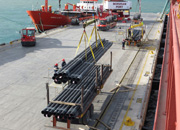
Unit price is not the only factor. Evaluate quality, stock availability, testing service, packaging, delivery and after-sales support. For export orders, choose proper transport and pipe-end protection to avoid transit damage.
Our Recommended Round Steel Pipe Products and Global Shipping Services
Recommended product categories include seamless carbon steel pipes for mechanical, boiler, and pressure applications; ERW round steel pipes for water transportation, construction, and general industry; LSAW round steel pipes for large-diameter pipelines, water transmission, and structural work; and SSAW round steel pipes for large-diameter water networks, drainage, piling, and infrastructure. Selection should be based on material (carbon, stainless, or alloy steel), manufacturing process, outside diameter, wall thickness, length, applicable standard (ASTM, API, EN), surface treatment (black, galvanized, epoxy, or 3PE-coated), and intended application. Quality control covers chemical composition analysis, tensile and yield strength testing, dimensional and wall-thickness measurement, surface and weld nondestructive testing, hydrostatic testing, and coating inspection, with material test certificates and reports provided as agreed. Global export services include container or bulk vessel shipping, protective packaging and pipe-end protection, export documentation, and logistics coordination. To request an accurate quotation, please provide steel grade and standard, outside diameter and wall thickness, length and quantity, coating requirements, and destination port. Confirming specifications, inspection needs, and delivery terms before ordering helps improve procurement efficiency and project success.
Conclusion:
Round steel pipes are essential to modern oil and gas, water supply, drainage, construction, industrial processing, and mechanical systems. Their hollow circular cross-section provides uniform stress distribution under internal pressure, reduces material consumption and weight compared with solid bars, and supports welding, flanged, threaded, and mechanical connections. Selecting the right pipe requires matching the manufacturing process, material, dimensions, and standards to the project. Seamless pipes suit mechanical, boiler, and pressure applications; ERW pipes serve general industrial and structural uses; LSAW and SSAW pipes are suitable for large-diameter pipeline and infrastructure projects. Carbon steel, stainless steel, and alloy steel offer different strength, corrosion resistance, and temperature performance. Buyers should confirm application, operating pressure and temperature, outside diameter, wall thickness, steel grade, applicable standard, surface treatment, and inspection requirements. Reliable supply depends on verified material certificates, mechanical and dimensional testing, weld inspection where applicable, proper packaging, and coordinated export shipping.
FAQ:
1. What is a round steel pipe?
A round steel pipe is a hollow cylindrical steel product with a circular cross-section, commonly used for fluid transportation, structural support, and mechanical applications.
2. What are the main advantages of round steel pipes?
Their main advantages include relatively uniform circumferential stress distribution under internal pressure, good structural performance, efficient material utilization, and suitability for fluid transportation.
3. What is the difference between round steel pipes and round steel bars?
Round steel pipes have a hollow internal structure, while round steel bars are solid. Pipes are commonly used for fluid transportation and hollow structural applications, whereas bars are used for machining and solid structural components.
4. What are the common types of round steel pipes?
The main types include seamless, ERW, LSAW, and SSAW steel pipes. They differ in manufacturing processes, weld characteristics, and typical applications.
5. Are round steel pipes suitable for high-pressure applications?
Yes, when properly designed and manufactured to meet the required pressure, temperature, material, and applicable standard requirements. Seamless and qualified welded pipes can both be used in appropriate pressure applications.
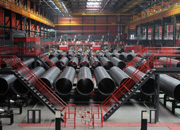 Threeway Steel is known as a professional supplier engaged in manufacturing and distributing a wide range of steel pipe, and our headquarter located the central part of China – Hunan and six associated factories throughout China.
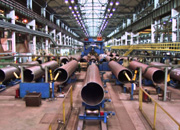 Threeway Steel is known as a professional supplier engaged in designing, manufacturing and distribution of a wide range of steel products with the headquarter located the central part of China – Hunan and six associated factories throughout China.
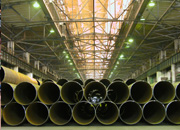 Threeway Steel is known as a professional supplier engaged in designing, manufacturing and distribution of a wide range of steel products with the headquarter located the central part of China – Hunan and six associated factories throughout China.
 Threeway Steel is known as a professional supplier engaged in designing, manufacturing and distribution of a wide range of steel products with the headquarter located the central part of China – Hunan and six associated factories throughout China.
 Threeway Steel is known as a professional supplier engaged in designing, manufacturing and distribution of a wide range of steel products with the headquarter located the central part of China – Hunan and six associated factories throughout China.