SSAW (Spiral Submerged Arc Welded) steel pipes are widely used in municipal infrastructure, industrial pipelines, drainage networks, and large-diameter water conveyance projects. Manufactured by forming steel coils into a spiral shape and welding with the submerged arc process, they offer flexible diameters, wall thicknesses, and lengths. Key characteristics include large-diameter capability, structural strength, production flexibility, and compatibility with internal linings and external coatings. SSAW pipes are commonly applied in stormwater drainage, wastewater collection, raw water transmission, and municipal water supply mains, supporting high flow rates and varied installation conditions. Proper selection should consider pipe diameter, wall thickness, material grade, design pressure, applicable standards, and corrosion protection. Quality control should cover raw materials, spiral weld inspection, dimensional tolerances, and coating performance.
Manufacturing Process and Key Specifications of SSAW Steel Pipes
SSAW (Spiral Submerged Arc Welded) steel pipes are manufactured by forming steel coils into a cylindrical shape and welding the spiral seam through a submerged arc welding process. This production method is particularly suitable for manufacturing large-diameter pipes used in municipal drainage, water transmission, and industrial pipeline projects. Understanding the manufacturing process and key specifications helps buyers select suitable products for their engineering requirements.
Manufacturing Process
|
Step
|
Key Activities
|
|
1. Raw material inspection
|
Verify steel coil chemical composition, mechanical properties, surface condition, and dimensional accuracy
|
|
2. Coil preparation
|
Uncoil, level, and prepare the coil; process edges to support consistent welding
|
|
3. Spiral forming
|
Steel strip passes through forming equipment and is shaped into a continuous spiral cylinder; forming angle helps determine pipe diameter
|
|
4. Spiral seam welding
|
Submerged arc welding protects the welding area and supports stable weld formation; may be performed internally and externally
|
|
5. Cutting and end processing
|
Continuous pipe cut to specified lengths; ends may be beveled or prepared for the required connection method
|
|
6. Inspection and testing
|
Dimensional checks, weld inspections, and other tests per applicable standard and project specification
|
These stages help ensure SSAW pipes meet required dimensional, mechanical, and welding quality requirements.
Key Specifications
|
Specification
|
Key Points
|
|
Outside diameter
|
Selected according to pipeline flow requirements and project design
|
|
Wall thickness
|
Determined by design pressure, external loads, burial conditions, and applicable engineering calculations
|
|
Pipe length
|
Standard or project-specific lengths, subject to manufacturing and transportation limitations
|
|
Material grade
|
Selected according to required strength, toughness, weldability, and applicable standards
|
|
Surface treatment
|
May include internal epoxy lining, cement mortar lining, external 3PE coating, FBE coating, or other specified protection systems
|
Commonly referenced standards may include API 5L and other applicable national or international specifications—however, the correct standard and grade must be confirmed against the intended application. Requirements for municipal water and drainage projects may differ from those for oil and gas pipelines.
Quality Inspection and Testing
Quality inspection is essential for SSAW pipes used in water conveyance and drainage systems.
|
Inspection Area
|
Key Items
|
|
Material properties
|
Chemical composition, tensile properties
|
|
Dimensions
|
Dimensional tolerances, pipe straightness
|
|
Weld quality
|
Nondestructive testing such as ultrasonic testing and radiographic testing may be specified
|
|
Pressure resistance
|
Hydrostatic testing may be required
|
|
Coating quality
|
Coating thickness, adhesion, and surface condition per relevant specifications
|
Applications of SSAW Steel Pipes in Drainage Projects
SSAW steel pipes are widely used in various drainage projects because they can be manufactured in large diameters and different wall thicknesses. Their structural strength, production flexibility, and compatibility with protective coatings make them suitable for municipal infrastructure, industrial wastewater systems, and large-scale stormwater drainage networks. When properly designed and installed, SSAW pipes support reliable drainage and wastewater transportation under different operating conditions.
Application Overview
|
Application Area
|
Typical Use
|
Key Considerations
|
|
Municipal stormwater drainage
|
Main drainage pipelines transferring stormwater to rivers, reservoirs, channels, or treatment facilities
|
Flow capacity, hydraulic calculations, installation conditions; external loads, soil conditions, burial depth, groundwater levels
|
|
Industrial wastewater collection and discharge
|
Collection and transport from production areas, processing equipment, and treatment plants
|
Wastewater characteristics, operating pressure/temperature; internal linings and external coatings for corrosive media
|
|
Road, bridge, and tunnel drainage
|
Underground drainage mains, stormwater collection pipelines, discharge connections
|
Soil pressure, traffic-related external loads, changing environmental conditions; foundation preparation, alignment, joint welding, backfilling
|
|
Municipal wastewater and pumping stations
|
Connecting wastewater collection networks with pumping stations and treatment facilities
|
Gravity or pressure flow; design pressure, wall thickness, connection strength, pressure fluctuations; hydrostatic testing and weld inspection
|
|
Corrosion protection and installation
|
Internal epoxy coatings, cement mortar linings, external 3PE coatings, protective painting
|
Coating system must match transported medium and installation environment; regular inspection and maintenance
|
1. Municipal Stormwater Drainage Systems
Urban stormwater drainage systems collect and transport rainwater from roads, residential areas, commercial buildings, and public spaces—during heavy rainfall, these networks must handle large volumes of water within a limited period.
Large-diameter SSAW steel pipes can be used as main drainage pipelines to transfer collected stormwater to rivers, reservoirs, drainage channels, or treatment facilities—their available diameters and wall thicknesses allow engineers to select suitable specifications according to required flow capacity, hydraulic calculations, and installation conditions.
For underground stormwater pipelines, consider external loads, soil conditions, burial depth, and groundwater levels during pipe selection and installation.
2. Industrial Wastewater Collection and Discharge
Industrial facilities often require drainage networks to collect and transport wastewater from production areas, processing equipment, and treatment plants—SSAW steel pipes can be used in industrial wastewater collection, discharge pipelines, and connections between treatment facilities.
Material grade, wall thickness, and internal protection system should be selected according to wastewater characteristics, operating pressure, and temperature—for corrosive wastewater, suitable internal linings and external coatings are important to reduce corrosion and extend service life.
Before selecting a protective system, project engineers should evaluate the chemical composition and operating conditions of the wastewater.
3. Drainage Systems for Roads, Bridges, and Tunnels
Transportation infrastructure requires reliable drainage to prevent water accumulation and protect structural components—SSAW steel pipes can be applied in large drainage lines for highways, bridges, tunnels, and other civil engineering projects.
They may serve as underground drainage mains, stormwater collection pipelines, and water discharge connections—their structural properties make them suitable for projects where pipelines may experience soil pressure, traffic-related external loads, and changing environmental conditions.
Proper foundation preparation, pipe alignment, joint welding, and backfilling are essential to prevent deformation and leakage.
4. Municipal Wastewater and Pumping Station Projects
SSAW steel pipes can also be used to connect wastewater collection networks with pumping stations and treatment facilities—in these applications, pipelines may operate under gravity flow or pressure, depending on system design.
For pressure drainage pipelines, engineers must consider design pressure, wall thickness, connection strength, and possible pressure fluctuations—hydrostatic testing and weld inspection should be conducted according to applicable project specifications before commissioning.
5. Corrosion Protection and Installation Considerations
Drainage pipelines are frequently exposed to moisture, soil chemicals, and potentially corrosive wastewater—corrosion protection is an important part of SSAW steel pipe selection.
|
Protection Option
|
Key Points
|
|
Internal epoxy coatings
|
Protect against transported wastewater corrosion
|
|
Cement mortar linings
|
Suitable for certain water and wastewater applications
|
|
External 3PE coatings
|
Protect against soil-related corrosion
|
|
Protective painting
|
General external protection
|
Applications of SSAW Steel Pipes in Large-Diameter Water Conveyance Projects
SSAW steel pipes are widely used in large-diameter water conveyance projects because they can be manufactured in various diameters, wall thicknesses, and lengths. Their structural strength and production flexibility make them suitable for transporting large volumes of water over long distances. These pipes are commonly considered for municipal water supply networks, raw water transmission systems, reservoir connections, and industrial water pipelines.
Application Overview
|
Application Area
|
Typical Use
|
Key Considerations
|
|
Raw water transmission
|
Transporting water from rivers, lakes, and reservoirs to treatment plants
|
Flow rate, pipeline length, operating pressure, hydraulic design; wall thickness and material grade
|
|
Municipal water supply mains
|
Connecting treatment plants, pumping stations, storage reservoirs, and distribution networks
|
Large diameter for high-volume transport; potable-water-approved internal linings
|
|
Long-distance and regional conveyance
|
Transporting water between distant reservoirs, cities, agricultural areas, and industrial zones
|
Design pressure, elevation changes, pressure fluctuations, soil conditions, external loads; water hammer risks
|
|
Pumping station and treatment facility connections
|
Inlet and outlet pipelines, pump connections, large-diameter transmission sections
|
Pipe dimensions, connection methods, pressure ratings; welding, flange installation, joint inspection
|
1. Raw Water Transmission from Rivers and Reservoirs
An important part of municipal water infrastructure—water must often be transported from rivers, lakes, reservoirs, or other sources to water treatment plants before distribution.
Large-diameter SSAW steel pipes can serve as main transmission pipelines—dimensions can be selected according to required flow rate, pipeline length, operating pressure, and hydraulic design. Appropriate wall thickness and material grade help ensure the pipes meet the project's mechanical and pressure requirements.
2. Municipal Water Supply Transmission Mains
Urban areas require reliable water supply systems for residential communities, commercial buildings, public facilities, and industrial users—large-diameter transmission mains connect water treatment plants, pumping stations, storage reservoirs, and distribution networks.
SSAW steel pipes provide a practical option for these main pipelines—their large diameter supports high-volume water transportation, while different material grades and wall thicknesses allow engineers to match specifications to operating conditions.
For drinking water applications: internal linings must be approved for potable water contact and comply with relevant local regulations—cement mortar lining and suitable epoxy coating systems may be considered according to project requirements.
3. Long-Distance and Regional Water Conveyance
Regional water transfer projects often transport water between distant reservoirs, cities, agricultural areas, and industrial zones—these systems may involve long pipelines, pumping stations, and different terrain conditions.
SSAW steel pipes can be used because manufacturers can produce a range of large diameters and lengths—however, pipe selection must account for design pressure, elevation changes, pressure fluctuations, soil conditions, and external loads.
For long-distance pipelines: engineers should also evaluate water hammer risks and determine whether additional pressure-control measures are required.
4. Connections Between Pumping Stations and Treatment Facilities
Pumping stations and water treatment facilities rely on pipelines to transfer water between different stages of the supply system—SSAW steel pipes can be used for inlet and outlet pipelines, pump connections, and large-diameter transmission sections.
In these applications: pipe dimensions, connection methods, and pressure ratings must match the system design—proper welding, flange installation, and joint inspection help reduce leakage risks and support stable operation.
5. Corrosion Protection and Quality Requirements
Water conveyance pipelines may be exposed to internal water corrosion, soil moisture, and external environmental conditions—suitable corrosion protection is essential.
|
Protection Option
|
Key Points
|
|
Internal epoxy coatings
|
Protect against internal water corrosion
|
|
Cement mortar linings
|
Suitable for potable water and water transmission applications
|
|
External 3PE coatings
|
Protect against soil moisture and external corrosion
|
|
Fusion-bonded epoxy systems
|
Provide protective coating for suitable applications
|
Key Advantages of SSAW Steel Pipes for Drainage and Water Conveyance
SSAW (Spiral Submerged Arc Welded) steel pipes offer several advantages for drainage networks and large-diameter water conveyance projects. Their spiral welding process provides manufacturing flexibility, allowing manufacturers to produce pipes in different diameters, wall thicknesses, and lengths—making them a practical option for municipal infrastructure, industrial water transportation, and large-scale drainage systems.
Key Advantages at a Glance
|
Advantage
|
Key Points
|
|
Flexible manufacturing
|
Spiral forming produces large-diameter pipes by adjusting forming angle and steel coil dimensions; supports high flow capacity
|
|
High structural strength
|
With proper material grade, wall thickness, and manufacturing quality, withstands internal pressure and external loads
|
|
Production flexibility
|
Different pipe diameters from steel coils; supports a wide range of project specifications and production planning
|
|
Corrosion protection compatibility
|
Internal epoxy coating, cement mortar lining, external 3PE coating, fusion-bonded epoxy coating
|
|
Suitability for different applications
|
Municipal stormwater drainage, industrial wastewater discharge, raw water transmission, large-diameter water supply mains
|
|
Quality control and inspection
|
Dimensional checks, mechanical property testing, weld NDT, hydrostatic testing, coating inspection
|
1. Flexible Manufacturing for Large Diameters
One of the main advantages—the spiral forming process allows manufacturers to produce large-diameter pipes by adjusting the forming angle and steel coil dimensions.
Particularly useful for water conveyance projects requiring pipelines with high flow capacity—large-diameter pipes can transport substantial volumes of water and help meet the requirements of municipal transmission mains, reservoir connections, and regional water transfer systems.
2. High Structural Strength
SSAW steel pipes are manufactured from steel materials with specified mechanical properties—when material grade, wall thickness, and manufacturing quality are properly selected, they can withstand internal pressure and external loads required by the project design.
This makes them suitable for various underground and aboveground pipeline applications—in buried drainage systems, engineers must also consider soil pressure, groundwater conditions, burial depth, and traffic loads when determining appropriate pipe specifications.
3. Production Flexibility and Material Utilization
The spiral welding process provides manufacturers with flexibility in producing different pipe diameters from steel coils—this can support a wide range of project specifications and help optimize production planning.
For buyers: this flexibility is valuable when standard pipe dimensions do not fully match the engineering design—however, final specifications must still comply with applicable standards and project requirements.
4. Compatibility with Different Corrosion Protection Systems
Carbon steel can corrode when exposed to water, moisture, soil chemicals, and certain wastewater conditions—SSAW steel pipes can be supplied with different internal and external protective systems.
|
Protection Option
|
Key Points
|
|
Internal epoxy coating
|
Helps protect the inner pipe surface from corrosion and reduce surface deterioration
|
|
Cement mortar lining
|
Commonly considered for water transmission pipelines
|
|
External 3PE coating
|
Provides protection for buried pipelines under suitable conditions
|
|
Fusion-bonded epoxy coating
|
Can be used for internal or external protection according to the specified system
|
For potable water pipelines: all internal coatings and linings must meet applicable drinking-water contact requirements.
5. Suitability for Different Pipeline Applications
SSAW steel pipes can be used in:
-
Municipal stormwater drainage
-
Industrial wastewater discharge
-
Raw water transmission
-
Large-diameter water supply mains
Their available dimensions and coating options allow engineers to adapt pipe specifications to different operating environments—they can also be integrated into pipeline systems connecting pumping stations, water treatment plants, reservoirs, and distribution networks.
The connection method and pressure requirements should be confirmed during project design.
6. Quality Control and Inspection
SSAW steel pipes can undergo various inspection procedures to verify product quality:
-
Dimensional checks
-
Mechanical property testing
-
Weld nondestructive testing
-
Hydrostatic testing
-
Coating thickness and surface condition inspection when protective treatments are specified
Corrosion Protection and Quality Control Requirements
Corrosion protection and quality control are essential for SSAW steel pipes used in drainage and large-diameter water conveyance projects. These pipelines may operate underground or aboveground and remain exposed to moisture, soil chemicals, transported water, and other environmental conditions. Without suitable protection and inspection, corrosion or manufacturing defects may reduce pipeline performance and service life.
Selecting an appropriate coating system and implementing strict quality control procedures can help improve pipeline reliability, reduce maintenance costs, and prevent unexpected failures.
Key Requirements at a Glance
|
Area
|
What to Evaluate
|
|
Internal corrosion protection
|
Epoxy coating, cement mortar lining, or project-approved linings; potable-water contact compliance
|
|
External corrosion protection
|
3PE coating, FBE coating, protective painting, cathodic protection; soil resistivity, groundwater, installation environment
|
|
Raw material and dimensional inspection
|
Chemical composition, mechanical properties, outside diameter, wall thickness, length, straightness, ovality, end preparation, surface condition
|
|
Spiral weld inspection
|
UT, RT, other NDT methods; hydrostatic testing; inspection frequency and acceptance criteria per standard
|
|
Coating inspection and final verification
|
Thickness, adhesion, surface defects, continuity, holiday testing; material certificates, inspection reports, dimensional records
|
1. Internal Corrosion Protection
The internal surface may be exposed to water, wastewater, or other transported media—the required protection depends on water quality, chemical composition, operating conditions, and project specifications.
|
Protection Option
|
Key Points
|
|
Epoxy coating
|
Protective barrier against corrosion; helps maintain a smooth internal surface
|
|
Cement mortar lining
|
Commonly used in water transmission pipelines to protect the steel surface
|
|
Other project-approved linings
|
Selected for specific wastewater characteristics or operating environments
|
For potable water pipelines: internal coatings and linings must comply with applicable drinking-water contact regulations—confirm suitability before procurement.
2. External Corrosion Protection
Buried SSAW steel pipes are exposed to soil moisture, groundwater, and potentially corrosive substances—external protection is important for preventing corrosion and extending service life.
|
Protection Option
|
Key Points
|
|
3PE coating
|
Three-layer polyethylene system commonly used for buried steel pipelines
|
|
FBE coating
|
Fusion-bonded epoxy provides a protective layer for suitable pipeline applications
|
|
Protective painting
|
Used for certain aboveground pipelines and environments
|
|
Cathodic protection
|
Additional corrosion-control measure when required by engineering design
|
Select the appropriate system according to: soil resistivity, groundwater conditions, installation environment, and expected service life.
3. Raw Material and Dimensional Inspection
Quality control begins with inspection of steel coils before pipe production—chemical composition and mechanical properties should be checked against the specified material grade.
Finished SSAW pipes should also undergo dimensional inspections:
-
Outside diameter and wall thickness
-
Pipe length and straightness
-
Ovality and end preparation
-
Surface condition and visible defects
These checks help confirm pipes meet required manufacturing tolerances and installation specifications.
4. Spiral Weld Inspection and Testing
The spiral weld is a critical part of SSAW steel pipe quality—inadequate welding or undetected defects may affect structural integrity and pressure performance.
Depending on applicable standard and project requirements, inspection methods may include:
-
Ultrasonic testing (UT)
-
Radiographic testing (RT)
-
Other specified nondestructive testing procedures
-
Hydrostatic testing to verify pressure resistance
Inspection frequency and acceptance criteria should follow the relevant product standard and project specification.
5. Coating Inspection and Final Quality Verification
After coating or lining application, the protective layer should be inspected for thickness, adhesion, surface defects, and continuity—holiday testing may be required for certain coating systems to identify discontinuities.
Before shipment, buyers should review:
-
Material certificates
-
Inspection reports
-
Dimensional records
-
Coating documentation
Key Factors in Selecting SSAW Steel Pipes for Drainage and Water Conveyance Projects
Selecting SSAW steel pipes for drainage and water conveyance projects requires evaluating pipe diameter, wall thickness, material grade, and applicable standards such as API 5L. Diameter determines flow capacity, while wall thickness should be determined by design pressure, burial depth, soil pressure, traffic loads, and water hammer risks. Manufacturing quality is critical: buyers should verify dimensional consistency, spiral weld formation, mechanical properties, nondestructive testing, hydrostatic testing, and material certificates. Corrosion protection should match operating conditions, with options including internal epoxy coatings, cement mortar linings, external 3PE coatings, fusion-bonded epoxy, and cathodic protection; potable water linings must meet drinking-water safety requirements. Installation environment, transportation, lifting, connection methods, and total lifecycle cost should also be assessed.
Conclusion:
SSAW (Spiral Submerged Arc Welded) steel pipes are an effective solution for urban stormwater drainage, industrial wastewater discharge, raw water transmission, and municipal water supply mains. Their flexible manufacturing process supports various diameters, wall thicknesses, and lengths to match flow capacity, operating pressure, and installation conditions. Proper selection should consider outside diameter, wall thickness, material grade, applicable standards, soil conditions, burial depth, external loads, water quality, and pressure fluctuations. Corrosion protection is essential, with options including internal epoxy coatings, cement mortar linings, external 3PE coatings, and fusion-bonded epoxy; potable water linings must meet drinking-water safety requirements. Quality inspection should cover raw materials, dimensions, spiral welds, hydrostatic testing, and coating performance. Transportation, installation, joint inspection, pressure testing, and maintenance also affect long-term reliability.
FAQ:
1. What are the main applications of SSAW steel pipes in drainage projects?
SSAW steel pipes are used in municipal stormwater drainage, industrial wastewater discharge, road and tunnel drainage, and pipelines connecting pumping stations and treatment facilities.
2. Why are SSAW steel pipes suitable for large-diameter water conveyance projects?
They offer flexible large-diameter manufacturing, structural strength, and different wall thickness options, making them suitable for transporting large volumes of water.
3. What is the difference between SSAW and LSAW steel pipes for water transmission?
SSAW pipes have spiral weld seams, while LSAW pipes have longitudinal weld seams. Both can be used for large-diameter water pipelines, depending on project specifications, manufacturing requirements, and cost considerations.
4. What coatings are commonly used to protect SSAW steel pipes in buried water pipelines?
Common options include external 3PE coatings, fusion-bonded epoxy coatings, and suitable internal epoxy or cement mortar linings. Cathodic protection may also be required.
 Threeway Steel is known as a professional supplier engaged in manufacturing and distributing a wide range of steel pipe, and our headquarter located the central part of China – Hunan and six associated factories throughout China.
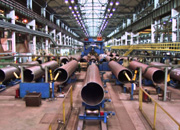 Threeway Steel is known as a professional supplier engaged in designing, manufacturing and distribution of a wide range of steel products with the headquarter located the central part of China – Hunan and six associated factories throughout China.
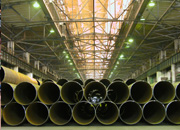 Threeway Steel is known as a professional supplier engaged in designing, manufacturing and distribution of a wide range of steel products with the headquarter located the central part of China – Hunan and six associated factories throughout China.
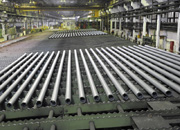 Threeway Steel is known as a professional supplier engaged in designing, manufacturing and distribution of a wide range of steel products with the headquarter located the central part of China – Hunan and six associated factories throughout China.
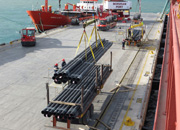 Threeway Steel is known as a professional supplier engaged in designing, manufacturing and distribution of a wide range of steel products with the headquarter located the central part of China – Hunan and six associated factories throughout China.