SSAW steel pipe is manufactured by spiral-forming steel strip and welding the helical seam from both sides. This process allows flexible production of large-diameter pipes by adjusting the forming angle and strip width. Compared with longitudinally welded pipes, SSAW pipes offer efficient coil feeding and controlled double-sided submerged arc welding, which helps achieve stable weld penetration and joint integrity. Typical applications include oil and gas pipelines, water transmission systems, pile foundations, and structural engineering projects. Final quality depends on steel strip grade, forming accuracy, welding parameters, dimensional control, and non-destructive testing.
Raw Material Preparation and Inspection Before SSAW Pipe Forming
Raw material preparation is the first important stage in SSAW steel pipe manufacturing. The quality of the steel strip directly affects forming stability, weld seam performance, dimensional accuracy, and mechanical properties of the finished pipe. Even with advanced spiral forming and double-sided submerged arc welding equipment, poor-quality raw materials can lead to production defects and reduce product reliability.
Manufacturers must inspect steel coils and complete several preparation operations before feeding the strip into the SSAW forming machine.
Preparation and Inspection Overview
|
Stage
|
Key Activities
|
|
Selection of hot-rolled steel coils
|
Confirm steel grade, chemical composition, thickness, width, yield/tensile strength, toughness, elongation, service conditions
|
|
Chemical and mechanical verification
|
Check element limits (C, Mn, Si, P, S); yield strength, tensile strength, elongation; impact testing where required
|
|
Coil surface inspection
|
Identify rust, scratches, cracks, scale, dents, uneven edges, excessive deformation, transport damage
|
|
Uncoiling, leveling, edge preparation
|
Release strip, reduce curvature, improve flatness, inspect and prepare edges for consistent alignment
|
|
Strip width and thickness control
|
Verify dimensions before production; monitor consistency during feeding
|
1. Selection of Hot-Rolled Steel Coils
SSAW steel pipes are generally manufactured from hot-rolled steel coils—the selected coil must meet required steel grade, thickness, width, and mechanical property specifications.
Common material grades depend on the intended application and relevant standards:
Consider during material selection:
-
Steel grade and chemical composition
-
Coil thickness and width
-
Yield strength and tensile strength
-
Toughness and elongation requirements
-
Intended service conditions and project standards
Correct material selection provides a suitable foundation for subsequent forming and welding operations.
2. Chemical Composition and Mechanical Property Requirements
Chemical composition influences strength, toughness, weldability, and resistance to cracking—elements such as carbon, manganese, silicon, phosphorus, and sulfur must be controlled within the limits specified by the applicable material standard.
Mechanical properties are equally important:
|
Property
|
Significance
|
|
Yield strength
|
Ability to withstand applied loads
|
|
Tensile strength
|
Ability to withstand applied loads
|
|
Elongation
|
Information about ductility
|
|
Impact testing
|
May be required for low-temperature service or specific toughness requirements
|
Review material certificates and conduct additional testing when required by the purchase order or inspection plan.
3. Coil Surface Inspection and Defect Identification
Before forming, steel coils should undergo visual and surface inspections.
Common defects:
-
Rust
-
Scratches
-
Cracks
-
Scale
-
Dents
-
Uneven edges
Surface defects may affect forming quality or create problems during welding. Cracks and severe edge damage are particularly important—they can become potential sources of defects in the finished pipe.
Also check for: excessive deformation, damage from transportation, or other conditions that could affect stable feeding. Defective sections should be evaluated and treated according to the manufacturer's quality procedures.
4. Uncoiling, Leveling, and Edge Preparation
After inspection, the steel coil is loaded onto an uncoiling machine—the strip is gradually released and fed into the production line.
Leveling equipment helps reduce coil curvature and improve strip flatness—important because excessive curvature or unevenness can affect forming angle, edge alignment, and pipe geometry.
The strip edges are also inspected and prepared to achieve consistent alignment before welding. Depending on the production line, edge milling or other edge preparation methods may be used to obtain the required joint condition.
5. Steel Strip Width and Thickness Control
Steel strip width and thickness are key parameters in SSAW pipe production:
-
Strip width – together with forming angle, influences resulting pipe diameter and spiral seam geometry
-
Thickness – affects finished pipe wall thickness and mechanical performance
Manufacturers should verify strip dimensions before production and monitor dimensional consistency during feeding—excessive variations can cause forming instability, uneven pipe dimensions, or welding problems.
The Complete Spiral Rolling Process of SSAW Steel Pipes
Spiral rolling is the core forming stage in SSAW steel pipe manufacturing. During this process, a continuous steel strip is gradually bent into a cylindrical shape, with its edges arranged along a spiral line. The forming machine controls the strip's feeding direction, forming angle, and bending condition to achieve the required pipe diameter and geometry.
The accuracy of spiral rolling directly affects pipe roundness, diameter consistency, edge alignment, and subsequent welding quality—each forming operation must be carefully controlled before the pipe enters the double-sided submerged arc welding stage.
Process Overview
|
Stage
|
Key Activities
|
|
Spiral forming principle
|
Continuous steel strip enters forming unit at controlled angle; passes through rollers; edges approach to form a continuous helical joint
|
|
Forming angle and pipe diameter
|
Angle between strip feeding direction and pipe axis; adjusted to determine pipe size and spiral seam geometry
|
|
Feeding and guiding
|
Guide rollers maintain position and feeding direction; stable strip movement essential for continuous production
|
|
Gradual spiral bending
|
Multiple rollers apply controlled pressure; strip changes from flat to curved to cylindrical; avoid excessive deformation and buckling
|
|
Roundness, diameter, and alignment control
|
Monitor outside diameter, roundness, edge alignment, wall thickness, and straightness
|
|
Tack welding and preparation
|
Temporarily join edges to maintain alignment; check edge alignment, joint condition, and dimensional accuracy before main welding
|
1. How Spiral Forming Works
SSAW spiral forming uses a continuous steel strip as the main raw material—the strip enters the forming unit at a controlled angle and passes through a series of rollers that gradually bend it into a spiral cylindrical shape.
As the strip advances, its two edges approach each other and form a continuous helical joint. The forming machine maintains the required geometry while the pipe moves forward through the production line.
Unlike straight-seam pipe manufacturing, the spiral forming process creates a weld seam that runs around the pipe body at an angle to its longitudinal axis.
2. Setting the Forming Angle and Pipe Diameter
The forming angle is one of the most important parameters—it refers to the angle between the steel strip's feeding direction and the pipe axis.
Adjusting this angle changes the relationship between strip width and pipe diameter—together with strip dimensions and forming equipment settings, it determines the resulting pipe size and spiral seam geometry.
Manufacturers must select suitable parameters according to:
Incorrect settings may cause: dimensional deviations, unstable forming, or poor edge alignment.
3. Feeding and Guiding the Steel Strip into the Forming Unit
After uncoiling and leveling, the steel strip enters the forming machine through a feeding and guiding system—guide rollers help maintain its position and control feeding direction.
Stable strip feeding is essential for continuous production—if the strip shifts, twists, or experiences uneven tension, the pipe may develop dimensional variations or misaligned edges.
Operators and automatic control systems monitor strip movement, feeding speed, and forming conditions to maintain stable operation.
4. Gradual Spiral Bending and Pipe Shape Formation
Inside the forming unit, multiple rollers apply controlled pressure to bend the flat steel strip gradually—the strip changes from a flat shape into a curved section and eventually forms a continuous cylindrical pipe.
The bending process must avoid: excessive deformation, local buckling, and uneven curvature. Roller positioning and pressure should be adjusted according to steel strip thickness, width, and mechanical properties.
During this stage, manufacturers monitor the pipe's outside diameter, roundness, and forming stability—consistent geometry helps ensure the two strip edges meet correctly before welding.
5. Controlling Roundness, Diameter, and Alignment
|
Inspection Point
|
Purpose
|
|
Outside diameter
|
Ensures pipe meets required dimensional specifications
|
|
Roundness
|
Prevents excessive ovality that may affect installation and connection
|
|
Edge alignment
|
Keeps the two strip edges in a suitable position for welding
|
|
Wall thickness
|
Confirms consistency with specified steel strip thickness and finished-pipe requirements
|
|
Straightness
|
Helps control overall geometry of the finished pipe
|
Regular monitoring allows operators to identify deviations and adjust forming parameters before defects become more serious.
6. Tack Welding and Preparation for Main Seam Welding
Once the steel strip has been formed into a cylindrical shape, its adjoining edges must be held in position before main seam welding—tack welding is commonly used to temporarily join the edges and maintain alignment.
The tack weld must provide sufficient stability for the pipe to proceed through the welding process—its condition, position, and compatibility with the main welding procedure should be controlled according to manufacturer requirements.
Before double-sided submerged arc welding begins, the formed pipe is checked for edge alignment, joint condition, and dimensional accuracy—proper preparation helps reduce the risk of weld defects and supports consistent seam quality.
Double-Sided Submerged Arc Welding Technology
Double-sided submerged arc welding (SAW) is a key process in SSAW steel pipe manufacturing. After the steel strip has been formed into a cylindrical shape, the adjoining edges are welded together to create a continuous spiral seam. Welding is generally performed on both the internal and external surfaces to achieve the required joint integrity and weld quality.
The welding process directly affects the strength, toughness, and reliability of SSAW steel pipes—proper control of welding materials, equipment, and process parameters is essential.
Welding Process Overview
|
Aspect
|
Key Points
|
|
SAW principle
|
Electric arc between continuously fed wire and workpiece; granular flux covers arc and molten pool
|
|
Internal and external welding
|
Internal weld along pipe inside; external weld along corresponding outside seam; sequence depends on production line
|
|
Consumables
|
Welding wire and flux selected by steel grade, wall thickness, mechanical properties, and welding procedure
|
|
Key parameters
|
Welding current, voltage, and travel speed—must be adjusted together
|
|
Heat input
|
Influences weld metal and heat-affected zone (HAZ); must be controlled per qualified welding procedures
|
|
Defect prevention
|
Control moisture, cleanliness, parameters, edge alignment, and follow qualified procedures
|
1. What Is Submerged Arc Welding (SAW)?
An automatic or mechanized welding process where an electric arc forms between a continuously fed welding wire and the workpiece—a layer of granular flux covers the arc and molten weld pool during welding.
The flux:
-
Protects the welding area from atmospheric contamination
-
Helps stabilize the welding process
-
Melts to form slag over the weld surface
Unused flux can be recovered and reused when it remains suitable and is handled according to manufacturer procedures.
SAW is widely used in large-diameter steel pipe production because it supports continuous welding and can provide consistent weld quality under properly controlled conditions.
2. Internal and External Spiral Seam Welding
SSAW steel pipes generally undergo internal and external spiral seam welding:
The welding sequence and equipment arrangement depend on the production line. This double-sided process is designed to achieve the specified weld penetration and joint quality—both weld passes must be properly coordinated to avoid incomplete fusion, excessive reinforcement, and other defects.
The welding equipment follows the spiral seam continuously, maintaining alignment between the welding head and the joint.
3. Welding Wire, Flux, and Parameter Selection
|
Consumable
|
Function
|
|
Welding wire
|
Provides filler metal needed to form the weld
|
|
Welding flux
|
Protects arc and molten metal; influences weld chemistry and slag formation
|
|
Wire and flux combinations
|
Must be compatible with base material and specified performance requirements
|
Manufacturers should control consumable storage, handling, and use to prevent moisture contamination and inconsistent welding performance.
4. Control of Welding Current, Voltage, and Speed
|
Parameter
|
Influence
|
|
Welding current
|
Affects melting rate of welding wire and weld penetration
|
|
Welding voltage
|
Influences arc length and weld bead width
|
|
Welding speed
|
Determines how quickly the process moves along the spiral seam
|
These parameters must be adjusted together—not controlled independently. Excessive or insufficient heat input may lead to defects such as incomplete fusion, excessive penetration, or an unsuitable weld profile.
5. Heat Input, Weld Penetration, and Seam Quality
Heat input influences the weld metal and the heat-affected zone (HAZ)—the base metal area affected by welding temperatures.
Manufacturers should establish and follow qualified welding procedures to control heat input and achieve the required weld profile—internal and external weld passes must form a sound joint without unacceptable defects.
6. Common Welding Defects and Their Prevention
|
Common Defect
|
Possible Cause
|
Prevention
|
|
Porosity
|
Moisture, contamination, or poor flux handling
|
Keep joint and consumables clean and dry
|
|
Slag inclusion
|
Inadequate slag removal or unsuitable welding conditions
|
Control welding parameters and cleaning
|
|
Incomplete fusion
|
Insufficient heat input or poor joint alignment
|
Adjust parameters and maintain proper edge alignment
|
|
Undercut
|
Unsuitable current, voltage, or travel speed
|
Optimize welding conditions
|
|
Cracking
|
Material, restraint, or welding procedure issues
|
Select suitable materials and follow qualified procedures
|
Post-Welding Processing and SSAW Steel Pipe Finishing
Finishing Process Overview
|
Stage
|
Key Activities
|
|
Cutting to length
|
Continuous pipe cut into sections; dimensional accuracy, clean ends, no excessive deformation or damage
|
|
Weld seam inspection and surface cleaning
|
Visual inspection; UT or RT where required; remove slag, scale, oil, and contaminants
|
|
End beveling and dimensional adjustment
|
Create specified edge angle and root face for butt welding; inspect end conditions
|
|
Straightness, roundness, and end squareness checks
|
OD, wall thickness, roundness, straightness, end squareness, length
|
|
Coating or lining
|
3LPE, FBE, epoxy lining, cement mortar lining as required
|
|
Final marking, identification, and packaging
|
Product information markings; pipe-end protectors; suitable supports and restraints
|
1. Cutting Pipes to the Required Length
After welding, the continuous pipe is cut into individual sections according to required length—cutting equipment must maintain dimensional accuracy and produce clean, consistent ends.
Specified pipe length depends on: purchase order, transportation conditions, and installation requirements. Common options include standard lengths and customized lengths within manufacturer capabilities.
During cutting: control cutting accuracy, avoid excessive deformation or damage to the pipe body, and check cut ends for burrs and irregularities before further processing.
2. Weld Seam Inspection and Surface Cleaning
The spiral weld seam must be inspected to identify visible defects and confirm compliance with applicable quality requirements.
Visual inspection can identify surface problems—cracks, undercut, excessive weld reinforcement, and poor weld appearance.
Non-destructive testing (ultrasonic or radiographic testing) may also be required by the relevant product standard or project specification.
After inspection, remove welding slag, loose scale, oil, and other contaminants as necessary—a clean surface provides better conditions for subsequent coating, lining, or other finishing operations.
3. End Beveling and Dimensional Adjustment
Pipe ends may require beveling before delivery, particularly when pipes will be connected through butt welding—beveling creates the specified edge angle and root face to support proper joint preparation during installation.
Bevel dimensions should follow the applicable standard or project requirements—also inspect end conditions to ensure the pipe is not excessively oval or deformed.
Dimensional adjustment may be necessary when measurements show deviations in diameter, roundness, or end alignment—any correction must follow approved manufacturing procedures to avoid damaging the pipe or weld seam.
4. Pipe Straightness, Roundness, and End Squareness Checks
|
Inspection Item
|
Purpose
|
|
Outside diameter
|
Confirms compliance with specified size
|
|
Wall thickness
|
Checks whether pipe meets required thickness tolerance
|
|
Roundness
|
Evaluates ovality and cross-sectional consistency
|
|
Straightness
|
Identifies excessive bending along pipe length
|
|
End squareness
|
Ensures pipe ends are properly aligned for connection and installation
|
|
Length
|
Confirms compliance with purchase order
|
Compare inspection results with applicable product standard and project acceptance criteria.
5. Internal and External Coating or Lining Options
|
Coating/Lining
|
Typical Application
|
|
3LPE coating
|
Three-layer polyethylene system for external corrosion protection
|
|
FBE coating
|
Fusion-bonded epoxy coating for corrosion protection
|
|
Epoxy lining
|
Internal protection in suitable water and industrial pipeline applications
|
|
Cement mortar lining
|
Internal protection in certain water transmission systems
|
Quality Inspection and Testing of SSAW Steel Pipes
|
Inspection Area
|
What to Check
|
|
Dimensional and visual
|
OD, wall thickness, length, straightness, roundness/ovality, end squareness, bevel dimensions, weld seam appearance, surface defects
|
|
NDT of spiral welds
|
UT, RT, MT, PT as required—method, coverage, acceptance criteria, and frequency per standard
|
|
Hydrostatic pressure testing
|
Test pressure and holding time per product standard and purchase order
|
|
Mechanical and chemical
|
Tensile, impact, bend/flattening, hardness tests; chemical composition compliance
|
|
Weld quality and repair
|
Evaluate visual/NDT results; approved repair procedures; reinspection of repaired areas
|
|
Standards
|
API 5L, ASTM A252, and project-specific specifications
|
1. Dimensional and Visual Inspection
Dimensional inspection confirms the finished pipe meets specified size and manufacturing tolerances:
-
Outside diameter and wall thickness
-
Pipe length and straightness
-
Roundness and ovality
-
End squareness and bevel dimensions
-
Weld seam appearance and surface condition
Visual inspection identifies surface defects—cracks, visible porosity, undercut, excessive weld reinforcement, dents, and corrosion. Any unacceptable condition should be evaluated and handled according to relevant inspection and repair procedures.
2. Non-Destructive Testing of Spiral Weld Seams
NDT helps identify internal or surface defects without damaging the pipe—since the spiral weld seam is critical to SSAW pipe performance, it requires appropriate inspection.
|
NDT Method
|
Purpose
|
|
Ultrasonic Testing (UT)
|
High-frequency sound waves detect internal discontinuities such as lack of fusion and certain inclusions
|
|
Radiographic Testing (RT)
|
X-rays or gamma rays produce images revealing internal weld defects
|
|
Magnetic Particle Testing (MT)
|
Detects surface and near-surface discontinuities in suitable ferromagnetic materials
|
|
Penetrant Testing (PT)
|
Identifies surface-breaking defects using penetrant materials
|
The inspection method, coverage, acceptance criteria, and testing frequency should follow the applicable standard and project requirements.
3. Hydrostatic Pressure Testing
Commonly specified for certain SSAW pipes—particularly those intended for pressure pipeline applications. The pipe is filled with water and pressurized to a specified test pressure for a defined period.
Purpose: evaluate the pipe's ability to withstand required internal pressure and identify leakage or other unacceptable conditions.
Test pressure and holding time must be determined according to the relevant product standard and purchase order. Hydrostatic testing should not be treated as a substitute for weld inspection or other required quality checks.
4. Mechanical Testing and Chemical Composition Analysis
|
Test
|
Purpose
|
|
Tensile testing
|
Measures yield strength, tensile strength, and elongation
|
|
Impact testing
|
Evaluates toughness under specified temperature conditions
|
|
Bend or flattening testing
|
Assesses ductility and resistance to deformation where applicable
|
|
Hardness testing
|
Measures resistance to localized indentation when required
|
|
Chemical composition analysis
|
Confirms material complies with specified grade
|
Test results should be checked against relevant material requirements and supported by appropriate inspection records.
5. Weld Quality Evaluation and Defect Repair
Weld quality evaluation considers results of visual inspection, NDT, and any other required tests—defects exceeding permitted acceptance limits must be assessed and handled through approved repair procedures.
Repair welding should follow qualified welding procedures, with appropriate controls over preheating, welding consumables, and post-repair inspection where required. Repaired areas must be reinspected using methods specified by the applicable standard or project requirements.
Clear inspection records help maintain traceability and demonstrate corrective actions have been completed.
6. Relevant Standards: API 5L, ASTM A252, and Project Specifications
|
Standard
|
Scope
|
|
API 5L
|
Line pipe for pipeline transportation systems—material grades, manufacturing, inspection, and testing requirements
|
|
ASTM A252
|
Welded and seamless steel pipe piles for structural and foundation applications
|
|
Project specifications
|
May define additional requirements for dimensions, testing coverage, acceptance criteria, coatings, documentation, and inspection procedures
|
Key Factors Affecting SSAW Steel Pipe Forming Quality
The quality of SSAW steel pipes depends on several interconnected factors throughout the manufacturing process. From raw material selection to spiral forming, double-sided submerged arc welding, and final inspection, each production stage can influence dimensional accuracy, weld integrity, and mechanical performance.
Even with advanced production equipment, poor process control may result in forming deviations, welding defects, or inconsistent product quality. Understanding the main influencing factors helps manufacturers improve production stability and helps buyers evaluate SSAW steel pipes more effectively.
Key Factors at a Glance
|
Factor
|
Key Points
|
|
Steel strip quality and thickness uniformity
|
Chemical composition and mechanical properties influence formability, weldability, strength, and toughness; thickness variations affect forming consistency and finished wall thickness
|
|
Forming angle and spiral seam geometry
|
Determines relationship between strip and pipe axis; incorrect parameters cause diameter deviations, poor roundness, or uneven edge alignment
|
|
Welding parameters and heat input control
|
Current, voltage, travel speed, wire selection, and flux condition influence weld quality; unsuitable parameters cause porosity, slag inclusion, incomplete fusion, and undercut
|
|
Equipment accuracy and production stability
|
Worn rollers, inaccurate guiding systems, unstable feeding, or poorly calibrated instruments cause dimensional variations and process interruptions
|
|
Operator skills and process monitoring
|
Experienced operators understand forming parameters, welding procedures, equipment operation, and inspection requirements
|
|
Defect reduction measures
|
Raw material inspection, forming optimization, welding control, equipment maintenance, inspection coverage, and traceability
|
1. Steel Strip Quality and Thickness Uniformity
Steel strip quality provides the foundation for stable production—chemical composition and mechanical properties influence formability, weldability, strength, and toughness.
Thickness uniformity is particularly important—significant variations may cause uneven forming conditions and affect finished pipe wall consistency. Poor surface conditions, edge cracks, rust, and other defects may also create problems during forming and welding.
Manufacturers should: inspect steel coils before production, verify material certificates, and check strip dimensions. Selecting suitable steel grades and controlling raw material quality help reduce manufacturing risks.
2. Forming Angle and Spiral Seam Geometry
The forming angle determines the relationship between the steel strip and the pipe axis—together with strip width and other equipment settings, it influences pipe diameter and spiral seam geometry.
Incorrect forming parameters may cause: diameter deviations, poor roundness, or uneven edge alignment—these problems can make welding more difficult and increase the possibility of joint defects.
To maintain forming accuracy: adjust roller positions, feeding direction, and forming pressure according to required pipe specifications. Continuous monitoring of diameter and roundness also helps maintain consistent production quality.
3. Welding Parameters and Heat Input Control
Double-sided submerged arc welding is a critical stage—welding current, voltage, travel speed, wire selection, and flux condition all influence weld quality.
|
Issue
|
Effect
|
|
Unsuitable welding parameters
|
May cause porosity, slag inclusion, incomplete fusion, and undercut
|
|
Excessive heat input
|
Can affect the microstructure and mechanical properties of the weld and heat-affected zone
|
Manufacturers should: establish qualified welding procedures, maintain stable operating conditions, regularly inspect welding equipment, and properly store welding consumables.
4. Equipment Accuracy and Production Stability
The performance of forming and welding equipment directly affects production consistency—worn rollers, inaccurate guiding systems, unstable feeding mechanisms, or poorly calibrated measuring instruments may cause dimensional variations and process interruptions.
Regular equipment maintenance helps maintain: stable forming pressure, strip alignment, welding position, and production speed.
Automated monitoring systems can help operators identify deviations early and make timely adjustments—equipment accuracy is especially important in continuous production, where small variations may affect multiple pipe sections.
5. Operator Skills and Process Monitoring
Experienced operators play an important role in maintaining production quality—they need to understand forming parameters, welding procedures, equipment operation, and inspection requirements.
Operators should monitor:
-
Steel strip feeding speed and alignment
-
Forming angle and pipe diameter
-
Edge alignment before welding
-
Welding current, voltage, and travel speed
-
Weld seam appearance and inspection results
-
Dimensional consistency during production
Clear operating procedures and regular technical training help reduce human errors and improve production stability.
6. How to Reduce Forming and Welding Defects
|
Measure
|
Key Action
|
|
Strengthen raw material inspection
|
Verify steel grade, thickness, surface condition, and mechanical properties before forming
|
|
Optimize forming parameters
|
Adjust forming angle, roller position, and feeding conditions according to pipe dimensions
|
|
Control welding procedures
|
Maintain suitable welding parameters and use compatible welding wire and flux
|
|
Maintain production equipment
|
Inspect and calibrate forming rollers, welding systems, and measuring instruments regularly
|
|
Improve inspection coverage
|
Apply visual inspection, dimensional checks, and appropriate NDT methods per applicable requirements
|
|
Maintain production traceability
|
Record material information, process parameters, inspection results, and repair activities
|
Our Recommended SSAW Steel Pipe Products and Global Shipping Services
Supplies SSAW steel pipes for oil and gas pipelines, water transmission, pipe piling, and structural applications. Products can be specified by outside diameter, wall thickness, length, steel grade, end preparation, and applicable standard, including API 5L line pipe, water transmission pipe, ASTM A252 pipe piles, and structural pipe. Internal lining and external coating options can be discussed according to project conditions. Quality inspection may cover dimensional checks, visual examination, ultrasonic testing, radiographic testing, hydrostatic testing, and mechanical property testing, with corresponding material certificates and inspection reports. Export packaging, loading protection, and global shipping arrangements are coordinated according to pipe dimensions, cargo weight, destination port, Incoterms, and delivery schedule. To request a quotation, please provide the outside diameter, wall thickness, length, steel grade, applicable standard, quantity, coating requirement, inspection requirement, and destination port.
Conclusion:
SSAW steel pipe quality depends on the combined performance of spiral forming and double-sided submerged arc welding. Spiral forming shapes the steel strip into a stable cylindrical profile, controlling pipe diameter, roundness, and edge alignment. Double-sided submerged arc welding then joins the spiral seam from both the inside and outside to achieve consistent penetration and weld integrity. Final quality is also influenced by raw material grade, forming accuracy, welding parameters, equipment stability, non-destructive testing, hydrostatic testing, and post-weld finishing. Buyers should confirm the applicable standard, steel grade, outside diameter, wall thickness, length, inspection requirements, and corrosion protection before purchasing. Standards such as API 5L and ASTM A252 serve different applications and should be selected according to project requirements.
FAQ:
Q1: What is the main difference between SSAW and LSAW steel pipe manufacturing?
SSAW pipes are formed by spiral rolling steel strips, creating a helical weld seam. LSAW pipes are formed from steel plates or strips, with a longitudinal weld seam along the pipe axis.
Q2: Why does SSAW steel pipe use spiral forming technology?
Spiral forming allows manufacturers to produce different pipe diameters by adjusting the forming angle and steel strip dimensions. It is particularly suitable for large-diameter steel pipe production.
Q3: What are the advantages of double-sided submerged arc welding for SSAW pipes?
It allows welding from both the internal and external sides of the spiral seam, helping achieve the required weld penetration and joint integrity under controlled welding conditions.
Q4: How are spiral weld seams inspected during SSAW steel pipe production?
Common inspection methods include visual inspection, ultrasonic testing, and radiographic testing. The required methods and inspection coverage depend on the applicable standards and project specifications.
Q5: What factors affect the quality of SSAW steel pipe forming and welding?
Major factors include steel strip quality, thickness uniformity, forming angle, edge alignment, welding parameters, equipment accuracy, and production process control.
Q6: Which standards are commonly used for SSAW steel pipes?
API 5L is commonly used for line pipes, while ASTM A252 covers steel pipe piles. The appropriate standard depends on the pipe's intended application and project requirements.
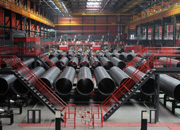 Threeway Steel is known as a professional supplier engaged in manufacturing and distributing a wide range of steel pipe, and our headquarter located the central part of China – Hunan and six associated factories throughout China.
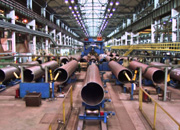 Threeway Steel is known as a professional supplier engaged in designing, manufacturing and distribution of a wide range of steel products with the headquarter located the central part of China – Hunan and six associated factories throughout China.
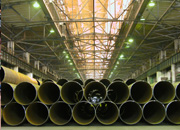 Threeway Steel is known as a professional supplier engaged in designing, manufacturing and distribution of a wide range of steel products with the headquarter located the central part of China – Hunan and six associated factories throughout China.
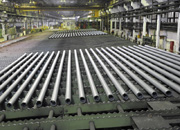 Threeway Steel is known as a professional supplier engaged in designing, manufacturing and distribution of a wide range of steel products with the headquarter located the central part of China – Hunan and six associated factories throughout China.
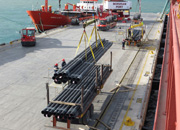 Threeway Steel is known as a professional supplier engaged in designing, manufacturing and distribution of a wide range of steel products with the headquarter located the central part of China – Hunan and six associated factories throughout China.