SSAW (Spiral Submerged Arc Welded) steel pipes are widely used in modern construction, infrastructure, pile foundations, bridges, port facilities, offshore structures, and industrial buildings. They are manufactured by forming hot-rolled steel coils into a spiral shape and welding the seam through submerged arc welding, allowing flexible production of large diameters, customized wall thicknesses, and specified lengths. SSAW steel pipe piles help transfer structural loads to deeper soil layers in bridges, docks, marine structures, and high-rise foundations. They are also suitable for tubular columns, bridge supports, offshore platforms, and other load-bearing components. Selection should consider steel grade, welding quality, dimensional accuracy, mechanical properties, corrosion protection, and applicable standards such as ASTM A252.
Manufacturing Process and Technical Characteristics of SSAW Steel Pipes
SSAW steel pipes are manufactured by forming steel strips or hot-rolled steel coils into a spiral cylindrical shape and welding the edges using submerged arc welding. This process allows producers to manufacture large-diameter steel pipes with different wall thicknesses and lengths—suitable for pile foundations and structural applications.
Manufacturing Process at a Glance
|
Step
|
Key Activities
|
|
1. Raw material selection
|
Hot-rolled steel coils selected by chemical composition, mechanical properties, surface condition, and dimensional accuracy
|
|
2. Uncoiling and leveling
|
Strip leveled to remove surface irregularities; edges prepared for accurate dimensions and suitable welding conditions
|
|
3. Spiral forming
|
Strip continuously shaped into a cylindrical pipe at a controlled spiral angle; forming angle, strip width, and tension determine diameter
|
|
4. Submerged arc welding
|
Internal and external weld seams produced using SAW with welding wire and granular flux protecting the weld area
|
|
5. Cutting and quality inspection
|
Pipe cut to required lengths; dimensional, weld, mechanical, hydrostatic, and surface inspections performed
|
1. Raw Material Selection
The process begins with selecting suitable hot-rolled steel coils. Chemical composition, mechanical properties, surface condition, and dimensional accuracy directly affect finished pipe quality.
Commonly used steel grades depend on the intended application and relevant standards—for example, ASTM A252 covers steel pipe piles, while other structural or project-specific specifications may apply. Proper raw material inspection helps ensure consistent production quality.
2. Uncoiling and Leveling
After inspection, the steel coil is transferred to the production line for uncoiling. The strip passes through leveling equipment to remove surface irregularities and reduce deformation—maintaining uniform flatness and stable forming conditions. Strip edges may also undergo preparation for accurate dimensions and suitable welding conditions.
3. Spiral Forming
The key process distinguishing SSAW pipes from longitudinally welded pipes. The steel strip enters a forming unit and is continuously shaped into a cylindrical pipe at a controlled spiral angle.
Forming angle, strip width, and forming tension determine pipe diameter and overall dimensional accuracy. By adjusting these parameters, manufacturers can produce different diameters and specifications using suitable strip widths.
4. Submerged Arc Welding
After spiral forming, strip edges are joined through submerged arc welding (SAW)—both internal and external weld seams.
SAW uses a continuously supplied welding wire and granular flux to protect the welding area from atmospheric contamination, providing stable welding conditions and strong, consistent weld joints when appropriate procedures are followed.
Weld quality is particularly important for large-diameter SSAW pipes used in pile foundations, bridge supports, and other load-bearing structures.
5. Cutting and Quality Inspection
After welding, the continuous pipe is cut to required lengths, then undergoes inspection:
|
Inspection Activity
|
What to Check
|
|
Dimensional inspection
|
Outside diameter, wall thickness, length, straightness, and ovality
|
|
Weld inspection
|
Ultrasonic testing (UT), radiographic testing (RT), or other methods per project requirements
|
|
Mechanical testing
|
Tensile strength, yield strength, elongation, and impact properties where required
|
|
Hydrostatic testing
|
Pressure integrity when required by specification or purchase contract
|
|
Surface inspection
|
Visible defects, surface damage, and manufacturing irregularities
|
6. Main Technical Characteristics
|
Characteristic
|
Key Points
|
|
Large diameter capability
|
Suitable for large-diameter foundation piles, bridge supports, and marine structures
|
|
Flexible wall thickness
|
Different thicknesses manufactured according to engineering requirements and production capabilities
|
|
Customized lengths
|
Pipe lengths adjusted to meet transportation and construction needs
|
|
Good mechanical performance
|
Properly manufactured SSAW pipes provide required strength and structural performance for demanding applications
|
|
Production efficiency
|
Continuous spiral forming and welding support efficient manufacturing of large-volume orders
|
|
Cost-effectiveness
|
Flexible raw material utilization can make SSAW pipes economical for certain large-diameter projects
|
Applications of SSAW Steel Pipes in Pile Foundation Engineering
SSAW steel pipes play an important role in modern pile foundation engineering because of their large-diameter manufacturing capability, mechanical strength, and flexible production specifications. They are widely used in bridge construction, port facilities, marine engineering, industrial buildings, and other infrastructure projects requiring reliable foundation support.
As spiral welded steel pipes, SSAW pipes can be manufactured with different diameters, wall thicknesses, and lengths to meet specific foundation design requirements.
Application Overview
|
Application Area
|
Typical Uses
|
Key Considerations
|
|
Bridge foundation piles
|
Load transfer from piers and supporting structures to deeper, stronger soil or rock layers
|
Dimensions and steel grades per geological surveys and structural calculations
|
|
Marine and port engineering
|
Docks, wharves, jetties, offshore support structures, port platforms
|
Corrosion protection—epoxy coatings, marine-grade treatments, cathodic protection
|
|
Building foundations
|
High-rise buildings, industrial facilities, large commercial structures
|
Large diameters and customizable wall thicknesses for demanding structural requirements
|
|
River and water conservancy
|
Cofferdams, retaining structures, temporary platforms
|
Surface protection and installation methods per soil and water conditions
|
|
Temporary and permanent piles
|
Permanent foundations, temporary construction support, combined foundation systems
|
Project design, expected service life, loading conditions, and construction methods
|
1. Bridge Foundation Piles
Bridge construction often involves complex geological conditions and heavy structural loads. SSAW steel pipe piles transfer loads from bridge piers and supporting structures into deeper and stronger soil or rock layers.
Large-diameter steel pipe piles can provide substantial axial and bending resistance when properly designed. Suitable for river crossings, elevated highways, and large transportation infrastructure.
Installation: driven into the ground using pile-driving equipment or other approved foundation construction methods. Select dimensions and steel grades according to geological surveys and structural calculations.
2. Marine and Port Engineering
Widely used in marine construction—docks, wharves, jetties, and offshore support structures—frequently exposed to seawater, waves, tides, and changing environmental loads.
Large-diameter SSAW pipe piles serve as foundation supports for port platforms, loading facilities, and marine structures. Their structural capacity helps resist vertical loads and lateral forces from waves, currents, and wind.
Corrosion protection is essential in marine environments. Common options: epoxy coatings, protective painting systems, and other marine-grade anti-corrosion treatments. Cathodic protection may also be considered per project design requirements.
3. Building Foundations
In high-rise buildings, industrial facilities, and large commercial structures, pile foundations are often required when surface soil cannot provide sufficient bearing capacity.
SSAW steel pipes can be used as steel pipe piles to support heavy structures and transfer loads to suitable deeper soil layers. Large diameters and customizable wall thicknesses suit foundation projects with demanding structural requirements.
4. River and Water Conservancy Projects
Used in river engineering, flood control projects, water conservancy facilities, and temporary construction structures.
For example, steel pipe piles can support cofferdams, retaining structures, and temporary platforms during bridge or hydraulic construction—providing construction stability in areas with soft soil, groundwater, and changing water levels.
These pipes may serve as temporary or permanent foundation components. Select surface protection and installation methods according to soil and water conditions.
5. Temporary and Permanent Pile Structures
|
Pile Type
|
Typical Use
|
|
Permanent piles
|
Long-term structural foundation components for bridges, ports, buildings, and industrial facilities
|
|
Temporary piles
|
Support cofferdams, construction platforms, retaining systems, and temporary working structures
|
|
Combined foundation systems
|
Used together with concrete, reinforcing steel, or other foundation materials to achieve required structural performance
|
The selection between temporary and permanent applications depends on project design, expected service life, loading conditions, and construction methods.
6. Key Considerations for Selecting SSAW Steel Pipe Piles
|
Factor
|
Key Consideration
|
|
Pipe diameter
|
Determine required diameter according to foundation design and load-bearing requirements
|
|
Wall thickness
|
Select based on axial loads, bending forces, driving stresses, and corrosion allowances
|
|
Steel grade
|
Choose materials meeting required mechanical properties and applicable standards, such as ASTM A252 where specified
|
|
Pipe length
|
Consider soil conditions, pile penetration depth, and connection requirements
|
|
Weld quality
|
Ensure spiral weld seams meet applicable inspection and acceptance criteria
|
|
Corrosion protection
|
Select appropriate coatings or cathodic protection for underground and marine environments
|
Applications of SSAW Steel Pipes in Structural Engineering
Application Overview
|
Application Area
|
Typical Uses
|
Key Considerations
|
|
Steel building structures
|
Tubular columns, structural supports, load-bearing members, space frames, roof support systems
|
Pipe diameter, wall thickness, steel grade, and connection details determined through structural calculations
|
|
Bridge structures
|
Bridge piers, tubular support members, foundation-related structures
|
Large-diameter availability; corrosion protection in coastal or humid environments
|
|
Industrial structures
|
Equipment support columns, structural frameworks, tubular supports, workshop buildings
|
Customized dimensions; material properties and dimensions must meet engineering specifications
|
|
Offshore and marine structures
|
Offshore platform supports, coastal facilities, tubular foundation components
|
Corrosion protection—epoxy coatings, marine protective systems, cathodic protection; welding quality
|
|
Transmission and infrastructure supports
|
Lighting towers, large tubular columns, transmission-related supports, engineered steel frameworks
|
Pipe dimensions, steel grades, connection methods, and structural stability under wind/external loads
|
1. Steel Building Structures
SSAW pipes can serve as tubular columns, structural supports, and load-bearing members in industrial buildings, commercial facilities, and large public structures.
Compared with some conventional structural sections, circular steel pipes can provide favorable strength-to-weight characteristics and resistance to bending and compression when properly designed. Large-diameter SSAW pipes are particularly useful where substantial structural dimensions are required.
They can also be incorporated into space frames, roof support systems, and other tubular structural arrangements. Determine pipe diameter, wall thickness, steel grade, and connection details through structural calculations.
2. Bridge Structures
Bridge engineering requires materials capable of withstanding heavy traffic loads, wind forces, vibration, and environmental exposure. SSAW pipes can be used in bridge piers, tubular support members, foundation-related structures, and other engineered components.
Large-diameter availability makes them suitable for projects requiring substantial tubular sections—supporting columns or structural members in different bridge configurations.
For bridges in coastal or humid environments, corrosion protection is particularly important. Appropriate coatings and regular inspections help maintain structural durability.
3. Industrial Structures
Industrial plants often require strong structural components to support heavy equipment, production platforms, pipelines, and large workshop buildings.
SSAW pipes can be used in equipment support columns, structural frameworks, tubular supports, and industrial infrastructure. Customized dimensions suit projects with special structural requirements.
In steel mills, power plants, chemical facilities, and manufacturing workshops, these pipes provide reliable structural support when material properties and dimensions meet engineering design specifications.
4. Offshore and Marine Structures
Offshore and marine projects expose structural components to seawater, waves, wind, and other demanding conditions.
SSAW pipes can be used in offshore platform supports, marine structures, coastal facilities, and tubular foundation components. Large diameters and customizable wall thicknesses suit applications requiring substantial load-bearing capacity.
Marine structures require careful corrosion protection consideration: epoxy coatings, specialized marine protective systems, and cathodic protection may be used per project requirements. Material selection and welding quality are also important for structural reliability.
5. Transmission and Infrastructure Supports
SSAW pipes can also be used in selected infrastructure support structures—lighting towers, large tubular columns, transmission-related supports, and other engineered steel frameworks.
Their circular geometry provides flexibility in structural design and helps distribute loads under different working conditions. For projects involving high wind loads or significant external forces, engineers must evaluate pipe dimensions, steel grades, connection methods, and structural stability.
6. Comparison with Other Steel Pipe Types
|
Comparison
|
SSAW Steel Pipes
|
LSAW Steel Pipes
|
ERW Steel Pipes
|
|
Manufacturing method
|
Spiral submerged arc welding
|
Longitudinal submerged arc welding
|
Electric resistance welding
|
|
Raw material
|
Steel coils
|
Steel plates
|
Steel coils or strips
|
|
Diameter range
|
Flexible large-diameter production
|
Large-diameter production
|
Commonly small and medium diameters
|
|
Production flexibility
|
High
|
Depends on plate dimensions and equipment
|
Suitable for standardized production
|
|
Common applications
|
Pipe piles, marine structures, large tubular supports
|
Heavy-duty structural pipes and large-diameter pipelines
|
Building structures, general structural pipes, smaller tubular components
|
The final choice should depend on structural design requirements, material specifications, manufacturing quality, and project economics—not manufacturing method alone.
Advantages of SSAW Steel Pipes for Pile Foundation and Structural Projects
SSAW (Spiral Submerged Arc Welded) steel pipes are widely used in pile foundation and structural engineering because of their large-diameter manufacturing capability, flexible specifications, and reliable mechanical performance. They suit various infrastructure projects—bridges, ports, industrial facilities, and large buildings. When properly designed, manufactured, and inspected, SSAW pipes provide an efficient solution for demanding construction applications.
Advantages at a Glance
|
Advantage
|
Key Points
|
|
Large-diameter manufacturing
|
Spiral forming produces a wide range of diameters from steel coils; suitable for high-capacity pile foundations, bridge piers, tubular columns
|
|
Flexible specifications
|
Adjustable diameter, wall thickness, and length; customized dimensions for different foundation depths and load conditions
|
|
Reliable mechanical performance
|
Strength and toughness depend on steel grade, manufacturing, welding quality, and inspection; circular cross-section resists compression and bending
|
|
Efficient material utilization
|
Steel coil raw material supports efficient production planning; competitive costs for large-diameter projects
|
|
Wide application range
|
Bridges, marine/port engineering, building foundations, industrial structures, infrastructure projects
|
|
Quality control and adaptability
|
Dimensional, visual, UT, RT, hydrostatic, and mechanical testing as specified; ASTM A252 where applicable
|
1. Large-Diameter Manufacturing Capability
The spiral forming process allows manufacturers to produce pipes in a wide range of diameters using steel coils.
Large-diameter SSAW pipes are particularly useful for pile foundations requiring substantial load-bearing capacity. They can also be used in bridge piers, tubular columns, and other structural support systems. Determine appropriate diameter and wall thickness through structural calculations, soil conditions, and project requirements.
2. Flexible Specifications and Customization
SSAW pipes offer flexibility in diameter, wall thickness, and pipe length—allowing designers and contractors to select products according to specific construction requirements.
-
Pile foundation projects – customized dimensions meet different foundation depths and load conditions
-
Structural engineering – different specifications support various tubular components and support structures
Manufacturers can also process pipe ends through cutting, beveling, and other operations per the purchase agreement—reducing unnecessary field processing and improving installation efficiency.
3. Reliable Mechanical Performance
Mechanical performance depends on steel grade, manufacturing process, welding quality, and inspection procedures. Properly manufactured pipes provide the strength and toughness required for many foundation and structural applications.
The circular cross-section offers favorable resistance to compression and bending when incorporated into an appropriately designed structural system—suitable for bridge foundations, building supports, and industrial structures.
Note: actual load-bearing capacity must be verified through engineering calculations and relevant material/product requirements.
4. Efficient Material Utilization and Cost Control
The spiral welding process uses steel coils as the primary raw material, providing flexibility in manufacturing different pipe dimensions—supporting efficient material utilization and production planning.
For large-scale projects, SSAW pipes may offer competitive manufacturing and procurement costs, particularly when large diameters are required. Evaluate economic advantages alongside steel grade, wall thickness, inspection requirements, transportation costs, and installation conditions. Choosing correct specifications helps avoid unnecessary material consumption while maintaining required structural performance.
5. Wide Range of Construction Applications
|
Application
|
Typical Use
|
|
Bridge foundations
|
Steel pipe piles to support bridge structures
|
|
Marine and port engineering
|
Wharf foundations, dolphins, and other marine structures with suitable corrosion protection
|
|
Building foundations
|
Deep foundation systems requiring large-diameter steel pipe piles
|
|
Industrial structures
|
Tubular columns, equipment supports, and structural frameworks
|
|
Infrastructure projects
|
Selected water conservancy, transportation, and heavy construction applications
|
6. Quality Control and Project Adaptability
SSAW pipes can be manufactured and inspected according to applicable product standards and project specifications.
Quality control may include: dimensional inspection, visual examination, ultrasonic testing, radiographic testing, hydrostatic testing, and mechanical property verification.
-
Pile applications – ASTM A252 may be specified when the product falls within its scope
-
Other structural applications – may require different material standards, design codes, and welding requirements
Quality Requirements, Standards, and Inspection of SSAW Steel Pipes
The quality of SSAW (Spiral Submerged Arc Welded) steel pipes directly affects the safety, durability, and performance of pile foundation and structural engineering projects. These pipes may be exposed to heavy loads, soil pressure, vibration, moisture, and other demanding service conditions. Selecting suitable materials, following applicable standards, and conducting effective quality inspections are essential for reliable construction.
Quality Requirements at a Glance
|
Area
|
What to Verify
|
|
Material quality
|
Yield strength, tensile strength, elongation, impact toughness, chemical composition
|
|
Applicable standards
|
ASTM A252 for pipe piles; API 5L for line pipe; ASTM A53 for general-purpose pipe—confirm the correct standard for the application
|
|
Welding quality
|
Visual inspection, ultrasonic testing (UT), radiographic testing (RT), weld process monitoring
|
|
Dimensions and hydrostatic testing
|
OD, wall thickness, length, straightness, ovality, end squareness, bevel angle, surface/coating condition; hydrostatic testing where specified
|
|
Documentation and traceability
|
Material test certificates, chemical/mechanical reports, NDT records, dimensional reports, hydrostatic reports
|
1. Material Quality Requirements
Manufacturers generally use hot-rolled steel coils meeting the chemical composition and mechanical property requirements of the relevant standard or purchase contract.
|
Property
|
Significance
|
|
Yield strength
|
Stress level at which permanent deformation begins
|
|
Tensile strength
|
Maximum stress the steel can withstand before failure
|
|
Elongation
|
Ability to deform before fracture
|
|
Impact toughness
|
May be required for low-temperature service or impact loading
|
|
Chemical composition
|
Influences strength, weldability, and other material characteristics
|
Select the steel grade to match the project's structural design, installation method, and service environment.
2. Applicable Standards for SSAW Steel Pipes
|
Standard
|
Scope
|
Notes
|
|
ASTM A252
|
Welded and seamless steel pipe piles
|
Important specification for pile foundation projects; defines material and mechanical property requirements
|
|
API 5L
|
Line pipe for pipeline transportation systems
|
Not interchangeable with dedicated pile specifications
|
|
ASTM A53
|
Certain general-purpose steel pipes
|
Not interchangeable with dedicated pile specifications
|
For structural engineering applications, confirm the applicable material standards, structural design codes, fabrication requirements, and project-specific technical specifications. The selected standard must match the actual product application—not simply the manufacturing process.
3. Welding Quality Inspection
The spiral weld is a critical part of SSAW pipe quality. Inadequate welding may lead to defects affecting structural reliability.
|
Inspection Method
|
Purpose
|
|
Visual inspection
|
Checks weld appearance; identifies visible defects such as cracks, undercut, or incomplete weld finishing
|
|
Ultrasonic testing (UT)
|
Detects internal discontinuities in the weld and base material
|
|
Radiographic testing (RT)
|
Uses radiation imaging to identify certain internal weld defects
|
|
Weld process monitoring
|
Verifies welding parameters and procedures follow approved manufacturing requirements
|
The required inspection method and acceptance criteria should be specified by the applicable standard and purchase contract.
4. Dimensional and Hydrostatic Testing
Dimensional accuracy is important for pipe installation, pile connection, and structural fabrication.
Inspection generally covers:
-
Outside diameter and wall thickness
-
Pipe length and straightness
-
Ovality and end squareness
-
Bevel angle and end preparation, when required
-
Surface condition and coating thickness, when applicable
Hydrostatic testing may be required by the product specification or purchase agreement—but it is not a universal requirement for every SSAW steel pipe used in pile foundations.
5. Documentation and Traceability
Reliable suppliers should provide documentation allowing buyers to verify product quality and trace materials back to production batches.
Depending on the contract, relevant documents may include:
-
Material test certificates
-
Chemical composition reports
-
Mechanical test results
-
Non-destructive testing records
-
Dimensional inspection reports
-
Hydrostatic test reports where applicable
Key Factors in Selecting SSAW Steel Pipes for Construction Projects
Selecting SSAW steel pipes for construction projects requires confirming the application, diameter, wall thickness, steel grade, welding quality, and corrosion protection. For pile foundations and structural supports, dimensions should follow design loads, soil conditions, and connection requirements. Common standards include ASTM A252 for steel pipe piles, with material selection based on yield strength, tensile strength, and chemical composition. Weld quality should be verified through visual examination, ultrasonic testing, radiographic testing, dimensional checks, and hydrostatic testing as required. In marine, coastal, or corrosive environments, additional protection such as epoxy coating, polyethylene coating, hot-dip galvanizing, or cathodic protection may be necessary. Buyers should also evaluate supplier capability, inspection documentation, packaging, delivery schedule, and total procurement cost.
Conclusion:
SSAW (Spiral Submerged Arc Welded) steel pipes are widely used in pile foundations, bridge construction, marine structures, building supports, and industrial facilities. Their main advantage is flexible manufacturing, allowing customized diameters, wall thicknesses, and lengths to meet large-scale infrastructure requirements. Selection should consider application conditions, structural loads, soil environment, installation methods, steel grade, and applicable standards such as ASTM A252 for steel pipe piles. Quality control should cover welding quality, mechanical properties, dimensional tolerances, and inspection documentation. For marine or corrosive environments, suitable coatings or cathodic protection can help extend service life.
FAQ:
1. What are SSAW steel pipes commonly used for in pile foundation engineering?
They are commonly used as steel pipe piles for bridges, buildings, ports, wharves, and other infrastructure foundations.
2. Why are SSAW steel pipes suitable for large-diameter pile foundations?
Their spiral-forming process supports the production of large-diameter pipes with flexible wall thicknesses and lengths.
3. What is the difference between SSAW steel pipes and LSAW steel pipes?
SSAW pipes have spiral weld seams formed from steel coils, while LSAW pipes have longitudinal weld seams. Both can be used for large-diameter applications, depending on project requirements.
4. Which standard is commonly used for SSAW steel pipe piles?
ASTM A252 is a commonly specified standard for welded and seamless steel pipe piles.
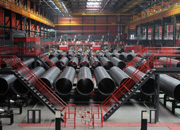 Threeway Steel is known as a professional supplier engaged in manufacturing and distributing a wide range of steel pipe, and our headquarter located the central part of China – Hunan and six associated factories throughout China.
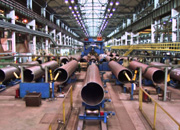 Threeway Steel is known as a professional supplier engaged in designing, manufacturing and distribution of a wide range of steel products with the headquarter located the central part of China – Hunan and six associated factories throughout China.
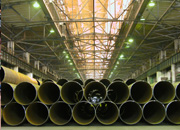 Threeway Steel is known as a professional supplier engaged in designing, manufacturing and distribution of a wide range of steel products with the headquarter located the central part of China – Hunan and six associated factories throughout China.
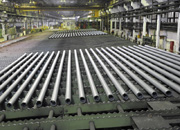 Threeway Steel is known as a professional supplier engaged in designing, manufacturing and distribution of a wide range of steel products with the headquarter located the central part of China – Hunan and six associated factories throughout China.
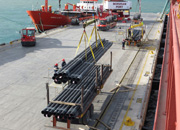 Threeway Steel is known as a professional supplier engaged in designing, manufacturing and distribution of a wide range of steel products with the headquarter located the central part of China – Hunan and six associated factories throughout China.