Steel pipes are widely used in construction, infrastructure, machinery manufacturing, industrial equipment, and fluid transportation. Based on cross-sectional shape, they are commonly divided into round, square, and rectangular steel pipes. Round pipes distribute internal pressure evenly, making them suitable for water, oil, gas, and other fluid transportation, as well as structural supports, handrails, scaffolding, and mechanical components. Square pipes offer flat surfaces for easy welding, cutting, drilling, and connection, and are often used in building frames, steel columns, machinery supports, fences, and furniture. Rectangular pipes provide directional bending performance and design flexibility, making them suitable for beams, building frameworks, vehicle structures, and equipment supports. Selection should consider steel grade, dimensions, wall thickness, manufacturing process, surface treatment, and applicable standards. Round pipes are generally preferred for fluid transportation, while square and rectangular pipes are often used in structural fabrication.
Basic Characteristics of Round, Square, and Rectangular Steel Pipes
Round, square, and rectangular steel pipes are common hollow steel products used in industrial, structural, and construction applications. Their main difference is their cross-sectional geometry, which affects mechanical behavior, fabrication methods, and suitable applications—understanding these basic characteristics is the first step in selecting the right steel pipe for a project.
Comparison at a Glance
|
Shape
|
Cross-Section
|
Key Advantages
|
Typical Applications
|
|
Round
|
Circular
|
Uniform pressure distribution, efficient resistance to loads from different directions, standardized connections
|
Water supply, oil and gas pipelines, scaffolding, structural supports, mechanical equipment
|
|
Square (SHS)
|
Four equal sides
|
Flat connection surfaces, balanced section geometry, space-efficient arrangement
|
Building frames, machinery supports, fences, furniture, steel structures
|
|
Rectangular (RHS)
|
Two pairs of unequal sides
|
Flexible structural design, directional bending performance, convenient fabrication
|
Beams, building frameworks, vehicle structures, equipment supports, architectural projects
|
1. Round Steel Pipes
Circular cross-section, available in various outside diameters and wall thicknesses—manufactured through seamless or welded processes depending on material, dimensions, and application requirements.
Main characteristics:
-
Uniform pressure distribution – circular shape distributes internal pressure relatively evenly around the pipe wall, suitable for fluid and gas transportation
-
Good structural performance – round sections provide efficient resistance to loads from different directions
-
Wide application range – water supply, oil and gas pipelines, scaffolding, structural supports, mechanical equipment
-
Standardized connections – commonly available pipe fittings, flanges, and couplings
2. Square Steel Pipes (SHS)
Four equal sides and a hollow interior—generally produced through welded forming processes, available in different side lengths and wall thicknesses.
Key characteristics:
-
Flat connection surfaces – four flat sides make welding, bolting, cutting, and assembly relatively convenient
-
Balanced section geometry – equal geometric dimensions along two perpendicular principal axes, useful for columns and structural frames
-
Space-efficient arrangement – straight edges allow convenient positioning and connection in rectangular structural layouts
-
Common structural applications – building frames, machinery supports, fences, furniture, steel structures
3. Rectangular Steel Pipes (RHS)
Two pairs of unequal sides—dimensions can be selected according to required structural design and loading direction.
Main characteristics:
-
Flexible structural design – different width-to-height ratios allow engineers to select sections according to available space and load requirements
-
Directional bending performance – different section dimensions produce different bending stiffness about the two principal axes; useful when loads act mainly in one direction
-
Convenient fabrication – flat surfaces simplify connections with plates, brackets, and other structural components
-
Broad applications – beams, building frameworks, vehicle structures, equipment supports, architectural projects
4. Common Materials and Manufacturing Processes
|
Aspect
|
Key Points
|
|
Material options
|
Carbon steel, galvanized steel, stainless steel
|
|
Manufacturing methods
|
Round pipes: seamless or welded; square/rectangular hollow sections: commonly formed and welded from steel strips or plates
|
|
Surface treatments
|
Hot-dip galvanizing, painting, other protective coatings—improve corrosion resistance per service environment
|
Comparison of Structural Strength and Load-Bearing Performance
Structural strength and load-bearing performance are important factors when selecting round, square, or rectangular steel pipes. Although all three can provide reliable structural support, their cross-sectional shapes influence how they distribute loads, resist bending, and respond to different forces—the most suitable option depends on loading conditions, dimensions, wall thickness, steel grade, and structural design.
Comparison Summary
|
Performance Factor
|
Round Steel Pipes
|
Square Steel Pipes
|
Rectangular Steel Pipes
|
|
Internal pressure
|
Generally suitable
|
Not commonly preferred
|
Not commonly preferred
|
|
Bending behavior
|
Similar in all directions
|
Balanced about two principal axes
|
Different about two principal axes
|
|
Axial compression
|
Suitable with proper design
|
Suitable with proper design
|
Suitable with proper design
|
|
Structural applications
|
Tubular supports and columns
|
Columns and frameworks
|
Beams and directional supports
|
|
Connection convenience
|
Often requires pipe fittings or specialized connections
|
Flat surfaces simplify connections
|
Flat surfaces simplify connections
|
1. Load-Bearing Performance of Round Steel Pipes
Circular cross-section provides relatively uniform geometric properties in every direction around the central axis—suitable for applications involving loads from multiple directions.
Main structural advantages:
-
Uniform stress distribution – circular pipe wall distributes circumferential stress relatively evenly under internal pressure
-
Good resistance to external forces – performs effectively under axial compression and bending from different directions
-
Efficient structural geometry – useful balance between material consumption and structural performance
-
Multiple applications – scaffolding, tubular columns, pipeline supports, structural frameworks
Note: performance depends on diameter-to-thickness ratio, material properties, connection details, and support conditions—thin-walled round pipes may be vulnerable to local buckling under certain loading conditions.
2. Load-Bearing Performance of Square Steel Pipes
Four equal sides give them consistent geometric properties along two perpendicular principal axes—useful for structural components experiencing loads in different horizontal directions.
Main advantages:
-
Balanced bending behavior – equal second moments of area about two principal axes (assuming uniform section)
-
Good compression applications – commonly used as columns, posts, and supports
-
Convenient connections – flat surfaces make it easier to connect with steel plates, brackets, and other components
-
Stable structural geometry – suitable for frameworks requiring consistent support in two directions
Note: must be properly designed to prevent local buckling, overall instability, and excessive deformation—actual load-bearing capacity depends on section dimensions, wall thickness, steel grade, and connection design.
3. Load-Bearing Performance of Rectangular Steel Pipes
Different width and height dimensions allow engineers to adjust cross-sectional geometry according to the direction of applied load.
Main structural characteristics:
-
Directional bending strength – rectangular section can provide greater bending stiffness about one principal axis than the other
-
Flexible design options – different width-to-height ratios allow optimization for specific loading conditions
-
Efficient beam applications – often used as beams, frames, and supports where bending occurs mainly in a known direction
-
Practical installation – flat surfaces simplify connections with other structural components
Note: rectangular pipes are not equally strong in every direction—orientation during installation is important because rotating the section changes its bending stiffness relative to the applied load.
4. Key Factors Affecting Structural Performance
|
Factor
|
Key Consideration
|
|
Wall thickness
|
Thicker walls generally improve resistance to local buckling and increase cross-sectional area
|
|
Steel grade
|
Higher-strength materials provide greater resistance to yielding, subject to design requirements
|
|
Cross-sectional dimensions
|
Outside diameter, side length, width, and height directly influence structural properties
|
|
Manufacturing quality
|
Dimensional accuracy, weld quality, and material consistency affect structural reliability
|
|
Loading conditions
|
Axial compression, bending, torsion, internal pressure, and external forces require different design considerations
|
Comparison of Fabrication, Connection, and Installation
Fabrication, connection, and installation requirements are important when choosing between round, square, and rectangular steel pipes. Although all three can be cut, welded, drilled, and assembled, their different cross-sectional shapes affect processing methods, connection convenience, installation efficiency, and overall project costs.
Installation and Connection Comparison
|
Factor
|
Round Steel Pipes
|
Square Steel Pipes
|
Rectangular Steel Pipes
|
|
Cutting and positioning
|
Requires suitable clamping fixtures
|
Generally straightforward
|
Generally straightforward
|
|
Welding to flat plates
|
May require additional joint preparation
|
Convenient
|
Convenient
|
|
Standard fittings
|
Wide range of pipe fittings
|
Usually requires structural connectors
|
Usually requires structural connectors
|
|
Drilling and bolting
|
Curved surfaces may require special positioning
|
Flat surfaces simplify drilling
|
Flat surfaces simplify drilling
|
|
Installation considerations
|
Pipe alignment and connection sealing
|
Frame alignment and joint accuracy
|
Frame alignment and section orientation
|
1. Fabrication of Round Steel Pipes
Widely used in pipeline systems, scaffolding, structural supports, and mechanical equipment—circular surfaces require suitable tools and fixtures during cutting, welding, and assembly.
|
Fabrication Aspect
|
Key Characteristics
|
|
Cutting
|
Band saws, circular saws, plasma cutting, or other suitable equipment; accurate positioning for clean, consistent cuts
|
|
Welding
|
Proper alignment and rotating fixtures may be required, especially when connecting pipes of different diameters or joining to flat plates
|
|
Bending
|
Specialized pipe-bending equipment; bending radius and wall thickness must be considered to prevent deformation or wrinkling
|
|
Connection
|
Standard elbows, tees, reducers, flanges, and couplings make pipeline installation convenient
|
Round pipes are particularly practical for fluid transportation—their geometry is compatible with commonly used pipeline fittings and connection systems.
2. Fabrication of Square Steel Pipes
Four flat sides make many fabrication operations relatively straightforward—commonly used in structural frameworks, machinery supports, fences, and building components.
Fabrication advantages:
-
Easy positioning – flat surfaces make it easier to position and clamp square pipes during cutting and welding
-
Convenient welding – can be connected to steel plates, brackets, and other components with relatively simple joint arrangements
-
Simple drilling – holes can be drilled on flat surfaces for bolts, fasteners, and mechanical connections
-
Efficient assembly – regular geometry helps simplify alignment when constructing rectangular frames and support structures
Note: accurate cutting and welding remain important—excessive welding heat may cause distortion, particularly in thin-walled square pipes.
3. Fabrication of Rectangular Steel Pipes
Share many fabrication advantages with square pipes because they also have flat surfaces—different width and height dimensions provide additional flexibility for structural designs.
Important fabrication characteristics:
-
Flexible orientation – can be positioned with either the wider or narrower face according to structural requirements
-
Convenient connections – flat surfaces simplify welding and bolting to plates, brackets, and other components
-
Custom cutting – can be cut into different lengths and angles to meet project drawings
-
Directional installation – orientation must be controlled to ensure the section provides intended bending stiffness and structural performance
For large structural projects: consistent dimensions and accurate positioning are essential to ensure proper assembly.
4. How Fabrication Requirements Affect Project Efficiency
|
Pipe Shape
|
Best Suited For
|
|
Round steel pipes
|
Pipeline systems—standard fittings and connection components widely available
|
|
Square and rectangular steel pipes
|
Structural frames—flat surfaces simplify welding, bolting, and alignment
|
However, fabrication efficiency also depends on:
-
Material thickness
-
Cutting accuracy
-
Welding procedures
-
Worker experience
-
Available equipment
Comparison of Applications Across Different Industries
Round, square, and rectangular steel pipes are widely used in construction, infrastructure, manufacturing, transportation, and other industries. Although all are hollow steel products, their different cross-sectional shapes make them suitable for different working conditions—selecting the right shape can improve structural performance, simplify installation, and reduce project costs.
Industry Application Comparison
|
Industry
|
Round Steel Pipes
|
Square Steel Pipes
|
Rectangular Steel Pipes
|
|
Construction
|
Scaffolding and tubular supports
|
Columns and frames
|
Beams and structural supports
|
|
Oil and gas
|
Transmission pipelines
|
Limited specialized applications
|
Limited specialized applications
|
|
Water supply
|
Water transportation
|
Generally not preferred for pressure pipelines
|
Generally not preferred for pressure pipelines
|
|
Machinery
|
Tubular components and supports
|
Machine bases and frames
|
Equipment frames and conveyor supports
|
|
Transportation
|
Tubular structures and supports
|
Vehicle frames
|
Vehicle frames and structural components
|
|
Furniture and decoration
|
Handrails and curved frames
|
Furniture frames
|
Tables, cabinets, and decorative structures
|
1. Applications in Construction and Steel Structures
Square and rectangular steel pipes are commonly used in building construction and steel structures—flat surfaces make them convenient for welding and connecting with steel plates, brackets, and other components.
|
Shape
|
Typical Applications
|
|
Square
|
Columns, support posts, building frames, roof structures, equipment platforms
|
|
Rectangular
|
Beams, roof supports, structural frames, components requiring directional bending strength
|
|
Round
|
Tubular columns, scaffolding, handrails, structural supports
|
The choice depends on: building design, load conditions, connection requirements, and applicable structural standards.
2. Applications in Oil, Gas, and Water Transportation
Round steel pipes are the preferred shape for most conventional fluid and gas transportation systems—circular cross-section provides relatively uniform stress distribution under internal pressure and allows convenient connections with standard pipeline fittings.
Common applications:
-
Oil and gas transmission pipelines
-
Municipal water supply and drainage systems
-
Industrial process pipelines
-
Heating, ventilation, and cooling systems
-
Chemical and petrochemical fluid transportation
Square and rectangular hollow sections are generally not the first choice for conventional pressurized pipelines because their corners create more complex stress distributions—round pipes are therefore more widely used in these applications.
3. Applications in Machinery and Equipment Manufacturing
Square and rectangular steel pipes are frequently selected for their flat surfaces and convenient connection characteristics.
|
Shape
|
Typical Applications
|
|
Square
|
Machine bases, equipment frames, support structures, protective guards
|
|
Rectangular
|
Machine frames, conveyor supports, lifting equipment, components requiring directional stiffness
|
|
Round
|
Rollers, tubular supports, hydraulic-related components, certain mechanical structures
|
Selection should consider: equipment weight, vibration, load distribution, dimensional accuracy, and fabrication requirements.
4. Applications in Transportation and Infrastructure
|
Shape
|
Typical Applications
|
|
Round
|
Bridge supports, guardrail components, drainage systems, tubular structures; circular geometry useful for members exposed to loads from different directions
|
|
Square and rectangular
|
Vehicle frames, bridge components, structural supports, transportation equipment; flat surfaces simplify assembly and connection
|
For infrastructure projects: engineers must evaluate fatigue resistance, corrosion protection, load requirements, and relevant design standards.
5. Applications in Furniture and Architectural Decoration
Square and rectangular steel pipes are popular in furniture manufacturing and architectural decoration because their straight edges create clean, modern designs—widely used in tables, chairs, cabinets, railings, partitions, and decorative frames.
Round steel pipes are also used in furniture and decoration—particularly for handrails, chair legs, tubular frames, and curved design elements.
Stainless steel and galvanized steel options can provide improved corrosion resistance and appearance, depending on the required finish and service environment.
Cost, Material Efficiency, and Corrosion Resistance Comparison
Overall Cost Comparison
|
Comparison Factor
|
Round Steel Pipes
|
Square Steel Pipes
|
Rectangular Steel Pipes
|
|
Manufacturing cost
|
Depends on seamless or welded production
|
Depends on forming and welding requirements
|
Similar to square pipes, depending on dimensions
|
|
Material efficiency
|
Suitable for pressure and tubular structures
|
Balanced properties along two principal axes
|
Flexible optimization for directional bending
|
|
Storage
|
Requires measures to prevent rolling
|
Convenient stacking
|
Convenient stacking
|
|
Installation
|
Standard pipeline fittings are widely available
|
Convenient for structural connections
|
Convenient for structural connections
|
|
Corrosion resistance
|
Depends on material and coating
|
Depends on material and coating
|
Depends on material and coating
|
1. Manufacturing and Purchase Cost Comparison
|
Pipe Shape
|
Cost Factors
|
|
Round
|
Seamless or welded production; diameter, wall thickness, steel grade, and inspection requirements affect final price
|
|
Square
|
Forming and welding steel strips or coils; price depends on raw material costs, section dimensions, wall thickness, welding quality, and surface treatment
|
|
Rectangular
|
Similar to square pipes; different width-to-height ratios and forming requirements may influence manufacturing costs
|
No pipe shape is always the cheapest—compare products with equivalent material grades, cross-sectional dimensions, wall thicknesses, manufacturing standards, and quality requirements.
2. Material Efficiency and Structural Weight
Material efficiency should not be evaluated by shape alone—engineers need to consider section properties, structural stability, connection details, deflection limits, and actual loading conditions.
3. Transportation, Storage, and Installation Costs
|
Shape
|
Storage/Transportation Characteristics
|
|
Round
|
Cylindrical shape may require suitable supports and restraints to prevent rolling
|
|
Square
|
Flat sides allow convenient stacking and positioning
|
|
Rectangular
|
Regular geometry supports organized stacking; bundle dimensions and loading arrangements must be planned carefully
|
Transportation costs depend on: product length, bundle weight, container capacity, packaging method, and shipping destination.
Installation costs depend on: cutting, welding, connection methods, equipment, and labor requirements.
4. Corrosion Resistance and Surface Protection
Corrosion resistance is mainly determined by material composition, surface condition, protective treatment, and operating environment—not cross-sectional shape.
|
Protection Option
|
Key Points
|
|
Carbon steel
|
Generally requires suitable protective coatings when exposed to moisture, chemicals, or outdoor environments
|
|
Hot-dip galvanized steel
|
Zinc coating provides protection against atmospheric corrosion; commonly used in construction, fencing, and outdoor structures
|
|
Painted steel pipes
|
Protective paint systems improve corrosion resistance and provide different surface finishes
|
|
Stainless steel pipes
|
Grades such as 304 and 316 offer corrosion resistance for various industrial, architectural, and environmental conditions
|
How to Choose Between Round, Square, and Rectangular Steel Pipes
Choosing between round, square, and rectangular steel pipes depends on application, load conditions, dimensions, material grade, fabrication requirements, corrosion protection, and total cost. Round pipes are generally best for fluid transportation, pressure applications, scaffolding, and tubular structures. Square pipes suit columns, steel frames, machinery supports, fences, and furniture because their flat surfaces simplify connections. Rectangular pipes are ideal for beams, building frameworks, vehicle structures, and directional loading due to their different bending stiffness along each axis. Buyers should confirm outside diameter or side dimensions, wall thickness, length, steel grade, manufacturing process, applicable standards, and surface treatment before ordering. Carbon steel, galvanized steel, and stainless steel are common options depending on the service environment. Hot-dip galvanizing or painting can improve outdoor durability, while stainless steel is often preferred for corrosive conditions.
Conclusion:
Round, square, and rectangular steel pipes each offer distinct advantages for construction, infrastructure, industrial manufacturing, and fluid transportation. Round pipes are ideal for pipeline systems and tubular structures due to uniform stress distribution under internal pressure, and are widely used in scaffolding, handrails, and mechanical components. Square pipes suit columns, structural frames, machinery supports, fences, and furniture because their flat sides simplify welding and connection. Rectangular pipes provide design flexibility for beams, vehicle structures, and directional loading through adjustable width and height dimensions. Selection should consider application requirements, structural performance, dimensions, wall thickness, steel grade, manufacturing process, corrosion protection, and total project cost. No single shape fits every application; buyers should confirm applicable standards and technical specifications before ordering.
FAQ:
Q1: Are round steel pipes stronger than square and rectangular steel pipes?
Not necessarily. Round pipes offer uniform geometric properties in different directions, while square and rectangular pipes may provide advantages under specific loading conditions. Strength depends on dimensions, wall thickness, steel grade, and structural design.
Q2: What is the main difference between round steel pipes and square steel pipes?
Round steel pipes have a circular cross-section and are commonly used for fluid transportation and tubular structures. Square steel pipes have four equal sides and are widely used in structural frameworks, columns, and machinery supports.
Q3: Are rectangular steel pipes suitable for building structures?
Yes. Rectangular steel pipes are commonly used for beams, columns, roof supports, and building frameworks. Their dimensions can be selected to meet specific structural and directional loading requirements.
Q4: Which type of steel pipe is best for water and gas transportation?
Round steel pipes are generally preferred because their circular cross-section distributes internal pressure relatively evenly and allows convenient connections with standard pipeline fittings.
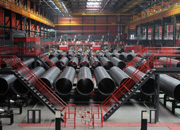 Threeway Steel is known as a professional supplier engaged in manufacturing and distributing a wide range of steel pipe, and our headquarter located the central part of China – Hunan and six associated factories throughout China.
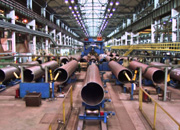 Threeway Steel is known as a professional supplier engaged in designing, manufacturing and distribution of a wide range of steel products with the headquarter located the central part of China – Hunan and six associated factories throughout China.
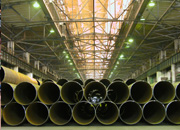 Threeway Steel is known as a professional supplier engaged in designing, manufacturing and distribution of a wide range of steel products with the headquarter located the central part of China – Hunan and six associated factories throughout China.
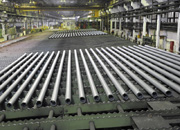 Threeway Steel is known as a professional supplier engaged in designing, manufacturing and distribution of a wide range of steel products with the headquarter located the central part of China – Hunan and six associated factories throughout China.
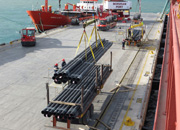 Threeway Steel is known as a professional supplier engaged in designing, manufacturing and distribution of a wide range of steel products with the headquarter located the central part of China – Hunan and six associated factories throughout China.