Selecting the right
square and rectangular tubes (HSS) requires more than checking dimensions; understanding the applicable global standard is critical for structural integrity. This guide compares three major standards: China's GB/T 6728, North America's ASTM A500, and Europe's EN 10219.
While these standards cover similar cold-formed welded structural sections, they are not automatically interchangeable. Key differences exist in steel grades (e.g., Q355 vs. S355 vs. ASTM A500 Gr. C), chemical composition, mechanical properties, and dimensional tolerances. Misinterpreting these specifications can lead to unsuitable material substitutions in load-bearing applications.
Overview of GB/T 6728, ASTM A500, and EN 10219
GB/T 6728, ASTM A500/A500M, and EN 10219 are key standards for square and rectangular structural tubes—but different standardization systems and markets. Their requirements for materials, manufacturing, dimensions, properties, and testing are not identical.
Quick Comparison
|
Factor
|
GB/T 6728
|
ASTM A500
|
EN 10219
|
|
System
|
Chinese
|
ASTM/American
|
European
|
|
Scope
|
Cold-formed welded structural hollow sections
|
Cold-formed welded and seamless structural tubing
|
Cold-formed welded structural hollow sections
|
|
Shapes
|
Square, rectangular
|
Round, square, rectangular, special
|
Square, rectangular
|
|
Common Grades
|
Q235, Q355
|
A, B, C, D
|
S235, S275, S355
|
|
Key Focus
|
Dimensions, tolerances, materials, inspection
|
Mechanical properties, chemical composition
|
Material properties, tolerances, inspection
|
|
Typical Use
|
Structural frames, columns, braces, trusses
|
North American construction
|
European structural applications
|
Key Details
1. GB/T 6728: Chinese Standard
2. ASTM A500: North American Standard
3. EN 10219: European Standard
Why These Standards Are Not Identical
GB/T 6728 vs ASTM A500 vs EN 10219: Key Technical Differences
These three standards cover similar square and rectangular structural pipes—but are not identical. Each has its own requirements for grades, manufacturing, properties, dimensions, tolerances, and inspection.
Quick Comparison
|
Item
|
GB/T 6728
|
ASTM A500/A500M
|
EN 10219
|
|
System
|
Chinese
|
ASTM/American
|
European
|
|
Product Type
|
Cold-formed structural hollow sections
|
Cold-formed welded and seamless structural tubing
|
Cold-formed welded structural hollow sections
|
|
Common Grades
|
Q235, Q355
|
A, B, C, D
|
S235, S275, S355
|
|
Shapes
|
Square, rectangular
|
Round, square, rectangular, special
|
Square, rectangular
|
|
Applications
|
Structural and engineering
|
Structural and infrastructure
|
Structural and infrastructure
|
|
Key Considerations
|
Grade, dimensions, tolerances, properties
|
Grade, manufacturing route, properties
|
Grade, material category, tolerances
|
Key Differences
1. Scope and Manufacturing
2. Steel Grade Designation
3. Mechanical Properties
4. Dimensional and Tolerance Requirements
5. Chemical Composition and Testing
How Do GB/T 6728, ASTM A500, and EN 10219 Correspond?
Buyers often ask whether these standards can replace one another. The answer requires a complete technical comparison—similar yield strength makes a material potentially comparable, not automatically interchangeable.
Approximate Grade Cross-Reference
Caution: Comparisons are approximate. Check yield strength, tensile strength, elongation, composition, thickness, and testing conditions.
Key Comparison Factors
1. Mechanical Properties
Tip: Structural capacity also depends on dimensions, wall thickness, connections, buckling, and design code.
2. Chemical Composition
3. Dimensional and Tolerance
Why Direct Substitution Requires Engineering Verification
Manufacturing and Quality Control Requirements
Manufacturing and quality control are essential for square and rectangular tubes under GB/T 6728, ASTM A500, or EN 10219. Though similar products, their requirements for materials, manufacturing, dimensions, testing, and acceptance differ. Always control quality against the exact standard and grade specified.
Key Requirements at a Glance
Key Details
1. Raw Material Selection
2. Forming and Welding
3. Dimensional Inspection
4. Mechanical Testing
5. Weld and Surface Quality
6. Documentation and Traceability
How to Select the Right Standard for Your Project
Choosing the right standard starts with engineering requirements—not simply comparing grades or prices. GB/T 6728, ASTM A500, and EN 10219 belong to different technical systems. Consider project location, design code, material properties, dimensions, manufacturing, testing, and certification.
Selection Factors at a Glance
Key Details
1. Project Location and Design Code
Tip: Design code and material standard should be considered together.
2. Select the Required Steel Grade
3. Check Dimensions and Section Properties
4. Confirm Manufacturing and Quality Requirements
5. Consider Welding and Fabrication
6. Evaluate Supply and Total Project Cost
Our Recommended Square and Rectangular Tube Products and Global Shipping Services
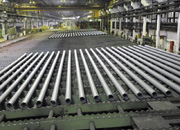
We supply certified square and rectangular steel tubes (HSS) compliant with GB/T 6728, ASTM A500, and EN 10219 standards. Our inventory covers a wide range of dimensions and grades, including Q355, S355, and A500 Grade C, tailored for structural columns, trusses, and machinery frames.
We ensure rigorous quality control, providing full Mill Test Certificates (MTCs) and traceability for every batch. Whether you require standard specifications or custom dimensions, our team verifies all technical details—from chemical composition to weld integrity—before production.
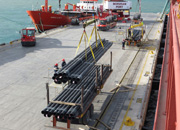
Leveraging our expertise in international steel export, we provide end-to-end global shipping solutions. From secure export bundling to coordinated logistics, we ensure your materials arrive safely and on schedule at any destination. Contact us today with your project specifications for a competitive quotation and reliable supply chain support.
Conclusion:
When procuring
structural square and rectangular tubes, assuming direct equivalence between GB/T 6728, ASTM A500, and EN 10219 is a common pitfall. While grades like Q355, S355, and A500 Gr. C share similar strength values, they differ significantly in chemical composition, dimensional tolerances, and testing protocols.
To ensure structural integrity, buyers must verify the complete technical specification—including yield strength, elongation, and weld requirements—rather than relying solely on nominal grade names. Substitutions should only be made after a rigorous technical review against the project's design code.
FAQ:
1. What is the difference between GB/T 6728, ASTM A500, and EN 10219?**
They are different standards with their own requirements for grades, chemistry, mechanical properties, dimensions, manufacturing, and testing.
2. Is GB/T 6728 equivalent to ASTM A500?**
No. Their products may have comparable properties, but they should not be considered directly equivalent without technical verification.
3. What is the EN 10219 equivalent of ASTM A500 Grade B or Grade C?**
There is no automatic one-to-one equivalent; grade selection should be based on mechanical, chemical, dimensional, and project requirements.
4. Can ASTM A500 square tubes replace EN 10219 tubes?**
Potentially, but only after confirming that the ASTM A500 product satisfies the project's design, material, dimensional, and certification requirements.
5. Which standard should be used for square and rectangular tubes in international projects?**
Use the standard specified by the project design documents and applicable regulations, and obtain engineering approval before using an alternative standard.
 Threeway Steel is known as a professional supplier engaged in manufacturing and distributing a wide range of steel pipe, and our headquarter located the central part of China – Hunan and six associated factories throughout China.
 Threeway Steel is known as a professional supplier engaged in designing, manufacturing and distribution of a wide range of steel products with the headquarter located the central part of China – Hunan and six associated factories throughout China.
 Threeway Steel is known as a professional supplier engaged in designing, manufacturing and distribution of a wide range of steel products with the headquarter located the central part of China – Hunan and six associated factories throughout China.
 Threeway Steel is known as a professional supplier engaged in designing, manufacturing and distribution of a wide range of steel products with the headquarter located the central part of China – Hunan and six associated factories throughout China.
 Threeway Steel is known as a professional supplier engaged in designing, manufacturing and distribution of a wide range of steel products with the headquarter located the central part of China – Hunan and six associated factories throughout China.