Oil casing is critical for shale oil and gas horizontal wells, where long wellbores, complex stress, and repeated high-pressure hydraulic fracturing create demanding service conditions. Casing supports the wellbore, isolates formations, maintains pressure integrity, and provides a structural base for drilling, cementing, completion, and production. In horizontal sections, casing must resist burst, collapse, axial loads, bending, fatigue, and combined-load effects. Appropriate selection of API 5CT grade, wall thickness, and connection type helps reduce deformation, leakage, and workover risks. Common grades include J55, K55, N80, L80, P110, and Q125, but higher strength is not always the best choice. Engineers must also evaluate corrosion resistance, low-temperature toughness, connection sealing performance, cementing quality, and sour-service requirements when applicable. Thread design, dimensional tolerances, and installation procedures further influence well integrity and lifecycle cost.
Application of Oil Casing in Shale Oil and Gas Horizontal Wells
Oil casing is essential in shale oil and gas horizontal wells. It supports the wellbore, isolates formations, and provides a structural barrier during drilling, hydraulic fracturing, and production. Because horizontal wells face high pressure, complex loading, and repeated fracturing cycles, casing must match the well design and operating conditions.
Main Functions of Oil Casing
Common Casing Strings in Horizontal Wells
Not every well needs all strings. The final casing program must follow well design and regulations.
Special Challenges in Shale Horizontal Wells
Key Factors in Selecting Oil Casing for Shale Horizontal Wells
Selecting the right casing is essential for well integrity and safe, efficient shale production. Horizontal wells face complex mechanical loads, high fracturing pressures, and repeated pressure cycles. Casing selection must consider more than steel strength—evaluate grade, OD, wall thickness, connections, corrosion resistance, and operating conditions.
Key Selection Factors at a Glance
1. Casing Steel Grade and Strength
A higher-strength grade is not automatically best. Assess burst, collapse, axial tension/compression, bending, and combined loading per API 5CT and project requirements.
2. Casing Size and Wall Thickness
Dimensions affect pressure capacity, collapse resistance, clearance, and completion design. Consider:
-
Well depth and formation pressure
-
Internal/external pressures during fracturing and production
-
Axial loads and bending in curved sections
-
Cementing clearance and completion equipment
-
Available sizes and connection compatibility
Thicker wall improves certain load resistance but raises cost and reduces internal clearance. Determine final dimensions through engineering calculations.
3. Casing Connections and Thread Types
Threaded joints must transfer loads and maintain integrity over the well's life. API round-thread and buttress-thread connections are common. Premium connections may be used when enhanced sealing, higher load capacity, or combined-load performance is needed.
Consider internal pressure, axial loads, installation torque, sealing, and compatibility with wellhead and completion equipment. Proper thread inspection, make-up, and handling reduce leakage and damage risk.
4. Corrosion Resistance and Material Selection
Shale wells may produce CO₂, H₂S, chlorides, and other corrosive substances—raising the risk of corrosion, cracking, and premature failure.
-
CO₂ environments: Evaluate corrosion rates; consider suitable materials or control measures
-
H₂S environments: Address sour-service requirements, including hardness limits and sulfide stress cracking resistance
L80 or other qualified materials may suit certain corrosive applications—but verify grade, product condition, and environmental limits. Higher-strength grades are not automatically suitable for sour service.
Comparison of Common Oil Casing Grades for Shale Horizontal Wells
Selecting the right casing grade is essential for well integrity during drilling, fracturing, and production. Shale horizontal wells face high pressure, complex loads, and repeated fracturing cycles. Casing must provide suitable strength and resistance.
Common API 5CT grades: J55, K55, N80, L80, P110, and Q125. The best choice depends on the full well design—pressure, depth, dimensions, connections, and corrosion risk.
Oil Casing Grade Comparison Table
Note: Values are general API 5CT grade designations. Confirm the applicable edition and product requirements before procurement.
Grade-by-Grade Overview
J55 & K55 — Conventional Applications
Both have 55 ksi minimum yield strength. K55 has a higher minimum tensile-strength requirement; their yield-strength ranges overlap. May suit surface, intermediate, or other strings if the well design supports it. Verify they can withstand expected pressures, axial loads, and installation conditions—especially for high-pressure fracturing or production.
N80 & L80 — Strength and Environmental Considerations
N80 offers higher yield strength than J55/K55; suitability depends on dimensions, connection capacity, and load envelope.
L80 comes in different types (e.g., L80 Type 1). Often considered where controlled properties or sour-service requirements matter—but not every L80 suits every H₂S environment. Confirm grade, manufacturing condition, hardness requirements, and applicable sour-service standard.
P110 & Q125 — High-Strength Applications
-
P110: 110 ksi minimum yield strength. May suit wells needing higher strength if burst, collapse, axial, and combined-load calculations confirm adequate performance.
-
Q125: 125 ksi minimum yield strength. For particularly demanding strength requirements. Higher yield strength does not automatically mean better collapse resistance, connection sealing, or resistance to every failure mechanism.
Both require evaluation of toughness, manufacturing quality, connections, and environmental compatibility. Do not select high-strength casing for sour service without verifying qualification requirements.
Casing Design, Installation, and Quality Control
Proper design, installation, and quality control are essential for well integrity in shale horizontal wells. Even with the right grade, poor design calculations, bad connection make-up, or ineffective cementing can cause leakage, deformation, and premature failure. Casing engineering must consider the entire well lifecycle, not just initial installation.
1. Load Evaluation: Burst, Collapse & Axial
Calculate the load envelope using well depth, formation pressure, fluid conditions, fracturing design, and operating scenarios. Apply design factors per governing standards. Evaluate grade, wall thickness, OD, and connection type together—higher strength alone does not guarantee collapse resistance or connection performance.
2. Installation and Cementing
Before running casing:
During installation:
-
Handle carefully to prevent dents, thread damage, excessive bending
-
Make up connections per manufacturer procedures, including torque requirements
Cementing is equally important—proper placement isolates formations, supports casing, and reduces fluid migration.
Poor cementing or damaged connections can compromise well integrity even if the casing meets specification.
3. Inspection and Testing
Quality control covers material, dimensions, threads, and documentation. Requirements depend on API 5CT, purchase order, connection type, and project specs.
Common checks:
Additional NDE or connection qualification may be required. Request material test reports and traceability records; review inspection records before installation. Handle nonconforming products per agreed quality procedures.
Our Recommended Oil Casing Products and Global Shipping Services
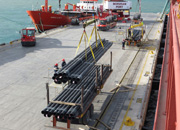
API 5CT oil casing for shale horizontal wells in J55, K55, N80, L80, P110, and Q125, with dimensions, wall thickness, length, and connection types matched to well load conditions and operating environment. High-strength P110 and Q125 suit demanding burst, collapse, axial, and bending loads, while L80 and other corrosion-resistant options may be considered for sour-service or corrosive fluids. Selection must be based on the applicable API 5CT edition, pressure rating, temperature, and inspection scope rather than strength alone. Before ordering, confirm grade, outside diameter, wall thickness, thread type, mechanical properties, quantity, destination port, and delivery schedule. Global shipping covers protective packaging for pipe bodies and threaded ends, commercial invoices, packing lists, bills of lading, material test certificates, and logistics coordination by shipment volume and agreed Incoterms.
Conclusion:
Selecting the right oil casing for shale horizontal wells requires balancing mechanical strength, corrosion resistance, connection reliability, and cost. Horizontal wells face complex loads, high-pressure fracturing, and repeated pressure cycles, so casing must support the wellbore, isolate formations, and withstand drilling, completion, and production conditions. Engineers should evaluate well depth, formation pressure, temperature, geological characteristics, and expected loads before determining outside diameter, wall thickness, steel grade, and connection type. Common API 5CT grades include J55, K55, N80, L80, P110, and Q125, but higher strength is not always superior. Selection must consider burst and collapse resistance, axial loads, bending, connection sealing performance, and sour-service or corrosion risks. Quality control should cover material specifications, dimensions, mechanical properties, thread quality, inspection records, handling, running procedures, and cementing.
FAQ:
FAQ 1: Which oil casing grade is best for shale oil and gas horizontal wells?
The appropriate grade depends on well depth, pressure, axial and collapse loads, connection requirements, and the corrosive environment; P110 or Q125 may be considered for demanding loads, but neither is universally suitable.
FAQ 2: Why is casing failure a concern in horizontal shale wells?
High fracturing pressures, repeated pressure cycles, bending, axial loads, connection problems, and corrosion can contribute to casing deformation or failure.
FAQ 3: What is the difference between P110 and Q125 oil casing?
They are different high-strength casing grades with different specified mechanical-property requirements; selection must consider the complete well-load analysis, toughness, connections, and service environment.
FAQ 4: Are premium connections necessary for shale horizontal wells?
Not always. Premium connections may be appropriate when sealing performance or combined-load capacity exceeds what a conventional connection can provide, but the choice should follow engineering analysis and project requirements.
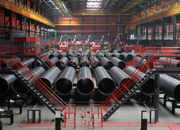 Threeway Steel is known as a professional supplier engaged in manufacturing and distributing a wide range of steel pipe, and our headquarter located the central part of China – Hunan and six associated factories throughout China.
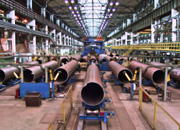 Threeway Steel is known as a professional supplier engaged in designing, manufacturing and distribution of a wide range of steel products with the headquarter located the central part of China – Hunan and six associated factories throughout China.
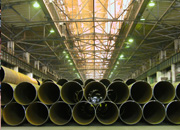 Threeway Steel is known as a professional supplier engaged in designing, manufacturing and distribution of a wide range of steel products with the headquarter located the central part of China – Hunan and six associated factories throughout China.
 Threeway Steel is known as a professional supplier engaged in designing, manufacturing and distribution of a wide range of steel products with the headquarter located the central part of China – Hunan and six associated factories throughout China.
 Threeway Steel is known as a professional supplier engaged in designing, manufacturing and distribution of a wide range of steel products with the headquarter located the central part of China – Hunan and six associated factories throughout China.