P110 and Q125 are high-strength oil well casing grades under API Specification 5CT, with minimum yield strengths of 110,000 psi (≈758 MPa) and 125,000 psi (≈862 MPa). P110 is commonly used in deep wells where conventional grades lack sufficient strength, while Q125 may be justified when higher axial loads or design requirements demand additional capacity. Neither grade is automatically superior; suitability depends on burst pressure, collapse resistance, tensile loading, temperature, corrosive fluids, sour-service conditions, and connection performance. Selection should balance well integrity, safety, and cost by evaluating well depth, pressure requirements, casing dimensions, downhole environment, and API 5CT compliance. Higher yield strength alone does not determine overall casing performance. The right choice follows engineering calculations, verified product specifications, and actual service conditions rather than strength grade alone.
P110 vs. Q125 Casing: Key Specifications and Mechanical Properties
P110 and Q125 are high-strength oil well casing grades used in demanding drilling and production environments. Both handle significant downhole loads, but they differ in minimum yield strength and well design requirements.
Quick Comparison
Q125 offers approximately 13.6% higher minimum yield strength than P110. This provides a greater yield-strength margin under high axial loads or demanding pressure conditions.
However, yield strength alone does not determine casing performance. Actual capacity also depends on outside diameter, wall thickness, manufacturing tolerances, connection design, and expected drilling and production loads.
Tensile Strength and Mechanical Performance
Yield strength is the stress at which permanent deformation begins. Tensile strength is the maximum stress a material withstands before fracture.
Q125 has a higher minimum yield-strength requirement, but buyers should compare complete mechanical-property requirements in API 5CT and the manufacturer's test documentation. Tensile strength, elongation, hardness, and other requirements must be evaluated by grade and product type.
For high axial loads, higher yield strength may help meet design requirements. The casing must also provide adequate burst resistance, collapse resistance, and connection performance.
Burst and Collapse Resistance
Burst resistance is the ability to withstand internal pressure. Collapse resistance concerns external pressure that may deform the pipe inward.
Q125's higher yield strength may support certain high-load designs, but it does not automatically guarantee better burst or collapse performance in every configuration. Wall thickness, diameter, dimensional tolerances, material properties, and design calculations all affect these limits.
Engineers should calculate expected loads throughout the well's service life rather than select casing based only on grade.
Corrosion and Service Conditions
Neither P110 nor Q125 is automatically suitable for every corrosive or sour-service environment based on strength grade alone. Wells containing hydrogen sulfide (H₂S), carbon dioxide (CO₂), or other corrosive components may require additional material, hardness, qualification, and environmental assessments.
The purchase specification should identify the required grade, dimensions, connection type, inspection level, and any additional service requirements.
Applicable Scenarios for P110 Oil Well Casing
P110 is a high-strength casing grade used in demanding oil and gas wells. Under API Specification 5CT, it has a minimum yield strength of 110,000 psi (110 ksi), or approximately 758 MPa. It is often chosen when lower-strength grades cannot meet mechanical requirements, but Q125-level strength is not necessary.
Suitability depends on well depth, pressure conditions, casing dimensions, formation characteristics, and expected loads over the well's service life.
Key Application Scenarios
When Should You Choose P110?
P110 is a reasonable candidate when:
-
Calculated casing loads exceed the capacity of lower-strength grades.
-
Verified mechanical properties satisfy burst, collapse, and axial-load limits.
-
Selected dimensions and connections meet the well design.
-
The operating environment is compatible with the specified material.
-
It provides an appropriate balance between performance and total project cost.
Applicable Scenarios for Q125 Oil Well Casing
Q125 oil well casing is a high-strength casing grade for demanding oil and gas well designs. Under API Specification 5CT, Q125 has a minimum yield strength of 125,000 psi (125 ksi), approximately 862 MPa. Compared with P110 (110,000 psi), Q125 provides a higher specified yield-strength level.
Q125 is generally considered when engineering calculations show lower-strength grades may not provide sufficient capacity. However, selection requires more than well depth or pressure alone. Casing dimensions, connection performance, operating conditions, and service environment must also be evaluated.
Quick Comparison
Applicable Scenarios at a Glance
Deep Wells with High Axial Loads
Deep wells place substantial loads on casing from casing weight, suspended loads, pressure, and installation.
Q125 is not automatically necessary for every deep well. Determine the grade through casing-load calculations and appropriate safety margins.
Wells with Demanding Pressure Conditions
Some wells experience high internal or external pressures during drilling, completion, testing, or production.
Higher yield strength alone does not guarantee superior burst or collapse performance in every configuration. Evaluate pressure loads, axial forces, temperature effects, and load combinations.
High-Load Production and Specialized Well Designs
Q125 may be considered for production wells requiring demanding mechanical performance. Its higher yield strength provides another design option when P110 does not satisfy calculated loads.
Also consider:
-
Connection strength
-
Dimensional tolerances
-
Manufacturing quality
-
Inspection requirements
-
Installation procedures
A high-strength casing body cannot compensate for an unsuitable connection or inadequate design.
Projects Requiring Service-Environment Assessment
High strength does not automatically mean improved corrosion resistance or sour-service suitability.
Confirm the required API 5CT grade, dimensions, connection type, testing documentation, and project-specific qualifications.
When Should You Choose Q125?
How to Choose Between P110 and Q125 Casing
Selecting between P110 and Q125 oil well casing requires evaluating mechanical loads, pressure conditions, service environment, and budget. Although Q125 has higher minimum yield strength, it is not automatically the best choice for every well. The correct grade meets engineering requirements with an appropriate safety margin and reasonable total cost.
Quick Comparison
Selection Guide
Evaluate Well Depth and Mechanical Loads
Well depth is important but not the only criterion. Deep wells place substantial axial loads, and wellbore conditions add stresses.
Evaluate casing weight, suspended loads, bending, and other loading conditions before choosing.
Compare Burst and Collapse Requirements
Higher yield strength does not guarantee better burst or collapse performance in every configuration. Calculate required capacities using expected operating conditions and design factors.
Consider the Downhole Environment
Neither P110 nor Q125 should be assumed suitable for every sour-service or corrosive application based on grade alone. Verify API 5CT requirements and project-specific standards.
Compare Procurement and Lifecycle Costs
If P110 satisfies design requirements, Q125 may not provide enough additional value to justify its cost. Conversely, using P110 when loads require higher strength creates unacceptable risks.
Use Verified Specifications to Make the Final Decision
Confirm before ordering:
Compare supplier technical data with the approved casing design.
Comparison Table
Choosing between P110 and Q125 casing depends on well conditions and required mechanical performance. P110 has a minimum yield strength of 110 ksi, while Q125 offers 125 ksi. Higher strength does not always mean a better choice—the final decision should be based on casing design, service conditions, and total cost.
P110 vs Q125: Quick Comparison Table
When P110 Is the Better Choice
P110 works well when its properties meet calculated casing loads and pressure requirements. It suits deep wells, production wells, and demanding applications if burst, collapse, and axial capacity are adequate. If P110 meets the approved design, a higher grade may add cost without real benefit.
When to Consider Q125
Consider Q125 when the design needs higher minimum yield strength than P110 can provide. This may apply to wells with heavy axial loading or other demanding mechanical requirements. Do not choose Q125 just because a well is deep or high-pressure—verify burst, collapse, connection capacity, dimensions, and service suitability.
Key Factors Beyond Strength
-
Pressure calculations: Internal, external, and combined loads
-
Dimensions: OD, wall thickness, tolerances
-
Connections: Strength and sealing performance
-
Environment: Temperature, corrosive fluids, sour service
-
Documentation: Grade, inspection records, test certificates
-
Total cost: Material, manufacturing, transport, project-specific costs
Our Recommended P110 and Q125 Oil Well Casing Products and Global Shipping Services
We supply API 5CT P110 and Q125 oil well casing for deep wells and demanding downhole applications. P110, with a minimum yield strength of 110,000 psi, suits projects where verified burst, collapse, and tensile capacity are sufficient. Q125, at 125,000 psi, may be justified when calculated axial loads exceed P110 limits. Products can be specified by outside diameter, wall thickness, length range, connection type, inspection scope, and material traceability. Quality documentation includes test certificates and manufacturing records per API 5CT requirements. For international orders, shipping is arranged by sea freight or other suitable methods, with export packaging, marking, commercial invoices, packing lists, and delivery coordination. To request a quotation, provide grade, dimensions, connection type, quantity, applicable standards, inspection requirements, destination port, and delivery schedule. Matching engineering calculations with verified specifications and reliable shipping supports safe, efficient casing procurement.
Conclusion:
P110 and Q125 oil well casing are high-strength API 5CT grades for demanding downhole applications. P110 has a minimum yield strength of 110,000 psi (≈758 MPa), while Q125 reaches 125,000 psi (≈862 MPa). Q125 may be justified when calculated axial loads exceed P110 capacity, but higher yield strength alone does not guarantee better performance. Selection should be based on well depth, burst and collapse pressure, wall thickness, outside diameter, connection performance, temperature, corrosion and sour-service risks, and verified API 5CT compliance. Using Q125 when P110 is sufficient can raise procurement costs without improving well integrity. The right casing grade balances mechanical capacity, service environment, inspection requirements, and total project cost. Confirm specifications, connections, testing, and delivery terms before ordering to support safe, reliable, and cost-effective oil and gas well construction.
FAQ:
Q1: What is the main difference between P110 and Q125 casing?
Q125 has a higher specified minimum yield strength than P110: 125 ksi compared with 110 ksi. The best choice depends on the casing design and service conditions.
Q2: Is Q125 casing always better than P110 casing?
No. Q125 offers higher specified yield strength, but casing performance also depends on wall thickness, collapse and burst requirements, connection design, toughness, and service conditions.
Q3: Is Q125 casing suitable for deep oil wells?
It may be suitable when the well design requires its higher strength and the selected product meets all relevant mechanical, connection, and service requirements.
Q4: Does Q125 casing have better collapse resistance than P110?
Not automatically. Collapse resistance depends on diameter-to-wall-thickness ratio, material properties, manufacturing tolerances, and other design factors.
Q5: Can P110 and Q125 casing be used in sour-service wells?
Only when the specific product, material condition, and qualification meet the applicable sour-service requirements. Higher yield strength alone does not establish sour-service suitability.
 Threeway Steel is known as a professional supplier engaged in manufacturing and distributing a wide range of steel pipe, and our headquarter located the central part of China – Hunan and six associated factories throughout China.
 Threeway Steel is known as a professional supplier engaged in designing, manufacturing and distribution of a wide range of steel products with the headquarter located the central part of China – Hunan and six associated factories throughout China.
 Threeway Steel is known as a professional supplier engaged in designing, manufacturing and distribution of a wide range of steel products with the headquarter located the central part of China – Hunan and six associated factories throughout China.
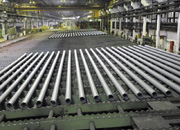 Threeway Steel is known as a professional supplier engaged in designing, manufacturing and distribution of a wide range of steel products with the headquarter located the central part of China – Hunan and six associated factories throughout China.
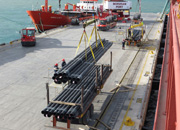 Threeway Steel is known as a professional supplier engaged in designing, manufacturing and distribution of a wide range of steel products with the headquarter located the central part of China – Hunan and six associated factories throughout China.