Hot-rolled seamless steel pipes are widely used in machinery manufacturing, industrial equipment, construction machinery, and selected hydraulic systems. Produced from solid steel billets without a longitudinal weld seam, they offer reliable mechanical performance, dimensional flexibility, and suitability for further machining. They can be used for equipment supports, rollers, cylindrical parts, and machined components, and may serve in hydraulic piping or equipment parts when pressure ratings, material specifications, and tolerances are met. Hydraulic cylinder barrels often require honed or precision-finished tubes, so standard hot-rolled seamless pipes may need additional processing. Proper selection should consider material grade, operating pressure, temperature, mechanical loads, wall thickness, dimensional tolerances, applicable standards, and quality documentation.
Key Characteristics of Hot-Rolled Seamless Steel Pipes
Hot-rolled seamless steel pipes are widely used in machinery manufacturing, industrial equipment, and selected hydraulic applications. Their manufacturing process, mechanical properties, dimensional flexibility, and suitability for further processing make them useful for a broad range of engineering components.
Key Characteristics at a Glance
1. Manufacturing Process
Produced from solid steel billets. Billets heated to suitable temperature and pierced to form hollow shells. Shells then elongated, rolled, and sized to achieve required outside diameter and wall thickness.
Because pipes are formed without a longitudinal weld seam—they avoid weld-related characteristics associated with welded pipes.
Important: Seamless construction alone does not guarantee superior performance in every application. Manufacturing quality, material grade, heat treatment, and inspection results remain important factors.
2. Mechanical Strength and Load-Bearing Performance
Available in various steel grades with different strength and toughness characteristics. Depending on selected grade and manufacturing condition—suitable for components subjected to mechanical loads, vibration, or demanding industrial service.
Review required yield strength, tensile strength, elongation, and other specified mechanical properties—do not assume all seamless pipes have the same performance.
3. Dimensional Flexibility
Available in a range of outside diameters and wall thicknesses—allows manufacturers to select products that suit different component designs and machining requirements.
Hot-rolled pipes generally have less precise dimensions and rougher surfaces than cold-drawn seamless tubes. Applications requiring tight tolerances or high-quality internal surface may need additional machining, honing, or other finishing processes.
4. Fabrication and Machining Suitability
Can be cut, drilled, machined, and fabricated when selected grade and delivery condition permit. Suitability for further processing makes them useful as starting materials for many industrial components.
However, machinability and weldability vary by steel grade, chemical composition, and heat treatment. Confirm appropriate processing parameters before production—especially when components require precise dimensions or demanding mechanical performance.
5. Quality Control and Applicable Standards
Applications in Machinery Manufacturing
Hot-rolled seamless steel pipes are widely used in machinery manufacturing because they are available in various sizes, steel grades, and wall thicknesses. Their seamless construction and suitability for machining make them useful raw materials for industrial components requiring reliable mechanical performance.
Specific application depends on: material grade, dimensional accuracy, load conditions, and applicable technical standards.
Application Overview
1. Mechanical Structural Components
Used to produce structural components, support members, frames, and tubular parts.
Compared with solid steel bars of similar outside dimensions: hollow sections can reduce component weight while providing useful structural performance when properly designed.
Commonly considered for: equipment frames, machine supports, and other tubular structures.
Before selecting for a load-bearing application, evaluate: wall thickness, material strength, connection design, and potential buckling loads.
2. Machinery Shafts, Rollers, and Cylindrical Parts
Can serve as starting materials for certain shafts, rollers, sleeves, and cylindrical machine components.
Hollow structure may reduce material consumption and machining requirements when component design does not require a solid section.
Additional processing may be necessary to achieve required dimensions and surface finish—operations can include cutting, turning, drilling, boring, and heat treatment.
For components exposed to repeated loads, impact, or rotation: confirm required strength, toughness, fatigue resistance, and dimensional tolerances. Not every hot-rolled pipe is suitable for precision shafts or high-speed rotating parts without further processing.
3. Industrial Equipment and Hydraulic Machinery
Used in selected industrial equipment—material-handling machinery, construction equipment, agricultural machinery, and heavy-duty mechanical systems.
May be used for: structural members, tubular supports, and components that transport fluids or gases—when pipe material, pressure rating, and applicable standard meet design requirements.
In hydraulic machinery: seamless steel pipes may be used in selected hydraulic lines and equipment components.
Important: Hydraulic cylinder barrels require particular attention to internal surface quality, dimensional tolerances, and sealing performance. Standard hot-rolled pipes may need boring, honing, or other precision finishing before serving in such applications.
4. Advantages in Machinery Manufacturing
Actual performance depends on: material quality, manufacturing tolerances, processing methods, and operating conditions.
5. How to Select Pipes for Machinery Applications
Before purchasing, define the component's purpose and technical requirements.
Applications in Hydraulic Equipment
Hydraulic equipment relies on pressurized fluids to transmit power and control mechanical movement. Steel pipes and tubes are essential components—transporting hydraulic oil and supporting cylinders, pumps, valves, and other equipment.
Hot-rolled seamless steel pipes can be used in selected hydraulic applications—provided material properties, dimensions, pressure capacity, and surface condition meet system requirements.
Application Overview
1. Hydraulic Oil Transportation Pipelines
Important application: transportation of hydraulic oil between system components.
2. Hydraulic Cylinder Barrels
Hydraulic cylinders convert fluid pressure into linear mechanical force. The cylinder barrel contains pressurized fluid and guides the piston—making dimensional accuracy and internal surface quality particularly important.
Hot-rolled seamless steel pipes may serve as starting materials for certain hydraulic cylinder barrels.
Important: Standard hot-rolled pipes generally do not provide the precision dimensions and internal finish required for many cylinder designs without additional processing.
For demanding hydraulic cylinders: evaluate whether a hot-rolled pipe can be processed economically—or whether a precision-finished tube (such as a honed cylinder tube) is more appropriate.
3. Hydraulic Machinery and Mobile Equipment
Can be considered for selected components in hydraulic machinery—construction equipment, mining machinery, agricultural machines, industrial production systems.
Potential applications:
In mobile equipment, pipes may experience: vibration, mechanical impact, temperature changes, and fluctuating pressure. Selected material and pipe dimensions must suit the actual operating environment.
For high-pressure hydraulic lines: confirm pressure ratings, fatigue resistance, connection requirements, and applicable standards before installation.
4. Key Requirements for Hydraulic Applications
Hot-Rolled Seamless Steel Pipes vs. Cold-Drawn Seamless Tubes
Hot-rolled seamless steel pipes and cold-drawn seamless tubes are both widely used in machinery manufacturing and industrial equipment. Although both are produced without a longitudinal weld seam, they differ in manufacturing processes, dimensional accuracy, surface quality, and typical applications.
Key Differences
General tendencies only—actual performance depends on steel grade, manufacturing conditions, heat treatment, and product specifications.
1. Manufacturing Process
Hot-rolled seamless steel pipes — manufactured by heating solid steel billets, piercing them to create hollow shells, and rolling them to required dimensions. Hot-working allows production in a wide range of diameters and wall thicknesses.
Cold-drawn seamless tubes — generally produced by drawing a hollow tube through a die, often over a mandrel, at or near room temperature. This process reduces diameter or wall thickness and improves dimensional control and surface finish. Multiple drawing passes and intermediate heat treatment may be required.
The manufacturing route affects final product's dimensions, mechanical properties, and suitability for further processing.
2. Applications in Machinery Manufacturing
The choice depends on the component's design and whether the additional precision of cold drawing justifies its higher processing cost.
3. Applications in Hydraulic Equipment
Neither manufacturing method alone guarantees pressure suitability. The product must comply with relevant design requirements.
4. How to Choose the Right Product
How to Select the Right Hot-Rolled Seamless Steel Pipe
Selecting the right hot-rolled seamless steel pipe is essential for machinery manufacturing, hydraulic equipment, and industrial applications. The correct product should meet mechanical, dimensional, and operating requirements while balancing material costs and processing expenses.
Selection Checklist at a Glance
1. Identify the Application and Operating Conditions
Identify: expected loads, working pressure, operating temperature, vibration, and environmental conditions.
Pipes used in pressure systems require particular attention to design requirements and applicable pressure standards.
2. Choose the Appropriate Steel Grade
Steel grade directly affects strength, toughness, weldability, machinability, and service performance.
When choosing a grade, consider:
-
Yield strength and tensile strength
-
Impact toughness where required
-
Weldability and machinability
-
Operating temperature and environmental exposure
-
Chemical composition and heat-treatment requirements
Selected grade should comply with applicable product standard and engineering specifications. Avoid choosing a grade based on strength alone—other properties may be equally important.
3. Confirm Pipe Dimensions and Tolerances
Outside diameter and wall thickness are two of the most important parameters.
Before ordering, confirm:
-
Outside diameter and wall thickness
-
Pipe length and required cutting allowances
-
Dimensional tolerances and straightness
-
Wall-thickness uniformity
-
Required surface condition
Hot-rolled pipes generally have less precise dimensions than cold-drawn tubes. If final component requires tight tolerances or smooth internal surface: additional machining or precision-finished tubing may be necessary.
4. Verify Applicable Standards and Quality Requirements
Product standards define requirements for material composition, manufacturing, dimensions, testing, and inspection.
Depending on application, specify relevant ASTM, EN, GB/T, or other recognized standards.
For pressure-containing applications: ensure selected pipe meets applicable design code and service requirements. Seamless construction alone does not establish pressure suitability.
5. Evaluate Processing and Total Cost
The lowest purchase price does not always result in the lowest overall cost.
For hydraulic cylinder barrels: consider the cost of additional boring and honing when comparing hot-rolled pipes with precision-finished tubes.
6. Select a Reliable Supplier
A reliable supplier should confirm:
-
Product specifications
-
Applicable standards
-
Inspection documentation
-
Packaging requirements
-
Shipping arrangements
Provide a clear technical inquiry including: steel grade, dimensions, quantity, required standard, and intended application. Review the quotation and ensure agreed specifications are documented before confirming an order.
Our Recommended Hot-Rolled Seamless Steel Pipe Products and Global Shipping Services
Supplies hot-rolled seamless steel pipes for machinery manufacturing, industrial fluid transportation, and hydraulic equipment. For machinery components such as rollers, sleeves, and structural supports, material grade and wall thickness should match mechanical loads and machining requirements. For hydraulic applications, working pressure, dimensional tolerances, and internal surface finish must be carefully evaluated; cylinder barrels often require additional boring or honing. Before requesting a quotation, please confirm the steel grade, applicable standard, outside diameter, wall thickness, length, quantity, inspection requirements, and destination. Quality verification may include dimensional checks, mechanical testing, surface examination, and material test certificates. For international orders, we coordinate sea freight or other suitable transportation, protective packaging, and export documentation. Comparing specification compliance, quality documentation, processing costs, and logistics helps improve procurement efficiency and ensures pipes meet project requirements.
Conclusion:
Hot-rolled seamless steel pipes are widely used in machinery manufacturing and selected hydraulic applications. For structural components such as rollers, sleeves, and supports, steel grade and wall thickness should meet load-bearing and machining requirements. For hydraulic systems, working pressure, pressure fluctuations, fluid compatibility, and fatigue resistance must be evaluated. Hydraulic cylinder barrels often require additional boring, honing, or precision finishing, so standard hot-rolled pipes are not automatically suitable for every hydraulic application. Buyers should clearly specify material grade, outside diameter, wall thickness, length, dimensional tolerances, applicable standards, inspection requirements, and material test certificates before ordering. Seamless construction alone does not guarantee pressure suitability; compliance with the relevant design code and service conditions must be confirmed. Total cost should include machining, inspection, transportation, and expected service life
FAQ:
Q1: What are the main applications of hot-rolled seamless steel pipes in machinery manufacturing?
- They are used in selected structural components, equipment parts, rollers, and machined cylindrical components, depending on their grade and dimensions.
Q2: Can hot-rolled seamless steel pipes be used in hydraulic equipment?
- Yes, in suitable hydraulic piping and components when their pressure ratings, material properties, and dimensional requirements meet the design specifications. Precision cylinder barrels often require specially finished tubes.
Q3: Are hot-rolled seamless pipes suitable for hydraulic cylinder barrels?
- Not automatically. Hydraulic cylinder barrels generally require controlled bore dimensions, straightness, surface finish, and tolerances, so honed or otherwise precision-finished tubes are often preferred.
Q4: What is the difference between hot-rolled and cold-drawn seamless steel pipes?
- Hot-rolled products are formed at elevated temperatures and generally have less precise dimensions and rougher surfaces, while cold-drawn products typically offer tighter tolerances and smoother surfaces.
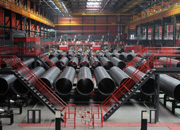 Threeway Steel is known as a professional supplier engaged in manufacturing and distributing a wide range of steel pipe, and our headquarter located the central part of China – Hunan and six associated factories throughout China.
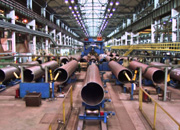 Threeway Steel is known as a professional supplier engaged in designing, manufacturing and distribution of a wide range of steel products with the headquarter located the central part of China – Hunan and six associated factories throughout China.
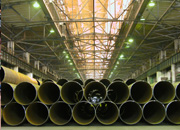 Threeway Steel is known as a professional supplier engaged in designing, manufacturing and distribution of a wide range of steel products with the headquarter located the central part of China – Hunan and six associated factories throughout China.
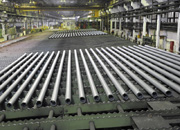 Threeway Steel is known as a professional supplier engaged in designing, manufacturing and distribution of a wide range of steel products with the headquarter located the central part of China – Hunan and six associated factories throughout China.
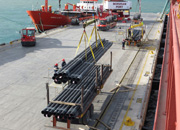 Threeway Steel is known as a professional supplier engaged in designing, manufacturing and distribution of a wide range of steel products with the headquarter located the central part of China – Hunan and six associated factories throughout China.