Large-diameter hot-rolled seamless steel pipes are widely used in oil and gas, power generation, petrochemical, infrastructure, and industrial fluid transportation systems. Produced by heating, piercing, and rolling steel billets, they have no longitudinal weld seam, which can support consistent material properties and resistance to internal pressure. However, seamless construction alone does not guarantee suitability for every high-pressure service; performance depends on steel grade, dimensions, manufacturing quality, and applicable design codes. Available in carbon steel and alloy steel, these pipes should be selected according to operating pressure, temperature, fluid characteristics, mechanical loads, and standards such as ASTM A106 for high-temperature service or API 5L for line pipe. Buyers should specify outside diameter, wall thickness, length, dimensional tolerances, testing requirements, and documentation rather than rely on general size descriptions. Correct specification helps avoid installation difficulties, compliance issues, delivery delays, and unnecessary costs.
Key Specifications of Large-Diameter Hot-Rolled Seamless Steel Pipes
Understanding the technical specifications of large-diameter hot-rolled seamless steel pipes is essential for selecting products that meet project requirements. Outside diameter, wall thickness, material grade, mechanical properties, manufacturing standards, and inspection requirements all influence pipe performance, installation compatibility, and service life.
Before ordering, establish a complete technical specification and confirm compliance with the applicable industry standard and engineering design.
Key Specifications at a Glance
1. Pipe Diameter, Wall Thickness, and Length
Wall thickness should be selected according to:
A thicker wall does not automatically make a pipe suitable for every application—evaluate the complete design.
Important dimensional requirements:
-
Outside diameter and allowable tolerance
-
Nominal wall thickness and tolerance
-
Pipe length and tolerance
-
Straightness and ovality requirements
-
End finish, beveling, connection compatibility
2. Material Grades and Applicable Standards
These standards cover different products and applications. Do not assume a pipe meeting one standard automatically satisfies another. State the exact standard, grade, product form, and applicable edition in the purchase order.
3. Mechanical Properties and Chemical Composition
For applications involving elevated temperatures, low temperatures, or demanding pressure requirements: verify all additional material requirements in the governing specification.
Material certificates and traceability records help confirm delivered pipes correspond to specified grade and production batch.
4. Manufacturing and Quality Inspection
Hot-rolled seamless pipe manufacturing generally involves: billet heating → piercing → rolling → sizing → cooling → finishing. Exact process depends on pipe size, material, and production route.
Not every inspection is mandatory for every pipe. Identify required tests, acceptance criteria, and third-party inspection arrangements before production begins.
5. Confirm Specifications Before Ordering
A complete procurement specification should include:
-
Standard and grade
-
Outside diameter, wall thickness, length
-
Quantity and end preparation
-
Testing requirements
-
Marking and documentation
-
Special operating conditions
How to Select the Right Large-Diameter Hot-Rolled Seamless Steel Pipe
Selecting the right large-diameter hot-rolled seamless steel pipe requires careful evaluation of operating conditions, material properties, dimensions, and applicable standards. A pipe that meets specifications can improve system reliability, simplify installation, and reduce long-term maintenance costs—while incorrect selection may lead to performance problems, compliance issues, and unnecessary expenses.
Selection Checklist at a Glance
1. Match Pipe Specifications to Operating Conditions
Key factors:
Determine whether seamless construction is specifically required by engineering design or governing specification. Seamless pipes have no longitudinal weld seam—but suitability still depends on material quality, dimensions, manufacturing controls, and inspection results.
2. Choose the Appropriate Material Grade
Consider more than nominal strength: chemical composition, impact toughness (where required), weldability, temperature limits, and corrosion risks. A higher-grade material is not automatically the best choice if it does not provide a meaningful benefit.
3. Confirm Diameter, Wall Thickness, and Dimensional Tolerances
Wall thickness should be determined using:
Do not select based solely on customary industry sizes.
Also verify: pipe length, straightness, ovality, end preparation, and dimensional tolerances.
Large-diameter pipes may require careful coordination with: transport equipment, lifting arrangements, storage areas, and installation machinery.
4. Evaluate Manufacturing Quality and Inspection
Supplier verification is an important part of product selection. Confirm the supplier can manufacture or source required dimensions and grades per the specified standard.
Review material certificates and traceability records against the purchase order.
Agree on inspection requirements and acceptance criteria before production or shipment—reduces risk of disputes.
5. Consider Total Cost and Delivery Requirements
The lowest quotation may not represent the best overall value. Compare:
-
Material costs and testing charges
-
Packaging and transportation
-
Lead time
-
Potential costs associated with nonconforming products
Large-diameter pipes can require special loading and transport arrangements due to size and weight. Confirm packaging, delivery terms, destination requirements, and shipping schedule early to prevent delays.
Key Procurement Points for Large-Diameter Hot-Rolled Seamless Steel Pipes
Purchasing large-diameter hot-rolled seamless steel pipes requires careful planning, technical verification, and supplier evaluation. These pipes are often used in industrial piping, energy projects, and large-scale infrastructure—errors in specifications or delivery arrangements can result in installation delays, additional costs, and compliance problems.
A successful procurement process focuses on: complete technical requirements, reliable product quality, transparent pricing, and a delivery plan that meets the project schedule.
Procurement Checklist at a Glance
1. Prepare a Complete Technical Purchase Specification
Clear specifications help suppliers calculate costs and production schedules more accurately.
2. Verify Supplier Capabilities and Product Quality
Before placing an order, review:
-
Relevant manufacturing or sourcing capabilities
-
Quality-control procedures
-
Inspection arrangements
-
Experience with similar requirements
If the project has strict technical conditions: clarify whether additional testing or third-party inspection is necessary.
Material certificates and inspection records should correspond to actual products supplied. Agree on acceptance criteria and procedures for handling nonconforming products before production begins.
For large-diameter pipes, dimensional accuracy deserves particular attention:
-
Excessive ovality
-
Incorrect wall thickness
-
Damaged ends
-
Surface defects
These may affect installation and system compatibility.
3. Evaluate Total Procurement Cost
Comparing quotations solely by price per ton can produce misleading results. Evaluate the total cost of purchasing and delivering compliant products.
Also confirm: currency, payment terms, quotation validity, and responsibilities defined by agreed Incoterms. Compare quotations against the same technical specification.
4. Confirm Production Schedule and Global Shipping
Large-diameter seamless steel pipes can require special handling due to dimensions and weight.
Check shipping documents for consistency with purchase order and actual shipment. Confirm import requirements and destination-specific restrictions before dispatch.
5. Avoid Common Procurement Mistakes
Our Recommended Large-Diameter Hot-Rolled Seamless Steel Pipe Products and Global Shipping Services
Supplies large-diameter hot-rolled seamless steel pipes for industrial piping, energy projects, and heavy-duty engineering. Recommended products include ASTM A106 carbon steel seamless pipes for high-temperature service, API 5L seamless line pipes for oil and gas transportation, alloy steel seamless pipes for specialized high-temperature strength, and customized large-diameter pipes to meet specific outside diameter, wall thickness, length, and end preparation requirements. Before ordering, confirm applicable standards, steel grade, dimensions, tolerances, and acceptance criteria. Quality documentation may include chemical analysis, mechanical testing, dimensional inspection, hydrostatic testing, nondestructive examination, material certificates, and traceability records; third-party inspection can be arranged when required. For international buyers, we coordinate protective packaging, product marking, bundling and loading, freight quotations, commercial invoices, packing lists, and shipment planning to the agreed destination. Freight costs, transit times, insurance, and import requirements depend on the destination and agreed Incoterms. To receive a quotation, provide the applicable standard, material grade, outside diameter, wall thickness, length, quantity, end preparation, intended application, operating conditions, inspection requirements, and destination port. Confirming specifications and inspection requirements before ordering helps reduce procurement risks, ensures compliance with project standards, and supports reliable delivery and performance in demanding industrial applications.
Conclusion:
Selecting large-diameter hot-rolled seamless steel pipes requires more than price comparison; buyers must confirm technical specifications, material grades, manufacturing quality, inspection requirements, and delivery arrangements. Define the applicable standard, steel grade, outside diameter, wall thickness, length, tolerances, end preparation, and operating conditions before ordering. ASTM A106 and API 5L serve different purposes and should not be treated as interchangeable. Seamless construction alone does not guarantee suitability for every pressure or temperature condition. Prioritize quality by verifying chemical analysis, mechanical testing, dimensional checks, hydrostatic testing, nondestructive examination, material certificates, and traceability records; arrange third-party inspection when required. Evaluate total cost, including processing, inspection, packaging, freight, insurance, and import expenses, and confirm packaging, loading, Incoterms, and estimated delivery schedules for large-diameter shipments.
FAQ:
Q1. What are the main advantages of large-diameter hot-rolled seamless steel pipes?
- Explain their seamless construction, potential pressure-bearing performance, and suitability for applications requiring specific mechanical properties.
Q2. How do I choose the correct wall thickness for a large-diameter seamless steel pipe?
- Discuss working pressure, design temperature, material properties, external loads, corrosion allowance, and applicable design codes.
Q3. Which standards are commonly used for large-diameter hot-rolled seamless steel pipes?
- Briefly explain the relevance of ASTM A106, API 5L, and other applicable standards, emphasizing that the correct standard depends on the intended service and product form.
Q4. What documents should buyers request when purchasing seamless steel pipes?
- Cover applicable material certificates, dimensional inspection reports, test records, traceability documents, and agreed third-party inspection reports.
Q5. What should buyers confirm before importing large-diameter seamless steel pipes?
- Address technical specifications, product availability, quality requirements, packaging, shipping terms, freight costs, and import documentation.
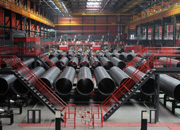 Threeway Steel is known as a professional supplier engaged in manufacturing and distributing a wide range of steel pipe, and our headquarter located the central part of China – Hunan and six associated factories throughout China.
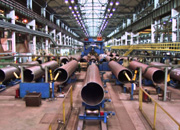 Threeway Steel is known as a professional supplier engaged in designing, manufacturing and distribution of a wide range of steel products with the headquarter located the central part of China – Hunan and six associated factories throughout China.
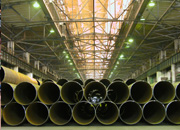 Threeway Steel is known as a professional supplier engaged in designing, manufacturing and distribution of a wide range of steel products with the headquarter located the central part of China – Hunan and six associated factories throughout China.
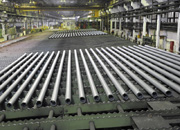 Threeway Steel is known as a professional supplier engaged in designing, manufacturing and distribution of a wide range of steel products with the headquarter located the central part of China – Hunan and six associated factories throughout China.
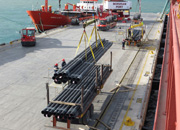 Threeway Steel is known as a professional supplier engaged in designing, manufacturing and distribution of a wide range of steel products with the headquarter located the central part of China – Hunan and six associated factories throughout China.