API 5CT casing is essential for wellbore stability, formation isolation, and safe drilling and production. End sizing and controlled thermal processing are two manufacturing steps that help meet its dimensional and mechanical requirements. End sizing controls outside diameter, roundness, and end geometry to support accurate threading and connection assembly for STC, LTC, and BTC connections, but it cannot replace thread geometry control, surface-quality checks, and dimensional inspection. Thermal processing influences strength, hardness, and toughness, while “heat recovery” may refer either to energy reuse or to informal thermal adjustments; the exact process should be clarified before judging its effect on casing quality.
What Is End Sizing in API 5CT Casing Manufacturing?
End sizing is a manufacturing operation used to control the dimensions and geometry of casing pipe ends. In API 5CT casing production, accurate end dimensions are important because the ends may undergo additional processing—including threading and coupling assembly. Proper dimensional control helps ensure finished casing meets specified tolerances and suits its intended connection system.
Unlike operations focused on the entire pipe body, end sizing concentrates on the pipe-end region. Depending on the manufacturing route, the process may involve mechanical sizing or other controlled forming methods. Exact procedures vary by manufacturer, product design, and technical requirements.
Main Objectives of End Sizing
End sizing must be performed within appropriate process limits. Excessive or inconsistent deformation may introduce unwanted dimensional variation or affect pipe-end material condition.
Relationship Between End Sizing and Threaded Connections
API 5CT casing commonly uses threaded connections, including STC, LTC, and BTC configurations—depending on product specification and application. These connections rely on accurately manufactured threads and compliance with dimensional and inspection requirements.
If the pipe end has excessive ovality or incorrect dimensions:
-
Thread machining may become more difficult
-
Finished thread may fail to meet specified tolerances
-
Assembly problems or rejection during inspection may occur
Accurate end sizing helps establish the geometry needed for subsequent machining—but does not replace thread inspection or connection performance verification.
Buyers should confirm:
Do not assume all casing ends follow the same design.
Quality Control During End Sizing
Manufacturers should monitor end dimensions and geometry throughout production.
Dimensional results should be evaluated against: applicable API 5CT edition, product requirements, and purchase order.
End sizing records may form part of the manufacturer's quality documentation.
For procurement teams: distinguish between a manufacturer's general process description and verified product compliance. Request relevant inspection records and material documentation when required by the project.
What Is Heat Recovery in API 5CT Casing Production?
Heat recovery in API 5CT casing production can refer to recovering heat energy from manufacturing operations for reuse. However, it is important to distinguish heat recovery from heat treatment.
This distinction matters because API 5CT casing must meet the mechanical and manufacturing requirements associated with its specified grade. Simply recovering heat from production equipment does not guarantee the finished pipe meets these requirements.
Heat Recovery vs. Heat Treatment: Key Differences
Why Thermal Processing Matters for API 5CT Casing
API 5CT casing is available in different grades designed for varying strength and service requirements. Required mechanical properties depend on the specified grade and applicable standard provisions.
Appropriate heat treatment, where required, helps manufacturers achieve:
-
Necessary strength
-
Hardness
-
Toughness
Temperature control is particularly important. Incorrect heating, holding time, or cooling conditions can result in unsuitable material properties or inconsistent results.
Manufacturers must establish and monitor process parameters according to the selected grade and approved manufacturing procedure.
Not every API 5CT casing product follows the same thermal route. Requirements vary by grade, manufacturing method, and applicable standard edition. Verify specified product requirements—do not assume one heat-treatment process applies to all casing grades.
Quality Verification and Manufacturing Efficiency
Heat recovery systems may help improve energy utilization—but product quality must be verified separately.
How Do End Sizing and Heat Recovery Work Together?
End sizing and heat-related processes serve different purposes in API 5CT casing manufacturing:
-
End sizing — controls the dimensions and geometry of casing ends
-
Heat recovery — improves energy efficiency by capturing and reusing waste heat
-
Heat treatment (where required) — a separate metallurgical process to achieve specified material properties
These processes do not automatically compensate for each other's limitations. Dimensional accuracy and mechanical properties must be controlled and verified independently.
Comparison: End Sizing vs. Heat Recovery vs. Heat Treatment
|
Item
|
End Sizing
|
Heat Recovery
|
Heat Treatment
|
|
Primary purpose
|
Control casing-end geometry
|
Reuse waste heat
|
Achieve specified material properties
|
|
Main focus
|
Dimensions and roundness
|
Energy utilization
|
Temperature, microstructure, mechanical properties
|
|
Quality contribution
|
Supports threading and connection assembly
|
Supports manufacturing efficiency
|
Supports grade compliance when required
|
|
Main controls
|
Tooling, deformation, dimensional tolerances
|
Heat capture, transfer, and reuse
|
Heating temperature, holding time, cooling conditions
|
|
Verification
|
Dimensional inspection
|
Energy-system monitoring
|
Required mechanical tests and process records
|
1. Coordinating Dimensional Control and Thermal Processing
End sizing ensures casing ends meet required dimensional tolerances before threading and connection inspection. Key parameters:
-
Outside diameter
-
Roundness
-
End geometry
Accurate dimensions provide a suitable foundation for producing threaded connections that meet applicable requirements.
Thermal processing (when required) helps establish mechanical properties of the selected grade. Controlled heating and cooling may affect:
-
Strength
-
Hardness
-
Toughness
-
Microstructure
Heat recovery supports this production system by reusing waste heat. However, recovered heat must not be confused with the controlled temperature cycles required for heat treatment. The latter must follow approved process parameters for the specific product.
2. Quality Considerations
Manufacturers should establish clear process controls for each operation.
3. How Process Coordination Supports Casing Reliability
Effective manufacturing coordination helps:
-
Reduce dimensional variation
-
Improve production consistency
-
Limit unnecessary energy consumption
Examples:
However, casing reliability also depends on:
Neither end sizing nor heat recovery alone guarantees compliance with API 5CT.
Buyers should confirm:
Effects on API 5CT Casing Quality and Field Performance
API 5CT casing quality directly affects well construction, installation efficiency, and long-term well integrity. Three processes contribute differently:
Understanding these distinctions helps manufacturers and buyers evaluate casing performance more accurately.
1. Dimensional Accuracy and Connection Performance
End sizing controls casing-end dimensions and geometry before threading and connection assembly. Accurate dimensions are important for:
If casing ends have excessive ovality or dimensional deviations:
-
Subsequent machining becomes more difficult
-
Threads may fail to meet tolerances
-
Assembly problems, inspection failures, and installation delays may occur
API 5CT casing may use different connection types—including STC, LTC, and BTC—depending on product specification. Each connection must meet its applicable dimensional and inspection requirements.
End sizing supports this process—but final thread inspection remains essential.
2. Mechanical Properties and Material Reliability
Mechanical properties determine casing's ability to withstand loads during well construction and operation. Depending on grade and manufacturing route, controlled heat treatment may be required to achieve specified:
-
Strength
-
Hardness
-
Toughness
Inadequate temperature control or an unsuitable heat-treatment cycle may result in material properties outside required limits—increasing risk of product rejection or unsuitable performance.
Manufacturers should:
-
Follow applicable production procedures
-
Verify mechanical properties through required tests
-
Maintain heat-treatment records and material test reports to demonstrate compliance
3. Production Efficiency and Manufacturing Consistency
Consistent end sizing can:
-
Reduce dimensional variation
-
Improve repeatability of downstream threading operations
-
Lower rework rates and reduce production delays
Heat recovery systems can improve manufacturing efficiency by capturing and reusing waste heat. However, energy savings should not come at the expense of process control. Where heat treatment is required, the steel must still undergo the specified temperature and cooling cycle.
A well-controlled manufacturing system combines:
4. Effects on Field Installation and Well Integrity
In the field, casing must be installed and connected according to the approved well design.
Field performance depends on more than manufacturing processes. Also consider:
Before purchasing API 5CT casing, verify:
Quality Inspection and Manufacturing Control Requirements
Quality inspection and manufacturing control ensure API 5CT casing meets specified grade and application requirements.
Manufacturers should establish documented procedures for production, inspection, testing, and traceability. Buyers should verify delivered casing complies with the applicable API 5CT edition and purchase order requirements.
Inspection & Control Checklist
1. Dimensional Inspection and End Sizing Control
Dimensional inspection verifies casing dimensions meet specified tolerances.
Inspection frequency and acceptance limits should follow the applicable standard, manufacturing procedures, and purchase order. Accurate end sizing supports consistent threading—but finished threads and connections must still be inspected independently.
2. Heat Treatment and Mechanical Property Verification
For casing grades requiring specific heat treatment, manufacturers must control:
-
Heating temperature
-
Holding time
-
Cooling conditions
Required process depends on grade, manufacturing method, and relevant API 5CT provisions.
Mechanical testing confirms finished product meets specified requirements.
Retain relevant heat-treatment records and test results. Do not assume every API 5CT grade follows the same thermal processing route—check requirements for the exact product ordered.
3. Documentation and Traceability
Traceability connects finished casing to its manufacturing and inspection history.
Before shipment, confirm product markings and documentation match the purchase order. Agree on any additional inspection, third-party witnessing, or certification requirements before production or dispatch.
4. Practical Recommendations for Buyers
When sourcing API 5CT casing, specify:
-
Grade and outside diameter
-
Wall thickness and length
-
Connection type
-
Inspection requirements
-
Applicable API 5CT edition
-
Any project-specific requirements
Our Recommended API 5CT Casing Products and Global Shipping Services
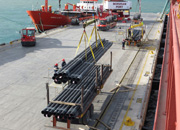
Supplies API 5CT casing for oil and gas well construction, supporting grade selection, quality verification, and global export arrangements. Available grades include J55, K55, N80, L80, P110, and Q125, with connection types such as STC, LTC, and BTC specified according to project requirements. Buyers should confirm outside diameter, wall thickness, length, quantity, applicable API 5CT edition, heat-treatment requirements, and inspection scope before ordering. Quality documentation may include dimensional inspection, thread inspection, mechanical test reports, and material traceability records. For export orders, we coordinate thread protection, bundling, loading arrangements, destination port, Incoterms, commercial invoices, packing lists, and estimated transit times. Freight costs and delivery schedules depend on pipe dimensions, quantity, destination, vessel availability, and market conditions, and should be confirmed in the quotation or sales contract. Confirming grade, dimensions, connection type, inspection requirements, availability, and shipping terms in advance helps improve procurement accuracy and support reliable well construction.
Conclusion:
API 5CT casing supports wellbore stability and formation isolation in oil and gas wells, requiring strict control of dimensions, mechanical properties, and connection quality. End sizing improves casing-end diameter and roundness to support accurate threading and connection assembly, but it cannot replace thread inspection and final dimensional verification. Thermal processing and heat treatment help achieve specified strength, hardness, and toughness for applicable grades, while heat recovery mainly improves energy efficiency and should not be confused with metallurgical process control. Buyers should confirm grade, outside diameter, wall thickness, length, connection type, manufacturing route, inspection scope, and material test documentation before ordering.
FAQ:
FAQ 1: What Is the Purpose of End Sizing in API 5CT Casing?
End sizing controls casing-end dimensions and geometry to support accurate thread machining and proper connection assembly.
FAQ 2: Is Heat Treatment Required for All API 5CT Casing Grades?
Heat-treatment requirements depend on the specified grade, manufacturing method, and applicable API 5CT requirements; buyers should verify the relevant specification and purchase order.
FAQ 3: How Does End Sizing Affect Casing Thread Quality?
Accurate end geometry helps provide suitable conditions for thread machining and inspection, supporting proper connection make-up.
FAQ 4: Can End Sizing and Heat Treatment Improve Casing Service Life?
Proper dimensional control and appropriate thermal processing can support reliable casing performance, but service life also depends on material grade, connection design, operating conditions, corrosion, and installation quality.

 Threeway Steel is known as a professional supplier engaged in manufacturing and distributing a wide range of steel pipe, and our headquarter located the central part of China – Hunan and six associated factories throughout China.
 Threeway Steel is known as a professional supplier engaged in designing, manufacturing and distribution of a wide range of steel products with the headquarter located the central part of China – Hunan and six associated factories throughout China.
 Threeway Steel is known as a professional supplier engaged in designing, manufacturing and distribution of a wide range of steel products with the headquarter located the central part of China – Hunan and six associated factories throughout China.
 Threeway Steel is known as a professional supplier engaged in designing, manufacturing and distribution of a wide range of steel products with the headquarter located the central part of China – Hunan and six associated factories throughout China.
 Threeway Steel is known as a professional supplier engaged in designing, manufacturing and distribution of a wide range of steel products with the headquarter located the central part of China – Hunan and six associated factories throughout China.