API 5CT L80 casing steel pipe is widely used in deep oil and gas wells requiring a suitable balance of strength and controlled material properties. L80 casing supports wellbore integrity by resisting axial tension, external collapse, internal burst, and combined downhole loads. Available variants include L80 Type 1, L80 9Cr, and L80 13Cr, with selection depending on well depth, pressure, temperature, formation characteristics, and fluid chemistry such as CO₂, H₂S, and chlorides. Casing connection selection is equally critical, as thread and coupling performance affects load transfer, sealing, and installation reliability. Engineers should confirm outside diameter, wall thickness or nominal weight, grade, connection type, and applicable API 5CT requirements before ordering. Quality verification should include material test certificates, dimensional tolerances, thread inspection, and, where applicable, sour-service hardness and environmental cracking assessments. This article covers L80 casing applications, grade selection, connection considerations, and inspection requirements to help engineers, contractors, and buyers make informed procurement decisions for safe and reliable deep-well operations.
What Is L80 Casing Steel Pipe?
L80 casing steel pipe is a type of oil country tubular goods (OCTG) manufactured for oil and gas wells. It is installed inside a drilled wellbore to support the surrounding formation, isolate geological zones, and provide a stable structure for drilling, completion, and production operations. L80 is a steel grade specified under API Specification 5CT, subject to the applicable edition and product requirements.
L80 casing is used in various well conditions, including selected deep wells where casing must withstand significant mechanical loads and potentially corrosive environments. Suitability depends on well design, operating conditions, material type, and connection requirements.
Applicable Standard and Material Grade
API 5CT defines requirements for casing and tubing in petroleum and natural gas industries—covering material grades, dimensions, manufacturing, mechanical properties, inspection, and product marking.
When purchasing L80 casing:
The L80 designation alone does not establish suitability for every pressure, temperature, or corrosive environment.
Main Types of L80 Casing Steel
These types are not interchangeable in every application. Engineers must evaluate actual fluid chemistry and operating conditions before selecting a grade.
Important: Sour-service conditions require careful assessment of material qualification, hardness limits, and applicable requirements for resistance to environmental cracking.
Key Mechanical and Technical Properties
L80 has a nominal minimum yield strength of 80 ksi (approximately 552 MPa), with specified upper yield-strength and tensile-strength requirements depending on the applicable product specification.
Yield strength alone does not determine casing performance. Engineers must also evaluate:
-
Burst resistance
-
Collapse resistance
-
Axial tension
-
Combined loading
-
Connection strength
These factors depend on casing dimensions, wall thickness, manufacturing condition, and well conditions.
Other important specifications:
Manufacturing, Heat Treatment, and Quality Control
L80 casing may be manufactured using permitted seamless or welded production routes, depending on applicable product requirements. Heat treatment and manufacturing controls help ensure the pipe meets specified mechanical properties and acceptance criteria.
Before installation, verify:
Proper storage, handling, and installation are also necessary to protect the casing and its connections.
Main Applications of L80 Casing Steel Pipe in Deep Wells
L80 casing steel pipe is widely considered for oil and gas wells requiring reliable wellbore support and controlled mechanical performance. As an API 5CT OCTG grade, L80 helps maintain well integrity under demanding downhole conditions.
Suitability depends on well depth, formation pressure, temperature, fluid composition, casing design, and selected connection.
Application Overview
1. Deep Oil and Gas Wells
Deep wells expose casing to substantial axial loads, external pressure, and sometimes high internal pressure. L80 offers 80 ksi (≈552 MPa) minimum yield strength—a potential option for well designs requiring this strength level.
Casing functions:
-
Supports the wellbore
-
Helps prevent formation collapse
-
Separates geological zones
-
Maintains well integrity during cementing and subsequent operations
The L80 grade alone does not determine suitability. Engineers must evaluate:
2. Wells Containing Corrosive Formation Fluids
Some deep wells contain CO₂, H₂S, chlorides, or other substances that can accelerate corrosion or cause material damage. Selecting the appropriate L80 type is particularly important.
Performance varies with temperature, chloride concentration, fluid chemistry, and other operating conditions.
Important: L80 should not automatically be considered suitable for every sour-service application. Wells containing H₂S require specific assessment of material qualification, hardness, environmental cracking risks, and applicable requirements (such as ISO 15156/NACE MR0175 where relevant).
3. High-Pressure and High-Temperature Wells
Deep wells may experience elevated temperatures and high formation pressures—increasing the importance of casing strength, dimensional accuracy, connection integrity, and resistance to deformation.
L80 can be considered when its specified properties meet calculated loads and operating conditions. Engineers should also:
For especially demanding HPHT wells, a higher-strength or specialized grade may be necessary. Selection should be based on engineering calculations—not depth alone.
4. Wells with Complex Geological Formations
Deep formations may contain unstable rock layers, fractured zones, or formations with different pressure regimes. Casing helps stabilize the wellbore and isolate these zones, reducing the risk of unwanted fluid communication.
L80 may be used in suitable casing strings when its mechanical properties and dimensions meet well design requirements. Correct installation, cementing, connection make-up, and quality control are essential for reliable performance.
Key Advantages of L80 Casing Steel Pipe in Deep Wells
L80 casing steel pipe is a commonly considered OCTG product for oil and gas wells requiring dependable mechanical performance and wellbore stability. Specified under API 5CT, L80 offers a defined strength level and several material options for different downhole environments.
Main advantages: suitable yield strength, reliable structural support, grade options for selected corrosive conditions, and flexibility in casing design.
Key Advantages at a Glance
1. Suitable Strength for Downhole Loads
Specified minimum yield strength: 80 ksi (≈552 MPa)—can meet requirements of many oil and gas casing applications when pipe dimensions and casing design are properly selected.
In deep wells, casing must withstand:
L80 provides a defined mechanical-property baseline for evaluating these conditions.
Important: Yield strength alone does not establish suitability. Consider:
2. Reliable Wellbore Support and Zonal Isolation
Casing helps stabilize the wellbore and prevent unstable formations from collapsing. It also supports cementing operations and helps isolate formations with different pressure conditions or fluid characteristics.
When properly designed, installed, and cemented, an L80 casing string contributes to well integrity throughout drilling, completion, and production.
Correct thread engagement, connection make-up, and sealing performance are essential—a casing string is only as reliable as its weakest critical component.
3. Material Options for Selected Corrosive Environments
These grades are not interchangeable. None should be assumed suitable for every corrosive or sour-service environment.
Assess before selection:
4. Flexibility in Casing Design
L80 casing can be specified in different outside diameters, wall thicknesses, nominal weights, lengths, and connection configurations—subject to applicable manufacturing and ordering requirements.
This flexibility helps engineers match casing dimensions to well load requirements and casing program.
Connection type is particularly important in deep wells—the connection must meet required tensile capacity and sealing performance under anticipated operating conditions.
5. Potential Long-Term Operational Benefits
Properly selected and installed L80 casing helps:
-
Reduce well-integrity risks
-
Support stable well operations
-
Avoid premature casing damage
-
Reduce unnecessary maintenance or intervention costs
How to Select the Right L80 Casing Steel Pipe for Deep Wells
Selecting the right L80 casing steel pipe is essential for wellbore stability, managing downhole loads, and supporting long-term production. Although L80 is a common OCTG grade, not every L80 casing pipe suits every deep well. Evaluate well conditions, material type, pipe dimensions, connection performance, and quality documentation before ordering.
Selection Checklist at a Glance
1. Evaluate Well Depth and Downhole Conditions
Important factors:
Deep wells may expose casing to:
Corrosive substances such as CO₂, H₂S, and chlorides can also affect material performance.
Well depth alone does not determine the required grade. Use casing program and load calculations to establish necessary strength, wall thickness, and connection requirements.
2. Choose the Appropriate L80 Type
Neither 9Cr nor 13Cr should be assumed suitable for all corrosive wells. Assess: temperature, chloride concentration, H₂S exposure, and environmental cracking risks.
For sour-service applications: confirm compliance with applicable material qualification and environmental requirements.
3. Confirm Outside Diameter and Wall Thickness
Casing dimensions directly affect load capacity, internal clearance, and installation compatibility.
Increasing wall thickness alone does not guarantee suitability. The complete casing design must account for material properties, manufacturing tolerances, loads, and intended operating conditions.
4. Select Suitable Threaded Connections
Connections must provide required tensile capacity and sealing performance. The appropriate connection depends on:
-
Casing size
-
Loading conditions
-
Pressure requirements
-
Installation procedures
-
Project specifications
Before purchasing, confirm:
Inspect threads and sealing surfaces for damage; ensure connections meet applicable specifications.
5. Verify Standards and Quality Documentation
Confirm the pipe meets the specified edition and requirements of API 5CT or the project-approved standard.
Additional testing or sour-service documentation may be necessary depending on the contract.
6. Compare Total Project Cost
Purchase price is only one part of casing cost. Also consider:
Common Challenges and Quality Control for L80 Casing Pipes
L80 casing steel pipes are used in oil and gas wells requiring reliable mechanical performance and wellbore support. However, deep-well applications expose casing to high pressure, elevated temperatures, corrosive fluids, and complex loading conditions. Even when a pipe meets the specified material grade, incorrect selection, manufacturing defects, or poor installation practices can affect performance.
Effective quality control is essential for maintaining casing integrity and reducing operational risks.
Challenges & Quality Control at a Glance
1. Corrosion and Environmental Damage
Major challenge in wells containing CO₂, H₂S, chlorides, or other aggressive substances. Severity depends on fluid composition, temperature, pressure, water content, and operating conditions.
None should be assumed suitable for every sour-service application. Suitability depends on the specific environment.
To control corrosion risks:
-
Evaluate downhole chemistry before selecting grade
-
Verify ISO 15156/NACE MR0175 compliance where applicable
-
Confirm material qualification, hardness limits, and environmental cracking resistance for intended service
2. Mechanical Failure Under Downhole Loads
Deep-well casing may experience:
If dimensions or mechanical properties are insufficient, deformation or failure may occur.
Quality control should include verification of:
Engineers must check casing design against expected loads and consider wear, temperature, and connection capacity.
L80's 80 ksi (≈552 MPa) minimum yield strength alone does not guarantee suitability—complete engineering calculations are necessary.
3. Manufacturing Defects and Dimensional Inconsistencies
Manufacturing defects, surface damage, dimensional deviations, and inconsistent material properties can affect casing reliability.
Quality inspections may include (per product specification and order requirements):
Confirm manufacturing route and inspection procedures comply with applicable API 5CT edition and purchase specification. Review required inspection reports before shipment or acceptance.
4. Thread and Connection Problems
Casing connections are critical to load transfer and sealing performance. Damaged threads, incorrect make-up, incompatible connections, or unsuitable sealing arrangements can lead to leakage or connection failure.
Quality control should cover:
-
Thread dimensions
-
Coupling compatibility
-
Sealing surfaces
-
Protective thread caps
-
Connection condition
During installation: qualified personnel should follow specified make-up procedures and use appropriate equipment.
5. Documentation and Traceability
Reliable documentation helps verify delivered L80 casing matches the order.
Our Recommended L80 Casing Steel Pipes and Global Shipping Services
Supplies API 5CT L80 casing steel pipes for oil and gas wells, including L80 Type 1, L80 9Cr, and L80 13Cr. L80 Type 1 suits conventional casing applications, while L80 9Cr and L80 13Cr may be considered for selected CO₂-corrosive environments depending on temperature, chloride concentration, and H₂S exposure. Sour-service requirements, hardness limits, and material qualification must be confirmed before ordering. Buyers should specify grade, outside diameter, wall thickness, nominal weight, length, quantity, thread type, coupling configuration, inspection needs, and service conditions. Available documentation includes material test certificates, chemical and mechanical test reports, dimensional inspection records, and nondestructive testing reports. For export orders, we coordinate thread protectors, protective packaging, packing lists, commercial invoices, customs documents, applicable Incoterms, and destination arrangements. Freight costs and lead times depend on order volume, pipe dimensions, destination, and current shipping conditions. Providing complete technical specifications at inquiry improves quotation accuracy and reduces procurement risk. Confirming grade, dimensions, connections, inspection, and shipping terms before ordering helps support reliable deep-well performance and efficient international delivery.
Conclusion:
API 5CT L80 casing steel pipe, with a specified minimum yield strength of 80 ksi (552 MPa), is a reliable option for deep oil and gas wells when grade, dimensions, and connections match well design. L80 Type 1 suits conventional applications, while L80 9Cr and L80 13Cr may be considered for selected CO₂-corrosive environments depending on temperature, chloride concentration, and H₂S exposure. Sour-service hardness limits and material qualification must be verified before use. Engineers should evaluate outside diameter, wall thickness, nominal weight, thread type, and connection strength against burst, collapse, axial-load, and combined-load requirements. Quality documentation should include material test certificates, chemical and mechanical test results, dimensional inspection records, and required nondestructive testing reports.
FAQ:
FAQ 1: What is L80 casing steel pipe used for?
Explain its use in oil and gas well construction to support the wellbore, isolate formations, and withstand specified downhole loads.
FAQ 2: Is L80 casing steel pipe suitable for deep wells?
Explain that L80 may be suitable when its strength, wall thickness, connection design, and corrosion performance meet the well's engineering requirements.
FAQ 3: What is the difference between L80 Type 1, L80 9Cr, and L80 13Cr?
Summarize the main differences in alloy composition and potential corrosion-service applications, emphasizing that suitability depends on the actual environment.
FAQ 4: Is L80 casing suitable for sour-service wells?
Explain that suitability depends on the exact grade, hardness and manufacturing requirements, H₂S partial pressure, temperature, chloride concentration, and applicable sour-service standards.
FAQ 5: How do I choose the correct L80 casing size for a deep well?
Describe how casing size and wall thickness are selected using well design, burst and collapse calculations, axial loads, connection requirements, and the planned casing program.
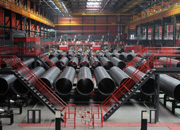 Threeway Steel is known as a professional supplier engaged in manufacturing and distributing a wide range of steel pipe, and our headquarter located the central part of China – Hunan and six associated factories throughout China.
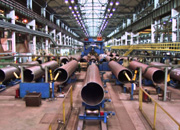 Threeway Steel is known as a professional supplier engaged in designing, manufacturing and distribution of a wide range of steel products with the headquarter located the central part of China – Hunan and six associated factories throughout China.
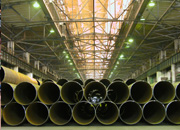 Threeway Steel is known as a professional supplier engaged in designing, manufacturing and distribution of a wide range of steel products with the headquarter located the central part of China – Hunan and six associated factories throughout China.
 Threeway Steel is known as a professional supplier engaged in designing, manufacturing and distribution of a wide range of steel products with the headquarter located the central part of China – Hunan and six associated factories throughout China.
 Threeway Steel is known as a professional supplier engaged in designing, manufacturing and distribution of a wide range of steel products with the headquarter located the central part of China – Hunan and six associated factories throughout China.