Hot-rolled seamless steel pipes are widely used in oil and gas transportation, power generation, petrochemical processing, and mechanical engineering. Unlike welded pipes, they are formed from solid steel billets without a longitudinal weld seam, providing consistent material integrity and reliable mechanical performance. The production process begins with billet heating, followed by piercing to create a hollow shell, elongation and rolling to control wall thickness and length, and sizing to adjust outer diameter and dimensional accuracy. Final steps include cooling, straightening, cutting, and inspection. Uniform heating, proper piercing, and controlled rolling parameters are essential to avoid defects such as uneven wall thickness, surface cracks, excessive ovality, or dimensional deviations. Hot rolling is particularly suitable for producing seamless pipes in a wide range of sizes, including thicker-walled products. Material selection, typically carbon steel or alloy steel, should match working pressure, temperature, corrosion exposure, and applicable industry standards.
Billet Preparation and Heating: The First Stage of Seamless Pipe Manufacturing
Billet preparation and heating are the first major stages in hot-rolled seamless steel pipe production. Billet quality and temperature control accuracy directly affect piercing, rolling, and sizing—proper preparation helps reduce manufacturing defects, improve material utilization, and ensure consistent pipe quality.
Key Stages at a Glance
1. Raw Material Selection and Billet Inspection
Hot-rolled seamless pipes are generally manufactured from solid round steel billets. Material is selected according to pipe grade, mechanical properties, operating conditions, and applicable product standards.
Before production, inspect billets for:
Defective billets may require additional evaluation or rejection. Starting with suitable raw materials helps reduce defect risk during hot working.
2. Billet Cutting and Surface Preparation
Billets are cut to required length per production plan and target pipe dimensions. Accurate cutting supports stable furnace loading and consistent material consumption.
Surface preparation may be necessary when inspection identifies defects or production specification requires additional cleaning. Surface defects can be removed through suitable conditioning methods before heating.
Proper preparation is important—some surface imperfections may become more difficult to manage after high-temperature deformation. Inspection at this stage helps prevent unsuitable material from proceeding to piercing.
3. Heating Billets in a Furnace
Billets enter a heating furnace and are brought to a suitable temperature for hot working. Heating increases steel plasticity—allowing it to deform more readily during piercing and rolling.
Required heating temperature depends on: steel grade, billet dimensions, furnace conditions, and production route. Temperature must be controlled carefully to ensure the billet is sufficiently heated throughout its cross-section.
Furnace operators use suitable temperature monitoring and process controls. The objective is not simply to reach a high temperature—but to achieve a uniform, controlled condition appropriate for the material and subsequent forming operations.
4. Why This Stage Determines Pipe Quality
Piercing Process: Forming the Hollow Pipe Shell
The piercing process is one of the most important stages in hot-rolled seamless steel pipe manufacturing. After a solid steel billet is heated to the required temperature, it enters the piercing mill and is transformed into a hollow pipe shell—creating the internal opening needed for subsequent elongation, wall thickness adjustment, and sizing.
Piercing quality directly affects wall uniformity, internal surface condition, and downstream rolling stability. Proper temperature control, equipment alignment, and process parameter management are essential.
How Rotary Piercing Works
Rotary piercing (commonly the Mannesmann process) uses specially arranged inclined rolls and a piercing plug to form a hollow shell from a solid billet.
Exact equipment configuration and operating sequence depend on mill design, steel grade, and required pipe dimensions.
Key Parameters Affecting Piercing Quality
Common Piercing Defects and Prevention
Manufacturers can reduce these risks through:
-
Regular equipment maintenance
-
Controlled billet heating
-
Appropriate piercing parameters
-
Inspection of the hollow shell
Why Piercing Matters for Final Pipe Quality
Piercing establishes the basic geometry of a seamless steel pipe.
A properly formed hollow shell provides:
Elongation and Wall Thickness Control: Transforming the Hollow Shell
After piercing, the hollow pipe shell must undergo further rolling to achieve the required length, wall thickness, and dimensions. Elongation is a key stage in hot-rolled seamless steel pipe production—transforming the initial shell into a pipe with more precise dimensions and a more uniform wall structure.
Rolling equipment reduces wall thickness and increases length. Effective control is essential to prevent dimensional variation and defects that could affect finished pipe performance.
Main Elongation Methods
Choice of elongation method depends on: target pipe size, production capacity, dimensional requirements, and available equipment.
How Elongation Controls Wall Thickness
Wall thickness affects pressure-bearing capacity, structural strength, weight, and material consumption.
During elongation, the heated hollow shell passes through rolling equipment that reduces wall thickness while increasing length. Deformation must be controlled carefully to maintain specified dimensions.
Regular equipment checks and process monitoring help maintain consistent wall thickness.
Common Defects During Elongation
To reduce these risks:
-
Maintain appropriate heating conditions
-
Monitor rolling parameters
-
Inspect mandrel or plug
-
Verify dimensions at suitable production stages
Early detection helps prevent defective products from proceeding to final sizing.
Why Elongation Quality Matters
Elongation establishes much of the pipe's final wall thickness and dimensional characteristics.
Sizing and Reducing: Achieving the Required Outer Diameter
Sizing and reducing are important stages in hot-rolled seamless steel pipe production. After piercing and elongation, the pipe shell has the basic hollow structure—but its outer diameter, ovality, and dimensional consistency may still need adjustment.
Sizing or reducing equipment brings the pipe closer to specified dimensions and prepares it for subsequent cooling, straightening, and inspection.
Important distinction: Sizing and stretch reducing are related but not identical.
-
Sizing mill — primarily adjusts outer diameter; relatively limited changes to wall thickness and length
-
Stretch-reducing mill — can reduce outer diameter more substantially while also changing wall thickness and pipe length
Purpose of the Sizing Process
Main purpose: achieve specified outer diameter and improve dimensional consistency. Accurate dimensions are essential for pipe installation, connection compatibility, and performance.
Sizing cannot correct every defect from earlier stages. Significant wall thickness variation, internal cracks, or other serious defects require separate evaluation and may result in rejection.
Sizing Mill vs. Stretch-Reducing Mill
Equipment selection depends on: initial shell dimensions, target diameter, required wall thickness, steel grade, and production route. Manufacturers must design the rolling schedule to achieve desired dimensions without introducing unacceptable defects.
Key Factors Affecting Sizing Accuracy
Common Sizing Defects and Quality Control
After sizing, the pipe should undergo dimensional inspection to verify outer diameter, ovality, wall thickness where required, and other specified characteristics. Acceptance criteria should follow applicable product standard and purchase specification.
Subsequent Processing and Quality Inspection of Hot-Rolled Seamless Steel Pipes
After sizing, hot-rolled seamless steel pipes undergo subsequent processing and quality inspection before delivery. These operations help stabilize dimensions, achieve required surface condition, and verify compliance with applicable standards.
Effective finishing and inspection are essential for identifying manufacturing defects and ensuring pipes are suitable for intended service conditions.
Processing & Inspection Overview
1. Cooling, Straightening, and Cutting
2. Heat Treatment and Surface Finishing
Some hot-rolled seamless pipes require additional heat treatment to achieve specified mechanical properties or metallurgical conditions.
Heat treatment requirements vary by grade and product standard. Not every hot-rolled seamless pipe requires the same treatment—follow relevant technical requirements, not a universal process.
Surface finishing may include:
Any coating or protective treatment should be compatible with the intended operating environment.
3. Dimensional and Mechanical Testing
Mechanical testing may include: tensile, flattening, bending, or impact testing—depending on applicable specification and product requirements.
These tests evaluate different properties: strength, ductility, and resistance to deformation. Not every test applies to every grade or pipe order.
4. Nondestructive Testing and Final Inspection
NDT helps identify certain defects without damaging the pipe.
Appropriate method depends on: defect types to be detected, pipe dimensions, material, and inspection requirements.
Standards reference: ASTM A106 may apply to seamless carbon steel pipes for high-temperature service; other products may follow different ASTM, API, EN, or national standards. Confirm exact standard and grade before ordering.
Before shipment, manufacturers should:
-
Review inspection results
-
Verify product identification
-
Prepare required documentation (material certificates, dimensional reports, mechanical test results, NDT records)
Our Recommended Hot-Rolled Seamless Steel Pipe Products and Global Shipping Services
Supplies
hot-rolled seamless steel tubes for oil and gas, power generation, petrochemical, and mechanical engineering applications. Recommended products include carbon steel seamless pipes such as ASTM A106 for high-temperature service, alloy steel seamless pipes for elevated temperature and pressure conditions, and customized pipes with specified outer diameter, wall thickness, length, end finish, and material grade. Before ordering, confirm the material grade, applicable ASTM/API/EN standard, dimensions, dimensional tolerances, operating temperature, pressure requirements, inspection methods, and required documentation. Material certificates, mechanical testing, nondestructive testing, and traceability records can be arranged according to project specifications. For international orders, we coordinate protective packaging, product marking, commercial invoices, packing lists, and agreed export documentation. Freight options, transit estimates, Incoterms, destination port, and customs responsibilities should be confirmed in advance. To request a quotation, provide the grade, standard, dimensions, quantity, inspection requirements, technical drawings, and delivery destination. Clear specifications and planned logistics help reduce procurement errors and support reliable hot-rolled seamless steel pipe supply.
Conclusion:
Hot-rolled seamless steel pipe quality depends on every production stage, from billet preparation and heating to piercing, elongation, sizing, finishing, and inspection. Uniform heating, correct piercing, and controlled rolling help reduce internal defects, uneven wall thickness, surface cracks, and dimensional deviations. Sizing and reducing operations improve outer diameter accuracy and ovality control, while cooling, straightening, cutting, heat treatment, and final testing complete the manufacturing process. No single step can guarantee finished-pipe quality, so effective quality control should cover raw material verification, temperature monitoring, equipment maintenance, dimensional inspection, mechanical testing, and nondestructive testing. Buyers should confirm the applicable standard, material grade, dimensional tolerances, inspection methods, and acceptance criteria before ordering. Specifications such as ASTM A106 may apply depending on the intended service conditions.
FAQ:
Q1: What are the main steps in hot-rolled seamless steel pipe production?
- Explain the process from billet preparation and heating through piercing, elongation, sizing, cooling, finishing, and inspection.
Q2: Why must steel billets be heated before piercing?
- Explain how heating increases plasticity and helps the billet deform into a hollow shell.
Q3: What is the difference between piercing and sizing in seamless pipe manufacturing?
- Clarify that piercing creates the hollow shell, while sizing adjusts the outer diameter and improves dimensional consistency.
Q4: How does the sizing process affect the quality of seamless steel pipes?
- Discuss outer diameter, ovality, dimensional tolerance, and the importance of controlled rolling parameters.
Q5: What quality tests are performed on hot-rolled seamless steel pipes?
- Summarize dimensional inspection, mechanical testing, and nondestructive testing according to the applicable product specification.
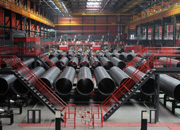 Threeway Steel is known as a professional supplier engaged in manufacturing and distributing a wide range of steel pipe, and our headquarter located the central part of China – Hunan and six associated factories throughout China.
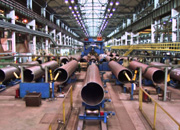 Threeway Steel is known as a professional supplier engaged in designing, manufacturing and distribution of a wide range of steel products with the headquarter located the central part of China – Hunan and six associated factories throughout China.
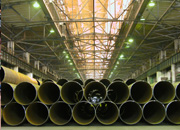 Threeway Steel is known as a professional supplier engaged in designing, manufacturing and distribution of a wide range of steel products with the headquarter located the central part of China – Hunan and six associated factories throughout China.
 Threeway Steel is known as a professional supplier engaged in designing, manufacturing and distribution of a wide range of steel products with the headquarter located the central part of China – Hunan and six associated factories throughout China.
 Threeway Steel is known as a professional supplier engaged in designing, manufacturing and distribution of a wide range of steel products with the headquarter located the central part of China – Hunan and six associated factories throughout China.