Selecting the right casing for sulfur-containing gas wells is critical because hydrogen sulfide (H₂S), high pressure, and corrosive fluids can cause sulfide stress cracking and premature failure. API 5CT grades L80, C90, and T95 offer different yield strengths, but higher strength alone does not ensure sour-service suitability. Engineers must evaluate material type, hardness, heat treatment, H₂S partial pressure, temperature, water chemistry, and design loads. Compliance with API 5CT should be confirmed alongside applicable sour-service requirements such as ISO 15156/NACE MR0175. A systematic selection process helps prevent material mismatches, reduce maintenance costs, and ensure long-term well integrity in sour gas production.
Sour Gas Environments and Their Effects on Oil Well Casing
Sour gas environments challenge oil well casing because hydrogen sulfide (H₂S) can cause corrosion and cracking in susceptible steel. In deep gas wells, casing must withstand pressure loads plus the chemical effects of produced fluids. Understanding these risks is essential when selecting API 5CT L80, C90, or T95 casing.
The correct grade must satisfy both mechanical design requirements and environmental limits. Higher yield strength alone does not guarantee better sour-service performance.
What Is a Sour Gas Well?
A well is generally described as sour when H₂S is present at levels relevant to sour-service requirements. H₂S concentration, partial pressure, water availability, and other factors determine the risk to casing materials.
H₂S can dissolve in produced water and promote hydrogen entry into steel—increasing cracking susceptibility when tensile stress and unfavorable material properties are present.
Assess these together—not total sulfur content alone.
Main Corrosion and Failure Risks
SSC and HIC are related but not identical. SSC is strongly associated with tensile stress and material susceptibility; HIC can occur without externally applied tensile stress. Casing selection and inspection should address the specific damage mechanisms relevant to the well.
Why Casing Grade Selection Is Critical
API 5CT L80, C90, and T95 have different minimum yield-strength levels, but sour-service suitability depends on exact grade, material condition, and environmental qualification.
Evaluate casing against ISO 15156/NACE MR0175 (where applicable), plus API 5CT and project requirements. Key checks: hardness limits, heat treatment, chemical composition, required testing, and environmental restrictions.
Overview of API 5CT L80, C90, and T95 Casing Grades
API 5CT L80, C90, and T95 are oil well casing grades with different minimum yield strengths and material requirements, suiting wells with varying pressure, depth, and loading conditions. For sulfur-containing gas wells, mechanical strength is only one part of selection—sour-service qualification, hardness control, heat treatment, and environmental compatibility matter equally.
Understanding the differences helps engineers select casing that meets both well design requirements and applicable safety standards.
L80 vs. C90 vs. T95: Comparison Table
|
Factor
|
L80
|
C90
|
T95
|
|
Min. yield strength
|
80 ksi (552 MPa)
|
90 ksi (621 MPa)
|
95 ksi (655 MPa)
|
|
Relative strength
|
Lowest of the three
|
Intermediate
|
Highest of the three
|
|
Main consideration
|
Product type and sour-service suitability
|
Higher strength with verified material controls
|
Higher strength with strict qualification
|
|
Sour-service suitability
|
Must be verified
|
Must be verified
|
Must be verified
|
|
Selection priority
|
Adequate strength + environmental compatibility
|
Required strength + SSC resistance
|
Required strength + SSC resistance
|
L80 Casing: Common Sour-Service Option
L80 has a minimum yield strength of 80 ksi (552 MPa). It is commonly evaluated where mechanical strength plus controlled material properties are required.
Types include:
Key considerations:
-
Suitability for required pressure and mechanical loads
-
Hardness and material condition for sour service
-
Effects of H₂S, CO₂, chlorides, temperature, and produced water
-
Whether a chromium variant suits the specific corrosion environment
L80 can be practical for certain sour gas wells, but suitability must be verified for the exact product type and operating conditions.
C90 Casing: Higher Strength with Strict Material Controls
C90 has a minimum yield strength of 90 ksi (621 MPa)—higher than L80. It may be considered when design calculations require a higher yield-strength grade.
Do not select C90 for sour service based on strength alone. Assess hardness, heat treatment, chemical composition, and SSC resistance against applicable requirements.
Before specifying C90:
-
Confirm strength meets design requirements
-
Verify sour-service restrictions and qualification criteria
-
Review hardness limits and manufacturing documentation
-
Assess actual H₂S partial pressure and well-fluid chemistry
Key question: Can C90 meet both mechanical requirements and environmental limits?
T95 Casing: Higher Strength for Demanding Wells
T95 has a minimum yield strength of 95 ksi (655 MPa)—the highest of the three. It may suit demanding wells needing higher mechanical strength.
Higher strength supports certain deep-well or high-pressure designs, but does not automatically make T95 best for sour gas service. Higher-strength steels can be susceptible to SSC under unfavorable combinations of material properties, tensile stress, and H₂S exposure.
Important considerations:
-
Required tensile and yield properties
-
Hardness control and heat-treatment condition
-
Sour-service qualification under the applicable standard
-
Compatibility with well temperature, pressure, and fluid chemistry
-
Required testing and material traceability
Use T95 in sour gas wells only when the specific product condition meets relevant material and environmental requirements.
Key Selection Factors for L80, C90, and T95 in Sour Gas Wells
Selecting API 5CT L80, C90, or T95 casing for sulfur-containing gas wells requires evaluating both mechanical performance and sour-service resistance. Higher yield strength does not automatically mean better performance in H₂S environments. Consider H₂S partial pressure, fluid chemistry, mechanical loads, hardness, heat treatment, and applicable sour-service standards together.
Selection Factors at a Glance
1. H₂S Partial Pressure and Well Chemistry
H₂S promotes sulfide stress cracking (SSC) in susceptible steels under tensile stress. Risk depends on the overall environment—not just total sulfur content.
Evaluate:
-
H₂S partial pressure — characterizes sour service and material requirements
-
CO₂ concentration — contributes to corrosion when water is present
-
Chloride concentration — may increase localized corrosion
-
Water chemistry and pH — influence corrosion and hydrogen damage
-
Elemental sulfur and other contaminants — additional corrosion risks
API 5CT compliance alone does not establish sour-gas suitability. Review ISO 15156/NACE MR0175 where applicable.
2. Well Pressure, Depth, and Mechanical Loads
Casing must withstand internal pressure, external pressure, axial tension, and combined loading. Required strength depends on well design, casing dimensions, connection performance, safety factors, and operating conditions.
Do not select C90 or T95 simply because the well is deeper or higher-pressure. Complete casing design calculations must establish grade and wall thickness.
3. Hardness, Heat Treatment, and Manufacturing Quality
Hardness and microstructure significantly influence SSC susceptibility. Excessive hardness increases cracking risk—making manufacturing control critical.
Confirm:
-
Compliance with applicable hardness limits
-
Appropriate heat treatment and material condition
-
Required tensile and mechanical test results
-
Chemical composition and manufacturing consistency
-
Sour-service qualification and required SSC testing
Hardness testing is important but does not replace environmental qualification or other required tests.
4. Temperature and Corrosion Conditions
Operating temperature affects corrosion rates, cracking susceptibility, and material performance. Assess it together with H₂S partial pressure, CO₂, chlorides, pH, and water production.
A grade that performs well in one sour gas field may not suit another with different water chemistry or operating conditions. In some environments, conventional low-alloy casing may not provide sufficient corrosion resistance—evaluate alternative materials, corrosion-resistant alloys, or additional control measures.
5. Cost, Service Life, and Operational Risk
Initial price is only part of total cost. Material failure can cause workovers, production interruptions, costly repairs, and safety risks.
Compare:
-
Whether the grade meets all mechanical and sour-service requirements
-
Manufacturing quality and inspection documentation
-
Expected service life and maintenance requirements
-
Availability, delivery schedule, and total installed cost
The most economical choice meets required strength and environmental limits without unnecessary over-specification.
Practical Selection Logic: When to Choose L80, C90, or T95
Selecting the right API 5CT casing grade for sulfur-containing gas wells requires balancing mechanical strength, SSC resistance, corrosion conditions, and procurement costs. L80, C90, and T95 offer different minimum yield strengths, but the strongest grade is not automatically the safest or most economical for sour service.
Start with the well's operating conditions and mechanical design requirements. Then verify that the specific product meets applicable sour-service requirements before confirming the final grade.
Grade Selection Comparison Table
|
Factor
|
L80
|
C90
|
T95
|
|
Min. yield strength
|
80 ksi (552 MPa)
|
90 ksi (621 MPa)
|
95 ksi (655 MPa)
|
|
Relative strength
|
Lower
|
Intermediate
|
Higher
|
|
Typical selection logic
|
Adequate strength with qualified sour-service performance
|
Additional strength when required by design
|
Higher strength when justified by design
|
|
Key verification
|
Exact L80 type and environmental limits
|
Hardness and sour-service qualification
|
Hardness, material condition, and sour-service qualification
|
|
Cost consideration
|
May be economical when suitable
|
Evaluate benefit of additional strength
|
Confirm additional strength is necessary
|
1. When L80 May Be Preferred
L80 (80 ksi minimum yield strength) is commonly evaluated for sour service where its mechanical properties meet design requirements.
Suitable when:
-
Required yield strength is within the grade's capability
-
The specific L80 type meets the well's environmental requirements
-
Hardness, heat treatment, and material properties comply with sour-service criteria
-
Project needs a balance of performance, reliability, and cost
Distinguish between L80 Type 1, L80 9Cr, and L80 13Cr—different compositions and corrosion characteristics; not interchangeable in every environment.
L80 can be cost-effective when strength and environmental suitability are confirmed—but the grade designation alone does not guarantee SSC resistance under all H₂S conditions.
2. When C90 May Be Considered
C90 (90 ksi minimum yield strength) provides higher strength than L80. Consider when engineering calculations show L80 does not provide sufficient strength.
Before selecting C90:
-
Confirm required yield strength and casing dimensions
-
Evaluate H₂S partial pressure and fluid chemistry
-
Verify hardness limits and manufacturing requirements
-
Confirm compliance with sour-service qualification criteria
Do not select C90 simply because the well is high-pressure. Suitability depends on combined mechanical and environmental conditions—verify any restrictions for the exact product.
3. When T95 May Be Considered
T95 (95 ksi minimum yield strength) may be evaluated for demanding designs requiring higher strength than L80 or C90.
Selection considerations:
-
High casing loads established through engineering calculations
-
Required strength for specified pressure and well configuration
-
Controlled hardness and appropriate heat treatment
-
Verified compatibility with the actual sour-service environment
T95's higher yield strength does not automatically provide better SSC resistance. Susceptibility depends on material properties, tensile stress, and environmental severity. Use only when the specific product meets all applicable sour-service requirements.
4. Practical Decision-Making Process
Conclusion:
Selecting the right casing for sulfur-containing gas wells is critical because hydrogen sulfide (H₂S) increases the risk of sulfide stress cracking and corrosion. API 5CT grades L80, C90, and T95 offer different yield strengths, but higher strength alone does not ensure sour-service suitability. L80 can be economical when its type and environment limits are verified; C90 and T95 may be considered when higher mechanical strength is required, subject to sour-service qualification. Selection should consider H₂S partial pressure, temperature, pressure, water chemistry, burst and collapse loads, hardness, heat treatment, and material test reports. Compliance with API 5CT should be confirmed alongside applicable ISO 15156/NACE MR0175 requirements. For international orders, buyers should confirm grade, size, wall thickness, connection type, inspection documents, and delivery terms with an experienced supplier. The best casing meets both mechanical design and sour-environment requirements for safe, cost-effective long-term production.
FAQ:
Q1: Which casing grade is best for sulfur-containing gas wells: L80, C90, or T95?
There is no universally best grade. L80, C90, and T95 must be evaluated against the well's mechanical loads, H₂S environment, hardness limits, and applicable sour-service requirements.
Q2: Can T95 casing be used in high-H₂S gas wells?
T95 should only be used when the specific product condition meets the applicable sour-service requirements and is qualified for the actual well environment. Higher yield strength alone does not guarantee resistance to sulfide stress cracking.
Q3: Why is hardness control important for sour-service casing?
Excessive hardness can increase susceptibility to sulfide stress cracking in susceptible materials exposed to H₂S. Applicable hardness limits and qualification requirements must be verified for the selected grade and product condition.
Q4: What is the difference between L80 Type 1 and L80 13Cr casing?
L80 Type 1 is a conventional low-alloy steel grade, while L80 13Cr is a chromium-containing alloy intended for particular corrosion environments. Their suitability depends on the combined H₂S, CO₂, chloride, temperature, and water chemistry conditions.
Q5: Which standards should be checked when selecting casing for sour gas wells?
API 5CT should be reviewed for casing product requirements, while ISO 15156/NACE MR0175 should be assessed for applicable materials requirements in H₂S-containing environments. Project specifications and relevant well-design standards may impose additional requirements.
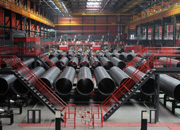 Threeway Steel is known as a professional supplier engaged in manufacturing and distributing a wide range of steel pipe, and our headquarter located the central part of China – Hunan and six associated factories throughout China.
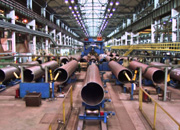 Threeway Steel is known as a professional supplier engaged in designing, manufacturing and distribution of a wide range of steel products with the headquarter located the central part of China – Hunan and six associated factories throughout China.
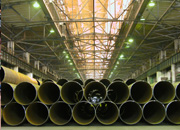 Threeway Steel is known as a professional supplier engaged in designing, manufacturing and distribution of a wide range of steel products with the headquarter located the central part of China – Hunan and six associated factories throughout China.
 Threeway Steel is known as a professional supplier engaged in designing, manufacturing and distribution of a wide range of steel products with the headquarter located the central part of China – Hunan and six associated factories throughout China.
 Threeway Steel is known as a professional supplier engaged in designing, manufacturing and distribution of a wide range of steel products with the headquarter located the central part of China – Hunan and six associated factories throughout China.