Precision steel pipes are essential for modern hydraulic and pneumatic systems, offering tighter dimensional tolerances, superior surface quality, and consistent mechanical properties compared to ordinary steel tubes. In hydraulic applications, they are widely used for cylinder barrels and oil transmission lines in construction machinery, agricultural equipment, and industrial presses. Honed tubes and SRB (skived and roller-burnished) tubes are preferred for cylinder manufacturing due to their accurate internal dimensions and smooth surfaces, which ensure optimal piston movement and sealing performance. In pneumatic systems, precision tubes support actuators and air distribution lines in automation and robotics, reducing friction and maintenance needs. Key manufacturing processes include cold drawing, cold rolling, honing, and SRB finishing, all of which enhance dimensional accuracy and surface integrity. It is crucial to distinguish between cylinder tubes, which require high wear resistance and internal finish, and transmission pipes, which must withstand working pressure and ensure connection reliability.
Common Types of Precision Steel Pipes Used in Hydraulic and Pneumatic Systems
Precision steel pipes come in several types to meet the different requirements of hydraulic and pneumatic equipment. Manufacturing process, dimensional tolerances, surface finish, and mechanical properties directly affect system performance. Common options include cold-drawn seamless, cold-rolled, honed, SRB, and precision welded tubes.
Type Comparison at a Glance
Manufactured by drawing a seamless hollow steel billet through a die to reduce diameter and wall thickness, improving dimensional accuracy, surface quality, and mechanical properties.
Characteristics:
-
Accurate outside diameter and wall thickness
-
Good surface finish and dimensional consistency
-
No longitudinal weld seam
-
Suitable mechanical strength for various pressure applications
Applications: hydraulic oil lines, precision machinery, hydraulic components, and industrial equipment—especially where consistent dimensions and reliable mechanical performance are required.
2. Cold-Rolled Precision Steel Tubes
Produced through cold rolling, which reduces tube dimensions and improves surface quality. They generally offer tight dimensional tolerances and good surface consistency.
Typical applications: pneumatic equipment, precision machinery, automotive components, and hydraulic system parts. Dimensional accuracy helps manufacturers achieve closer fitting tolerances during assembly.
The choice between cold-drawn and cold-rolled depends on required dimensions, mechanical properties, surface quality, and manufacturing specifications.
3. Honed Hydraulic Cylinder Tubes
Commonly used as hydraulic cylinder barrels. After initial tube manufacturing, the internal surface is finished by honing to achieve the required inside diameter tolerance, roundness, and surface roughness.
Main advantages:
-
Smooth and uniform internal surfaces
-
Accurate inside diameter
-
Improved compatibility with piston seals
-
Reduced friction during piston movement
Applications: construction machinery, agricultural equipment, hydraulic presses, lifting systems, and other hydraulic cylinders.
4. SRB Hydraulic Cylinder Tubes
SRB stands for skived and roller-burnished. SRB tubes use a specialized finishing method that removes a thin internal material layer and then improves the surface through roller burnishing.
Compared with conventional honing, SRB processing can provide high dimensional accuracy and a smooth internal surface with efficient production. Commonly used in hydraulic cylinder manufacturing where specific internal diameter and surface finish requirements must be met.
The choice between honed and SRB tubes depends on cylinder design, seal requirements, operating conditions, and customer specifications.
5. Precision Welded Steel Tubes
Manufactured by forming steel strip into a tubular shape and joining the edges through welding. They offer consistent dimensions, good surface quality, and economical production for suitable applications.
Applications: pneumatic equipment, mechanical structures, and selected lower-pressure fluid systems. Suitability for hydraulic service depends on material grade, weld quality, wall thickness, manufacturing standards, and pressure requirements.
Applications of Precision Steel Pipes in Hydraulic Systems
Precision steel pipes are essential in hydraulic systems because they provide reliable fluid transmission and support equipment operation. Hydraulic systems use pressurized oil to generate force and movement, so pipes and cylinder tubes must meet strict requirements for dimensional accuracy, mechanical strength, pressure resistance, and surface quality.
They are widely used in construction machinery, agricultural equipment, industrial presses, lifting systems, and automated production equipment.
Application Overview
1. Hydraulic Cylinder Barrels
A hydraulic cylinder converts pressure into linear movement, and its barrel provides the internal space where the piston moves. Honed and SRB tubes are commonly used—their accurate internal diameters and smooth finishes support stable piston movement and effective sealing.
Selection factors:
-
Inside diameter and dimensional tolerance
-
Internal surface roughness
-
Roundness and straightness
-
Wall thickness and mechanical strength
-
Compatibility with piston seals and operating pressure
These requirements are especially important for construction machinery, excavators, hydraulic presses, and industrial lifting equipment.
2. Hydraulic Oil Transmission Pipes
These pipes transport pressurized oil between pumps, valves, cylinders, and other components, maintaining stable fluid flow throughout the circuit.
Cold-drawn seamless precision steel tubes are commonly considered where accurate dimensions and reliable mechanical performance are required. Select outside diameter, wall thickness, material grade, and connection design according to working pressure and flow requirements.
Key selection factors:
-
Maximum working pressure and pressure fluctuations
-
Required oil flow rate
-
Tube diameter and wall thickness
-
Hydraulic oil compatibility
-
Vibration and fatigue resistance
-
Connection and sealing requirements
Properly selected oil pipes reduce leakage risks and maintain efficient hydraulic transmission.
3. Construction and Agricultural Machinery
Precision steel pipes are widely used in hydraulic systems for excavators, loaders, bulldozers, tractors, harvesters, and other heavy machinery. Hydraulic cylinders control lifting, pushing, steering, and bucket operation.
These machines often work under heavy loads, vibration, dust, and changing temperatures, so cylinder tubes and oil lines must provide suitable strength, dimensional stability, and wear resistance.
Honed and SRB tubes suit cylinder barrels, while precision seamless tubes may be used in selected hydraulic lines and components per design requirements.
4. Industrial Presses and Lifting Equipment
Hydraulic presses, lifting platforms, injection molding machines, and material-handling equipment also depend on precision steel tubes. Hydraulic cylinders must provide stable movement and maintain pressure during repeated cycles. Accurate barrel dimensions help control piston movement and support effective sealing.
For high-load equipment, pay particular attention to wall thickness, material strength, fatigue performance, and pressure ratings. Proper tube selection improves equipment stability and reduces maintenance.
5. High-Pressure Hydraulic Systems
Some systems operate under high pressure with frequent pressure changes, placing additional demands on tube strength, connection reliability, and fatigue resistance.
Seamless precision steel tubes are often considered for demanding hydraulic applications. Actual suitability depends on material grade, manufacturing quality, dimensions, applicable standards, and verified pressure rating. Tube connections and fittings must also be properly designed and installed.
Applications of Precision Steel Pipes in Pneumatic Systems
Precision steel pipes are widely used in pneumatic systems for compressed-air transmission, pneumatic cylinder manufacturing, and industrial automation. Unlike hydraulic systems that use pressurized liquid, pneumatic systems use compressed air or gas to generate movement. Components require accurate dimensions, good surface quality, and reliable sealing for stable operation.
Compared with ordinary steel pipes, precision tubes offer tighter dimensional tolerances and more consistent surface finishes—making them suitable for equipment requiring smooth movement, accurate positioning, and dependable air transmission.
Application Overview
1. Pneumatic Cylinder Barrels
A pneumatic cylinder converts compressed-air energy into linear movement. Inside the cylinder, a piston moves along the barrel to drive connected equipment. The internal surface directly affects piston movement, seal performance, and air leakage.
Manufacturers require tubes with accurate inside diameters, good roundness, straightness, and suitable surface roughness. Precision seamless tubes and other properly finished precision tubes can be used depending on cylinder design and specifications.
Key selection factors:
-
Inside diameter and dimensional tolerance
-
Internal surface roughness
-
Roundness and straightness
-
Wall thickness and mechanical strength
-
Compatibility with piston seals and operating pressure
2. Compressed Air Transmission Pipes
Precision steel pipes can transport compressed air between air compressors, storage tanks, control valves, and pneumatic actuators. Tubes must maintain sufficient pressure resistance and provide reliable connections. Dimensional consistency helps manufacturers achieve accurate fitting and assembly.
Selection factors: working pressure, air flow requirements, tube diameter, wall thickness, corrosion protection, and connection methods. Proper installation and sealing reduce air leakage and pressure loss.
3. Industrial Automation Equipment
Modern automated production lines rely heavily on pneumatic cylinders and actuators—used in packaging machinery, assembly lines, material handling, robotic equipment, and automated positioning devices.
Precision steel tubes provide suitable structural and dimensional characteristics for pneumatic cylinder components. Consistent dimensions help maintain assembly accuracy and stable piston movement. In high-speed automation, tube quality can affect equipment consistency and maintenance frequency. Appropriate materials and surface finishes support reliable operation during repeated cycles.
4. Pneumatic Actuators and Mechanical Components
Pneumatic actuators control movement in industrial valves, conveying systems, sorting equipment, and other mechanical devices. Precision steel tubes may serve as cylinder barrels or structural components.
Depending on the application, manufacturers may choose cold-drawn seamless, cold-rolled precision, or precision welded tubes. Selection should be based on pressure requirements, dimensions, mechanical loads, and manufacturing standards.
For lightweight equipment, optimize tube dimensions and wall thickness to balance strength and weight without compromising safety.
5. Air Leakage Prevention and Surface Quality
Air leakage reduces operating efficiency and increases compressed-air consumption. While leakage is often related to seals, fittings, and connections, tube dimensional accuracy and surface quality also influence sealing performance.
Precision tubes with consistent dimensions improve component assembly and sealing compatibility. For cylinder barrels, a suitable internal surface finish supports stable piston movement and reduces unnecessary seal wear.
How to Select Precision Steel Pipes for Hydraulic Cylinders and Oil Lines
Selecting the right precision steel pipes is essential for hydraulic system performance, safety, and service life. Cylinder barrels and oil transmission pipes serve different functions, so their material properties, dimensional accuracy, and surface requirements differ. Evaluate operating conditions and technical specifications before choosing.
Selection Overview
1. Select the Right Tubes for Hydraulic Cylinder Barrels
Cylinder barrels require accurate internal dimensions and smooth surfaces to support piston movement and sealing.
-
Honed tubes – internal surfaces finished by honing to achieve specified inside diameter tolerance, roundness, and surface roughness; widely used where consistent internal surface quality is required
-
SRB tubes – skived and roller-burnished to improve internal dimensional accuracy and surface finish; suitable for many applications requiring efficient production and consistent bore quality
Key factors: inside diameter, wall thickness, straightness, roundness, surface roughness, and material strength—these influence piston movement, seal performance, and cylinder durability.
2. Choose Suitable Tubes for Hydraulic Oil Lines
Oil pipes transport pressurized fluid between pumps, valves, cylinders, and other components. Their primary requirements are pressure resistance, reliable connections, and stable fluid transmission.
Cold-drawn seamless precision steel tubes are commonly considered—their dimensional consistency and lack of a longitudinal weld seam suit many demanding applications.
3. Consider Material Selection
Common precision steel tube materials include carbon steel and alloy steel.
-
Carbon steel – suitable for many general hydraulic applications where strength and corrosion protection meet system requirements
-
Alloy steel – considered when higher mechanical strength or other specialized properties are required
Base material selection on working pressure, temperature, mechanical loading, and environmental conditions. Corrosion protection may be necessary in humid or corrosive environments.
4. Check Dimensional Accuracy and Surface Quality
Dimensional accuracy directly affects assembly and performance. Confirm required inside diameter, outside diameter, wall thickness, ovality, concentricity, and straightness.
-
Cylinder barrels – internal surface roughness is especially important because it influences piston movement and seal wear
-
Oil lines – dimensional consistency helps ensure reliable connections and proper fluid transmission
5. Compare Manufacturing Processes
6. Confirm Standards and Quality Requirements
Confirm applicable EN, DIN, ASTM, or project-specific standards before purchasing. Inspection requirements may include chemical composition analysis, tensile testing, hardness testing, dimensional checks, surface inspection, and pressure testing where specified.
Our Recommended Precision Steel Pipe Products and Global Shipping Services
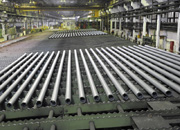
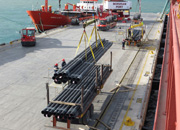
Supplies high-precision steel pipes for hydraulic cylinders, pneumatic systems, and industrial automation. Our product range includes cold-drawn seamless tubes for oil transmission lines and precision machinery, honed tubes specifically for hydraulic cylinder barrels in excavators and loaders, and SRB (skived and roller-burnished) tubes offering superior internal surface finish for efficient cylinder manufacturing. We also provide precision tubes for pneumatic actuators and compressed-air equipment, ensuring dimensional consistency for stable operation. All products can be customized regarding material grades, outside diameters, wall thicknesses, and lengths to meet specific project requirements. Quality control measures include chemical analysis, mechanical testing, dimensional measurement, and pressure testing.
Conclusion:
Choosing the right precision steel pipes is critical for the performance and reliability of hydraulic and pneumatic systems. These components are widely used in hydraulic cylinder barrels, oil transmission lines, pneumatic cylinders, and industrial automation equipment. For cylinder manufacturing, honed tubes and SRB (skived and roller-burnished) tubes are preferred due to their accurate internal diameters and smooth surface finishes, which ensure stable piston movement and superior sealing. For hydraulic oil transmission, cold-drawn seamless tubes offer the necessary dimensional consistency and mechanical strength to withstand high working pressures. In pneumatic applications, precision seamless or welded tubes are selected based on cylinder design and air pressure requirements. Key selection factors include material grade (carbon or alloy steel), dimensional accuracy (ID, OD, wall thickness, tolerances), surface quality, and manufacturing processes like cold drawing or rolling. Strict quality control, including chemical analysis and mechanical testing, is essential to prevent leakage and equipment failure.
FAQ:
Q1: What type of precision steel pipe is used for hydraulic cylinders?
Honed tubes and SRB (skived and roller-burnished) tubes are commonly used for hydraulic cylinder barrels because they provide accurate internal dimensions and smooth surface finishes.
Q2: What is the difference between honed tubes and SRB tubes?
Honed tubes use an abrasive honing process to improve internal surface quality and bore accuracy. SRB tubes use skiving and roller burnishing to achieve accurate dimensions and a smooth internal surface.
Q3: Why are precision steel pipes important in hydraulic systems?
They provide dimensional accuracy, mechanical strength, and reliable fluid transmission. These properties help maintain pressure, reduce leakage risks, and improve equipment performance.
Q4: Can precision steel tubes be used in pneumatic cylinders?
Yes. Precision steel tubes can be used as pneumatic cylinder barrels and in compressed-air equipment. Their dimensional accuracy and surface quality support smooth piston movement and effective sealing.
Q5: How do I select the right steel pipe for hydraulic oil transmission?
Consider working pressure, oil flow rate, outside diameter, wall thickness, material grade, connection type, and applicable standards.
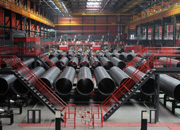 Threeway Steel is known as a professional supplier engaged in manufacturing and distributing a wide range of steel pipe, and our headquarter located the central part of China – Hunan and six associated factories throughout China.
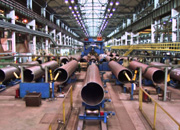 Threeway Steel is known as a professional supplier engaged in designing, manufacturing and distribution of a wide range of steel products with the headquarter located the central part of China – Hunan and six associated factories throughout China.
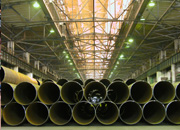 Threeway Steel is known as a professional supplier engaged in designing, manufacturing and distribution of a wide range of steel products with the headquarter located the central part of China – Hunan and six associated factories throughout China.
 Threeway Steel is known as a professional supplier engaged in designing, manufacturing and distribution of a wide range of steel products with the headquarter located the central part of China – Hunan and six associated factories throughout China.
 Threeway Steel is known as a professional supplier engaged in designing, manufacturing and distribution of a wide range of steel products with the headquarter located the central part of China – Hunan and six associated factories throughout China.