Precision steel pipes deliver tight dimensional tolerances, smooth surface finish, and consistent mechanical properties for hydraulic cylinders, automotive components, machinery, and industrial manufacturing. Produced as seamless or welded tubes through cold drawing, cold rolling, heat treatment, straightening, and surface finishing, they achieve controlled outside diameter, inside diameter, wall thickness, ovality, straightness, and length. Materials include carbon steel for general mechanical use, alloy steel for higher strength or heat-treatment requirements, and stainless steel for improved corrosion resistance. Precision grades are defined by applicable standards such as the EN 10305 series rather than a single universal tolerance level. Selecting the right precision steel pipe requires confirming material grade, dimensions, tolerance class, delivery condition, surface quality, and intended application to reduce machining allowance, improve assembly accuracy, and support reliable component performance.
What Is a Precision Steel Pipe?
A precision steel pipe is a steel tube manufactured to meet specific requirements for dimensional accuracy, surface quality, and mechanical performance. Compared with ordinary steel pipes—precision pipes are produced with closer control over outside diameter, wall thickness, length, straightness, and other dimensional parameters.
Commonly used in applications where accurate fitting, machining, and reliable mechanical performance are essential.
Manufacturing: seamless or welded processes—cold drawing and cold rolling commonly used to improve dimensional accuracy and surface finish.
Quick Overview
1. Definition and Basic Characteristics
2. Common Manufacturing Processes
3. Common Materials and Steel Grades
Precision Grades and Dimensional Tolerance Requirements
Dimensional accuracy is one of the most important characteristics of precision steel pipes. Unlike general-purpose pipes—precision tubes are manufactured to meet specific dimensional tolerances and surface quality requirements, affecting machining accuracy, component assembly, sealing performance, and mechanical system reliability.
No universal grading system exists—precision classifications and tolerance requirements depend on the applicable product standard, manufacturing method, steel grade, and purchasing agreement.
Quick Overview
1. What Are Precision Grades?
Generally describe dimensional accuracy and manufacturing requirements specified for a particular product. Some standards define different tolerance classes or delivery conditions—others specify dimensional limits according to tube dimensions and manufacturing processes.
Example: EN 10305 series covers precision steel tubes for different applications and manufacturing methods—EN 10305-1 addresses seamless cold-drawn tubes; EN 10305-2 covers welded cold-drawn tubes. Check requirements separately when selecting products.
Important: Precision grades should not be confused with steel material grades. E235 or E355 identifies a steel material grade—dimensional tolerances describe permitted variation in product measurements.
2. Key Dimensional Accuracy Parameters
Acceptable values must be taken from applicable standard or agreed technical specification—not assumed to be the same for every precision tube.
3. Common Standards for Precision Steel Pipes
EN 10305 series — particularly important in European precision tube market. Each part covers different manufacturing processes and applications—select correct standard according to required product type.
DIN 2391 — another designation frequently found in older drawings and purchasing specifications. Verify applicable edition and corresponding requirements before substituting it with another standard.
4. How to Select the Appropriate Precision Grade
Balancing dimensional accuracy, application requirements, and production costs—excessively tight tolerances may increase manufacturing costs without practical benefits.
When preparing a purchase order, clearly state: applicable standard, steel grade, outside diameter, wall thickness, required length, delivery condition, and any additional tolerance requirements.
Example: Simply ordering a precision steel pipe with a 50 mm outside diameter is insufficient if the application requires a particular wall thickness tolerance, straightness, or surface roughness. These details should be agreed upon before production.
Positioning of Precision Steel Pipes in Steel Pipe Systems
Precision steel pipes occupy an important position in modern steel pipe systems—particularly in applications requiring accurate dimensions, reliable mechanical properties, and consistent surface quality. Unlike conventional steel pipes designed mainly for fluid transportation or general structural purposes—precision steel pipes are often used as mechanical components or parts of equipment assemblies.
Main value: dimensional control and manufacturing consistency.
Quick Comparison: Precision vs. Conventional Pipes
1. Precision Pipes vs. Conventional Seamless Steel Pipes
Both manufactured without longitudinal weld seams—but manufacturing objectives and finishing requirements differ.
2. Precision Pipes vs. Ordinary Welded Steel Pipes
Ordinary welded pipes — manufactured by forming steel strips or plates into tubular shapes and joining edges through welding—widely used in construction, water transportation, industrial piping, and structural applications.
Precision welded steel tubes — undergo additional manufacturing controls such as cold drawing, cold sizing, or precision finishing—improve dimensional consistency and surface quality.
Important: The weld seam is an important consideration when purchasing precision welded tubes. Confirm: applicable welding process, weld quality requirements, inspection methods, and dimensional tolerances.
A precision welded tube should not automatically be considered inferior to a seamless tube—suitability depends on product specification and application.
3. Precision Pipes vs. Hydraulic and Mechanical Tubes
Overlapping applications—but technical requirements are not identical.
Precision steel pipes can serve either purpose when their specifications meet the relevant application requirements.
4. Typical Applications in Industrial Systems
Quality Inspection and Purchasing Considerations
Quality inspection is essential when purchasing precision steel pipes—dimensional accuracy, surface condition, and mechanical properties directly affect finished component performance. Even small dimensional deviations can cause assembly difficulties, machining problems, or leakage in hydraulic and pneumatic systems.
Quick Overview
1. Dimensional Inspection
One of the most important quality indicators.
Use calibrated measuring equipment. For particularly tight tolerances: clearly specify inspection methods and acceptance criteria.
2. Mechanical and Material Testing
Not every test applies to every precision steel pipe. Required inspection program depends on: product standard, material grade, manufacturing process, and purchasing agreement.
3. Surface Quality and Non-Destructive Testing
Surface defects—cracks, scratches, dents, corrosion—can affect product performance and subsequent processing.
Inspect both internal and external surfaces—particularly when tubes will be used in hydraulic systems or precision mechanical components.
Applicable NDT method and acceptance criteria should be agreed upon before production.
4. Documentation and Supplier Evaluation
Reliable documentation helps verify product quality and material traceability.
Supplier evaluation should also consider: manufacturing experience, quality management procedures, inspection equipment, production consistency, and delivery capability.
5. Important Purchasing Considerations
Our Recommended Precision Steel Pipe Products and Global Shipping Services
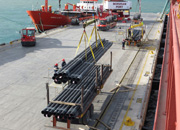
Supplies precision steel pipes for hydraulic cylinders, automotive components, machinery, and industrial automation. Available options include cold-drawn seamless pipes, precision-welded tubes, carbon steel, alloy steel, and stainless steel precision pipes. Selection should consider steel grade, manufacturing process, outside diameter, wall thickness, dimensional tolerances, straightness, internal and external surface finish, heat treatment, delivery condition, and applicable standards. Provide technical drawings or specifications to confirm feasibility. We support inspection documentation, export packaging, and global shipping coordination. To request a quotation, confirm the grade, standard, dimensions, tolerances, process, surface treatment, order quantity, and destination port.
Conclusion:
Selecting the right precision steel pipe requires matching dimensional accuracy, material performance, manufacturing quality, and cost. Carbon steel, alloy steel, and stainless steel grades serve different mechanical and corrosion-resistance needs, while cold drawing and cold rolling improve tolerances, straightness, and surface finish. Both seamless and welded precision tubes can meet industrial requirements when manufacturing and inspection comply with the applicable standard. Dimensional tolerance should be defined by standards such as the EN 10305 series rather than general descriptions. Confirm outside diameter, wall thickness, length, ovality, surface roughness, heat treatment, delivery condition, and required testing before ordering.
FAQ:
1. What is the difference between precision steel pipes and ordinary steel pipes?
Precision steel pipes have tighter dimensional tolerances, better dimensional consistency, and often smoother surface finishes than general-purpose steel pipes.
2. What are the common precision grades of steel pipes?
Precision requirements depend on the applicable standard. The EN 10305 series, for example, specifies different technical requirements for seamless and welded precision steel tubes.
3. Are precision steel pipes always seamless?
No. Precision steel pipes can be manufactured through seamless or welded processes, depending on the required specifications and application.
4. What industries commonly use precision steel pipes?
They are widely used in automotive manufacturing, hydraulic and pneumatic systems, machinery, industrial automation, and precision equipment.
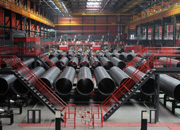 Threeway Steel is known as a professional supplier engaged in manufacturing and distributing a wide range of steel pipe, and our headquarter located the central part of China – Hunan and six associated factories throughout China.
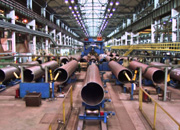 Threeway Steel is known as a professional supplier engaged in designing, manufacturing and distribution of a wide range of steel products with the headquarter located the central part of China – Hunan and six associated factories throughout China.
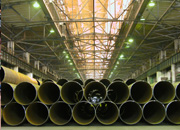 Threeway Steel is known as a professional supplier engaged in designing, manufacturing and distribution of a wide range of steel products with the headquarter located the central part of China – Hunan and six associated factories throughout China.
 Threeway Steel is known as a professional supplier engaged in designing, manufacturing and distribution of a wide range of steel products with the headquarter located the central part of China – Hunan and six associated factories throughout China.
 Threeway Steel is known as a professional supplier engaged in designing, manufacturing and distribution of a wide range of steel products with the headquarter located the central part of China – Hunan and six associated factories throughout China.