Selecting Q355 square and rectangular tubes requires more than confirming nominal yield strength. Grades Q355B, Q355C, Q355D, and Q355E differ significantly in impact toughness, with B-grade suitable for 20°C environments, C-grade for 0°C, D-grade for -20°C, and E-grade for -40°C extreme cold conditions. These grades are not directly interchangeable. Choosing solely by strength overlooks critical toughness requirements, risking brittle fracture in demanding service conditions. Buyers must evaluate applicable standards, wall thickness, chemical composition, mechanical properties, welding procedures, and fabrication methods before ordering. Q355 tubes are widely used for columns, frames, trusses, supports, and machinery structures. Proper grade selection based on actual operating temperature, load type, and structural requirements improves material reliability, supports sound engineering design, and prevents costly mismatches during fabrication and installation.
What Is Q355 Steel? Understanding the Q355 Series
Q355 is a commonly used structural steel designation in China, applied to welded structures, construction components, machinery frames, bridges, and steel hollow sections. Q355 square and rectangular tubes are formed into hollow profiles that offer a high strength-to-weight ratio and efficient load distribution. The Q355 series includes grades such as Q355B, Q355C, Q355D, and Q355E, which share the same general strength class but differ mainly in impact toughness.
Q355 Basics at a Glance
Actual specified yield strength can vary with product thickness and the applicable standard. Always check the specific material standard and product specification rather than treating "355" as a fixed value for every size.
Chemical Composition and Mechanical Properties
Q355 is designed for a combination of strength, weldability, and toughness. Its chemical composition is controlled to achieve required mechanical properties and fabrication performance.
Depending on grade and standard, limits may apply to:
For square and rectangular tubes, mechanical performance also depends on manufacturing method, wall thickness, heat treatment, and forming process. Verify yield strength, tensile strength, elongation, and impact toughness through product documentation.
Understanding the Q355 Grades
The series is divided mainly by impact-toughness requirements. The progression from B to E represents increasingly demanding impact-test conditions.
Exact testing temperature and acceptance criteria should be confirmed against the applicable standard and purchase specification.
Why Q355 Suits Hollow Sections
Q355 square and rectangular tubes offer efficient resistance to bending and compression while reducing material use versus some solid sections.
The Q355 designation alone does not determine suitability. Also consider:
Q355B vs Q355C vs Q355D vs Q355E: Key Differences
Q355B, Q355C, Q355D, and Q355E belong to the Q355 family of high-strength structural steels. For square and rectangular tubes, the main difference between these grades is impact toughness and specified impact-test temperature, not nominal strength.
Quick Comparison
*Under GB/T 1591-2018, Q355B/C/D are specified at 20°C/0°C/-20°C respectively. Exact requirements depend on standard, product form, thickness, and purchase specification.
**Confirm Q355E applicability and requirements for the specific tube standard before ordering.
Q355B: General Structural Applications
Q355B suits structural applications where the service environment does not require lower-temperature impact performance. Its Charpy impact test is conducted at 20°C under GB/T 1591-2018.
Selection should still consider tube thickness, design loads, fabrication requirements, and service conditions.
Q355C: Improved Low-Temperature Toughness
Q355C has a more demanding impact-test temperature than Q355B. Its Charpy V-notch test is conducted at 0°C under GB/T 1591-2018.
This grade is relevant when the structure may experience lower service temperatures and needs greater impact toughness than Q355B provides. Check the design temperature before selecting.
Q355D: Higher Low-Temperature Toughness
Q355D is specified for an impact test at -20°C under GB/T 1591-2018, providing higher low-temperature impact performance than Q355B and Q355C.
Q355E: For More Demanding Low-Temperature Conditions
Q355E is commonly associated with a -40°C impact-test requirement in Q355 material references. It suits situations where low-temperature toughness is critical.
Do not assume Q355E is automatically required just because the environment is cold. The actual design temperature, applicable standard, tube manufacturing specification, and project requirements should determine the grade.
Key Selection Point
Do not select Q355B, C, D, or E based only on yield strength. Service temperature and impact toughness are critical.
How to Select the Right Q355 Grade for Square and Rectangular Tubes
Selecting the right Q355 grade requires more than checking nominal yield strength. Q355B, Q355C, Q355D, and Q355E share the same general strength series but differ in impact-toughness requirements. Choose the grade based on service temperature, structural requirements, tube dimensions, fabrication conditions, and the applicable product standard.
Selection Steps at a Glance
1. Start With the Design Temperature
Service temperature is one of the most important factors. An indoor structure may have different toughness needs than one exposed to winter conditions or low-temperature service.
As the required impact-test temperature drops, a higher-toughness grade may be specified. Q355B, C, D, and E are associated with progressively more demanding impact-test temperatures.
Note: Always confirm exact requirements against the applicable standard and purchase specification.
2. Check Structural Loading Requirements
The tube must provide adequate yield strength, tensile strength, and section capacity for design loads. Consider:
Select grade together with tube size and wall thickness. A higher grade does not compensate for an undersized tube.
3. Consider Impact Toughness
Impact toughness matters when tubes may face low temperatures, dynamic loading, or conditions where brittle fracture resistance is important.
4. Evaluate Welding and Fabrication Requirements
Tubes are often welded, cut, and drilled before installation. Consider the planned fabrication process, wall thickness, welding procedure, and project requirements.
For thicker sections or demanding conditions, chemical composition and carbon-equivalent may affect welding procedures. The supplier should provide documentation needed by the fabricator and engineer.
5. Match the Grade to the Application
Do not automatically use the same Q355 grade for every application.
6. Verify the Applicable Standard and Certification
Before purchasing, confirm:
Applications of Different Q355 Square and Rectangular Tube Grades
Q355 square and rectangular tubes are widely used in structural and industrial applications for their relatively high strength and efficient cross-sectional geometry. While Q355B, C, D, and E belong to the same material family, their suitability differs by impact-toughness requirements, design temperature, and project specifications. Always confirm the grade against the applicable tube standard and engineering requirements.
Grades by Application
*Confirm Q355E applicability and requirements with the relevant product standard and purchase specification.
Q355B Square and Rectangular Tubes
Q355B suits general structural applications where severe low-temperature impact requirements are not the primary concern.
Typical uses:
Its strength and availability suit many ordinary structural projects. If the structure operates in significantly colder conditions, a grade with a lower specified impact-test temperature may be required.
Q355C Square and Rectangular Tubes
Q355C provides a higher specified impact-toughness requirement at lower temperature than Q355B under commonly referenced Q355 specifications.
Potential applications:
Base selection on the project's minimum design temperature and applicable standard, not on the assumption that Q355C suits every cold-weather application.
Q355D Square and Rectangular Tubes
Q355D is commonly specified when greater low-temperature toughness is required.
Common Mistakes When Choosing Q355B/C/D/E Tubes
Common Mistakes at a Glance
1. Assuming All Q355 Grades Are Interchangeable
Q355B, C, D, and E are not identical. Their strength class is similar, but they differ mainly in impact-toughness requirements and testing temperatures. A grade for ordinary structural service may not meet a low-temperature project's needs.
2. Selecting the Grade Only by Yield Strength
The "355" represents the nominal minimum yield-strength class, but structural performance is not determined by yield strength alone.
Also consider:
-
Impact toughness
-
Tensile strength
-
Elongation
-
Wall thickness
-
Design temperature
-
Loading conditions
For low-temperature or dynamic loading, toughness matters because insufficient toughness increases brittle fracture risk.
3. Ignoring the Minimum Service Temperature
Do not select a grade without checking the lowest service temperature.
Identify the design temperature before choosing between Q355B, C, D, and E.
4. Overlooking Wall Thickness
Mechanical requirements can vary with product thickness. Do not interpret "355 MPa" as a fixed yield value for every tube size and wall thickness.
Check specified mechanical properties for the actual tube dimensions and applicable standard. This matters most for large rectangular tubes and heavy-wall sections.
5. Ignoring Welding and Fabrication Requirements
Tubes are frequently cut, drilled, welded, and assembled. Consider chemical composition, weldability, wall thickness, and the fabrication process.
Choosing a grade without reviewing the full fabrication procedure can cause production difficulties or require extra welding controls.
6. Assuming Q355E Always Has the Same Requirements
Q355E is associated with demanding low-temperature impact performance, but do not rely on the grade name alone. Exact requirements depend on the applicable material or product standard and purchase specification.
State the standard, impact-test temperature, mechanical properties, and inspection requirements clearly in the purchase order. Confirm them through the material test certificate.
7. Failing to Check Material Certificates
Verify that supplied tubes meet the specified grade and standard. Check certificates for:
Our Recommended Q355 Square and Rectangular Tube Products and Global Shipping Services
We supply Q355 square and rectangular tubes in grades Q355B, Q355C, Q355D, and Q355E, tailored to structural load, temperature, and fabrication needs. Square tubes offer balanced strength for columns, frames, and machinery supports; rectangular tubes provide superior bending resistance along principal axes for beams, trusses, and large assemblies. Available in customizable dimensions, wall thicknesses, and lengths, with strict quality control covering chemical composition, mechanical properties, dimensional accuracy, and impact testing. Full material test certificates and inspection records are provided for traceability. Our global shipping services include export bundling, protective packaging, and container/bulk logistics coordination. Share your grade, dimensions, wall thickness, quantity, standard, inspection requirements, and destination for an accurate quotation and efficient delivery plan.
Conclusion:
Selecting the right Q355 square or rectangular pipe grade requires more than confirming nominal yield strength. Q355B, Q355C, Q355D, and Q355E belong to the same strength family but differ significantly in impact-toughness requirements for varying service temperatures. Service temperature is the most critical factor: Q355B suits ordinary indoor structures, while progressively colder conditions demand higher toughness grades like Q355C, Q355D, or Q355E to prevent brittle fracture. Toughness must be evaluated alongside strength—yield strength resists structural loads, but adequate toughness is essential for structures exposed to low temperatures, impact loading, or vibration. Application also dictates the appropriate grade and tube specification for columns, beams, trusses, frames, and bridges; a higher grade cannot compensate for unsuitable dimensions or structural design. Buyers must verify applicable standards, wall thickness, chemical composition, mechanical properties, impact-test requirements, welding compatibility, and material certificates before ordering. Effective Q355 grade selection follows a practical principle: match toughness to temperature, strength to structural loads, and tube specification to the application for reliable structural performance and service life.
FAQ:
1. What is the difference between Q355B, Q355C, Q355D, and Q355E?
They have a similar Q355 strength class but differ mainly in impact-toughness requirements and specified testing temperatures.
2. Which Q355 grade is suitable for low-temperature applications?
Q355D or Q355E may be considered for lower-temperature service, but the exact choice should follow the project’s minimum design temperature and applicable standard.
3. Are Q355B, Q355C, Q355D, and Q355E the same strength?
They belong to the same general strength class, but their specified mechanical properties can vary with thickness and applicable standards.
4. How do I choose the right Q355 rectangular tube grade?
Consider service temperature, impact toughness, structural loads, wall thickness, welding requirements, applicable standards, and project specifications.
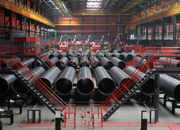 Threeway Steel is known as a professional supplier engaged in manufacturing and distributing a wide range of steel pipe, and our headquarter located the central part of China – Hunan and six associated factories throughout China.
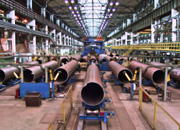 Threeway Steel is known as a professional supplier engaged in designing, manufacturing and distribution of a wide range of steel products with the headquarter located the central part of China – Hunan and six associated factories throughout China.
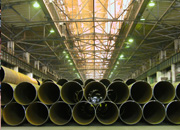 Threeway Steel is known as a professional supplier engaged in designing, manufacturing and distribution of a wide range of steel products with the headquarter located the central part of China – Hunan and six associated factories throughout China.
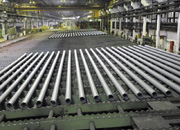 Threeway Steel is known as a professional supplier engaged in designing, manufacturing and distribution of a wide range of steel products with the headquarter located the central part of China – Hunan and six associated factories throughout China.
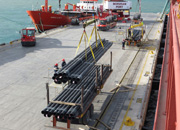 Threeway Steel is known as a professional supplier engaged in designing, manufacturing and distribution of a wide range of steel products with the headquarter located the central part of China – Hunan and six associated factories throughout China.