Square and rectangular steel tubes are critical structural members in modern bridge construction, offering high strength, stiffness, and low weight for trusses, bracing, and cross members. Their closed cross-sections provide excellent resistance to bending and torsional loads. Material selection is vital; bridge steels like Q345q and Q370q are designed to withstand repeated traffic loads, vibration, and corrosive environments. Q345q balances strength, toughness, and weldability, while Q370q offers higher strength for greater load capacity and weight optimization. Manufacturing quality is equally important, requiring strict control over welding, dimensional accuracy, and surface condition. Buyers must select tubes based on comprehensive engineering design, including structural loads, span configuration, and service temperature, rather than dimensions alone. Proper adherence to applicable material and product standards ensures the safety and durability of bridge structures.
What Are Q345q and Q370q Bridge Steels?
Q345q and Q370q are bridge structural steel grades for demanding bridge applications. The "Q" indicates yield-strength classification, while the "q" identifies steel for bridge construction. These grades provide a combination of strength, toughness, weldability, and durability for load-bearing bridge structures.
Quick Comparison
Actual properties depend on thickness, subgrade, heat treatment, and the applicable standard. Use this as a general comparison, not a substitute for the material specification.
Q345q Bridge Steel
Q345q is a common bridge steel with a nominal yield strength of about 345 MPa for the relevant thickness range. It balances mechanical strength and fabrication performance.
Typical applications:
Its main advantage is the combination of strength and weldability. Bridge structures need extensive welding, so the material must suit controlled welding procedures. Q345q also provides required toughness when the appropriate subgrade and impact requirements are specified.
Q370q Bridge Steel
Q370q has a higher nominal yield strength of about 370 MPa for applicable thickness ranges. Higher strength allows designers to carry greater loads or reduce steel in certain members — useful when structural weight, member dimensions, or transportation requirements matter.
Note: Higher strength does not automatically suit every bridge application. Also consider:
-
Toughness
-
Weldability
-
Thickness
-
Design temperature
-
Fatigue loading
-
Fabrication conditions
Application in Square and Rectangular Tubes
When Q345q or Q370q is used for bridge tubes, steel grade is only one part of selection.
A truss chord may face significant axial and bending loads, while a bracing member may have different requirements. Select material and tube dimensions together per the structural design.
What to Confirm When Ordering
-
Exact grade
-
Subgrade
-
Thickness range
-
Impact requirements
-
Manufacturing standard
-
Testing requirements
-
Certification
Materials and Standards for Square and Rectangular Bridge Tubes
Selecting suitable materials and standards is essential for square and rectangular tubes in bridge structures. Unlike ordinary structural tubing, bridge members face heavy static and dynamic loads, repeated traffic cycles, wind, temperature variations, and demanding welding conditions. The material and finished tube must satisfy both structural design requirements and applicable product standards.
Key Selection Points at a Glance
Bridge Steel Materials
Do not select by yield strength alone. Also consider:
-
Chemical composition
-
Tensile properties
-
Impact toughness
-
Thickness
-
Weldability
-
Service temperature
For cold-climate bridges, impact performance at the specified design temperature is especially important. Other structural steels may be specified depending on design, regulations, and project standards.
Applicable Standards
Bridge tubes may involve more than one standard because raw steel and finished hollow section requirements can differ.
Do not assume a steel grade alone defines the complete product. A purchase specification should clearly identify:
Dimensional and Quality Requirements
Control these characteristics:
-
Outside dimensions
-
Wall thickness
-
Corner geometry
-
Length and straightness
-
Surface condition
Welding quality is critical for welded tubes because the longitudinal weld must provide reliable structural performance.
Mill test certificates and heat-number traceability confirm material origin and properties.
Standards Should Match the Project
Treat material and product standards as part of an integrated specification. Before selecting Q345q, Q370q, or another grade, consider:
-
Design loads
-
Fatigue requirements
-
Service environment
-
Welding procedures
-
Fabrication methods
-
Applicable bridge codes
Applications of Square and Rectangular Tubes in Bridges
Square and rectangular steel tubes are useful structural members in bridge construction because their closed sections provide good strength, stiffness, and torsional resistance. Their uniform geometry also simplifies fabrication, connection, transportation, and modular assembly. Depending on the bridge design, they can serve as primary or secondary structural members.
Main Applications at a Glance
Bridge Trusses
Square and rectangular tubes suit bridge trusses, carrying axial, bending, and combined loads.
Consider axial compression, tension, buckling, connection forces, and fatigue from traffic loads. Q345q and Q370q may be selected when strength and toughness meet project requirements.
Cross Beams and Transverse Members
Rectangular tubes can serve as cross beams that distribute loads between major bridge components. Their geometry provides useful bending stiffness in a compact section.
Required width, height, and wall thickness depend on span, loading, support conditions, and connection design. A larger tube is not automatically more efficient — weight, fabrication, connections, and transportation also matter.
Bracing and Stability Systems
Bridge bracing controls lateral movement and improves stability. Tubes can serve as diagonal braces and lateral bracing members.
Pedestrian and Architectural Bridges
Tubes are widely used in pedestrian bridges for:
-
Trusses
-
Handrail supports
-
Frames
-
Roof structures
Their regular appearance creates clean structural lines. For visible members, surface quality and corrosion protection are important. Coatings or galvanizing can be specified per the service environment.
Highway and Railway Bridges
In highway and railway projects, tubes may be used for:
Railway bridges impose additional requirements from repeated dynamic loading and vibration. Consider fatigue performance, toughness, weldability, and service conditions — not just static strength.
Prefabricated Bridge Components
The regular shape of square and rectangular tubes supports prefabrication. Components can be cut, welded, inspected, coated, and assembled before transport to site.
Q345q vs. Q370q: How to Select the Appropriate Bridge Steel
Q345q and Q370q are bridge structural steel grades for square and rectangular pipes and other load-bearing bridge components. The main difference is specified strength level, but selection should involve more than comparing yield strength. Also evaluate toughness, weldability, fatigue, service temperature, structural loads, and fabrication conditions.
Quick Comparison
Compare Strength Requirements
Q345q has a nominal yield strength of about 345 MPa; Q370q about 370 MPa for applicable thickness ranges. Q370q provides higher strength when the design requires it.
Higher strength may allow member dimension optimization or weight reduction. However, actual allowable design values depend on thickness, applicable standard, design code, and project requirements. Do not select the higher grade just because it has higher nominal strength.
Consider Structural Loads
First, determine the loads on the bridge member. Tubes in trusses, braces, cross beams, or frames may face different combinations of tension, compression, bending, and torsion.
Increasing steel grade does not remove the need to check slenderness, section geometry, connection design, and overall stability.
Evaluate Toughness and Service Temperature
Bridges operate under changing temperatures and repeated loading for years. Impact toughness is important, especially for low-temperature exposure.
Verify the applicable test temperature and acceptance criteria. Do not assume all Q345q or Q370q products have identical performance.
Check Weldability and Fabrication
Bridge tubes require cutting, forming, welding, and connection fabrication. The steel must suit the planned welding procedure.
Consider Fatigue and Corrosion
Bridge components face repeated traffic and environmental loads, making fatigue design important. Material grade is only one factor — structural details, weld geometry, stress concentration, and connection design strongly affect fatigue performance.
For corrosion protection, tubes may require:
-
Painting
-
Coating
-
Galvanizing
-
Other approved systems
Practical Selection
Q345q vs. Q370q should be determined by the complete bridge design, not strength alone. Before ordering, verify:
-
Structural loads
-
Section dimensions
-
Material thickness
-
Toughness requirements
-
Welding requirements
-
Fatigue conditions
-
Corrosion protection
-
Applicable standards
Our Recommended Square and Rectangular Bridge Tube Products and Global Shipping Services
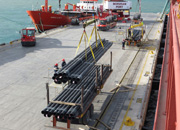
We supply high-quality square and rectangular steel tubes for bridge construction, including trusses, cross members, and bracing systems. Manufactured to customer drawings and applicable standards, our products are available in Q345q and Q370q bridge steel grades, with customizable dimensions, wall thicknesses, lengths, and surface conditions. Rigorous quality control covers chemical composition, mechanical properties, dimensional accuracy, weld integrity, and nondestructive testing, supported by Mill Test Certificates and full material traceability. Customized solutions accommodate non-standard dimensions, fixed lengths, and project-specific inspection requirements. For international projects, our global shipping services ensure safe delivery through protective bundling, clear marking, and coordinated export logistics. From technical specification to final inspection, we provide an integrated supply solution that aligns with structural design requirements and project standards, ensuring reliable performance for load-bearing bridge applications.
Conclusion:
Square and rectangular steel tubes provide efficient structural solutions for modern bridge construction, offering high strength, stiffness, and torsional resistance for trusses, braces, and cross members. Successful application requires selecting the appropriate material, dimensions, and standards as an integrated system. Q345q and Q370q are key bridge steel options; Q345q balances strength and weldability, while Q370q offers higher nominal strength for weight optimization or heavy loads. Selection must be based on engineering calculations rather than strength alone. Tube geometry, including wall thickness and corner configuration, critically affects load capacity and buckling behavior. Standards distinguish between raw steel and finished tube requirements, necessitating clear specifications for manufacturing and testing. Given the exposure to traffic loads and vibration, weldability and impact toughness are vital for long-term performance. Rigorous quality control, including NDT and material traceability via Mill Test Certificates, ensures compliance. Environmental factors like moisture and salt also dictate the need for corrosion protection
FAQ:
1. What is Q345q steel used for in bridge construction?
Q345q is bridge structural steel used for load-bearing components such as trusses, beams, braces, and other fabricated bridge members.
2. What is the difference between Q345q and Q370q steel?
Q370q has a higher nominal yield-strength level than Q345q, while both are designed for bridge structural applications subject to applicable standards.
3. Can Q345q and Q370q be used for square and rectangular bridge tubes?
Yes, they can be used when the material grade, tube manufacturing requirements, and project specifications are compatible.
4. What standards apply to square and rectangular tubes used in bridges?
The applicable standards depend on the bridge project, steel grade, finished tube, manufacturing method, and local or international engineering requirements.

 Threeway Steel is known as a professional supplier engaged in manufacturing and distributing a wide range of steel pipe, and our headquarter located the central part of China – Hunan and six associated factories throughout China.
 Threeway Steel is known as a professional supplier engaged in designing, manufacturing and distribution of a wide range of steel products with the headquarter located the central part of China – Hunan and six associated factories throughout China.
 Threeway Steel is known as a professional supplier engaged in designing, manufacturing and distribution of a wide range of steel products with the headquarter located the central part of China – Hunan and six associated factories throughout China.
 Threeway Steel is known as a professional supplier engaged in designing, manufacturing and distribution of a wide range of steel products with the headquarter located the central part of China – Hunan and six associated factories throughout China.
 Threeway Steel is known as a professional supplier engaged in designing, manufacturing and distribution of a wide range of steel products with the headquarter located the central part of China – Hunan and six associated factories throughout China.