As a core component in industrial heating, the lifespan and operational stability of
flange heating wires are 90% determined by the material used. Every day, numerous engineers and purchasing personnel ask us: "What material should I use for water heating?" "Is 316L sufficient for acidic and alkaline chemical environments?" "Why must nickel-based alloys be used for high-temperature heat transfer oils?" This guide provides an in-depth comparison of three mainstream materials—304, 316L, and Incoloy 800—from four dimensions: temperature resistance, corrosion resistance, cost-effectiveness, and applicable operating conditions. Combining industry standards and practical examples, it offers all industrial professionals a professional, objective, and actionable material selection guide, so you'll never be misled by manufacturers again.
First, we must understand the core underlying logic: flange heating wires directly contact the heating medium, enduring the triple challenges of high temperature, corrosion, and pressure. The alloy composition, wall thickness, and manufacturing process of the material determine its tolerance limits. There is no best material, only the material most suitable for the operating conditions; adaptability is key.
The first type: 304 stainless steel flange heating tubes, a general-purpose industrial product, offering the best value for money. 304 stainless steel contains 18% chromium and 8% nickel. 304 stainless steel flange heating tubes are the most basic type in the industry, capable of withstanding temperatures up to 800℃ at room temperature. They have good oxidation resistance, are non-magnetic, easy to weld, and have low production costs. The core suitable operating conditions for 304 stainless steel flange heating tubes include: heating of clean water at normal pressure, tap water tanks, general dry air heating, and heating of non-corrosive low-temperature oils. The advantages of 304 stainless steel flange heating tubes are their affordable price, fast delivery, and strong versatility, making them suitable for small to medium-sized applications and low-corrosion environments. However, 304 stainless steel flange heating tubes have significant drawbacks: weak corrosion resistance, unable to cope with chloride ions, acid and alkali media, and prone to pitting and rusting in seawater, chemical wastewater, and salt solutions, which can shorten their service life by more than 50%; they are also prone to oxidation and peeling under high-temperature conditions, making them unsuitable for long-term operation above 600℃. In summary, 304 stainless steel flange heating tubes are the first choice for low-corrosion, normal-temperature applications, but should be avoided in strong acid/alkali and high-temperature environments.
The second type: 316L stainless steel flange heating tubes, an upgraded corrosion-resistant option, and the mainstream choice in the chemical industry. 316L adds 2%-3% molybdenum to 304, featuring a low-carbon design and a temperature resistance of 850℃. Its core upgrades include 30%-50% improved resistance to chloride ion corrosion and acid/alkali corrosion. 316L stainless steel flange heating tubes are the standard material in the chemical industry. Core applications for 316L stainless steel flange heating tubes include: seawater desalination, wastewater treatment, weak acid/weak alkali solutions, food and pharmaceutical media, and heating of saline wastewater. It can also be used for medium-temperature heat transfer oil heating. 316L offers extremely high cost-effectiveness; it is about 20% more expensive than 304, but its service life is doubled, making it the most widely used material in industrial settings. The only drawback of 316L stainless steel flange heating tubes is their inability to withstand strong corrosion and ultra-high temperature conditions. They will rapidly degrade in environments with concentrated acids and alkalis or temperatures above 1000℃. In summary, 316L stainless steel flange heating tubes are the first choice for corrosive and medium-to-high temperature conditions; they are a go-to choice for chemical and water treatment industries, and are the optimal solution for most companies.
The third option: Incoloy 800 nickel-based alloy flange heating tubes, a high-end, top-of-the-line model, specifically designed for extreme conditions. Nickel-based alloys contain over 30% nickel, have an iron-chromium alloy base, and can withstand temperatures up to 1200℃. Their resistance to oxidation, carbonization, and strong corrosion is 2-3 times that of stainless steel. Incoloy 800 nickel-based alloy flange heating tubes are the only choice for extreme conditions. Core suitable conditions for Incoloy 800 nickel-based alloy flange heating tubes include: high-temperature thermal oil furnaces, molten salt heating, strong acid and alkali chemical media, petrochemical high-temperature reactors, and long-term dry-burning high-temperature environments. The advantages of Incoloy 800 nickel-based alloy flange heating elements are their extremely long service life, capable of continuous operation for up to 15,000 hours without failure, and excellent high-temperature resistance and corrosion resistance. The only drawback is their high cost, approximately three times that of 316L, making them suitable for large industrial enterprises with ample budgets and demanding operating conditions. In summary, Incoloy 800 nickel-based alloy flange heating elements are essential for highly corrosive, ultra-high-temperature, and high-risk applications; you get what you pay for.
After discussing material comparisons, let's avoid a major industry pitfall: falsified wall thickness of flange heating elements. Many small workshops use 0.6mm thin-walled pipes to imitate 1.0mm standard pipes, with no difference in appearance, but their pressure resistance and corrosion resistance plummet, leading to damage after only 3 months of use. Reputable manufacturers' flange heating elements have a wall thickness ≥1.0mm, and ≥1.2mm for high-power and high-pressure applications, and support third-party testing.
Finally, a word of advice to all customers: when choosing the heating element material for your flange, prioritize compatibility over price, and avoid cheap, inferior products. 304 stainless steel is suitable for room temperature clean water, 316L for moderately corrosive chemicals, and nickel-based alloys for extremely high-temperature, highly corrosive conditions. By matching the material to your operating conditions, you can select a high-performance, long-life product.
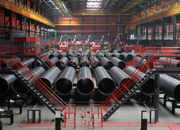 Threeway Steel is known as a professional supplier engaged in manufacturing and distributing a wide range of steel pipe, and our headquarter located the central part of China – Hunan and six associated factories throughout China.
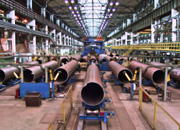 Threeway Steel is known as a professional supplier engaged in designing, manufacturing and distribution of a wide range of steel products with the headquarter located the central part of China – Hunan and six associated factories throughout China.
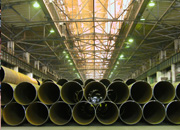 Threeway Steel is known as a professional supplier engaged in designing, manufacturing and distribution of a wide range of steel products with the headquarter located the central part of China – Hunan and six associated factories throughout China.
 Threeway Steel is known as a professional supplier engaged in designing, manufacturing and distribution of a wide range of steel products with the headquarter located the central part of China – Hunan and six associated factories throughout China.
 Threeway Steel is known as a professional supplier engaged in designing, manufacturing and distribution of a wide range of steel products with the headquarter located the central part of China – Hunan and six associated factories throughout China.