First, they are classified differently:
1. Straight seam steel pipes: These include metric welded steel pipes, welded thin-walled pipes, and transformer cooling oil pipes.
2.
Seamless steel pipes: Seamless pipes include hot-rolled pipes, cold-rolled pipes, cold-drawn pipes, extruded pipes, and jacking pipes. According to cross-sectional shape, seamless steel pipes are divided into round and irregular shapes. Irregular shapes include square, oval, triangular, hexagonal, seed-shaped, star-shaped, and finned pipes, among other complex shapes.
Second, they have different concepts:
1. Straight seam steel pipes: Straight seam steel pipes are steel pipes where the weld seam is parallel to the longitudinal direction of the pipe.
2. Seamless steel pipes: Steel pipes made from a single piece of metal with no seams on the surface are called seamless steel pipes.
Third, they have different applications:
1. Straight seam steel pipes: Straight seam steel pipes are mainly used in water supply projects, the petrochemical industry, the chemical industry, the power industry, agricultural irrigation, and urban construction.
(1) Liquid Transportation: Water supply and drainage.
(2) Gas Transportation: Coal gas, steam, liquefied petroleum gas.
(3) Structural Use: Pipes for piling, bridges, docks, roads, and building structures.
2. Seamless Steel Pipes: Seamless steel pipes have a hollow cross-section and are widely used as pipelines for transporting fluids, such as oil, natural gas, coal gas, water, and certain solid materials. Compared to solid steel materials like round steel bars, seamless steel pipes are lighter in weight while maintaining the same bending and torsional strength, making them an economical cross-sectional steel material.
Fourth. Quality Requirements for Seamless Steel Pipes:
1. Chemical Composition of Steel: The chemical composition of steel is one of the most important factors affecting the performance of seamless steel pipes and is also the main basis for determining the process parameters for rolling mill pipes and the heat treatment process parameters for seamless steel pipes. (1) Alloying elements: Intentionally added, depending on the intended use;
(2) Residual elements: Introduced during steelmaking, appropriately controlled;
(3) Harmful elements: Strictly controlled (As, Sn, Sb, Bi, Pb), gases (N, H, O); Ladle refining or electroslag remelting: Improves the uniformity of chemical composition and purity of steel, reduces non-metallic inclusions in the billet, and improves their distribution morphology.
2. Geometric Dimensional Accuracy and Shape of Seamless Steel Pipes
(1) Outer Diameter Accuracy of Seamless Steel Pipes: Depends on the sizing (reduction) method, equipment operation, process system, etc. (1) Allowable deviation of outer diameter δ = (D - Di) / Di × 100% D: or minimum outer diameter mm;
(2) Nominal outer diameter mm;
(3) Wall thickness accuracy of seamless steel pipe: related to the heating quality of the billet, the process design parameters and adjustment parameters of each deformation process, tool quality and its lubrication quality, etc.; Allowable deviation of wall thickness: ρ = (S - Si) / Si × 100% S: minimum wall thickness on the cross section; Si: nominal wall thickness mm;
(4) Ellipticity of seamless steel pipe: indicates the degree of non-roundness of the steel pipe;
(5) Length of seamless steel pipe: normal length, fixed (multiple) length, allowable deviation of length;
(6) Curvature of seamless steel pipe: indicates the curvature of seamless steel pipe: curvature per meter of seamless steel pipe length, curvature of the entire length of seamless steel pipe;
(7) Bevel of end face of seamless steel pipe: indicates the degree of inclination between the end face of the steel pipe and the cross section of the steel pipe;
(8) Bevel angle and blunt edge of the end face of the seamless steel pipe.
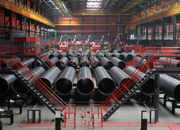 Threeway Steel is known as a professional supplier engaged in manufacturing and distributing a wide range of steel pipe, and our headquarter located the central part of China – Hunan and six associated factories throughout China.
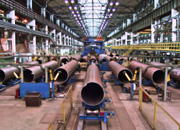 Threeway Steel is known as a professional supplier engaged in designing, manufacturing and distribution of a wide range of steel products with the headquarter located the central part of China – Hunan and six associated factories throughout China.
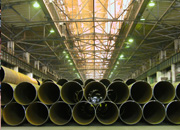 Threeway Steel is known as a professional supplier engaged in designing, manufacturing and distribution of a wide range of steel products with the headquarter located the central part of China – Hunan and six associated factories throughout China.
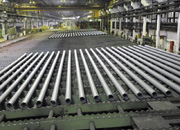 Threeway Steel is known as a professional supplier engaged in designing, manufacturing and distribution of a wide range of steel products with the headquarter located the central part of China – Hunan and six associated factories throughout China.
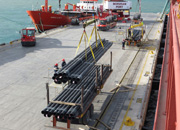 Threeway Steel is known as a professional supplier engaged in designing, manufacturing and distribution of a wide range of steel products with the headquarter located the central part of China – Hunan and six associated factories throughout China.