There are three commonly used stainless steel materials: 201, 304, and 316L. 201 has poor corrosion resistance but is inexpensive; 304 is a general-purpose material with strong corrosion resistance and the widest range of applications; 316
stainless steel pipe has stronger corrosion resistance than 304 stainless steel pipe. Analyzing material properties first requires looking at the material composition. Secondly, we need to identify the type of corrosion the stainless steel pipe is experiencing.
The types of corrosion affecting stainless steel pipes include electrolyte corrosion and high-temperature corrosion. Let's compare the compositional differences between the two materials: 304 stainless steel pipe has a nickel content of 8.0%-10.5% and a chromium content of 18.0%-20.0%; 316 stainless steel pipe has a nickel content of 10.0%~14.0%, a chromium content of 16.0%~18.0%, and a molybdenum content of 2.00%-3.00%. The nickel and chromium content is a crucial factor determining the corrosion resistance of stainless steel. 316 stainless steel pipes have significantly higher nickel and chromium content than 304 stainless steel pipes, resulting in stronger corrosion resistance. Furthermore, 316 stainless steel contains molybdenum, a high-temperature resistant element, which helps prevent high-temperature fatigue and embrittlement.
Theoretically, the electrode potentials of the matrix (ferrite) and the carbides (cementite) or non-metallic inclusions dispersed in the matrix of general steel are different; the matrix is the negative electrode, while the carbides and non-metallic inclusions are the positive electrode. Therefore, micro-cells are formed in electrolyte solutions, causing continuous corrosion of the matrix. If the carbides are highly dispersed in 316 stainless steel pipes, a large number of micro-cells will form, accelerating corrosion. It can be said that the multiphase structure of stainless steel pipes and the negative charge of the matrix are the two fundamental reasons why general stainless steel pipes are prone to corrosion in electrolyte solutions. Therefore, changing the negative charge of stainless steel pipes to increase the electrode potential, making the microstructure of stainless steel pipes single-phase, and forming a dense and stable passivation film on the steel surface are three basic aspects to improve the corrosion resistance of stainless steel pipes.
316 stainless steel pipes can undergo passivation in corrosive oxidizing media. This is due to the reaction between the stainless steel and the oxidizing medium, forming a thin oxide film tightly adhering to the surface of the stainless steel. The Cr: Fe content in this film varies between 0.7% and 9%, while the Cr: Fe content in the steel itself is only 0.24%, indicating that chromium is enriched in stainless steel. 316 stainless steel pipes contain added molybdenum (Mo), which enhances their corrosion resistance, atmospheric corrosion resistance, and high-temperature strength. However, due to the difference in expansion coefficients, significant thermal stress is generated during heating. Especially under rapid temperature changes or after repeated heating, thermal fatigue cracks may develop. These fatigue cracks differ from general high-temperature fatigue; the former is thermal embrittlement caused by internal thermal stress with temperature changes, while the latter is caused by changes in external load at high temperatures.
Why is 316 stainless steel pipe more corrosion-resistant than 304 stainless steel pipe? In terms of basic corrosion resistance, 316 stainless steel has a higher chromium and nickel content than 304 stainless steel, making it far superior to 304 stainless steel in its corrosion resistance to various organic acids, inorganic acids, alkalis, salts, and seawater. Furthermore, 316 stainless steel contains a unique molybdenum element, which provides excellent resistance to thermal fatigue and effectively prevents embrittlement.
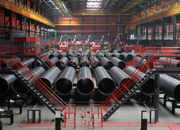 Threeway Steel is known as a professional supplier engaged in manufacturing and distributing a wide range of steel pipe, and our headquarter located the central part of China – Hunan and six associated factories throughout China.
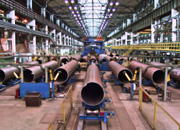 Threeway Steel is known as a professional supplier engaged in designing, manufacturing and distribution of a wide range of steel products with the headquarter located the central part of China – Hunan and six associated factories throughout China.
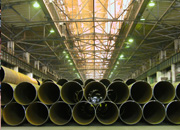 Threeway Steel is known as a professional supplier engaged in designing, manufacturing and distribution of a wide range of steel products with the headquarter located the central part of China – Hunan and six associated factories throughout China.
 Threeway Steel is known as a professional supplier engaged in designing, manufacturing and distribution of a wide range of steel products with the headquarter located the central part of China – Hunan and six associated factories throughout China.
 Threeway Steel is known as a professional supplier engaged in designing, manufacturing and distribution of a wide range of steel products with the headquarter located the central part of China – Hunan and six associated factories throughout China.