Steel pipe bending is essential for pipeline and structural projects, but improper execution can cause critical defects like wall thinning, ovality, or cracking. To ensure structural integrity, engineers must choose between cold bending and hot bending based on specific project needs.
Cold bending is performed at room temperature, offering high efficiency, cost-effectiveness, and excellent surface finishes for standard applications. Conversely, hot bending heats the pipe to enhance plasticity, making it ideal for thick-walled or high-strength steel while reducing deformation stress.
Selecting the right method requires evaluating material grade, wall thickness, and bending radius. This article compares cold and hot bending techniques, focusing on preventing common defects. It provides practical guidance for fabricators and engineers to optimize performance, safety, and cost-efficiency in steel pipe fabrication.
What Is Cold Bending of Steel Pipes?
Cold bending is a highly efficient steel pipe forming process performed at room temperature using mechanical force, without external heating. Utilizing techniques like mandrel, compression, or roll bending, this method is valued for its cost-effectiveness, speed, and excellent dimensional accuracy. Because it avoids thermal exposure, cold bending preserves surface quality and prevents oxidation, making it ideal for structural frameworks, scaffolding, and HVAC systems.
However, cold bending has technical limitations. Without proper internal support, the process can lead to wall thinning on the outer radius and ovality (cross-section distortion), particularly when bending high-strength steels or using tight radii. These defects can compromise the pipe's structural integrity and pressure resistance. Consequently, cold bending is less suitable for thick-walled or high-grade line pipes.
Despite these risks, cold bending remains a practical choice for low to medium-pressure pipelines and general fabrication where speed and moderate precision are prioritized. To ensure optimal results, engineers must carefully control the process and utilize internal mandrels to minimize deformation defects when working with challenging materials or tighter bending requirements.
What Is Hot Bending of Steel Pipes?
Hot bending is a specialized steel pipe forming process where the pipe is heated to high temperatures before shaping. This increases the steel's plasticity and reduces deformation resistance, making it essential for forming thick-walled or high-strength pipes (such as API 5L X70/X80) in demanding industries like oil and gas, power generation, and offshore engineering.
The primary advantage of hot bending is its superior formability. It allows for the creation of complex geometries and tighter bending radii while minimizing the risk of cracking and reducing internal stress concentrations. However, this method requires strict temperature control and higher energy consumption, increasing overall production costs. A critical technical challenge is managing the heat-affected zone (HAZ); improper heating or cooling can alter the steel's microstructure and compromise its mechanical toughness. Post-bending heat treatment is often required to stabilize these properties.
Despite these complexities, hot bending remains the preferred choice for critical, high-pressure pipeline systems where structural integrity and safety are paramount. By carefully balancing heating parameters and cooling processes, fabricators can achieve precise, high-performance bends that cold bending cannot produce.
Cold Bending vs Hot Bending: Wall Thinning & Ovality Control
|
Feature
|
Cold Bending
|
Hot Bending
|
|
Wall Thinning Control
|
More pronounced due to high mechanical stress at room temperature. Requires internal mandrels to prevent severe thinning at tight radii.
|
Superior control. Heat increases plasticity and reduces yield strength, allowing uniform material deformation and minimizing localized stress.
|
|
Ovality Resistance
|
Prone to cross-section flattening due to uneven force distribution, especially in high-strength steels and small radii.
|
Better resistance to collapse. Softened material accommodates shape changes uniformly, though strict temperature control is required.
|
|
Dimensional Accuracy
|
High precision and consistency, making it ideal for repetitive production and standard geometries.
|
Slightly less precise but highly adaptable for complex shapes, large diameters, and thick-wall pipes beyond cold forming limits.
|
|
Ideal Applications
|
Scaffolding, structural frameworks, and low-to-medium pressure pipelines.
|
High-pressure oil/gas pipelines, high-strength/thick-wall pipes (X70, X80), and complex geometries.
|
Our Recommended Steel Pipe Products and Global Shipping Services
We supplies premium steel pipes optimized for cold and hot bending, including API 5L seamless, ERW, thick-wall, and alloy steel pipes. Manufactured under strict quality standards, each pipe undergoes comprehensive testing for mechanical properties, dimensions, and structural integrity, backed by full Mill Test Certificates (MTC).
To prevent surface damage during transit, we provide professional export packaging with anti-rust oil, waterproof wrapping, and protective end caps. With extensive international experience, we offer reliable global shipping services to Asia, Europe, the Middle East, Africa, and the Americas. Our logistics include FCL, LCL, and bulk vessel transport, alongside third-party inspections (SGS, BV, TÜV) and complete export documentation. Combining high-quality steel pipes with secure packaging and efficient global delivery.
Common Mistakes When Choosing Bending Methods
|
Common Mistake
|
Key Risks & Consequences
|
Best Practice / Solution
|
|
Choosing Based Only on Cost
|
Selecting cold bending for thick-wall/high-strength pipes causes severe wall thinning; unnecessary hot bending inflates budgets.
|
Evaluate lifecycle performance and technical requirements rather than just upfront costs.
|
|
Ignoring Pipe Material Grade
|
Applying cold bending to high-strength steels (e.g., X70, X80) increases cracking, ovality, and residual stress risks.
|
Assess material properties and ductility to match the appropriate bending process.
|
|
Overlooking Wall Thickness & Radius
|
Tight radii combined with standard parameters lead to stress concentration, uneven wall distribution, and thinning.
|
Adjust bending parameters specifically for pipe geometry and wall thickness.
|
|
Misjudging Ovality Tolerance
|
Undefined limits result in pipes failing installation or pressure requirements due to cross-section distortion.
|
Define strict ovality limits and ensure adequate internal support or temperature control.
|
|
Poor Control of Process Parameters
|
Hot bending: Microstructure damage from overheating. Cold bending: Defects from incorrect machine settings or lack of mandr
|
|
Conclusion
Cold bending and hot bending are complementary steel pipe forming methods, each with distinct advantages. Cold bending offers high efficiency, cost-effectiveness, and dimensional precision, making it ideal for structural and general piping applications. However, it requires proper internal support to prevent wall thinning and ovality in high-strength materials.
Conversely, hot bending provides superior formability by heating the pipe, allowing for the smooth shaping of thick-wall and high-strength pipes. It is essential for demanding applications like oil and gas pipelines and complex geometries, though it requires strict process control to manage heat-affected zones.
Ultimately, the optimal choice depends on project-specific factors, including pipe grade, wall thickness, bending radius, and operating pressure. By carefully evaluating these technical requirements, engineers can minimize critical defects like wall thinning and ovality. A balanced, engineering-based selection approach ensures maximum structural safety, durability, and cost-efficiency in modern pipeline fabrication.
FAQ:
(1) Which bending method reduces wall thinning more effectively?
Hot bending generally reduces wall thinning due to improved material plasticity, but cold bending with mandrel support can also control thinning effectively.
(2) When should hot bending be used instead of cold bending?
Hot bending is preferred for thick-wall pipes, high-strength grades (X70/X80), and tight-radius or complex bending requirements.
(3) Does cold bending affect pipe strength?
It may introduce residual stress, but properly controlled cold bending maintains acceptable mechanical properties for most applications.
(4) What is the main cause of ovality in pipe bending?
Excessive deformation force and insufficient internal support during bending, especially in cold bending processes.
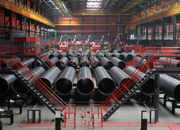 Threeway Steel is known as a professional supplier engaged in manufacturing and distributing a wide range of steel pipe, and our headquarter located the central part of China – Hunan and six associated factories throughout China.
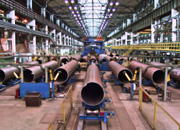 Threeway Steel is known as a professional supplier engaged in designing, manufacturing and distribution of a wide range of steel products with the headquarter located the central part of China – Hunan and six associated factories throughout China.
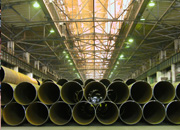 Threeway Steel is known as a professional supplier engaged in designing, manufacturing and distribution of a wide range of steel products with the headquarter located the central part of China – Hunan and six associated factories throughout China.
 Threeway Steel is known as a professional supplier engaged in designing, manufacturing and distribution of a wide range of steel products with the headquarter located the central part of China – Hunan and six associated factories throughout China.
 Threeway Steel is known as a professional supplier engaged in designing, manufacturing and distribution of a wide range of steel products with the headquarter located the central part of China – Hunan and six associated factories throughout China.