What are the advantages and disadvantages of galvanized seamless pipes and welded steel pipes?
Contact Us
galvanized seamless pipes and welded steel pipes

Threeway Steel Co., Ltd

E-mail: sales@srtsteelpipe.com

Address: 22nd Floor, Royal Wing Tower, Long Champ International Building, No.9 Xiangfu Road, Changsha, Hunan, China, PC: 410116

Phone:0086-731-8873-9521  

Home - News > Industry NewsIndustry News

What are the advantages and disadvantages of galvanized seamless pipes and welded steel pipes?

Update:2026-08-12   View(s):1   Keywords :galvanized seamless pipes and welded steel pipes
Galvanized seamless and welded steel pipes are essential materials for construction, industrial, and infrastructure projects. Both feature a protective zinc coating to prevent corrosion, but they differ significantly in manufacturing and application.

Neither pipe type is universally superior. Galvanized seamless pipes are best suited for high-pressure or critical mechanical systems, while welded pipes offer excellent value for standard structural and fluid transport needs. Selecting the right option requires evaluating operating pressure, dimensions, environmental conditions, and project budget. 


What Are the Advantages and Disadvantages of Galvanized Seamless Pipes?


Galvanized seamless pipes combine the structural characteristics of seamless steel pipes with the corrosion protection of a zinc coating. They are manufactured without a longitudinal weld seam and are used in mechanical, industrial, structural, and pressure-related applications. Understanding their advantages and disadvantages helps buyers select the right pipe for specific projects.


Advantages

Advantage Explanation Benefit
No Longitudinal Weld Seam Formed from solid steel billets; no welded joint along the pipe body Beneficial for applications with specific mechanical or pressure requirements
Good Pressure Resistance Reliable performance under internal pressure when correct grade, diameter, and wall thickness selected Suitable for demanding piping systems and mechanical applications
Consistent Structural Performance Continuous pipe body without weld Offers reliable mechanical performance under pressure and mechanical loads
Corrosion Protection Zinc coating protects steel from moisture and atmospheric corrosion Extends service life; reduces maintenance in outdoor/humid environments
Suitable for Demanding Applications Combines seamless construction with corrosion protection Ideal for industrial systems, mechanical components, and structural projects

Disadvantages

Disadvantage Explanation Impact
Higher Cost More complex manufacturing process than welded pipes Usually more expensive for similar sizes and specifications
Limited Availability Large-diameter or specialized sizes may not be readily available May require confirmation of production schedules and lead times
Higher Material Weight Required wall thickness may result in higher material consumption Engineering calculations needed to determine most efficient specification
Galvanizing Considerations Coating quality and uniformity are important Must confirm coating specification and applicable standards for demanding environments

Is Galvanized Seamless Always Better?

Question Answer
Is seamless always the best choice? No—seamless construction provides benefits but does not automatically make it the best for every application.
When should welded pipes be considered? For many general-purpose projects, galvanized welded pipes may provide sufficient performance at a lower cost.
When are seamless pipes most attractive? When mechanical performance, pressure requirements, seamless construction, and corrosion protection are all important.

Summary Table

Aspect Galvanized Seamless Pipe
Weld seam None
Pressure capability Good (when properly specified)
Corrosion protection Yes (zinc coating)
Cost Higher
Best for Demanding mechanical, pressure, and corrosion-resistant applications


What Are the Advantages and Disadvantages of Galvanized Welded Steel Pipes?


Galvanized welded steel pipes are widely used in construction, water supply, structural, agricultural, and general industrial applications. They are manufactured by forming steel strip into a tubular shape and welding the edges, then galvanized for corrosion protection. Like seamless pipes, welded pipes have both advantages and limitations.


Advantages

Advantage Explanation Benefit
Cost-Effective Manufacturing process is more efficient than seamless production Economical option for many construction and industrial projects
Wide Range of Sizes Available in many diameters, wall thicknesses, and lengths Suitable for various flow, structural, and installation requirements
Efficient Production Supports large-volume manufacturing Useful for projects requiring substantial quantities within schedule
Good Dimensional Consistency Modern processes provide consistent OD, wall thickness, and dimensions Simplifies fabrication, connection, and installation
Good Corrosion Protection Zinc coating protects steel from moisture and atmospheric corrosion Suitable for outdoor and humid environments with appropriate coating
Versatile Applications Water supply, construction, fencing, scaffolding, structural supports, agriculture Practical choice for many general-purpose projects

Disadvantages

Disadvantage Explanation Impact
Presence of a Weld Seam Contains a welded joint along the pipe body or spiral weld Weld area must meet quality standards; may require specific inspection
Pressure Limitations Pressure performance depends on weld quality, wall thickness, grade, and standard Must check specifications before selecting for demanding pressure service
Weld-Related Quality Control Weld area may require additional inspection Critical applications may need specified weld testing and certification
Coating Requirements Coating must provide adequate coverage and adhesion Confirm zinc coating specification and relevant standards for the environment

When to Choose Galvanized Welded Pipes

Scenario Recommendation
General construction and utility projects Yes – cost-effective and readily available
Large-volume requirements Yes – efficient production supports bulk orders
Demanding pressure or mechanical applications Consider seamless instead – verify welded pipe specifications first
Outdoor / humid environments Yes – with appropriate zinc coating specification

Summary Table

Aspect Galvanized Welded Pipe
Weld seam Yes
Cost Lower
Size availability Wide range
Pressure capability Good (verify for demanding applications)
Corrosion protection Yes (zinc coating)
Best for General construction, water supply, structural, agricultural applications


Galvanized Seamless Pipes vs. Welded Steel Pipes: Which Is Better?


Quick Comparison Table

Feature Galvanized Seamless Pipe Galvanized Welded Pipe
Manufacturing Formed from solid billet; no longitudinal weld Formed from strip/plate; welded seam (longitudinal or spiral)
Weld Seam None Present
Pressure Applications Often preferred for demanding services Suitable when specification permits
Cost Generally higher Generally lower
Size Availability More limited for some sizes Broad range
Production Efficiency Lower Higher
Typical Applications Mechanical, industrial, high-pressure Construction, water supply, structural, utility
Main Advantage Seamless construction Cost-effectiveness and availability

Detailed Comparison

Aspect Seamless Welded Which Is Better?
Strength & Pressure No weld seam; reliable for demanding pressure Depends on weld quality, grade, and standard Seamless for critical pressure; welded for standard applications
Cost Higher – complex process Lower – efficient production Welded – for budget-sensitive projects
Availability Limited for large diameters Wide range Welded – for standard sizes and quick supply
Corrosion Protection Both can be galvanized Both can be galvanized Equal – depends on coating specification
Best Application Demanding mechanical/pressure service General construction, water, structural Seamless for critical; welded for general

Selection Guide

Project Requirement Recommended Choice Reason
Demanding pressure or mechanical performance Seamless No weld seam; reliable under high stress
Cost-sensitive; standard pressure Welded Lower cost; sufficient for most applications
Large diameter required Welded More readily available
Critical or safety-rated system Seamless Verify by engineering calculation
General construction, water supply Welded Cost-effective; good corrosion protection


Main Applications of Galvanized Seamless and Welded Pipes

Applications by Pipe Type

Application Area Galvanized Seamless Pipes Galvanized Welded Pipes
Industrial Piping Transporting liquids/gases under pressure General utility lines where specifications permit
Mechanical Applications Components, assemblies, equipment requiring consistent properties Light to medium mechanical structures
Pressure Systems Where seamless construction is specified by design/standard Standard pressure applications (verify rating)
Structural Supports Frames and structural components where dimensions/properties suit Handrails, guardrails, scaffolding, building frames
Water Supply & Utilities Limited—specified for specific conditions Widely used in water systems and general utility piping
Agricultural Facilities Not common—higher cost Farms, greenhouses, livestock facilities, irrigation
Fencing & Guardrails Rarely used—cost-prohibitive Fences, gates, barriers, protective structures
General Industrial Critical equipment and high-performance systems Frames, supports, enclosures, non-critical structures

Why Galvanizing Is Important

Benefit Explanation
Corrosion Protection Zinc coating protects steel from moisture and atmospheric corrosion
Extended Service Life Reduces maintenance and replacement costs
Suitable for Outdoor Use Effective for structures and pipes exposed to weather
Application-Specific Selection Coating weight should match environment (coastal, humid, industrial, or chemical exposure)

Selection Guide by Application

Project Type Recommended Pipe Reason
Demanding pressure/mechanical systems Seamless No weld seam; reliable performance
General construction and utility Welded Cost-effective; readily available
Water supply systems Welded Sufficient for standard pressure; good corrosion protection
High-pressure industrial lines Seamless Required by design specifications
Fencing, handrails, scaffolding Welded Economical; adequate strength
Critical safety-rated systems Seamless Verify through engineering calculations


How to Choose the Right Galvanized Steel Pipe


Factor Key Considerations Why It Matters
Application Water supply, construction, structural, fencing, mechanical, industrial piping Determines whether seamless or welded is more appropriate
Pipe Type Seamless (no weld seam) vs. Welded (economical, wide size range) Seamless for demanding pressure/mechanical; welded for general use
Diameter & Wall Thickness Based on flow, pressure, load, span, support conditions Oversized increases cost; undersized risks inadequate performance
Zinc Coating Coating weight/ thickness matched to environment (indoor, coastal, humid, industrial) Directly affects corrosion resistance and service life
Steel Grade Strength, ductility, weldability; verify with material certificates Ensures pipe meets mechanical and structural requirements
Applicable Standards Pipe standard, tolerances, testing, galvanizing spec, inspection Critical for engineering/regulatory compliance
Operating Environment Moisture, rain, salt, chemicals, temperature extremes May require higher coating weight or additional protection
Total Project Cost Material + processing + transport + installation + maintenance Lowest price ≠ best value; consider lifecycle cost

Selection Guide by Application

Application Recommended Type Key Spec Consideration
Demanding pressure / mechanical Seamless No weld seam; verify grade and wall thickness
General construction / structural Welded Cost-effective; sufficient for standard loads
Water supply / utility systems Welded Standard pressure; good corrosion protection
Fencing / handrails / scaffolding Welded Economical; adequate strength
Industrial piping / high pressure Seamless Engineering design required; verify pressure rating
Agricultural facilities Welded Cost-effective; choose appropriate coating

Seamless vs. Welded – Quick Decision Guide

Choose Seamless When... Choose Welded When...
Pressure or mechanical requirements are demanding General-purpose performance is sufficient
No weld seam is specified or required Cost-effectiveness is a priority
Engineering design calls for seamless construction Wide size availability is needed
Higher cost is justified by technical needs Standard corrosion protection is adequate


Our Galvanized Seamless and Welded Steel Pipe Products and Shipping Services

We supply premium galvanized seamless and welded steel pipes tailored for construction, industrial, water supply, and structural applications. Our seamless pipes are ideal for demanding, high-pressure mechanical systems, while our welded pipes offer a cost-effective solution for general-purpose infrastructure and scaffolding. Both are available in a wide range of diameters, wall thicknesses, steel grades, and zinc coating specifications, with customized processing like cutting and threading available.

Quality and durability are paramount. Every pipe undergoes rigorous inspections to ensure dimensional accuracy, weld integrity, and coating consistency, and is accompanied by comprehensive material test certificates. To guarantee safe transit, we provide secure, professional bundling and packaging tailored to your transportation needs.

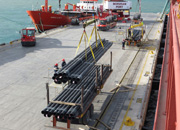
Beyond manufacturing, we offer end-to-end global shipping solutions. Whether you require containerized or bulk vessel transport, our logistics team manages production scheduling, export documentation, and delivery coordination to meet your project deadlines.

From product selection to final delivery, we provide a comprehensive, reliable supply chain for your galvanized steel pipe needs. Contact us today with your required pipe type, diameter, wall thickness, quantity, and destination for a customized quote and efficient shipping solution.


Conclusion

Galvanized seamless and welded steel pipes are essential materials for construction, industrial, and infrastructure projects. While both feature a protective zinc coating to prevent corrosion, they serve different structural needs.
Galvanized seamless pipes are manufactured without a weld seam, providing superior mechanical performance and pressure resistance. This makes them ideal for demanding, high-pressure industrial applications. Conversely, galvanized welded steel pipes are formed by welding steel strips or plates. Their highly efficient manufacturing process makes them a cost-effective and versatile choice for general-purpose applications, including water supply, structural supports, and agricultural facilities.
Selecting the right pipe requires careful evaluation of your specific project requirements. Buyers must consider operating pressure, environmental conditions, steel grade, dimensions, and total project cost. Seamless pipes should not be chosen merely for prestige, nor welded pipes solely for their lower price; the best choice is the one that perfectly aligns with your technical specifications and budget.


FAQ:

FAQ 1: What is the difference between galvanized seamless and welded steel pipes?
A seamless pipe is manufactured without a longitudinal weld seam, while a welded pipe is formed by welding steel strip or plate. Their suitability depends on application and specification.


FAQ 2: Which is better, galvanized seamless pipe or welded pipe?
Neither is universally better. Seamless pipes are often selected for demanding pressure or mechanical applications, while welded pipes are commonly chosen for general applications because of their lower cost and wide availability.


FAQ 3: Are galvanized seamless pipes more expensive than welded pipes?
Generally, yes. Seamless pipes usually have higher production costs, while welded pipes are typically more economical for comparable dimensions.


FAQ 4: Are galvanized welded pipes suitable for water supply?
They can be suitable for certain water-related applications when the pipe, zinc coating, and applicable standards meet the project's requirements.


FAQ 5: What is the purpose of galvanizing steel pipes?
Galvanizing applies a zinc coating to the steel surface to improve corrosion protection and potentially extend service life in suitable environments.

Related Information