Introduction: Why Pile Type Selection Matters in Construction Projects
Pile foundations are essential for modern infrastructure, transferring structural loads to stable soil or rock layers to ensure long-term safety. They are widely used in bridges, ports, high-rise buildings, and offshore platforms. Among the most common solutions are sheet piling and pipe piling. While both utilize steel, they serve distinct purposes: sheet piling creates continuous retaining walls to resist soil and water pressure, whereas pipe piling is designed to carry heavy vertical and lateral loads in deep foundation systems.
Selecting the correct pile type is a critical engineering decision that directly impacts structural stability and project budget. Using the wrong system can lead to severe consequences, such as structural instability or unnecessary construction costs. For instance, sheet piles lack the capacity for high-load bridge foundations, while pipe piles may be over-engineered for simple retaining walls.
Sheet Piling in Construction: Key Features & Applications
|
Feature Category
|
Details & Characteristics
|
|
Definition & Process
|
Long, flat steel sections with interlocking edges driven into the ground (via vibration or impact) to form a continuous, tight barrier wall.
|
|
Primary Function
|
Designed to resist horizontal soil/water pressure and control seepage, rather than carrying heavy vertical structural loads.
|
|
Key Advantages
|
Fast and efficient installation; highly adaptable for straight or curved layouts; effective water retention; reusable and cost-effective.
|
|
Limitations
|
Limited vertical load-bearing capacity; not suitable for deep foundation systems; may require additional anchoring in high-pressure conditions.
|
|
Common Applications
|
Excavation retaining walls, cofferdams, flood protection barriers, riverbank stabilization, and underground construction support.
|
Pipe Piling in Construction: Key Features & Applications
|
Feature Category
|
Details & Characteristics
|
|
Definition & Process
|
Steel pipes driven or drilled deep into the ground to transfer heavy structural loads into stable soil or bedrock; often filled with concrete for added strength.
|
|
Primary Function
|
Designed to support heavy vertical and lateral loads, providing deep foundation stability rather than just earth retention.
|
|
Key Advantages
|
Exceptional load-bearing capacity; excellent resistance to dynamic forces (wind, waves, traffic); durable with corrosion protection (e.g., epoxy, 3PE).
|
|
Limitations
|
Higher material and installation costs; requires specialized heavy equipment; construction time can be longer depending on soil conditions.
|
|
Common Applications
|
Bridge foundations and piers, offshore platforms, high-rise building foundations, heavy industrial facilities, and port/harbor structures.
|
Sheet Piling vs. Pipe Piling: Key Differences & Selection Criteria
|
Comparison Criteria
|
Sheet Piling
|
Pipe Piling
|
|
Structural Function
|
Primarily used for earth retention and water control; forms continuous walls to resist horizontal pressure.
|
A deep foundation system designed to carry heavy vertical loads and transfer structural weight to stable layers.
|
|
Load-Bearing Capacity
|
Lower vertical load capacity; excels in lateral resistance against soil and water.
|
Significantly higher capacity; excellent resistance to compression, tension, and bending forces.
|
|
Installation Method
|
Fast installation using vibration or impact driving to form continuous retaining walls.
|
More complex and slower installation via pile driving or drilling, ensuring superior structural performance.
|
|
Cost & Efficiency
|
Generally more cost-effective and material-efficient, ideal for temporary works or excavation support.
|
Higher material and installation costs, but delivers superior long-term structural reliability for critical projects.
|
|
Typical Applications
|
Retaining walls, cofferdams, flood protection systems, and basement excavation support.
|
Bridge foundations, offshore structures, heavy industrial buildings, and port/harbor construction.
|
Selection Criteria
To choose the right piling system, engineers should comprehensively evaluate the following key factors:
Type of load (lateral vs vertical)
Soil conditions and depth requirements
Project lifespan (temporary vs permanent)
Environmental exposure (marine, soil, industrial)
Budget and construction timeline
Safety and structural requirements
Recommended Steel Piling Products and Global Shipping Services
We provide a comprehensive range of high-quality steel piling solutions tailored for global infrastructure projects. Our steel sheet piles (U-type, Z-type, straight web) are engineered for fast installation and reliable earth retention, while our steel pipe piles (seamless and welded) offer exceptional load-bearing capacity for deep foundations in bridges and offshore platforms.
All products strictly comply with international standards, including ASTM A252, API 5L, and EN/DIN. We also offer value-added anti-corrosion solutions (epoxy, galvanizing, 3PE) and customized processing to meet specific engineering needs. Committed to efficient global delivery, we provide robust logistics support across North America, Europe, the Middle East, and beyond. With export-standard packaging and full customs clearance assistance, we ensure your project materials arrive safely and on schedule.
How to Choose Between Sheet Piling and Pipe Piling
Selecting the right piling system is a critical decision that directly impacts construction safety, budget, and long-term performance. The choice ultimately depends on the specific structural function, load requirements, and site conditions of your project.
The primary factor is the structural purpose. Sheet piling is engineered for earth retention and water control, forming continuous walls to resist horizontal soil and water pressure. It is the go-to solution for excavation support, cofferdams, and flood barriers. In contrast, pipe piling serves as a deep foundation system designed to carry heavy vertical and lateral loads, transferring the weight of structures like bridges, high-rise buildings, and offshore platforms into stable soil or bedrock.
Soil conditions and environmental exposure also play a vital role. Pipe piles offer superior penetration and foundation support in soft soils or deep underwater environments. However, in marine settings, they often require robust anti-corrosion protection. Sheet piles excel in shallow excavations where soil sealing is the priority.
From a cost and efficiency perspective, sheet piling is generally faster to install and more economical, making it ideal for temporary works. Pipe piling involves higher material and installation costs but delivers unmatched durability and load-bearing capacity for permanent, critical infrastructure.
To make the optimal choice, engineers should evaluate:
Structural load requirements (lateral vs. vertical)
Soil and groundwater conditions
Project duration (temporary vs. permanent)
Budget and construction timeline
In summary, use sheet piling for effective earth retention and pipe piling for heavy structural foundations to ensure a safe and cost-efficient project.
Conclusion: Choosing the Right Steel Piling Solution
Sheet piling and pipe piling serve distinct engineering purposes, and selecting the right system is crucial for structural safety and cost efficiency. Sheet piling is primarily designed for earth retention and water control, offering a fast, economical solution for cofferdams, flood protection, and retaining walls. In contrast, pipe piling is a deep foundation system engineered to support heavy vertical loads, making it essential for bridges, offshore platforms, and high-rise buildings.
There is no universally "better" option—only the right choice for your specific application. Engineers must carefully evaluate load requirements, soil conditions, and environmental exposure to make an informed decision. Ultimately, matching the correct piling system to your project ensures optimal performance, durability, and long-term infrastructure success.
FAQ:
(1) Which is stronger, sheet piling or pipe piling?
Structural strength comparison and use cases
(2) When should pipe piles be used instead of sheet piles?
Deep foundation and heavy load scenarios
(3) Are sheet piles suitable for permanent structures?
Temporary vs permanent application considerations
(4) How long do steel piles last in marine environments?
Role of coatings and corrosion protection systems
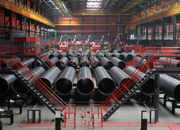 Threeway Steel is known as a professional supplier engaged in manufacturing and distributing a wide range of steel pipe, and our headquarter located the central part of China – Hunan and six associated factories throughout China.
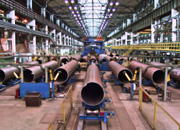 Threeway Steel is known as a professional supplier engaged in designing, manufacturing and distribution of a wide range of steel products with the headquarter located the central part of China – Hunan and six associated factories throughout China.
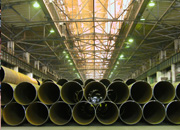 Threeway Steel is known as a professional supplier engaged in designing, manufacturing and distribution of a wide range of steel products with the headquarter located the central part of China – Hunan and six associated factories throughout China.
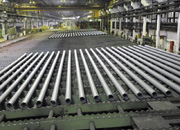 Threeway Steel is known as a professional supplier engaged in designing, manufacturing and distribution of a wide range of steel products with the headquarter located the central part of China – Hunan and six associated factories throughout China.
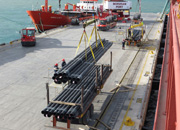 Threeway Steel is known as a professional supplier engaged in designing, manufacturing and distribution of a wide range of steel products with the headquarter located the central part of China – Hunan and six associated factories throughout China.