In 2026, low-carbon construction is a global priority, driving a major shift toward sustainable materials. Structural steel, particularly H-beam steel, has emerged as a preferred solution due to its superior recyclability, long service life, and compatibility with green building standards like LEED and BREEAM.
H-beams offer an exceptional strength-to-weight ratio, allowing engineers to design lighter structures that significantly reduce raw material usage and carbon emissions during production and transport. Their adaptability also makes them ideal for prefabricated and modular construction, minimizing on-site waste and accelerating project timelines.
As the industry embraces circular economy principles, H-beam steel stands out as a foundational material for modern infrastructure. Its combination of structural efficiency, full recyclability, and environmental compatibility makes it essential for achieving sustainable, low-carbon construction goals in 2026 and beyond.
Why H-Beam Steel is Ideal for Low-Carbon Buildings
H-beam steel has emerged as a cornerstone of low-carbon construction, offering a perfect balance of structural efficiency, durability, and environmental sustainability. Its unique H-shaped cross-section provides exceptional resistance to bending and compression, allowing engineers to achieve high load-bearing capacity with significantly less material. This material optimization directly reduces the energy consumption and carbon emissions associated with manufacturing and transportation.
A major advantage of H-beam steel is its full recyclability. It can be reused at the end of its service life without losing mechanical properties, supporting a circular construction economy and minimizing the demand for virgin raw materials. Furthermore, H-beams are highly compatible with prefabricated and modular building systems. This enables precise off-site fabrication and rapid on-site assembly, which drastically cuts construction waste, noise, and energy use during the building process.
Additionally, the long service life and minimal maintenance requirements of H-beam steel contribute to lower lifecycle carbon emissions. By combining material efficiency, recyclability, and construction speed, H-beam steel remains a top choice for achieving modern green building goals and sustainable infrastructure development.
Performance Advantages of H-Beam Steel in Modern Architecture
|
Core Advantage
|
Key Benefits for Modern Architecture
|
|
High Load-Bearing Capacity
|
Excellent resistance to bending, compression, and shear. Ideal for high-rise buildings and large-span structures, enabling open spaces with fewer internal columns.
|
|
Structural Stability
|
Superior performance under static and dynamic loads. Provides exceptional seismic resistance and wind pressure tolerance, ensuring overall building resilience.
|
|
Prefabrication Compatibility
|
Perfect for modular and off-site construction. Enables precise manufacturing, faster assembly, improved quality control, and reduced on-site labor costs.
|
|
Design Flexibility
|
High strength-to-weight ratio reduces material usage. Standardized shapes allow versatile configurations to meet complex architectural and engineering requirements.
|
|
Long-Term Durability
|
Resists corrosion and maintains structural integrity for decades when properly coated or galvanized, significantly reducing long-term maintenance and lifecycle costs.
|
Environmental and Regulatory Drivers in 2026
In 2026, stringent environmental regulations and carbon reduction targets are reshaping the global construction industry. Policies now extend beyond operational energy to strictly regulate embodied carbon in building materials. Consequently, H-beam steel has become essential for compliance, thanks to its high material efficiency and full recyclability.
The widespread adoption of green building standards like LEED and BREEAM further drives demand, as H-beams significantly boost sustainability scores through waste reduction and compatibility with prefabricated construction. Additionally, government incentives, such as tax benefits and fast-track approvals, strongly favor developers utilizing low-carbon structural systems.
As cities prioritize sustainable urban development, H-beam steel stands out as a foundational material. It enables engineers to meet rigorous regulatory requirements while delivering durable, high-performance infrastructure for a greener future.
Recommended H-Beam Steel Products & Global Services
|
Core Category
|
Key Features & Specifications
|
|
ASTM A36 H-beam
|
General structural grade with reliable strength and good weldability. Ideal for standard building frameworks and engineering projects.
|
|
Q235 H-beam
|
Cost-effective solution for light to medium-load structures, such as warehouses, workshops, and modular buildings.
|
|
Q345 H-beam
|
High-strength steel designed for heavy-load applications, including high-rise buildings, bridges, and large industrial structures.
|
|
Wide Flange H-beam
|
Optimized for long-span projects requiring superior bending resistance and structural efficiency.
|
|
Custom Processing
|
Precision cutting, drilling, welding preparation, and hot-dip galvanizing to reduce on-site work and extend service life.
|
|
Quality & Standards
|
Strict dimensional and mechanical testing. Fully compliant with ASTM, EN, and JIS standards; supports SGS/BV third-party inspection.
|
|
Global Shipping
|
Secure steel bundling packaging with container or bulk shipment options. Efficient delivery to North America, Europe, the Middle East, and beyond.
|
Conclusion
In 2026, H-beam steel stands as a cornerstone of modern low-carbon construction, perfectly balancing structural strength with environmental responsibility. Its highly efficient H-shaped cross-section ensures superior load distribution while minimizing material usage, significantly reducing the carbon footprint associated with production and transportation.
A key driver of its adoption is full recyclability. H-beam steel supports circular economy principles by being 100% reusable without losing mechanical properties, making it an ideal choice for sustainable infrastructure. Furthermore, its compatibility with prefabricated and modular construction reduces on-site waste and accelerates project timelines, aligning seamlessly with global green building strategies.
As environmental regulations tighten and certifications like LEED and BREEAM gain prominence, H-beam steel helps developers meet strict compliance standards. Combining exceptional durability, seismic stability, and material efficiency, it remains the foundational material for safe, high-performance, and eco-friendly engineering projects worldwide.
FAQ:
(1) Why is H-beam steel considered a low-carbon building material?
Because it is recyclable, reduces material waste, and supports efficient construction with lower lifecycle emissions.
(2) Is H-beam steel better than concrete for green buildings?
In many structural applications, yes—steel offers higher recyclability, faster installation, and lower long-term carbon impact.
(3) Can H-beam steel be used in modular green buildings?
Yes, it is widely used in prefabricated and modular construction systems due to its strength and ease of assembly.
(4) Does using H-beam steel reduce construction time?
Yes, prefabrication and easier installation significantly shorten project timelines and reduce on-site emissions.
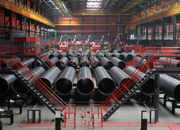 Threeway Steel is known as a professional supplier engaged in manufacturing and distributing a wide range of steel pipe, and our headquarter located the central part of China – Hunan and six associated factories throughout China.
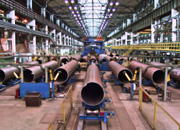 Threeway Steel is known as a professional supplier engaged in designing, manufacturing and distribution of a wide range of steel products with the headquarter located the central part of China – Hunan and six associated factories throughout China.
 Threeway Steel is known as a professional supplier engaged in designing, manufacturing and distribution of a wide range of steel products with the headquarter located the central part of China – Hunan and six associated factories throughout China.
 Threeway Steel is known as a professional supplier engaged in designing, manufacturing and distribution of a wide range of steel products with the headquarter located the central part of China – Hunan and six associated factories throughout China.
 Threeway Steel is known as a professional supplier engaged in designing, manufacturing and distribution of a wide range of steel products with the headquarter located the central part of China – Hunan and six associated factories throughout China.