First, the definition and structure of
coated spiral steel pipes.
Fire-fighting coated spiral steel pipes are composite pipes made from Q235B/Q355 spiral welded pipes as the base material (double-sided submerged arc welding, welds must pass flaw detection), sandblasted to remove rust (Sa2.5 grade), preheated, and then coated with thermosetting epoxy resin (EP) (the mainstream for fire protection) or modified polyethylene (PE) powder on both the inner and outer walls. They are then cured at high temperature to form a dense coating. Fire-fighting grade pipes are usually red for easy identification and acceptance; the outer wall can also be customized in green/black as needed.
Second, key points of the production process for plastic-coated spiral steel pipes.
Substrate pretreatment: Cut to length, sandblast to Sa2.5 grade to thoroughly remove oxide scale and oil stains;
Preheating: Heat the steel pipe to a suitable temperature (matching the powder melting point).
Coating: Electrostatic spraying or fluidized bed coating to ensure a uniform coating without leaks.
Curing: High-temperature baking to melt and cross-link the powder into a film.
Quality inspection: Coating thickness measurement, adhesion, pressure resistance, spark leak detection, and visual inspection.
Third, Core Performance and Technical Parameters
Corrosion and Durability: Isolates water and oxygen, with a lifespan of up to 50+ years in buried/humid environments, far superior to galvanized steel pipes; coating thickness ≥0.35mm for DN50 and below, ≥0.4mm for DN50 and above; adhesion level 1 (no peeling).
Mechanical Strength: Maintains the high rigidity and impact resistance of the spiral pipe; system static pressure test pressure ≥2.4MPa, meeting the 1.6MPa working pressure for fire protection.
Fluid Efficiency: Smooth inner wall, low friction coefficient, low head loss, and less prone to scaling and microbial growth;
Flame Retardant Compliance: Adds flame retardants, conforming to GB/T 5135.20 "Automatic Sprinkler System Coated Steel Pipes" and CJ/T 120 "Water Supply Plastic-Coated Composite Steel Pipes", passing fire protection-specific testing;
Connection Methods: Grooved (clamp) connection, flange connection, welding + coating at the joint; grooved connection requires no open flame, high construction efficiency, suitable for rapid installation in fire protection projects.
Fourth, the main application scenarios of plastic-coated spiral steel pipes:
Fire water supply/sprinkler systems in various buildings (high-rise buildings, commercial complexes, factories);
Municipal fire protection pipe networks and inlet/outlet pipes for fire water tanks;
Fire protection pipelines in chemical industrial parks, ports, tunnels, etc., where high corrosion resistance is required;
Renovation of fire protection pipe networks in old residential areas (replacing easily corroded galvanized pipes).
Fifth, key implementation standards for plastic-coated spiral steel pipes:
GB/T 5135.20: Coated steel pipes for automatic sprinkler systems;
CJ/T 120: Plastic-coated composite steel pipes for water supply;
SY/T 5037: Submerged arc welded spiral steel pipes for general fluid transportation;
GB/T 9711: Steel pipes for oil and gas industrial pipelines;
Fire protection acceptance also requires compliance with GB 50974 "Technical Specification for Fire Water Supply and Fire Hydrant Systems".
Sixth, Precautions for the Procurement and Acceptance of Plastic-Coated Spiral Steel Pipes.
Request complete factory certificates of conformity, coating inspection reports, water pressure test reports, and fire protection certifications; Inspect the coating appearance: ensure there are no runs, pinholes, or missed areas; conduct spot checks using a thickness gauge and spark leak detector; Verify the diameter, wall thickness, coating material (epoxy resin preferred), color, and length; Pipe fittings (elbows, tees) must be coated with the same process to prevent joints from becoming weak points for corrosion; Prevent scratches on the coating during transportation and stacking; strictly prohibit open flames on the coating surface during installation; recoat promptly after welding.
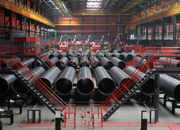 Threeway Steel is known as a professional supplier engaged in manufacturing and distributing a wide range of steel pipe, and our headquarter located the central part of China – Hunan and six associated factories throughout China.
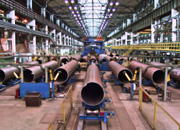 Threeway Steel is known as a professional supplier engaged in designing, manufacturing and distribution of a wide range of steel products with the headquarter located the central part of China – Hunan and six associated factories throughout China.
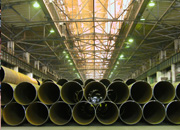 Threeway Steel is known as a professional supplier engaged in designing, manufacturing and distribution of a wide range of steel products with the headquarter located the central part of China – Hunan and six associated factories throughout China.
 Threeway Steel is known as a professional supplier engaged in designing, manufacturing and distribution of a wide range of steel products with the headquarter located the central part of China – Hunan and six associated factories throughout China.
 Threeway Steel is known as a professional supplier engaged in designing, manufacturing and distribution of a wide range of steel products with the headquarter located the central part of China – Hunan and six associated factories throughout China.