Introduction to Q235 Structural Steel
Q235 steel is a widely used carbon structural steel defined by the Chinese GB standard, featuring a minimum yield strength of approximately 235 MPa. Renowned for its balanced mechanical properties, excellent weldability, and cost efficiency, it is a fundamental material for general construction, steel structures, and industrial equipment.
In structural engineering, selecting the right steel is crucial for safety and economic efficiency. While higher-strength steels support heavier loads, Q235 offers a practical balance between strength and affordability for medium-load applications. Although it requires protective coatings like galvanizing to prevent corrosion, its superior fabrication performance and ease of welding make it an ideal, reliable choice for diverse infrastructure projects.
What Is Q235 Steel?
Q235 steel is a widely used low-carbon structural steel produced according to the Chinese GB standard. The designation “Q” represents its yield strength, and “235” indicates a minimum yield strength of approximately 235 MPa. This balanced combination of moderate strength, cost efficiency, and excellent ductility makes it a staple in construction, machinery manufacturing, and general engineering projects.
One of the greatest advantages of Q235 is its superior weldability and formability. Thanks to its low carbon content, it can be easily welded, cut, and machined using standard industrial methods without requiring complex heat treatments. This high fabrication efficiency significantly reduces production costs for manufacturers. It is widely available in various forms, including steel plates, hot-rolled coils, pipes, H-beams, and angle bars.
While Q235 is not a high-strength steel like Q345 or high-strength low-alloy (HSLA) steels, it offers a highly economical solution for medium-load structural applications. It is often compared to ASTM A36 steel due to its similar mechanical properties. However, as a standard carbon steel, Q235 is prone to rust in harsh environments. To ensure long-term durability, it is commonly protected with galvanized, painted, or anti-corrosion coatings. Overall, its versatility and affordability make it a foundational material in modern infrastructure.
Comparing Q235 Steel With Other Structural Steels
|
Steel Type
|
Key Characteristics
|
Typical Applications
|
|
Q235 Steel
|
Yield strength ~235 MPa; highly cost-effective and easy to fabricate
|
Medium/light structures, general construction, and standard fabrication
|
|
Q345 Steel
|
Higher yield strength (~345 MPa); handles heavier loads than Q235
|
Large-span structures, high-rise buildings, and heavy industrial equipment
|
|
ASTM A36 Steel
|
Mechanical properties very similar to Q235; widely used internationally
|
Global construction projects are often interchangeable with Q235
|
|
Stainless Steel
|
Excellent corrosion resistance (e.g., 304/316); significantly higher cost
|
Marine environments, food processing, chemical industries, and humid areas
|
|
HSLA Steel
|
Superior strength, toughness, and atmospheric corrosion resistance
|
Bridges, heavy-duty machinery, and weight-sensitive infrastructure projects
|
In summary, Q235 steel is the ideal choice for general structural applications where moderate strength and low cost are priorities. For projects demanding extreme load-bearing capacity, higher-grade steels like Q345 or HSLA are preferred. Meanwhile, stainless steel remains the best option for highly corrosive environments, despite its higher price point. Selecting the right material ultimately depends on balancing structural requirements, environmental conditions, and project budget.
Strength and Durability Analysis of Q235 Steel
|
Performance Aspect
|
Key Characteristics
|
Engineering Implications
|
|
Strength
|
Minimum yield strength of ~235 MPa
|
Sufficient for static loads like building frames; not for heavy-duty stress.
|
|
Toughness
|
Good ductility and low brittleness
|
Absorbs deformation before failure, reducing sudden fracture risks.
|
|
Durability
|
Low natural corrosion resistance
|
Prone to rust in moisture; requires galvanization or painting for outdoor use.
|
|
Fabrication
|
Excellent weldability and machinability
|
Easily cut, bent, and drilled without complex heat treatments, saving costs.
|
Structural Performance and Environmental Considerations
In terms of strength, Q235 provides a stable load-bearing capacity for standard applications like machinery bases and support structures. Its good toughness ensures structural flexibility, making it less brittle than higher-carbon steels. However, for high-stress or heavy-duty applications, higher-grade steels like Q345 or HSLA are generally preferred.
Durability remains the primary limitation of Q235. As a standard carbon steel, it lacks strong natural resistance to oxygen, moisture, and industrial pollutants. In dry indoor environments, it performs well with minimal maintenance. However, in coastal or chemical environments, corrosion develops rapidly. Therefore, surface protection measures—such as galvanization, powder coating, or anti-corrosion painting—are essential to significantly extend the service life of Q235 steel structures. When properly protected and used within appropriate load conditions, it offers excellent long-term reliability.
Factors to Consider When Choosing Structural Steel
|
Key Factor
|
Evaluation Criteria
|
Impact on Material Selection
|
|
Load Requirements
|
Static loads vs. dynamic loads (wind, vibration)
|
Q235 suits medium/light loads; Q345/HSLA needed for heavy-duty structures.
|
|
Environment
|
Indoor, coastal, or industrial exposure
|
Carbon steel (Q235) needs coatings outdoors; stainless steel excels in harsh zones.
|
|
Fabrication
|
Welding, cutting, and forming needs
|
Q235 offers easy processing; high-strength steels require strict welding protocols.
|
|
Cost & Budget
|
Initial material cost vs. long-term expenses
|
Q235 is highly economical; premium steels may lower long-term maintenance costs.
|
|
Standards
|
Compliance with GB, ASTM, EN, etc.
|
Ensures structural safety and meets mandatory engineering certifications.
|
Material selection begins with load-bearing capacity. Q235 steel is ideal for standard static loads like building frames, whereas high-strength steels like Q345 or HSLA are necessary for heavy-duty infrastructure facing dynamic stress.
Environmental and fabrication needs are equally critical. Standard carbon steels like Q235 require protective coatings against corrosion but offer excellent weldability, significantly reducing manufacturing costs compared to complex high-strength alternatives.
Ultimately, buyers must balance Q235's low initial cost against long-term maintenance needs, while strictly ensuring the selected material complies with all relevant engineering standards for safety.
Recommended Q235 Steel Products and Global Shipping
We supply a comprehensive range of high-quality Q235 steel products, including steel plates, pipes, H-beams, angle steel, and hollow sections. Ideal for construction, infrastructure, and machinery manufacturing, our Q235 steel offers excellent weldability and cost efficiency. For enhanced durability in outdoor or humid environments, we also provide hot-dip galvanized options with superior corrosion resistance.
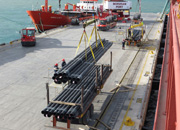
All products are customizable in size and thickness, strictly manufactured to international standards like GB, ASTM, and EN. We support global shipping with secure, waterproof packaging and flexible logistics solutions, including sea freight and container transport. With fast delivery, OEM/ODM services, and full quality certification, we are your reliable partner for efficient and cost-effective Q235 steel solutions worldwide.
Future Trends in Structural Steel Development
The structural steel industry is rapidly evolving to meet demands for higher performance, durability, and sustainability. A key trend is the shift toward high-strength low-alloy (HSLA) steels, which support heavier loads with reduced weight for modern infrastructure, while traditional Q235 steel remains vital for general applications.
To combat corrosion, advanced surface treatments like hot-dip galvanizing and multi-layer coatings are becoming standard, significantly extending service life. Sustainability is also driving the adoption of low-carbon production methods and increased use of recycled materials to meet global green construction goals.
Furthermore, digitalization and smart manufacturing—featuring AI-based quality control and automated mills—are enhancing product consistency. Combined with a growing demand for customized steel solutions, these advancements ensure safer, more efficient, and environmentally friendly structural engineering for the future.
FAQ:
(1) Is Q235 steel stronger than ASTM A36 steel?
Q235 steel and ASTM A36 steel have very similar mechanical properties and are often considered equivalent in many structural applications. However, exact strength values may vary depending on manufacturing standards and material thickness.
(2) Does Q235 steel rust easily?
Q235 is a carbon structural steel, so it can rust when exposed to moisture or harsh outdoor environments. Protective coatings, painting, or galvanization are commonly used to improve corrosion resistance.
(3) What is Q235 steel commonly used for?
Q235 steel is widely used in building structures, bridges, machinery manufacturing, steel pipes, and general construction projects because of its good weldability, moderate strength, and affordable cost.
(4) What is the difference between Q235 and Q345 steel?
Q345 steel has higher yield strength and better load-bearing capacity than Q235 steel. Q235 is more economical and suitable for standard structural applications, while Q345 is preferred for heavier-duty engineering projects.

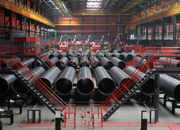 Threeway Steel is known as a professional supplier engaged in manufacturing and distributing a wide range of steel pipe, and our headquarter located the central part of China – Hunan and six associated factories throughout China.
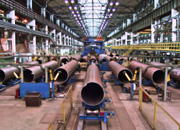 Threeway Steel is known as a professional supplier engaged in designing, manufacturing and distribution of a wide range of steel products with the headquarter located the central part of China – Hunan and six associated factories throughout China.
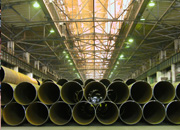 Threeway Steel is known as a professional supplier engaged in designing, manufacturing and distribution of a wide range of steel products with the headquarter located the central part of China – Hunan and six associated factories throughout China.
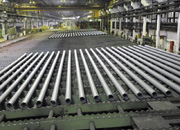 Threeway Steel is known as a professional supplier engaged in designing, manufacturing and distribution of a wide range of steel products with the headquarter located the central part of China – Hunan and six associated factories throughout China.
 Threeway Steel is known as a professional supplier engaged in designing, manufacturing and distribution of a wide range of steel products with the headquarter located the central part of China – Hunan and six associated factories throughout China.