First, the material characteristics and core advantages of
15CrMo seamless steel pipe:
(1) Chemical composition and mechanical properties of 15CrMo seamless steel pipe:
Composition: Carbon: 0.12%-0.18%, Chromium: 0.80%-1.10%, Molybdenum: 0.40%-0.55%, belonging to low-alloy pearlitic heat-resistant steel.
(2) Performance of 15CrMo seamless steel pipe:
- High temperature strength: Tensile strength 440-640MPa, yield strength ≥235MPa, excellent creep strength below 500℃, temperature control required above 550℃.
- Oxidation resistance: A dense chromium oxide protective film forms on the surface, and the corrosion rate in sulfur environments is only 1/3-1/2 that of carbon steel.
- Hydrogen corrosion resistance: Suitable for hydrogen-containing media environments, reducing the risk of hydrogen-induced cracking.
(3) Heat Treatment Process of 15CrMo Seamless Steel Pipe
Normalizing + Tempering: Normalizing temperature 900-960℃, tempering temperature 630-700℃, eliminating internal stress, optimizing microstructure (sorbite structure), and improving impact toughness (impact energy in the heat-affected zone ≥47J).
Process Stability: Controlled rolling and controlled cooling technology ensure uniform performance, and online heat treatment reduces production costs.
Second, Applications of 15CrMo Seamless Steel Pipe in Petrochemical and Chemical Industries.
(1) Application of 15CrMo Seamless Steel Pipe in Petroleum Cracking Units:
Furnace Tubes: Bearing high-temperature cracking reactions (temperature ≥500℃), requiring long-term stable operation.
Heat Exchanger Tubes: Transporting high-temperature fluids, requiring corrosion resistance and thermal fatigue resistance.
Pressure Pipelines: Connecting critical equipment, requiring high strength and sealing.
(2) Application of 15CrMo Seamless Steel Pipe in Chemical Equipment:
Hydrogenation Reactors: High-pressure hydrogen environment, requiring resistance to hydrogen embrittlement and high-temperature strength.
Synthesis Towers: Resistant to corrosive media (such as acidic gases), reducing material loss.
(3) Power Industry Applications of 15CrMo Seamless Steel Pipes:
Main Steam Pipes for Steam Turbines: Requires high-temperature steam (540-580℃) for extended periods, demanding high durability.
Reheat Steam Pipes: Optimizes thermal efficiency and reduces energy loss.
(4) Advantages of 15CrMo Seamless Steel Pipes in Manufacturing Ring-Shaped Parts:
Material Utilization: Compared to solid steel, seamless steel pipes can save 30%-50% of material when manufacturing ring-shaped parts (such as bearing rings and jack sleeves).
Simplified Processes: Reduces machining steps (such as drilling and boring), shortening the production cycle.
Structural Strength: The hollow cross-section design enhances bending stiffness, making it suitable for high-load applications.
(5) Military Equipment Applications:
Gun Barrels and Cannons: Utilizes high strength and heat resistance to withstand high-temperature, high-pressure gas impacts, extending service life.
Hydraulic Systems: Manufactures high-pressure hydraulic cylinders, ensuring sealing and reliability.
Third, Manufacturing Process and Quality Control of 15CrMo Seamless Steel Pipes.
(1) Production Process of 15CrMo Seamless Steel Pipes
Hot Rolling: Round billets are heated to 1100-1200℃ and pierced and rolled, resulting in a dense structure suitable for mass production.
Cold Drawing: Drawing at room temperature, resulting in high dimensional accuracy (outer diameter deviation ≤ ±0.2mm) and good surface finish (Ra≤0.8μm).
Hot Expansion: Optimizing mechanical properties through multi-pass expansion to meet large-diameter requirements (large outer diameter 765mm).
(2) Quality Inspection of 15CrMo Seamless Steel Pipes
Non-destructive Testing: Ultrasonic testing detects internal defects (sensitivity ≥99.9%), and eddy current testing detects surface cracks.
Hydraulic Pressure Test: Verifies pressure-bearing capacity (pressure ≥ 1.5 times the design pressure).
Metallographic Analysis: Microstructure inspection (grain size rating ≥ 6), hardness testing (Britner hardness ≤ 170HBW).
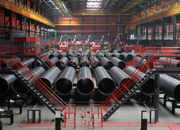 Threeway Steel is known as a professional supplier engaged in manufacturing and distributing a wide range of steel pipe, and our headquarter located the central part of China – Hunan and six associated factories throughout China.
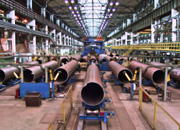 Threeway Steel is known as a professional supplier engaged in designing, manufacturing and distribution of a wide range of steel products with the headquarter located the central part of China – Hunan and six associated factories throughout China.
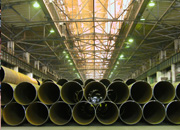 Threeway Steel is known as a professional supplier engaged in designing, manufacturing and distribution of a wide range of steel products with the headquarter located the central part of China – Hunan and six associated factories throughout China.
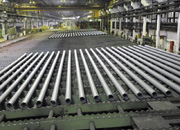 Threeway Steel is known as a professional supplier engaged in designing, manufacturing and distribution of a wide range of steel products with the headquarter located the central part of China – Hunan and six associated factories throughout China.
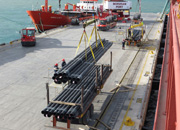 Threeway Steel is known as a professional supplier engaged in designing, manufacturing and distribution of a wide range of steel products with the headquarter located the central part of China – Hunan and six associated factories throughout China.