First, what do you know about externally
galvanized and internally plastic-coated steel pipe?
Externally galvanized and internally plastic-coated steel pipe uses a straight seam steel pipe or seamless steel pipe as a solid base pipe. These two types of base pipe are widely used in the industrial field, possessing good strength and toughness, and can withstand certain pressure and external forces. Based on this, a key process of hot-dip galvanizing is applied. In the hot-dip galvanizing process, the base pipe first undergoes strict pretreatment, removing rust, oil, and impurities from the surface through sandblasting, pickling, etc., to achieve a certain surface roughness, much like preparing a base coat for a wall to be painted, aiming to increase the adhesion between the subsequent coating and the base pipe. Subsequently, the pretreated base pipe is heated to a specific temperature. For the outer surface, a hot-dip galvanizing process is used, immersing the heated base pipe in molten zinc. Under high temperatures, zinc atoms diffuse and fuse with iron atoms, forming a dense and firm galvanized layer on the surface of the base pipe. This galvanized layer not only has a bright, silvery-white appearance, but more importantly, it acts like a sturdy armor for the steel pipe, effectively resisting the corrosion of oxygen, moisture, and chemicals in the external environment, preventing rust, and extending its service life. The hot-dip galvanized layer has excellent impact resistance; it is not easily peeled off or damaged when subjected to external impacts, consistently protecting the steel pipe. For the inner surface, food-grade epoxy or polyethylene coatings are used, applied evenly to the heated inner wall of the base pipe using electrostatic spraying or hot-dip plastic coating techniques. During electrostatic spraying, the coating particles become charged and, under the influence of an electric field, quickly and evenly adhere to the inner wall of the base pipe, forming a dense plastic coating layer.
Second, a complete analysis of the production process of externally galvanized and internally plastic-coated steel pipes:
(I) Pre-treatment of externally galvanized and internally plastic-coated steel pipes.
Pre-treatment is a crucial foundational step in the production of externally galvanized and internally plastic-coated steel pipes. First, the steel pipes need to be chamfered and deburred. During the rolling or cutting process, sharp burrs and uneven edges are generated at the ends of the steel pipes. These burrs not only affect the smooth progress of subsequent processing, but also hinder it. Using specialized chamfering equipment, these burrs are removed from the pipe ends, and a chamfered angle is formed, making the ends smoother and more regular, creating favorable conditions for subsequent connection and processing. The end faces of the steel pipes may be uneven during production, which can lead to uneven gaps and poor sealing during welding and connection operations. Using equipment such as a surface grinder, the end faces of the steel pipes are ground and leveled to ensure that both ends are flat and parallel, guaranteeing a tight fit during connection and improving the overall stability of the pipeline system. Sandblasting is a crucial step in the preliminary treatment. The surface of steel pipes usually contains impurities such as rust, oil, and oxide scale. If these impurities are not thoroughly removed, they will seriously affect the adhesion of the galvanized and plastic coating layers to the steel pipe substrate, reducing corrosion resistance and service life. Sandblasting removes rust by using high-speed abrasive jets to impact and rub the surface of the steel pipe, thoroughly removing impurities and creating a certain roughness that increases the mechanical bonding between the coating and the substrate, thus improving adhesion. After sandblasting, the steel pipe surface exhibits a uniform metallic luster, preparing it for subsequent processing steps.
(II) Key Processing Steps for Externally Galvanized and Internally Plastic-Coated Steel Pipes.
- External Surface Galvanizing: Hot-dip galvanizing is a key process that imparts strong corrosion resistance to the steel pipe. After pre-treatment, the steel pipe is heated to a suitable temperature and then immersed in molten zinc. At high temperatures, zinc atoms rapidly diffuse to the surface of the steel pipe and react chemically with iron atoms, forming a galvanized layer composed of a zinc-iron alloy layer and a pure zinc layer. The zinc-iron alloy layer adheres tightly to the steel pipe substrate, possessing high hardness and corrosion resistance; the pure zinc layer covers the surface of the alloy layer, providing further protection. Its smooth and dense surface effectively blocks the erosion of oxygen, moisture, and chemicals. In the hot-dip galvanizing process, strict control of parameters such as the temperature of the zinc bath, immersion time, and the heating temperature of the steel pipe is crucial. These parameters directly affect the thickness, quality, and uniformity of the galvanized layer. Appropriate immersion time and temperature ensure uniform galvanized layer thickness, avoiding localized areas of excessive thickness or thinness, and guaranteeing good protective performance for the steel pipe under various environments.
- Inner Surface Coating: There are two main inner surface coating processes: electrostatic spraying and hot-dip coating. Each has its own characteristics and is suitable for different application scenarios.
- Electrostatic Spraying: The electrostatic spraying process uses a high-voltage electrostatic generator to negatively charge paint particles. Under the influence of an electric field, the paint particles quickly and uniformly adhere to the inner wall of a grounded steel pipe. Before electrostatic spraying, the steel pipe is preheated to a certain temperature, which helps improve the adhesion and leveling properties of the paint. After preheating, the steel pipe enters the spraying chamber, and the spray gun sprays the paint in a mist form. Under the guidance of the electric field, the charged paint particles accurately adhere to the inner wall of the steel pipe, forming a uniform coating. For electrostatic spraying using thermosetting coatings such as epoxy resin, a curing process is required after spraying.
- Hot-dip plastic coating: The hot-dip plastic coating process involves immersing a preheated steel pipe into molten plastic, allowing the plastic to rapidly cool and solidify on the inner wall of the steel pipe, forming a plastic coating layer. Before hot-dip plastic coating, the steel pipe must also be preheated; the preheating temperature is adjusted according to the type and characteristics of the plastic. When the steel pipe is immersed in the molten plastic, the plastic molecules rapidly interact with the metal atoms on the surface of the steel pipe, forming a tight bond. The plastic coating layer formed by the hot-dip plastic coating process is relatively thick, possessing good wear resistance, corrosion resistance, and impact resistance, making it suitable for applications requiring high protection of the inner wall of the pipe. During the hot-dip plastic coating process, it is important to control the immersion time and speed to ensure a uniform coating thickness and avoid localized areas that are too thick or too thin. Simultaneously, attention must be paid to controlling the temperature of the molten plastic to ensure its fluidity and wettability, thereby obtaining a high-quality plastic coating layer.
(III) Post-processing of externally galvanized and internally plastic-coated steel pipes.
After product processing, post-processing work is equally important. Despite stringent quality control measures during production, minor defects may still occur, such as localized scratches on the coating or slight damage to the galvanized layer. These issues require meticulous repair work. For scratched areas, the area is first cleaned and sanded to remove surface impurities and loose coating. Then, a paint of the same or matching the original coating is applied for repair. Methods such as spraying or brushing are used to ensure the repaired coating blends seamlessly with the surrounding coating, restoring its protective properties. For damaged galvanized layers, hot-dip galvanizing repair agents or cold-dip galvanizing paint can be used for repair, following the product instructions to ensure the repaired galvanized layer effectively prevents the steel pipe from rusting. Furthermore, a comprehensive quality inspection is conducted on the finished product, including visual inspection, coating thickness measurement, adhesion testing, and pressure resistance testing. Through rigorous testing, every externally galvanized and internally plastic-coated steel pipe meets relevant standards and quality requirements; only products that pass inspection are allowed to enter the market and be put into use.
Third, what are the unique properties of externally galvanized and internally plastic-coated steel pipes?
(I) Superior Corrosion Resistance of Externally Galvanized and Internally Plastic-Coated Steel Pipes.
The corrosion resistance of externally galvanized and internally plastic-coated steel pipes is unparalleled, thanks to their unique double-layer anti-corrosion structure. The outer hot-dip galvanized layer acts like a strong defensive line, tightly wrapping the steel pipe. Zinc is a relatively reactive metal that reacts rapidly with oxygen in the air to form a dense zinc oxide film. This film acts as a protective barrier, effectively preventing oxygen and moisture from further contacting the steel pipe substrate, thus preventing rust. The thickness of the hot-dip galvanized layer is typically tens of micrometers or more, exhibiting excellent corrosion resistance. Even in harsh environments with high humidity and salt content, it can protect the steel pipe from corrosion for extended periods. For example, in coastal construction projects, externally galvanized and internally plastic-coated steel pipes are used for water supply and drainage pipelines. The outer galvanized layer can resist salt erosion from sea breezes, ensuring long-term stable operation of the pipeline. The inner plastic coating layer also plays a crucial role. Food-grade epoxy or polyethylene coatings are used, which possess excellent chemical stability and water resistance.
(II) Excellent Mechanical Strength of Externally Galvanized and Internally Plastic-Coated Steel Pipes.
The hot-dip galvanizing process not only endows steel pipes with excellent corrosion resistance but also plays a crucial role in enhancing their mechanical strength. During the hot-dip galvanizing process, a series of physicochemical reactions occur between the steel pipe surface and the molten zinc, forming a zinc-iron alloy layer and a pure zinc layer. The zinc-iron alloy layer is harder than the steel pipe substrate, and it adheres tightly to the steel pipe surface, like putting a hard armor on the steel pipe, effectively increasing the surface hardness of the steel pipe. This increased hardness makes the steel pipe less prone to deformation or damage when subjected to external impact. The tight bonding between the inner and outer coatings and the steel pipe substrate further endows the pipeline with excellent high rigidity and pressure-bearing capacity. When the pipeline is subjected to the pressure of the internal fluid, the steel pipe substrate provides the main load-bearing capacity, while the external galvanized layer and the internal plastic coating work synergistically to enhance the overall rigidity of the pipeline. The internal plastic coating can evenly distribute the internal pressure, avoiding pressure concentration at a certain point on the inner wall of the steel pipe, thereby reducing the risk of local deformation. The outer galvanized layer provides additional external support, preventing the steel pipe from expanding or deforming outward under pressure. This synergistic effect allows the externally galvanized and internally plastic-coated steel pipe to withstand high pressures, typically ranging from 1.6MPa to 4.5MPa or even higher, making it suitable for various high-pressure applications, such as fire protection systems and industrial high-pressure fluid transportation.
(III) Long Service Life of Externally Galvanized and Internally Plastic-Coated Steel Pipes.
Externally galvanized and internally plastic-coated steel pipes boast an impressively long service life, stemming from their excellent anti-aging, wear-resistant, and impact-resistant properties. Regarding anti-aging, both the outer galvanized layer and the inner plastic coating exhibit excellent stability. The zinc in the galvanized layer is chemically stable in the natural environment and is not prone to chemical reactions with other substances that could lead to aging. The epoxy or polyethylene materials used in the inner plastic coating, through special formulations and processing techniques, possess excellent weather resistance, resisting the effects of ultraviolet radiation and temperature changes, thus slowing down the aging process. Even after long-term exposure to outdoor environments and years of wind and sun, its performance remains stable. Its wear resistance also provides a strong guarantee for long-term use. The smooth surface of the inner plastic coating reduces the friction between the fluid and the inner wall of the pipe during fluid transportation, thus reducing wear.
(IV) Convenient Installation Characteristics of Externally Galvanized and Internally Coated Steel Pipes.
Externally galvanized and internally coated steel pipes exhibit significant advantages in installation. Their lightweight and fewer joints bring numerous conveniences to construction. Compared to traditional steel pipes, externally galvanized and internally coated steel pipes, due to the use of a composite process, effectively reduce weight while ensuring strength and performance. This greatly reduces the labor intensity of workers during handling and installation, while also reducing reliance on lifting equipment and improving construction efficiency. Fewer joints are also a major highlight. Fewer joints mean less connection work and less potential leakage risk.
Fourth. Wide Range of Application Areas of Externally Galvanized and Internally Coated Steel Pipes
(I) Domestic Water Supply and Drainage: In the domestic water supply and drainage field, externally galvanized and internally coated steel pipes are the "guardians" ensuring the safety and stability of residents' water supply. Their safe and hygienic characteristics make them an ideal choice for the transportation of drinking water. The inner plastic coating uses food-grade paint, meeting strict hygiene standards and ensuring no harmful substances are released into the water, guaranteeing its purity and health. Whether for water supply pipeline installation in newly built residential areas or pipeline renovation in older communities, externally galvanized and internally plastic-coated steel pipes play a crucial role.
(II) Fire Protection: In the fire protection field, externally galvanized and internally plastic-coated steel pipes bear the heavy responsibility of protecting lives and property. Fire protection systems place extremely high demands on pipelines, requiring high strength and excellent corrosion resistance. Externally galvanized and internally plastic-coated steel pipes fully meet these requirements. Their robust steel pipe base provides strong support, ensuring they can withstand the high-pressure impact of fire-fighting water during a fire, rapidly and effectively delivering fire-fighting water. The combined effect of the outer galvanized layer and the inner plastic coating gives the pipe excellent corrosion resistance, maintaining stable performance even in harsh environments such as humidity and high temperatures, without being affected by corrosion.
(III) Chemical Industry: The chemical industry often involves the transportation of various corrosive media and acid/alkali solutions, posing a severe test to the performance of externally galvanized and internally plastic-coated steel pipes. However, its excellent corrosion resistance and mechanical strength make it a reliable pipeline for chemical industry transportation. The internal plastic coating uses a specially formulated corrosion-resistant plastic that can resist corrosion from various strong acids, alkalis, and other chemicals. Simultaneously, the high strength of the steel pipe substrate and the reinforcing effect of the external galvanized layer give the pipeline good mechanical strength, enabling it to withstand pressure fluctuations, mechanical vibrations, and other external forces that may occur during chemical production. In the connecting pipelines of some chemical reaction equipment, externally galvanized and internally plastic-coated steel pipes can stably transport various media under complex operating conditions, ensuring the continuity and stability of chemical production.
(IV) Oil and Gas Transportation: In the oil and gas transportation field, the pressure-bearing capacity and corrosion resistance of externally galvanized and internally plastic-coated steel pipes are key factors in ensuring the safe operation of oil and gas pipelines. The transportation of oil and natural gas typically requires high-pressure environments. The high-strength steel base and tightly bonded inner and outer coatings of galvanized steel pipes enable them to withstand high pressures, ensuring smooth oil and gas transportation. Their excellent corrosion resistance also plays a crucial role in oil and gas transportation. Oil and gas often contain corrosive gases such as hydrogen sulfide and carbon dioxide, as well as impurities such as moisture and salt, which can cause severe corrosion to pipelines. The outer galvanized layer and inner plastic coating of galvanized steel pipes provide double protection, effectively preventing these corrosive substances from contacting the steel base and extending the pipeline's service life. Galvanized steel pipes are widely used in long-distance oil and gas pipeline projects. They not only ensure the safety of oil and gas transportation but also reduce leaks caused by pipeline corrosion, lower maintenance costs, and improve the economic and social benefits of oil and gas transportation.
(V) Power Industry: In the power industry, galvanized steel pipes play an important role in high-voltage cable protection pipes and power distribution line protection pipes. It effectively prevents cables or conductors from being affected by the external environment, ensuring the safety and stability of power transmission. In outdoor substations, overhead transmission lines, and other applications, high-voltage cables need to traverse various complex terrains and environments, making them susceptible to corrosion from natural factors such as ultraviolet radiation, rain, and sandstorms, as well as damage from external forces such as construction work and mechanical collisions. Galvanized steel pipes with internal plastic coatings serve as cable protection conduits. The outer galvanized layer resists corrosion from the natural environment, preventing the steel pipe from rusting; the inner plastic coating provides a smooth, insulated protective space for the cable, reducing friction between the cable and the inner wall of the conduit, preventing damage to the cable sheath, and providing excellent insulation to prevent leakage accidents. In urban power distribution lines, galvanized steel pipes with internal plastic coatings are used to protect the distribution lines, effectively preventing corrosion of conductors due to factors such as changes in groundwater levels and soil pH, ensuring normal power distribution and providing reliable power support for urban production and daily life.

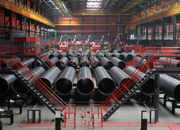 Threeway Steel is known as a professional supplier engaged in manufacturing and distributing a wide range of steel pipe, and our headquarter located the central part of China – Hunan and six associated factories throughout China.
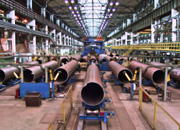 Threeway Steel is known as a professional supplier engaged in designing, manufacturing and distribution of a wide range of steel products with the headquarter located the central part of China – Hunan and six associated factories throughout China.
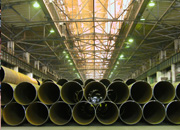 Threeway Steel is known as a professional supplier engaged in designing, manufacturing and distribution of a wide range of steel products with the headquarter located the central part of China – Hunan and six associated factories throughout China.
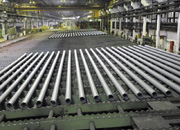 Threeway Steel is known as a professional supplier engaged in designing, manufacturing and distribution of a wide range of steel products with the headquarter located the central part of China – Hunan and six associated factories throughout China.
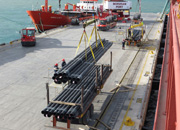 Threeway Steel is known as a professional supplier engaged in designing, manufacturing and distribution of a wide range of steel products with the headquarter located the central part of China – Hunan and six associated factories throughout China.