First, Types and Characteristics of
H-Beams in Construction
H-beams in construction generally include the following types:
1) Hot-rolled H-beams: Advantages include high dimensional accuracy, high production efficiency, low consumption, low overall cost, low residual stress, and short construction period; however, they have fixed specifications, poor cross-sectional flexibility, slightly larger steel consumption, and long procurement cycles for uncommon specifications.
2) Welded H-beams: Advantages include customizable cross-sectional dimensions and flexible cross-sectional changes; however, they have disadvantages such as high metal consumption during cutting and welding, low production efficiency, difficulty in guaranteeing shape and quality, and high residual stress.
3) High-frequency welded H-beams: Advantages include fast welding speed, small heat-affected zone, easy deformation control, and the ability to weld H-beams with different material combinations; however, they are only suitable for small cross-sections.
4) Corrugated web H-beams: The web uses profiled steel sheets to improve the local stability of the web, saving steel when used as beam members; however, they are not suitable for compression members or tension members; they cannot directly bear dynamic loads; and the welding connections are complex.
Second, the advantages of hot-rolled H-beams in building construction and steel structures:
Hot-rolled H-beams are high-performance green building materials, in line with national policies and industry development trends. This product has the following advantages:
(1) Good mechanical properties in cross-section distribution;
(2) No welding required, high-quality precision, efficient, and low-consumption production;
(3) Low residual stress, high component load-bearing capacity;
(4) Convenient connection structure, easy installation, short construction period;
(5) Easy to standardize, low overall cost.
Third, the current status of H-beam applications:
Data from the China Steel Structure Association on the proportion of various steel materials consumed in steel structure projects over the past decade shows that plate steel remains the main component in building steel structures, consistently accounting for over 60%. The application of hot-rolled H-beams has grown slowly, with a low proportion of only 14%-19%, far lower than the 40%-50% proportion in developed countries. Overall, plate steel remains the main component in steel structure projects, while the proportion of H-beams is low. The large amount of welding required for composite sections increases the welding volume and cost in the steel structure manufacturing process, which does not meet the requirements of sustainable development.
A survey of H-beam usage in Chinese steel structure factories over the past five years shows that Q355 grade H-beams currently account for the vast majority (approximately 99%) of the steel used in building steel structures. This contrasts sharply with the fact that Q235 grade H-beams dominate (60%) in hot-rolled H-beam production. Therefore, hot-rolled H-beams need to be developed towards higher strength, and their application in the construction industry should be expanded.
In terms of quantity, my country's current annual consumption of hot-rolled H-beams is approximately 3 million tons, and it is projected to reach 13.2 million tons by 2025, accounting for about 12% of steel structure usage.
Regarding standards, compared with advanced countries, my country's current hot-rolled H-beam standards have reached international advanced levels in terms of product specification range and number of models and specifications. However, improvements are needed in controlling allowable deviations in weight and dimensions.
Fourth, the main problems facing H-beams:
Currently, the main problem facing hot-rolled H-beams for construction is the mismatch between supply and demand. The steel structure industry has significant future development potential, aligning with carbon emission reduction policies. However, current standards for hot-rolled H-beams and their application in steel structure engineering still exhibit inconsistencies and a lack of integration, necessitating consolidation. A standard applicable to building engineering is urgently needed for hot-rolled H-beams.
1. Inconsistencies exist between hot-rolled H-beam product standards and engineering standards regarding permissible errors, width-to-thickness ratios, and other indicators. For example, the width-to-thickness ratio of some wide-flange, thin-walled hot-rolled H-beams does not meet seismic design requirements; some error controls are not specified in product standards, potentially leading to components that meet steel product requirements failing to meet steel structure construction quality acceptance standards and thus being unacceptable.
2. Limited product variety. Currently, domestic H-beam manufacturers are limited to producing H-beams; further product development is entirely handled by downstream steel structure fabrication plants, leading to energy waste, high costs, and inconsistent product quality.
3. Due to long-standing design habits, structural engineers are generally unfamiliar with the application and advantages of hot-rolled H-beams. Related design software and steel structure connection manuals are also not user-friendly, hindering the widespread application of hot-rolled H-beams from the design stage.
Fifth, Development Strategies for H-beams.
In response to the needs and challenges of steel structure development in my country, the following suggestions are made regarding the application of hot-rolled H-beams:
1) Strengthen the interconnectedness of the steel-design-fabrication-installation industrial chain to achieve component-based and standardized products. Component-based production is the biggest advantage of hot-rolled H-beams. Steel mills only need to extend the industrial chain downstream appropriately, performing simple deep processing, completing bolt holes and simple connection plates on steel structure components at the mill, and delivering components directly. Steel products can also be extended to the manufacture of various high-efficiency honeycomb sections, such as oblong-hole honeycomb beams, square-hole honeycomb beams, and variable-height honeycomb beams.
2) Specification variations and combinations. For example, L-shaped, T-shaped, and cross-shaped combined sections.
3) Research and development of fully prefabricated steel structure nodes and structural systems. This includes standardized rigid, semi-rigid, and hinged beam-column connections with adjustable stiffness and rapid assembly, along with corresponding structural systems.
4) Establish an interconnected marketing platform to facilitate design selection and construction procurement, resolving supply-demand mismatches and meeting project needs.
5) Improve standards and strengthen their promotion and application.
Firstly, provide hot-rolled H-beam solutions for prefabricated steel structure housing.
① Reduce costs: Hot-rolled H-beams replace welded H-beams, avoiding mechanical, labor, and material costs associated with cutting, assembly, welding, and straightening processes. Hot-rolled H-beam cross columns replace welded box columns, reducing welding difficulty and costs.
② Design large-space unit types suitable for steel structures, with flexible partitions to meet the requirements of flexible unit layout changes.
③ Use fully prefabricated nodes; beams and columns use bolts instead of welding, shortening the construction period.
Secondly, optimize commonly used product series standards and integrate steel product standards with steel structure engineering standards. The project expanded steel inspection items and sampling procedures; it also coordinated the allowable errors in international and domestic steel structure construction quality acceptance standards, such as adding inspections for web and flange wave patterns and cross-sectional torsional deformation.
Thirdly, adhering to the principle of fewer specifications and more combinations, the project strengthened product series design and development, providing standardized node solutions suitable for prefabricated buildings. For example, it standardized and serialized H-beam sections by maintaining the inner height Hw, inner width bf, and r constant based on existing roller systems, adjusting t1 and t2 values, and linking H and B values to form a series, achieving fewer specifications and more combinations. It also strengthened cross-section optimization research to obtain economically reasonable hot-rolled H-beams and their combined sections, and compiled beam and column load-bearing capacity selection tables, node tables, and standard drawings for direct design adoption. Furthermore, it strengthened research on the load-bearing performance of heavy-duty hot-rolled H-beams and enhanced research on cross-section derivatives, such as circular-hole cellular beams, hexagonal-perforated cellular beams, and octagonal-perforated cellular beams.

 Threeway Steel is known as a professional supplier engaged in manufacturing and distributing a wide range of steel pipe, and our headquarter located the central part of China – Hunan and six associated factories throughout China.
 Threeway Steel is known as a professional supplier engaged in designing, manufacturing and distribution of a wide range of steel products with the headquarter located the central part of China – Hunan and six associated factories throughout China.
 Threeway Steel is known as a professional supplier engaged in designing, manufacturing and distribution of a wide range of steel products with the headquarter located the central part of China – Hunan and six associated factories throughout China.
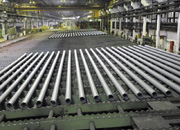 Threeway Steel is known as a professional supplier engaged in designing, manufacturing and distribution of a wide range of steel products with the headquarter located the central part of China – Hunan and six associated factories throughout China.
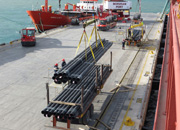 Threeway Steel is known as a professional supplier engaged in designing, manufacturing and distribution of a wide range of steel products with the headquarter located the central part of China – Hunan and six associated factories throughout China.