ASTM A53 steel pipes are widely used but highly susceptible to corrosion when exposed to moisture, chemicals, and harsh environments. Without adequate protection, this degradation can lead to wall thinning, leaks, and structural failure.
Applying a protective coating is the most effective defense. Options range from hot-dip galvanizing, which offers sacrificial protection, to advanced epoxy and 3PE coatings that provide robust barrier protection for buried or industrial pipelines. However, there is no universal solution. The ideal coating depends entirely on the specific service environment, operating temperature, and installation method.
Equally important is proper surface preparation and rigorous quality control to ensure optimal adhesion and longevity.
Common Coating Options for ASTM A53 Steel Pipes
ASTM A53 steel pipes can be used in many environments, but carbon steel is susceptible to corrosion when exposed to moisture, oxygen, salts, chemicals, and soil. Applying a suitable protective coating can help reduce corrosion and extend service life. The best coating depends on the installation environment, operating temperature, mechanical exposure, and required service life.
Coating Options Overview
How to Choose the Right Coating
Key Takeaway
There is no universal "best" coating for ASTM A53 steel pipes:
-
Hot-dip galvanizing – effective for many atmospheric applications
-
FBE and 3LPE – commonly considered for buried and pipeline service
-
3LPP – preferred for selected higher-temperature applications
-
Liquid epoxy and polyurethane – address specific field or environmental requirements
The most reliable approach is to match the coating system to the pipe's actual operating environment, temperature, mechanical exposure, and expected service life.
How to Choose the Best Coating for ASTM A53 Steel Pipes
Choosing the best coating for ASTM A53 steel pipes depends on where the pipe will be installed and how it will operate. There is no coating that performs equally well in every environment. A suitable coating should provide effective corrosion protection while also meeting temperature, mechanical, chemical, and service-life requirements.
Selection Factors
Application Guide
Key Takeaway
The best coating for ASTM A53 steel pipe is the one that matches the:
-
Environment – atmospheric, buried, marine, industrial
-
Temperature – operating limits
-
Chemical exposure – compatibility
-
Mechanical conditions – impact and handling
-
Service life – durability and maintenance
-
Application method – factory or field
Hot-dip galvanizing, FBE, 3LPE, 3LPP, liquid epoxy, and other systems each have specific advantages. By evaluating the complete service environment instead of choosing based only on price or popularity, buyers can improve corrosion protection, reduce maintenance, and achieve more reliable long-term pipe performance.
ASTM A53 Pipe Coating Process and Quality Control
Applying a protective coating to ASTM A53 steel pipe is an effective way to reduce external corrosion and extend service life. However, coating performance depends not only on the coating material but also on surface preparation, application conditions, curing, inspection, and handling. A properly controlled coating process helps ensure that the finished pipe can withstand its intended environment.
Coating Process & Quality Control
Summary Table
Key Takeaway
Effective ASTM A53 pipe coating requires a controlled process from surface preparation through application, curing, inspection, and transportation.
Choosing the right coating is important, but proper application and quality control are equally essential. By controlling surface cleanliness, coating thickness, adhesion, curing, and final inspection, suppliers can help ensure reliable corrosion protection and longer service life for ASTM A53 steel pipes.
Our ASTM A53 Steel Pipe Products, Coating Options, Quality Assurance, and Shipping Services
We supply premium
ASTM A53 steel pipes (Grade A/B) tailored for construction and industrial applications. We offer comprehensive corrosion protection solutions, including hot-dip galvanizing, FBE, and 3LPE, to maximize pipe longevity in harsh environments.
Quality and compliance are paramount. We conduct rigorous inspections—including dimensional checks, coating thickness, and holiday detection—and provide comprehensive Mill Test Certificates (MTCs) to guarantee full adherence to ASTM A53 standards.
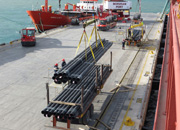
Beyond manufacturing, we provide end-to-end global shipping solutions. We understand that timely delivery is critical to maintaining project schedules. Our logistics team manages secure packaging and flexible transportation options (container and bulk freight) to prevent transit damage and ensure your pipes arrive safely and on time.
To receive a customized product and shipping quotation, please contact us today with your required grade, dimensions, coating type, testing requirements, quantity, and delivery destination. Our expert team will recommend the optimal ASTM A53 steel pipe configuration tailored to your exact project needs.
Conclusion:
Selecting the right coating is essential for protecting ASTM A53 steel pipes from corrosion and extending their service life. There is no universal solution; the best choice depends entirely on the operating environment, temperature, and mechanical conditions.
For outdoor applications, hot-dip galvanizing provides excellent sacrificial protection. For buried pipelines, Fusion-Bonded Epoxy (FBE) and 3LPE systems offer superior barrier and mechanical resistance. However, proper surface preparation and rigorous quality control—including thickness measurement and holiday detection—are equally critical to prevent premature coating failure.
FAQ:
1. What is the best coating for ASTM A53 steel pipe?
There is no universal best coating. Hot-dip galvanizing, FBE, 3LPE, 3LPP, and epoxy coatings suit different environments, temperatures, and service requirements.
2. Is galvanized ASTM A53 pipe corrosion resistant?
Yes. The zinc coating provides barrier and sacrificial protection, helping protect the underlying steel from atmospheric corrosion.
3. What coating is best for buried ASTM A53 pipe?
FBE and 3LPE are commonly used for buried pipelines because they provide strong protection against soil moisture and corrosion. The final choice depends on temperature and soil conditions.
4. Is FBE better than hot-dip galvanizing?
Neither is universally better. FBE is often suitable for buried pipeline applications, while galvanizing is widely used for atmospheric and outdoor exposure.
5. How can I extend the service life of coated ASTM A53 pipe?
Use the appropriate coating, ensure proper surface preparation and application, perform coating inspections, and protect the coating from damage during transportation and installation.
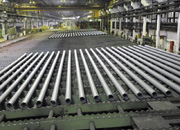
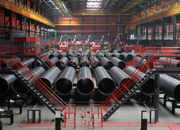 Threeway Steel is known as a professional supplier engaged in manufacturing and distributing a wide range of steel pipe, and our headquarter located the central part of China – Hunan and six associated factories throughout China.
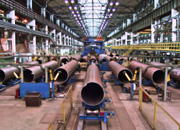 Threeway Steel is known as a professional supplier engaged in designing, manufacturing and distribution of a wide range of steel products with the headquarter located the central part of China – Hunan and six associated factories throughout China.
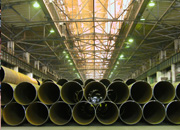 Threeway Steel is known as a professional supplier engaged in designing, manufacturing and distribution of a wide range of steel products with the headquarter located the central part of China – Hunan and six associated factories throughout China.
 Threeway Steel is known as a professional supplier engaged in designing, manufacturing and distribution of a wide range of steel products with the headquarter located the central part of China – Hunan and six associated factories throughout China.
 Threeway Steel is known as a professional supplier engaged in designing, manufacturing and distribution of a wide range of steel products with the headquarter located the central part of China – Hunan and six associated factories throughout China.