API 5L steel pipes are essential for offshore oil and gas transportation, providing a standardized solution for subsea pipelines, export lines, and riser systems. Developed by the American Petroleum Institute, this specification covers seamless and welded line pipes with varying strength grades and Product Specification Levels (PSL1 and PSL2).
Offshore environments present severe challenges, including seawater corrosion, high pressure, and wave-induced fatigue. Therefore, selecting the appropriate API 5L pipe requires careful evaluation of the complete service environment, including fluid composition, operating temperature, and structural loads.
Key Requirements of API 5L Steel Pipes
API 5L steel pipes are widely used for oil and gas transportation because the standard establishes requirements for material quality, manufacturing, mechanical performance, dimensions, and testing. For offshore applications, understanding these requirements is particularly important because pipelines are exposed to pressure, seawater, temperature changes, mechanical loads, and potentially corrosive fluids. Buyers should select API 5L pipe according to the project specification rather than relying on grade or size alone.
Key Requirements Overview
PSL1 vs. PSL2
Manufacturing Methods
Key Takeaway
API 5L requirements cover:
-
PSL – PSL1 or PSL2
-
Steel grade – strength and toughness
-
Chemical composition – weldability and corrosion
-
Manufacturing method – seamless or welded
-
Testing – verification and quality
-
Dimensions – fit and assembly
-
Traceability – identification and records
For offshore applications, evaluate corrosion, fatigue, welding, installation, and service conditions together. Careful specification and inspection before shipment ensure the selected pipe meets performance requirements.
Applications of API 5L Steel Pipes on Offshore Oil and Gas Platforms
API 5L steel pipes are widely used in oil and gas transportation systems because they are designed as line pipe for pipeline applications. On offshore platforms and associated subsea facilities, these pipes can transport crude oil, natural gas, produced fluids, and other media between wells, processing equipment, subsea systems, and onshore facilities.
Applications Overview
Key Requirements by Application
Selection Factors
Key Takeaway
API 5L steel pipes can play an important role in offshore oil and gas infrastructure, particularly in:
With proper material selection, inspection, corrosion control, and engineering design, API 5L line pipe can provide a reliable solution for demanding offshore transportation systems.
Why API 5L Steel Pipes Are Suitable for Offshore Projects
Offshore oil and gas projects require pipeline materials that can withstand pressure, mechanical loads, corrosion, temperature changes, and demanding installation conditions. API 5L steel pipes are widely used for suitable line-pipe applications because the specification provides controlled requirements for material properties, manufacturing, testing, and product quality. When properly selected and engineered, API 5L pipe can provide a reliable foundation for offshore pipeline systems.
Key Suitability Factors
Strength Grades Reference
Key Takeaway
API 5L steel pipes are suitable for many offshore projects because they offer:
-
Controlled material properties – strength and toughness
-
Range of strength grades – design flexibility
-
Seamless and welded options – size flexibility
-
Standardized testing – quality verification
-
Strong traceability – material identification
When combined with appropriate engineering design, welding procedures, corrosion protection, and inspection, API 5L line pipe provides a dependable solution for offshore oil and gas transportation systems.
How to Select the Right API 5L Steel Pipe for Offshore Use
Selecting the right API 5L steel pipe for an offshore oil and gas project requires careful consideration of operating conditions, material properties, pipe dimensions, manufacturing methods, corrosion risks, and applicable standards. Offshore pipelines are exposed to pressure, seawater, temperature changes, installation stresses, and sometimes corrosive fluids. A systematic selection process helps reduce material risks and supports long-term pipeline integrity.
Selection Factors
Selection Checklist
Key Takeaway
Selecting the right API 5L steel pipe involves more than choosing a strength grade. Evaluate:
-
Design pressure and temperature – operating conditions
-
Fluid composition – corrosion risk
-
PSL and grade – quality and strength
-
Pipe type – seamless or welded
-
Corrosion protection – external and internal
-
Welding and installation – fabrication and installation stresses
-
Testing and documentation – quality verification
-
Logistics – transport and delivery
Careful coordination between engineers, suppliers, inspectors, and contractors ensures the selected pipe meets technical and operational requirements.
Our API 5L Steel Pipe Recommendations and Shipping Services.
we supply premium
API 5L seamless and welded steel pipes tailored for demanding offshore oil and gas projects. Available in various grades and PSL levels, our line pipes are engineered to withstand extreme marine environments and corrosive fluids.
Quality and compliance are paramount. We conduct rigorous inspections—including hydrostatic, NDT, and impact testing—and provide comprehensive Mill Test Certificates (MTCs) to guarantee full adherence to API 5L standards.
Beyond manufacturing, we provide end-to-end global shipping solutions. We understand that timely delivery is critical to maintaining project schedules. Our logistics team manages secure packaging and flexible transportation options (container and break-bulk freight) to prevent transit damage and ensure your pipes arrive safely and on time.
To receive a customized product and shipping quotation, please contact us today with your required grade, PSL, dimensions, testing requirements, quantity, and delivery destination. Our expert team will recommend the optimal API 5L steel pipe configuration tailored to your exact offshore project needs.
API 5L Steel Pipe Standards and Offshore Project Considerations
API 5L is an important specification for steel line pipe used in oil and gas pipeline transportation systems. However, compliance with API 5L alone does not determine whether a pipe is suitable for every offshore application. Offshore projects involve complex pressure, temperature, corrosion, fatigue, installation, and environmental requirements. Therefore, API 5L pipe selection should always be considered together with the applicable project specifications, design codes, and service conditions.
Standard Comparison
Offshore Project Considerations
Pre-Order Checklist
Key Takeaway
API 5L provides an important material specification for offshore oil and gas line pipe, but it is only one part of the overall project requirements.
Comparing API 5L with ASTM A106 and ASTM A53 helps buyers understand their different applications. Careful review of:
-
Offshore design codes
-
Corrosion conditions
-
Welding requirements
-
Inspection criteria
Ensures the selected pipe is appropriate for the complete pipeline system.
Common Challenges When Using API 5L Steel Pipes Offshore
API 5L steel pipes can provide reliable performance in offshore oil and gas pipeline systems, but the marine environment creates several challenges that must be addressed during design, procurement, installation, and operation. Seawater, high pressure, temperature changes, mechanical loading, corrosive fluids, and difficult maintenance conditions can all affect pipeline integrity.
Common Challenges
Key Takeaway
The main challenges of using API 5L steel pipes offshore include:
-
External and internal corrosion
-
Pressure – internal and external
-
Fatigue – cyclic loading
-
Welding – field installation
-
Handling – transport and logistics
-
Inspection and maintenance – difficult access
-
Material selection – grade, toughness, weldability
-
Compliance – multiple requirements
Addressing these issues at the design and procurement stages significantly improves pipeline reliability and reduces the risk of costly failures or repairs.
Conclusion:
API 5L steel pipes are essential for offshore oil and gas transportation, offering standardized solutions for subsea and export pipelines. However, offshore environments demand more than basic compliance. Successful deployment requires careful evaluation of extreme conditions, including high pressure, fatigue, and corrosive fluids.
Engineers must select the appropriate grade, Product Specification Level (PSL), and manufacturing method based on comprehensive structural and environmental calculations. Equally critical are rigorous quality control, strict material traceability, and effective corrosion protection systems.
FAQ:
FAQ 1: Can API 5L steel pipes be used for offshore oil and gas pipelines?
Yes. API 5L steel pipes are widely used for suitable oil and gas transportation pipelines, including offshore export, gathering, and subsea systems. The grade, PSL, dimensions, corrosion protection, and other requirements must match the project specifications.
FAQ 2: Which API 5L grade is suitable for offshore pipelines?
There is no single grade suitable for every offshore project. Grades such as L245, L290, L360, L415, L450, and L485 may be selected based on pressure, temperature, pipe dimensions, fluid characteristics, installation conditions, and engineering requirements.
FAQ 3: Is API 5L PSL2 better for offshore applications?
PSL2 generally has more stringent requirements for chemical composition, mechanical properties, testing, and qualification than PSL1. Whether PSL2 is required depends on the offshore project's specifications and applicable codes.
FAQ 4: How are API 5L pipes protected from offshore corrosion?
External corrosion is commonly addressed with protective coatings and cathodic protection. Internal corrosion may require corrosion inhibitors, fluid treatment, internal coatings, or other measures depending on the transported medium and service conditions.
FAQ 5: Can API 5L pipes be used for sour-service offshore pipelines?
They may be used when the material and complete pipeline system meet the applicable sour-service requirements. H₂S-containing environments require careful evaluation of material properties, hardness, welding, testing, and corrosion control.
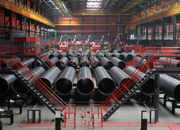 Threeway Steel is known as a professional supplier engaged in manufacturing and distributing a wide range of steel pipe, and our headquarter located the central part of China – Hunan and six associated factories throughout China.
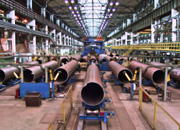 Threeway Steel is known as a professional supplier engaged in designing, manufacturing and distribution of a wide range of steel products with the headquarter located the central part of China – Hunan and six associated factories throughout China.
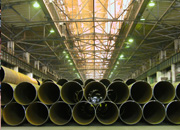 Threeway Steel is known as a professional supplier engaged in designing, manufacturing and distribution of a wide range of steel products with the headquarter located the central part of China – Hunan and six associated factories throughout China.
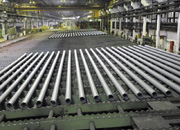 Threeway Steel is known as a professional supplier engaged in designing, manufacturing and distribution of a wide range of steel products with the headquarter located the central part of China – Hunan and six associated factories throughout China.
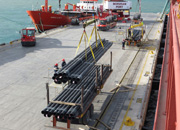 Threeway Steel is known as a professional supplier engaged in designing, manufacturing and distribution of a wide range of steel products with the headquarter located the central part of China – Hunan and six associated factories throughout China.