EN 10219 S355J2H steel pipe is a premium cold-formed welded structural hollow section designed for load-bearing applications. Manufactured under the European EN 10219 standard, it is available in CHS, SHS, and RHS profiles.
The "S355" designation guarantees a minimum yield strength of 355 MPa, providing excellent structural capacity. The "J2" suffix ensures superior impact toughness at -20°C, making it ideal for cold environments and dynamic loading. The "H" signifies its use as a hollow section.
While offering good weldability, S355J2H requires protective coatings like galvanizing for outdoor use. Proper selection requires evaluating structural loads, dimensions, and environmental conditions.
What Is EN 10219 S355J2H Steel Pipe?
EN 10219 S355J2H steel pipe is a cold-formed welded structural hollow section made from non-alloy structural steel. It is designed primarily for load-bearing structures rather than for transporting fluids under pressure. The product is manufactured according to the EN 10219 series, which specifies technical delivery conditions for cold-formed welded structural hollow sections.
Key Characteristics
Designation Breakdown
Manufacturing & Quality
Main Characteristics
Important Note – Not for Pressure Piping
Key Takeaway
EN 10219 S355J2H is a high-strength structural hollow section combining:
-
Strength – 355 MPa minimum yield
-
Impact toughness – J2 low-temperature requirement
-
Weldability – suitable for fabrication
-
Standardized geometry – CHS, SHS, RHS profiles
Suitability depends on required profile, dimensions, structural loads, environmental conditions, fabrication method, and applicable design requirements.
Key Performance Characteristics of S355J2H Steel Pipe
EN 10219 S355J2H steel pipe, more precisely described as a cold-formed welded structural hollow section, is valued for its combination of strength, toughness, weldability, and efficient cross-sectional design. These properties make it suitable for a wide range of load-bearing structural applications. However, performance should always be evaluated according to the specific profile, wall thickness, service conditions, and applicable design requirements.
Key Performance Characteristics
Summary Table
Key Takeaway
The main performance characteristics of EN 10219 S355J2H can be summarized as:
-
High structural strength – 355 MPa yield
-
Specified low-temperature toughness – J2 impact
-
Good weldability – fabrication-friendly
-
Efficient hollow-section geometry – CHS, SHS, RHS
-
Standardized dimensional performance – consistent quality
Best performance is achieved when the grade, profile, wall thickness, surface protection, and fabrication method are properly matched to the project's structural and environmental requirements.
S355J2H Steel Pipe vs. Other Structural Steel Grades
When selecting a structural hollow section, EN 10219 S355J2H is often compared with other grades such as S235JRH, S275J2H, and S355J0H. These grades may look similar, but their strength levels, impact toughness requirements, and intended service conditions can differ. The correct choice should be based on the structural design rather than simply selecting the highest-strength grade.
Comparison Table
Detailed Comparisons
Which Grade Should You Choose?
Important Notes
Key Takeaway
S355J2H stands out through its combination of S355-level strength and J2 impact toughness.
Selecting the right grade requires matching these characteristics to the actual structural and environmental requirements.
Applications of EN 10219 S355J2H Steel Pipe
EN 10219 S355J2H steel pipe, more precisely called a cold-formed welded structural hollow section, is widely used in structures that require a combination of strength, impact toughness, weldability, and efficient cross-sectional design. It can be supplied as circular, square, or rectangular hollow section, allowing engineers to select a profile suited to different structural loads and fabrication requirements.
Applications Overview
Profile Selection Guide
Important Considerations
Key Takeaway
EN 10219 S355J2H steel pipe is well suited to structural applications where strength, toughness, weldability, and efficient hollow-section geometry are important.
From building frames and bridges to industrial structures and equipment supports, it provides a versatile solution when the grade, profile, wall thickness, and surface protection are properly matched to the project requirements.
How to Select the Right S355J2H Steel Pipe
Selecting the right EN 10219 S355J2H steel pipe requires more than confirming the steel grade. Because S355J2H is primarily used as a structural hollow section, engineers should consider the structural loads, section shape, dimensions, operating environment, fabrication requirements, and applicable standards.
Selection Factors
Profile Selection Guide
Final Selection Checklist
Key Takeaway
Selecting S355J2H should begin with the structural design requirements, followed by profile and dimension selection.
The correct product is not necessarily the thickest or largest section—it is the section that provides the required strength, stability, toughness, durability, and fabrication performance while maintaining reasonable material and project costs.
Our EN 10219 S355J2H Steel Pipe Products & Shipping Services
We supply premium EN 10219 S355J2H structural hollow sections in
CHS, SHS, and RHS profiles. With a minimum yield strength of 355 MPa and guaranteed impact toughness at -20°C, these cold-formed welded pipes are ideal for demanding load-bearing applications.
Quality and compliance are paramount. We conduct rigorous inspections—including tensile, Charpy impact, and dimensional testing—and provide comprehensive Mill Test Certificates (MTCs) to guarantee full adherence to EN 10219 standards. We also offer custom surface treatments like galvanizing for enhanced corrosion protection.
Beyond manufacturing, we provide end-to-end global shipping solutions. Our logistics team manages secure packaging and flexible transportation options (container and bulk freight) to prevent transit damage and ensure your structural components arrive safely and on time.
To receive a customized product and shipping quotation, please contact us today with your required profile, dimensions, wall thickness, testing requirements, quantity, and delivery destination. Our expert team will recommend the optimal S355J2H steel pipe configuration tailored to your exact project needs.
Conclusion
EN 10219 S355J2H is a premium cold-formed welded structural hollow section, available in CHS, SHS, and RHS profiles. With a 355 MPa yield strength and J2 impact toughness at -20°C, it is ideal for demanding load-bearing applications like building frames and bridges.
However, S355J2H is strictly a structural product, not a pressure pipe. Proper selection requires evaluating structural loads, dimensions, and welding requirements. Since it lacks inherent corrosion resistance, protective coatings like hot-dip galvanizing are often necessary for outdoor use.
FAQ:
1. What is S355J2H steel pipe used for?
S355J2H is mainly used for structural hollow sections, including building frames, bridges, columns, towers, industrial structures, machinery frames, and supports.
2. What does S355J2H mean?
S355 indicates the structural steel strength class, J2 refers to the specified low-temperature impact toughness category, and H indicates a hollow section.
3. Is S355J2H a high-strength steel?
Yes. S355J2H has a higher strength classification than S235 and S275 structural grades, making it suitable for many load-bearing applications.
4. Is S355J2H suitable for outdoor use?
Yes, but S355J2H is not inherently corrosion-resistant. Outdoor applications may require galvanizing, painting, or another suitable protective coating.
5. Is S355J2H seamless or welded?
EN 10219 S355J2H is a cold-formed welded structural hollow section. It is available in circular, square, and rectangular profiles.
6. What is the difference between S355J2H and S235JRH?
S355J2H has a higher strength classification and a different impact toughness category than S235JRH. The appropriate grade depends on the project's structural and temperature requirements.
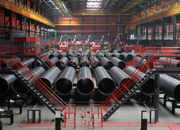 Threeway Steel is known as a professional supplier engaged in manufacturing and distributing a wide range of steel pipe, and our headquarter located the central part of China – Hunan and six associated factories throughout China.
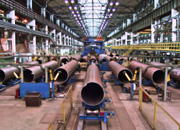 Threeway Steel is known as a professional supplier engaged in designing, manufacturing and distribution of a wide range of steel products with the headquarter located the central part of China – Hunan and six associated factories throughout China.
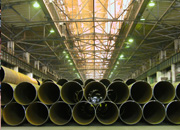 Threeway Steel is known as a professional supplier engaged in designing, manufacturing and distribution of a wide range of steel products with the headquarter located the central part of China – Hunan and six associated factories throughout China.
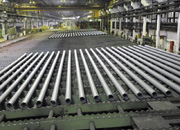 Threeway Steel is known as a professional supplier engaged in designing, manufacturing and distribution of a wide range of steel products with the headquarter located the central part of China – Hunan and six associated factories throughout China.
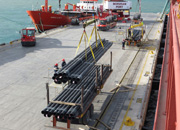 Threeway Steel is known as a professional supplier engaged in designing, manufacturing and distribution of a wide range of steel products with the headquarter located the central part of China – Hunan and six associated factories throughout China.