Spiral welded steel pipes and straight seam welded steel pipes have different technical characteristics and production processes, resulting in many differences in their manufacturing, functions, and applications, and thus different values in use. Let's first make a simple comparison of the technical characteristics of spiral welded steel pipes and straight seam welded steel pipes:
First, the differences in welding processes between spiral welded steel pipes and straight seam welded steel pipes.
In terms of welding processes, the welding methods for spiral welded steel pipes and straight seam welded steel pipes are the same. However, straight seam welded steel pipes inevitably have many T-shaped welds, thus greatly increasing the probability of welding defects. Furthermore, the residual stress at the T-shaped welds is relatively high, and the weld metal is often in a triaxial stress state, increasing the possibility of cracking. Moreover, according to the submerged arc welding process specifications, each weld should have an arc initiation point and an arc extinguishing point. However, when welding the circumferential seam of each straight seam welded steel pipe, this condition cannot be met, resulting in more welding defects at the arc extinguishing point. Therefore, the spiral welded steel pipes produced have excellent quality assurance, guaranteeing that the products will not have defects such as cracks.
Second, the strength characteristics of spiral welded steel pipes and straight seam welded steel pipes.
When a steel pipe is subjected to internal pressure, two main stresses are usually generated on the pipe wall: radial stress δY and axial stress δX. The combined stress at the weld is δ=δY(l/4sin2α+cos2α)1/2, where α is the helix angle of the spiral welded steel pipe weld. The helix angle of the spiral welded steel pipe weld is generally 50-75 degrees; therefore, the combined stress at the spiral weld is 60-85% of the principal stress of the straight seam welded steel pipe. Under the same working pressure, the wall thickness of a spiral welded steel pipe of the same diameter can be reduced compared to a straight seam welded steel pipe.
Third, the metallurgical properties of spiral welded steel pipe and straight seam welded steel pipe materials.
Straight seam submerged arc welded steel pipes are produced from steel plates, while spiral welded steel pipes are produced from hot-rolled coils. Hot-rolled strip mills offer a range of advantages, providing the metallurgical capability to produce high-quality pipeline steel. For example, the water-cooling system on the output stand accelerates cooling, allowing for the use of low-alloy components to achieve specific strength grades and low-temperature toughness, thus improving the weldability of the steel. However, this system is largely absent in plate production plants. The alloy content (carbon equivalent) of coiled steel is often lower than that of similarly graded plates, which also improves the weldability of spiral welded pipes. Furthermore, because the rolling direction of spiral welded pipe coils is not perpendicular to the pipe axis (its clamping depends on the helix angle), while the rolling direction of straight seam pipes is perpendicular to the pipe axis, spiral welded pipe materials exhibit superior crack resistance compared to straight seam pipes.
This paper systematically compares spiral welded steel pipes and straight seam welded steel pipes in terms of welding process, metallurgical properties, and strength characteristics. It focuses on analyzing the differences and main distinctions between the two, and specifically introduces the welding process and methods, strength properties, metallurgical properties, and processes of each type of pipe fitting.
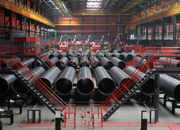 Threeway Steel is known as a professional supplier engaged in manufacturing and distributing a wide range of steel pipe, and our headquarter located the central part of China – Hunan and six associated factories throughout China.
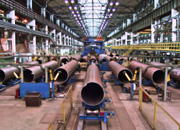 Threeway Steel is known as a professional supplier engaged in designing, manufacturing and distribution of a wide range of steel products with the headquarter located the central part of China – Hunan and six associated factories throughout China.
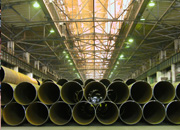 Threeway Steel is known as a professional supplier engaged in designing, manufacturing and distribution of a wide range of steel products with the headquarter located the central part of China – Hunan and six associated factories throughout China.
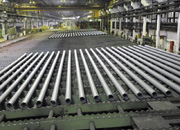 Threeway Steel is known as a professional supplier engaged in designing, manufacturing and distribution of a wide range of steel products with the headquarter located the central part of China – Hunan and six associated factories throughout China.
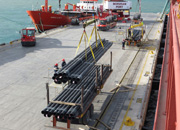 Threeway Steel is known as a professional supplier engaged in designing, manufacturing and distribution of a wide range of steel products with the headquarter located the central part of China – Hunan and six associated factories throughout China.