First, Material Characteristics of
Q700L High-Strength Welded Steel Pipes.
Q700L belongs to low-alloy high-strength structural steel. In its naming, "Q" represents yield strength, "700" indicates a minimum yield strength of 700MPa, and "L" refers to low-temperature toughness. This steel achieves grain refinement and microstructure strengthening through microalloying design and controlled rolling and cooling process (TMCP), enabling it to maintain high strength while possessing good plasticity and low-temperature impact toughness. Laboratory data show that Q700L's elongation can reach over 14%, and its impact energy at -40℃ remains above 27J, far exceeding the standard for ordinary structural steel. Weldability is one of the core advantages of Q700L. By precisely controlling the carbon equivalent (Ceq≤0.47) and cold crack sensitivity coefficient (Pcm≤0.26), combined with appropriate preheating and post-weld treatment, the strength of the weld heat-affected zone (HAZ) can be no less than 90% of the base metal. Actual measurements by a heavy machinery manufacturing company show that the efficiency of Q700L welded steel pipe joints using submerged arc welding reaches 94%, fully meeting the performance requirements of the ISO 14341 standard for high-strength steel welded joints.
Second, the production process of Q700L high-strength steel welded pipes involves three key stages.
Steel plate preparation, forming, welding, and heat treatment. In the steel plate preparation stage, a clean steel production process is adopted, consisting of converter smelting, LF refining, RH vacuum degassing, and continuous casting, ensuring that the sulfur content of the molten steel is ≤0.005% and the phosphorus content is ≤0.015%. During hot rolling, a bainitic microstructure is obtained through two-stage controlled rolling (roughing temperature 1050-1100℃, finishing temperature 800-880℃) and laminar flow cooling (cooling rate 15-25℃/s). Welded steel pipes are formed using JCOE (Progressive Co-forming) or UOE (Underforming) processes, combined with high-frequency induction welding (HFW) or laser welding technology. Taking a φ610×25mm welded steel pipe from a certain company as an example, the forming accuracy can be controlled within ±0.5mm/m, and the ultrasonic testing pass rate of the weld reaches 99.8%. Post-weld tempering treatment (quenching temperature 900±10℃, tempering temperature 600±20℃) is required to eliminate residual stress; shot peening may also be necessary to increase surface compressive stress.
Third, Application Scenarios of Q700L High-Strength Steel Welded Pipes.
In the field of engineering machinery, Q700L welded steel pipes are widely used in key load-bearing components such as crane booms and pump truck booms. A certain company's latest 220-ton all-terrain crane uses a main boom made of Q700L welded steel pipes, reducing weight by 18% compared to traditional materials while increasing the maximum lifting height to 92 meters.
In the construction machinery sector, Q700L welded steel pipes are commonly found in the core tube support systems of super high-rise buildings. For example, the Q700L welded steel pipe columns used in a 380-meter landmark building in Shenzhen achieved a 30% reduction in steel consumption.
In the vehicle manufacturing sector, special vehicle manufacturing is another important application area. Roll cages for military armored vehicles use 12mm thick Q700L welded steel pipes, which, through a special heat treatment process, achieve a hardness of HB300-380, enabling them to withstand the impact of 7.62mm armor-piercing projectiles and possess excellent resistance to blast waves. In the new energy sector, Q700L welded steel pipes are being used in the transition sections of offshore wind turbine towers. Tests on a 5MW unit project showed that its fatigue life is 2.3 times longer than that of Q690 material.
Fourth, Technical Challenges and Development Trends of Q700L High-Strength Welded Steel Pipes.
Despite their superior performance, Q700L welded steel pipes still face several technical bottlenecks in practical applications. The softening phenomenon in the heat-affected zone (HAZ) of welding leads to a loss of joint efficiency. Currently, this is mainly improved through Nb-Ti composite microalloying and new laser-arc composite welding processes. A research institute has developed a dual-pulse MAG welding process that controls the heat input within the range of 12-15 kJ/cm, reducing the HAZ width to below 1.2 mm.
The future development direction of Q700L high-strength steel welded pipes exhibits three characteristics:
(1) Breakthrough in thickness limits: A company's trial-produced 40mm thick Q700L steel plate has passed the welding process evaluation.
(2) Intelligent production: A welded steel pipe forming system based on digital twins can improve product consistency to 99.9%.
(3) Green manufacturing: Hydrogen reduction ironmaking technology is expected to reduce the carbon emissions of Q700L from the current 2.1 t CO2/t steel to 0.8 t CO2/t steel.
Fifth, the market prospects and industrial chain impact of Q700L high-strength steel welded pipes.
According to the China Iron and Steel Association, domestic demand for Q700L high-strength steel welded pipes is projected to exceed 800,000 tons in 2025, with a compound annual growth rate of 12%. This growth is mainly driven by the trend towards larger wind power units (a surge in demand for 8-10MW single-unit capacity) and lightweight construction machinery. Notably, with the advancement of "Belt and Road" infrastructure projects, the annual growth rate of import demand for Q700L welded pipes in Southeast Asia has remained above 25% for three consecutive years. Upstream in the industrial chain, price fluctuations of microalloying elements such as molybdenum and vanadium directly affect the production cost of Q700L. In 2024, the price of ferrovanadium (FeV80) remained high at 230,000-250,000 yuan/ton, prompting steel mills to accelerate the development of new steel grades with low vanadium content. Downstream applications show a trend towards customization. From a standards perspective, my country's GB/T 1591-2018 standard has achieved technical alignment with the European standard EN 10025-6, but the certification barrier of the American standard ASTM A1069 still restricts expansion in the North American market. The industry's ongoing "Q700L+" R&D program aims to increase the yield strength to 750-800 MPa while maintaining existing weldability, which may reshape the global technological competitive landscape for high-strength welded steel pipes.
The technological evolution of Q700L high-strength welded steel pipes is essentially a deep coupling of materials science and industrial needs. With the deepening of China's Made in China 2025 strategy, this type of high-performance steel will demonstrate its value in more high-end equipment fields, and continuous technological innovation and process optimization will be key to maintaining industrial competitiveness. For application companies, a deep understanding of material properties and precise matching of process solutions are essential to maximizing the technical and economic advantages of Q700L welded steel pipes.
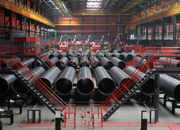 Threeway Steel is known as a professional supplier engaged in manufacturing and distributing a wide range of steel pipe, and our headquarter located the central part of China – Hunan and six associated factories throughout China.
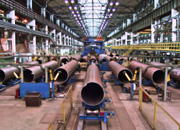 Threeway Steel is known as a professional supplier engaged in designing, manufacturing and distribution of a wide range of steel products with the headquarter located the central part of China – Hunan and six associated factories throughout China.
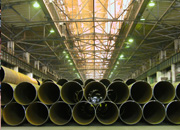 Threeway Steel is known as a professional supplier engaged in designing, manufacturing and distribution of a wide range of steel products with the headquarter located the central part of China – Hunan and six associated factories throughout China.
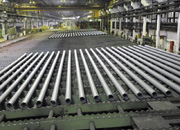 Threeway Steel is known as a professional supplier engaged in designing, manufacturing and distribution of a wide range of steel products with the headquarter located the central part of China – Hunan and six associated factories throughout China.
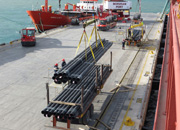 Threeway Steel is known as a professional supplier engaged in designing, manufacturing and distribution of a wide range of steel products with the headquarter located the central part of China – Hunan and six associated factories throughout China.