Q890D seamless steel pipe, as a high-strength low-alloy structural steel material, is widely used in engineering machinery, mining equipment, bridge construction, and other fields. With its excellent mechanical and weldability properties, this steel pipe has become one of the preferred materials for heavy-duty structural components. This article will elaborate on the material characteristics, production process, application fields, and market prospects of Q890D seamless steel pipe.
The material characteristics of Q890D seamless steel pipe are its core advantage. As a high-strength low-alloy steel, Q890D has a yield strength exceeding 890MPa and a tensile strength of 940-1100MPa, while maintaining good plasticity and toughness. This excellent mechanical property stems from its special chemical composition design, typically containing appropriate amounts of carbon, manganese, silicon, and other elements, and achieving fine-grain strengthening and precipitation strengthening through the addition of microalloying elements such as niobium, vanadium, and titanium. It is worth mentioning that Q890D seamless steel pipes also possess excellent weldability, thanks to their low carbon equivalent design, which reduces the likelihood of cold cracking during welding, significantly improving structural safety.
The manufacturing process has a decisive impact on the performance of Q890D seamless steel pipes. Currently, the mainstream manufacturing process includes three key stages: hot rolling, cold drawing, and heat treatment. In the hot rolling stage, precise control of heating temperature and rolling process parameters ensures the uniformity of the steel pipe's microstructure and dimensional accuracy. The cold drawing process further improves the dimensional accuracy and surface quality of the steel pipe. The most critical heat treatment stage typically employs a quenching and tempering process (quenching + tempering), a crucial step in achieving high strength and high toughness. Modern advanced production lines are also equipped with online inspection systems to monitor the steel pipe's geometry, surface defects, and mechanical properties in real time, ensuring that each pipe meets stringent quality standards.
In terms of applications, Q890D seamless steel pipes, with their high strength-to-weight ratio, are widely used in various industries. In the construction machinery sector, it is widely used in manufacturing high-stress components such as crane booms and excavator booms, effectively reducing equipment weight and improving operational efficiency. In mining machinery, Q890D steel pipes are commonly used in the manufacture of hydraulic supports and conveyor structural components, whose excellent impact resistance significantly extends the service life of the equipment. In recent years, with the development of bridge construction towards longer spans, the application of Q890D seamless steel pipes in key parts such as bridge main towers and arch ribs has also increased. Furthermore, this high-strength steel pipe demonstrates unique advantages in special vehicles and offshore platforms.
From a market perspective, the demand for Q890D seamless steel pipes shows a stable growth trend. With the transformation and upgrading of my country's manufacturing industry, the demand for high-performance structural materials continues to increase. Especially under the impetus of the "new infrastructure" strategy, the demand for high-strength steel pipes in large-scale construction machinery and intelligent equipment has increased significantly. At the same time, with increasing environmental protection requirements, lightweight design has become a development trend in various industries, further highlighting the value of high-strength materials like Q890D. According to industry data, the market size of high-strength seamless steel pipes is expected to maintain an average annual growth rate of over 8% in the next five years. In terms of quality control, the production of Q890D seamless steel pipes requires strict adherence to relevant national standards and industry specifications. Besides routine chemical composition analysis and mechanical property testing, rigorous non-destructive testing, such as ultrasonic flaw detection and eddy current testing, is also necessary to ensure the internal quality of the steel pipes. Some high-end applications also require special testing items such as low-temperature impact testing and fatigue testing. It is worth noting that with the increasing complexity of application environments, higher requirements are being placed on the corrosion resistance and hydrogen embrittlement resistance of Q890D steel pipes, prompting manufacturers to continuously optimize processes and formulations.
Technological innovation is the core driving force behind the development of Q890D seamless steel pipes. Currently, leading domestic companies are developing a new generation of high-strength seamless steel pipe production technologies, including ultra-fast cooling processes and online heat treatment technologies. These new processes are expected to further improve product performance and reduce production costs. In terms of materials research and development, upgraded products with better strength and toughness matching are being developed through micro-alloying design and optimization of controlled rolling and cooling processes. Furthermore, the application of intelligent manufacturing technologies has significantly improved production efficiency and product consistency, such as using big data analysis to optimize process parameters and employing machine vision for surface quality inspection. From a supply chain perspective, the raw material supply for Q890D seamless steel pipes is relatively stable, but key alloying elements for high-end products, such as niobium and vanadium, still partially rely on imports. In recent years, domestic enterprises have made significant progress in the localization of raw materials, and some special alloys have achieved domestic substitution. In the logistics processes, because Q890D seamless steel pipes are mostly used in important projects, strict requirements are placed on transportation and storage, necessitating professional rust prevention and deformation prevention measures.
Regarding use and maintenance, although Q890D seamless steel pipes have excellent performance, they still require adherence to standardized operating procedures. During welding, appropriate welding materials and process parameters must be selected based on material characteristics, and preheating and post-heating should be performed when necessary. During service, the corrosion and fatigue conditions of critical components should be regularly inspected, especially structural components in harsh environments. It is worth emphasizing that although Q890D material itself has high strength, appropriate design considerations are still necessary.
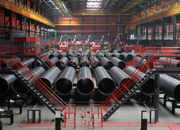 Threeway Steel is known as a professional supplier engaged in manufacturing and distributing a wide range of steel pipe, and our headquarter located the central part of China – Hunan and six associated factories throughout China.
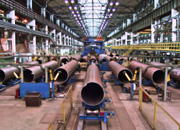 Threeway Steel is known as a professional supplier engaged in designing, manufacturing and distribution of a wide range of steel products with the headquarter located the central part of China – Hunan and six associated factories throughout China.
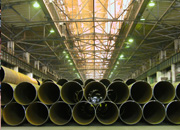 Threeway Steel is known as a professional supplier engaged in designing, manufacturing and distribution of a wide range of steel products with the headquarter located the central part of China – Hunan and six associated factories throughout China.
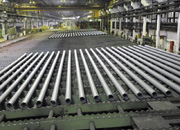 Threeway Steel is known as a professional supplier engaged in designing, manufacturing and distribution of a wide range of steel products with the headquarter located the central part of China – Hunan and six associated factories throughout China.
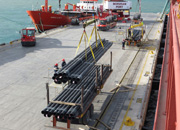 Threeway Steel is known as a professional supplier engaged in designing, manufacturing and distribution of a wide range of steel products with the headquarter located the central part of China – Hunan and six associated factories throughout China.