Ensuring leak-free Oil Country Tubular Goods (OCTG) requires a dual approach: hydrostatic testing and non-destructive testing (NDT). These complementary methods serve distinct but equally vital roles in preventing costly well control incidents.
Hydrostatic testing is a proof test that pressurizes the pipe to validate its overall structural integrity and confirm it can contain pressure without leaking. However, it primarily detects through-wall leaks. NDT (including ultrasonic, magnetic flux leakage, and eddy current testing) identifies subcritical material flaws, cracks, and wall thickness variations that hydrostatic testing cannot reveal.
Industry standards recognize this synergy. API 5CT mandates NDT based on product specification levels (PSL), requiring up to 100% ultrasonic coverage for PSL-3, while ASME codes govern hydrostatic pressure protocols. Neither method alone guarantees 100% integrity; combining them ensures comprehensive defect detection. Understanding the specific strengths of each testing protocol is essential for operators to specify the right quality assurance measures and guarantee reliable, leak-free OCTG performance in demanding field conditions.
Hydrostatic Testing—Purpose, Process, and Limitations
Hydrostatic testing is a critical pressure-based proof test used to verify that Oil Country Tubular Goods (OCTG) can safely contain pressure. The process involves filling the pipe with water and pressurizing it to 1.5 times its design pressure for a specified duration to validate overall mechanical integrity and detect through-wall leaks. Industry standards like API 5CT and ASME strictly govern these parameters.
However, hydrostatic testing has significant limitations. It cannot detect subcritical flaws, planar weld defects, or localized hard spots that may survive the test but fail later under cyclic loading. Additionally, water can temporarily seal small leaks, and the "pressure reversal" phenomenon may allow a defect to survive high test pressures but fail at lower operating pressures.
Because passing the test only confirms the absence of immediate leaks, hydrostatic testing must be complemented by Non-Destructive Testing (NDT) to identify hidden flaws. Furthermore, due to the high risks involved, strict safety protocols—such as using protective barriers and keeping personnel clear during pressurization—are mandatory to prevent severe injuries.
Non-Destructive Testing—Methods, Capabilities, and Applications
Non-destructive testing (NDT) is essential for identifying specific material flaws in OCTG that hydrostatic testing cannot reveal. Unlike pressure-based proof tests, NDT detects cracks, inclusions, and wall thickness variations without damaging the product. Common methods include Ultrasonic Testing (UT), which uses phased array technology for comprehensive volumetric flaw detection; Magnetic Flux Leakage (MFL), which identifies surface and near-surface defects; and Eddy Current Testing (ET). Modern inspection often combines these technologies to achieve superior, all-direction defect detection.
NDT is critical for identifying subcritical defects and planar weld imperfections that could grow under operating pressure. Industry standards strictly regulate these inspections. API 5CT mandates NDT based on product specification levels, requiring 25% UT coverage for PSL-2 and 100% full-body coverage for PSL-3. High-strength grades like C90, T95, and Q125 require mandatory ultrasonic and surface inspections. While multi-technology NDT setups provide excellent quality control for the pipe body, conventional methods still face limitations in testing the extreme ends of products, often requiring untested ends to be cut off and discarded.
Common NDT Methods and Capabilities for OCTG
|
NDT Method
|
Primary Detection Capabilities
|
Key Features & Applications
|
|
Ultrasonic Testing (UT)
|
Volumetric flaws, laminations, and irregular folds.
|
Phased array UT uses a "paint brush" technique to detect longitudinal defects with ±20° deviation. Requires multi-directional testing.
|
|
Magnetic Flux Leakage (MFL)
|
Surface and near-surface defects (seams, laps, cracks).
|
Tests up to 10% OD/ID notch levels for wall thickness up to ~14mm. Provides all-direction capability when combined with UT.
|
|
Eddy Current Testing (ET)
|
Surface cracks.
|
Requires magnetic field saturation to penetrate the metal surface. Often combined with UT and MFL for superior results.
|
|
Leak Testing
|
Pinholes and penetrators.
|
Air-under-water testing serves as an additional layer of quality control in comprehensive test sequences.
|
API 5CT NDT Coverage Requirements
|
Product Specification Level (PSL)
|
NDT Requirements
|
|
PSL-2
|
Requires NDT for most grades, with a minimum of 25% ultrasonic testing (UT) wall thickness coverage.
|
|
PSL-3
|
Requires full-body, full-length NDT with higher sensitivity and 100% UT coverage.
|
Complementary Roles—Why Both Methods Are Essential
Hydrostatic testing and Non-Destructive Testing (NDT) are complementary, not interchangeable, methods for ensuring OCTG quality. Hydrostatic testing serves as a proof test to verify overall structural integrity and detect through-wall leaks or critical cracks. However, it misses subcritical flaws and weld imperfections. NDT fills this gap by detecting planar weld defects, wall thickness variations, and subcritical flaws that could grow under operating pressure.
A standard manufacturing sequence reflects this synergy, progressing from inline mill ET and offline UT during production to hydrostatic testing, followed by final NDT and leak testing to catch any defects opened during pressurization. Industry codes mandate this dual approach for critical applications. API 5CT requires 25% UT coverage for PSL-2 and 100% for PSL-3, while ASME codes govern hydrostatic proof testing. For high-pressure or sour service environments, relying on only one method is insufficient; combining both is essential to prevent costly downhole failures.
Defect Detection Capabilities: Hydrostatic vs. NDT
|
Defect Type
|
Hydrostatic Testing
|
Non-Destructive Testing (NDT)
|
|
Through-wall leaks
|
✓ Detects
|
May detect (depends on method)
|
|
Subcritical cracks
|
✗ Misses
|
✓ Detects
|
|
Weld seam imperfections
|
✗ Limited detection
|
✓ Detects (via UT/MFL)
|
|
Wall thickness reduction
|
✗ Cannot detect
|
✓ Detects (via UT)
|
|
Stress corrosion cracking
|
✓ Detects (critical size only)
|
✓ Detects
|
|
ID indentation flaws
|
✗ Misses
|
✓ Detects
|
Product Recommendations and Shipping Information
For reliable OCTG quality assurance, we recommend advanced hydrostatic and NDT equipment. Full-pipe testers verify overall integrity up to 10,000 psi, while box-end testers offer a faster, high-pressure alternative for thread verification. For flaw detection, combined modality systems integrating MFL, UT, and PAUT provide superior results. PAUT delivers 100% volumetric coverage for complex defects, and MFL systems efficiently detect surface flaws in heavy-wall tubing at production speeds up to 200 feet per minute.
All equipment is securely packaged in heavy-duty crates with included calibration standards. Lead times range from 6–10 weeks for box-end testers to 12–16 weeks for custom PAUT gantry systems. Every system is shipped with comprehensive documentation, including traceable calibration certificates, system qualification reports, operator training manuals, and API/ISO compliance certifications to ensure immediate and accurate deployment.
Conclusion
Hydrostatic testing and Non-Destructive Testing (NDT) are complementary pillars of OCTG quality assurance. Hydrostatic testing serves as the ultimate proof of structural integrity, verifying leak-tightness and detecting through-wall defects under extreme pressure. Conversely, NDT methods like UT, MFL, and PAUT identify subcritical flaws, weld imperfections, and wall thickness variations that a one-time pressure test might miss but could grow under cyclic loading.
Industry standards mandate this dual approach. API 5CT requires specific NDT coverage based on PSL levels, while ASME codes govern hydrostatic proof testing. Modern manufacturing sequences integrate both methods at multiple stages to ensure comprehensive defect detection. For critical applications such as HPHT wells, sour service, and deepwater drilling, relying on only one method is insufficient. The minimal cost of rigorous testing is vastly outweighed by the millions lost to downhole failures, fishing operations, and environmental damage.
Operators and procurement professionals must specify both hydrostatic and NDT methods for OCTG orders. Verify that suppliers follow a documented testing sequence and meet or exceed API 5CT coverage requirements. While no single test guarantees 100% leak-free performance, a rigorously applied combination of hydrostatic testing and advanced NDT provides the highest level of metallurgical assurance, meeting the strict demands of the oil and gas industry.
FAQ:
FAQ 1: Can hydrostatic testing detect all weld defects in OCTG?
No. Most weld defects cannot be determined by hydrostatic testing and must be identified through other forms of nondestructive testing (NDT). Hydrostatic testing is a proof test that primarily reveals through-wall leaks and gross structural weaknesses. Planar weld seam imperfections, lack-of-fusion pinholes, and subcritical cracks may survive hydrotesting but fail later under normal operating pressure. For complete weld integrity verification, UT or MFL inspection is required.
FAQ 2: What NDT methods are required by API 5CT for OCTG?
API 5CT specifies NDT requirements based on product specification level (PSL). For PSL-2 pipes, 25% UT wall thickness coverage is required; for PSL-3, 100% UT wall thickness coverage is mandated. Full-volume testing typically requires at least seven testing directions: wall thickness/lamination, longitudinal notches (clockwise/counterclockwise), transverse notches (forward/reverse), and oblique notches (clockwise/counterclockwise). Additional leak testing (air under water) and magnetic flux leakage inspection may be specified depending on customer requirements and applicable standards.

 Threeway Steel is known as a professional supplier engaged in manufacturing and distributing a wide range of steel pipe, and our headquarter located the central part of China – Hunan and six associated factories throughout China.
 Threeway Steel is known as a professional supplier engaged in designing, manufacturing and distribution of a wide range of steel products with the headquarter located the central part of China – Hunan and six associated factories throughout China.
 Threeway Steel is known as a professional supplier engaged in designing, manufacturing and distribution of a wide range of steel products with the headquarter located the central part of China – Hunan and six associated factories throughout China.
 Threeway Steel is known as a professional supplier engaged in designing, manufacturing and distribution of a wide range of steel products with the headquarter located the central part of China – Hunan and six associated factories throughout China.
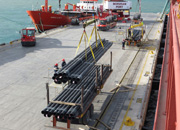 Threeway Steel is known as a professional supplier engaged in designing, manufacturing and distribution of a wide range of steel products with the headquarter located the central part of China – Hunan and six associated factories throughout China.