J55 casing pipe is widely used in oil and gas wells, but deformation—such as bending, ovality, or collapse—remains a costly challenge. These distortions typically result from mechanical stress during handling, improper installation, thermal cycling in steam injection wells, or uneven lateral loads from swelling formations. A single deformed section can compromise wellbore integrity, restrict tool access, and lead to expensive remedial work or well abandonment.
Prevention is critical and requires understanding specific well risks, such as thermal expansion in steam injection or formation creep in reactive mudstones. Operating within J55's mechanical and thermal limits is essential to avoid failures that far exceed prevention costs. This guide explores the root causes of J55 casing deformation, provides practical prevention strategies for handling and thermal management, and outlines corrective actions.
Root Causes of J55 Casing Deformation
J55 casing deformation is primarily driven by thermal cycling, formation-induced lateral loads, mechanical handling errors, and metallurgical defects. In cyclic steam injection wells, temperature fluctuations cause severe thermal expansion and contraction. Research indicates that temperatures exceeding 500°F can induce compressive stresses during heating, which reverse into tensile forces upon cooling, potentially rupturing the pipe or causing joint pullout. Similarly, water swelling in mudstone and formation creep exert local lateral loads that can reduce casing bearing capacity by nearly 40% compared to standard API values. Mechanical mishandling during lifting or excessive make-up torque during installation can also cause permanent warping.
Root Causes of J55 Casing Deformation
|
Cause Category
|
Mechanism & Impact
|
Key Findings & Characteristics
|
|
Thermal Causes
|
Cyclic steam injection creates compressive stresses during heating and tensile forces upon cooling.
|
Temperatures >500°F significantly increase failure risk; a 160°C rise can cause J55 to yield and plastically shorten under constrained conditions.
|
|
Formation Loads
|
Mudstone swelling and formation creep impose local lateral radial loads on the casing.
|
Reduces bearing capacity by 39.69% vs. API 5C3 standards; creates a distinct half-rhombus deformation shape with symmetrical parabolic boundaries.
|
|
Mechanical Causes
|
Improper lifting, stacking, and excessive make-up torque during handling and installation.
|
Causes permanent warping, ovality, thread damage, and stress concentrations that initiate deformation under service loads.
|
|
Metallurgical Factors
|
Manufacturing defects including banded microstructures, inner folds, and non-metallic inclusions.
|
Creates localized stress concentration points that reduce the casing's resistance to thermal and mechanical loads during service.
|
Prevention Strategies—Handling, Installation, and Thermal Management
Preventing casing pipe deformation requires a comprehensive approach spanning handling, installation, and operational management. Deformation often begins before the pipe reaches the wellsite, making disciplined handling essential. Casing should be lifted using spreader bars to avoid point-loading and stored horizontally on adequately spaced supports to prevent sagging. During installation, running speeds must be controlled to avoid shock loads, and make-up torque should be strictly regulated to prevent thread damage.
For steam injection wells, thermal management is critical. Effective strategies include using insulating fluids in the annulus, deploying radiation shields, and prestressing the completion to counteract compressive stresses. In severe cases, upgrading to higher-grade casing like N80 may be necessary. For wells in reactive formations, mitigating lateral loads requires appropriate wall thickness selection, pressure monitoring, and additional cement barriers. Finally, rigorous quality assurance, including verifying API 5CT compliance and conducting dimensional checks before running, ensures that only structurally sound pipe enters the wellbore.
Prevention Strategies for J55 Casing Deformation
|
Strategy Category
|
Key Preventive Measures
|
|
Handling & Storage
|
Use spreader bars for lifting; store horizontally on spaced supports; secure with padded straps during transport; inspect for pre-existing ovality.
|
|
Installation Practices
|
Control running speeds to prevent shock loads; strictly avoid excessive make-up torque; control welding parameters and preheat if field welding is required.
|
|
Thermal Management
|
Use insulating fluids and radiation shields; prestress the completion; upgrade to N80+ grades if J55 is marginal; select connections with adequate stretch capacity.
|
|
Formation Load Mitigation
|
Design appropriate wall thickness for expected pressures; monitor injection pressures; use oversized casing or additional cement barriers in swelling formations.
|
|
Inspection & QA
|
Verify API 5CT specifications and mechanical properties; require mill test certificates and NDT reports; perform visual and dimensional checks before running.
|
Corrective Actions—When Deformation Has Already Occurred
When J55 casing deformation occurs, accurate assessment using multifinger caliper logs or downhole cameras is the critical first step. For minor, non-slip-related damage, hydraulic mechanical straightening can restore over 60% of the cross-sectional area and retain 64% of collapse strength.
For localized damage or leaks, expandable steel patches are highly effective. They conform to irregular geometries, withstand pressures up to 14,500 psi, and save over 60% of rig time compared to traditional cement squeezes, which are increasingly being phased out due to inefficiency. However, when casing suffers severe structural loss or total collapse beyond repair, milling out and replacing the entire string becomes the only reliable, albeit most costly, solution. Selecting the right intervention ensures wellbore integrity while minimizing operational downtime and expenses.
Product Recommendations and Shipping Information
|
Category
|
Details & Specifications
|
|
Product Recommendations
|
Seamless J55: Standard for conventional wells (4-1/2" to 20" OD; STC, LTC, BTC threads). ERW J55: Cost-effective for shallow/moderate pressure; not for sour service. PSL2: Preferred over PSL1 for low-temperature brittle fracture risk (min 20J impact energy).
|
|
Grade Upgrades for High-Risk Wells
|
J55 (379 MPa): Shallow, low-pressure. N80 (552 MPa): Medium-depth, standard conditions. P110 (758 MPa): Deep, HPHT, severe thermal cycling.
|
|
Packaging Standards
|
Small-diameter: Bundled with steel strapping, wooden separators, and PE film wrapping. Large-diameter: Shipped individually on heavy-duty supports with steel/plastic thread protectors.
|
|
Lead Times
|
Standard J55: 15–30 days. Custom J55: 20–35 days. PSL2 / High-grade (N80, P110): 20–45 days. Third-party inspection (SGS, BV): +5–7 days.
|
|
Shipment Documentation
|
EN 10204 3.1B Mill Test Certificates, API monogram license, hydrostatic test records, NDT reports (UT/eddy current), Certificate of Origin, and packing list.
|
Conclusion
J55 casing deformation is a preventable challenge that requires targeted countermeasures throughout the casing lifecycle. Primary root causes include thermal cycling in steam injection wells (which can exceed coupling capacity above 500°F), formation creep and mudstone swelling (which reduce casing strength by nearly 40%), mechanical handling damage, and metallurgical defects.
Prevention begins before the casing reaches the wellsite. Proper handling, controlled installation, and thermal management strategies—such as insulating fluids, radiation shields, and upgrading to N80 or higher grades for high-temperature wells—are essential to keep J55 within its operating limits.
When deformation occurs, corrective actions depend on severity. Mechanical straightening can restore over 60% of the cross-sectional area for minor damage, while expandable steel patches offer a rapid, high-integrity solution for leaks, saving significant rig time compared to traditional cement squeezes. Severe structural failures require complete milling and replacement.
The economic case for prevention is clear: proactive handling, storage, and thermal management cost far less than remedial interventions.
FAQ:
FAQ 1: What is the maximum safe temperature for J55 casing in steam injection wells?
J55 casing should generally not be exposed to temperatures exceeding approximately 500°F in fully constrained conditions. Research from the Cat Canyon field shows that cyclic steam injection at temperatures above 500°F creates significant failure risk for J55 ST&C casing—with risk increasing dramatically as temperatures approach 650°F . For wells requiring higher injection temperatures, consider upgrading to N80 or higher grade casing or implementing thermal insulation measures such as insulating fluids or radiation shields.
FAQ 2: Can deformed J55 casing be straightened and reused?
Straightening is only recommended for minor deformation and must be performed by professionals using specialized hydraulic equipment. Attempting to straighten severely deformed casing can induce additional stress concentrations, micro-cracks, or metallurgical damage that may lead to premature failure in service . For deformation that is moderate to severe—particularly if it affects pressure integrity or connection fit-up—replacement is the safer and more reliable option. Always perform a thorough inspection (including ultrasonic or electromagnetic testing) before deciding on straightening vs. replacement.
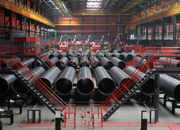 Threeway Steel is known as a professional supplier engaged in manufacturing and distributing a wide range of steel pipe, and our headquarter located the central part of China – Hunan and six associated factories throughout China.
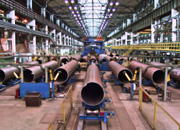 Threeway Steel is known as a professional supplier engaged in designing, manufacturing and distribution of a wide range of steel products with the headquarter located the central part of China – Hunan and six associated factories throughout China.
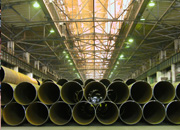 Threeway Steel is known as a professional supplier engaged in designing, manufacturing and distribution of a wide range of steel products with the headquarter located the central part of China – Hunan and six associated factories throughout China.
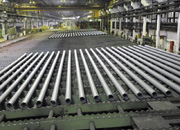 Threeway Steel is known as a professional supplier engaged in designing, manufacturing and distribution of a wide range of steel products with the headquarter located the central part of China – Hunan and six associated factories throughout China.
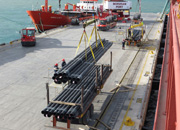 Threeway Steel is known as a professional supplier engaged in designing, manufacturing and distribution of a wide range of steel products with the headquarter located the central part of China – Hunan and six associated factories throughout China.