Natural gas pipelines face severe degradation from corrosive agents like CO₂ and H₂S, which can cause cracking and catastrophic failures. To mitigate these risks, corrosion-resistant steel pipes utilize either inherently resistant alloys or protective coating systems. Material selection is strictly governed by industry standards such as GB/T 20972 and SY/T 0599, which mandate hardness limits of 250HV10 for sour gas environments to prevent sulfide stress cracking.
These pipes are classified based on the service environment (sweet vs. sour) and material type, ranging from standard carbon steel to duplex stainless and nickel-based alloys. While carbon steel with a corrosion allowance may suffice for sweet gas, aggressive sour environments require specialized Corrosion Resistant Alloys (CRAs).
Classification by Corrosion Environment and Mechanism
The classification of natural gas corrosion-resistant pipes is primarily driven by the specific corrosive environment and the resulting degradation mechanisms. The most fundamental distinction is between sweet service, which contains carbon dioxide (CO₂) and is typically managed with carbon steel and a corrosion allowance, and sour service, which contains hydrogen sulfide (H₂S) and requires strict hardness limits (≤250HV10) and specialized alloys to prevent catastrophic sulfide stress cracking (SSC) and hydrogen-induced cracking (HIC).
Beyond these primary environments, pipelines face several localized and complex corrosion threats. Top-of-Line Corrosion (TLC) occurs when water vapor condenses at the top of the pipe in stratified flow, creating highly acidic localized environments that require specialized vapor-phase inhibitors. Microbial Corrosion (MIC) is driven by bacteria like IOB and SRB forming biofilms that accelerate localized pitting, necessitating biocides or antimicrobial coatings. Additionally, Erosion-Corrosion occurs in elbows and fittings where the synergistic effect of acidic condensates and solid particle impingement destroys protective internal coatings, dramatically accelerating localized metal loss.
Classification by Corrosion Environment and Mechanism
|
Corrosion Type
|
Primary Mechanism & Environment
|
Material & Mitigation Requirements
|
|
Sweet Service
|
CO₂ dissolves in water to form carbonic acid; severity depends on CO₂ partial pressure.
|
Carbon steel with a corrosion allowance (typically 3 mm) is generally adequate.
|
|
Sour Service
|
H₂S causes severe sulfide stress cracking (SSC) and hydrogen-induced cracking (HIC).
|
Strict hardness limits (≤250HV10) per NACE MR0175/ISO 15156; requires CRAs or nickel alloys.
|
|
Top-of-Line Corrosion (TLC)
|
Condensation of water vapor at the pipe top creates acidic aqueous phases in stratified flow.
|
Requires vapor-phase inhibitors or specialized internal coatings to prevent localized damage.
|
|
Microbial Corrosion (MIC)
|
Bacteria (SRB/IOB) form biofilms that accelerate localized pitting beneath the film.
|
Requires biocides, antimicrobial coatings, or continuous pigging to control bacterial activity.
|
|
Erosion-Corrosion
|
Synergistic effect of acidic condensates and solid particle impingement in elbows/fittings.
|
Requires optimized pipeline geometry and highly durable internal organic coatings.
|
Classification by Material Type
The classification of natural gas corrosion-resistant steel pipes is primarily governed by the international standard ISO 13680 (equivalent to API 5CRA), which categorizes Corrosion Resistant Alloys (CRAs) into five distinct groups based on their microstructure and composition. These groups range from cost-effective Martensitic Stainless Steels (Group 1), which are suitable for mild sour service and moderate chloride environments, to Duplex and Super Duplex Stainless Steels (Group 2). Duplex grades offer superior resistance to chloride stress corrosion cracking and are widely used in offshore and high-chloride pipeline projects.
For moderate-temperature applications, Austenitic Stainless Steels (Group 3) provide excellent CO₂ and chloride resistance, though they are limited by susceptibility to stress corrosion cracking at elevated temperatures. The most severe environments—characterized by high H₂S, extreme temperatures, and high chlorides—require Nickel-Based Alloys (Group 4) or Age-Hardened Nickel-Based Alloys (Group 5) for unmatched corrosion and cracking resistance. Additionally, CRA Composite (Clad/Lined) Pipes offer a highly economical alternative by combining the mechanical strength of a carbon steel base with a thin, highly resistant internal CRA layer, making them ideal for transporting sour gas without the cost of solid alloy pipes.
Classification of Corrosion-Resistant Steel Pipes by Material Type
|
Material Group
|
Key Characteristics & Limitations
|
Best Application
|
|
Group 1: Martensitic SS
|
Cost-effective; requires strict hardness control (≤HRC 23) for sour service.
|
Mild sour service and moderate chloride environments (e.g., 13Cr grades).
|
|
Group 2: Duplex SS
|
High strength; excellent resistance to chloride stress corrosion cracking (SCC).
|
Offshore pipelines, subsea flow lines, and high-chloride environments.
|
|
Group 3: Austenitic SS
|
Excellent CO₂ resistance; limited by SCC risk at temperatures above 60–80°C.
|
Moderate-temperature applications with chlorides (e.g., 316L).
|
|
Group 4: Nickel-Based Alloys
|
Highest corrosion resistance; immune to severe H₂S, chlorides, and MIC.
|
Extreme downhole conditions and severe sour service.
|
|
Group 5: Age-Hardened Ni Alloys
|
High-strength austenitic structure; restricted to bar products only.
|
Accessories and equipment components requiring high strength.
|
|
CRA Composite Pipes
|
Combines carbon steel strength with a thin internal CRA layer; cost-effective.
|
Sour gas transmission where solid CRA is economically prohibitive.
|
Standards and Selection Criteria
Selecting corrosion-resistant steel pipes for natural gas service requires strict adherence to international standards. The primary framework includes GB/T 9711 (ISO 3183) for standard line pipes and ISO 13680 (API 5CRA) for corrosion-resistant alloys (CRAs). For sour service environments containing H₂S, NACE MR0175 / ISO 15156 is mandatory to prevent catastrophic failures like sulfide stress cracking (SSC) and hydrogen-induced cracking (HIC). This standard dictates strict limits, including a maximum hardness of 22 HRC (248 HV10) for base metals and welds, and requires specific heat treatments and HIC testing.
Material selection is driven by the severity of the corrosive environment, including H₂S and CO₂ partial pressures, chloride content, and temperature. For sweet gas, carbon steel with a corrosion allowance is the most economical choice. As environments become more aggressive, engineers must step up to hardness-controlled carbon steel, martensitic stainless steels, duplex stainless steels, or ultimately nickel-based alloys. Crucially, only PSL-2 products are qualified for sour service, ensuring enhanced toughness and rigorous corrosion testing.
Key Standards and Selection Criteria
|
Standard / Criteria
|
Key Requirements & Specifications
|
Application / Environment
|
|
GB/T 9711 (ISO 3183)
|
Defines PSL1 (standard) and PSL2 (enhanced toughness/testing) line pipe.
|
General petroleum and natural gas pipeline transportation.
|
|
ISO 13680 (API 5CRA)
|
Classifies CRAs into 5 groups; PSL-2 requires Annex G/ISO 15156 qualification.
|
CRA seamless tubulars for casing, tubing, and severe service.
|
|
NACE MR0175 / ISO 15156
|
Max hardness ≤22 HRC; strict S/P limits; mandatory HIC testing.
|
Sour service (H₂S environments) to prevent SSC and HIC.
|
|
Sweet Service
|
Carbon steel (API 5L) with 1.5–3 mm corrosion allowance.
|
CO₂ only, manageable corrosion rates.
|
|
Mild Sour Service
|
Hardness-controlled PSL2 carbon steel or Martensitic SS (Group 1).
|
Low H₂S and moderate chlorides.
|
|
Severe Sour Service
|
Duplex SS (Group 2) or Nickel-Based Alloys (Group 4).
|
High H₂S, high chlorides, high temperatures, and low pH.
|
Product Recommendations and Shipping Information
Selecting the right corrosion-resistant pipe requires matching the product to specific environmental and operational needs. Recommended options include ISO 13680 alloy groups: Martensitic stainless steel for mild sour service, Duplex for high chlorides, and Nickel-based alloys (e.g., N08825) for severe conditions. For moderate H₂S environments, API 5L X65 PSL2 sour service carbon steel is highly cost-effective.
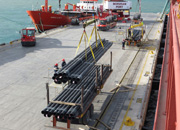
To ensure safe transit, pipes are securely packaged using wooden crates, waterproof sealing, and specialized bundling based on diameter. Standard lead times range from 20 to 40 business days depending on the material. All shipments include comprehensive documentation, such as EN 10204 3.1B mill test certificates, NACE MR0175 compliance, and NDT reports. Third-party inspections (SGS, Bureau Veritas) are also available upon request to guarantee strict quality and standard adherence.
Conclusion
Selecting the right natural gas corrosion-resistant steel pipes is critical for ensuring pipeline safety and longevity. The primary classification depends on the environment: sweet service (CO₂ only) is typically managed with carbon steel and a corrosion allowance, while sour service (H₂S present) introduces severe cracking risks, requiring strict adherence to NACE MR0175/ISO 15156 standards and hardness limits (≤250HV10).
For severe sour conditions, Corrosion-Resistant Alloys (CRAs) classified under ISO 13680 are mandatory. These range from martensitic stainless steels (Group 1) and duplex stainless steels (Group 2) to nickel-based alloys (Group 4). Additionally, specialized threats like Top-of-Line Corrosion (TLC) and Microbial Corrosion (MIC) require targeted mitigation strategies.
The standards framework, including GB/T 9711 (ISO 3183) and ISO 13680, provides the technical basis for these specifications. PSL-2 products are strictly required for sour service environments. Accurate material selection is essential: under-specifying risks catastrophic pipeline failures and environmental damage, while over-specifying adds unnecessary costs. By understanding the classifications based on corrosive environments, material types, and industry standards, engineers and procurement professionals can make informed decisions that perfectly balance safety, corrosion resistance, and economic performance.
FAQ:
FAQ 1: What is the difference between sweet gas and sour gas pipeline requirements?
Sweet gas contains CO₂ but no significant H₂S. The primary corrosion mechanism is acid corrosion from carbonic acid (H₂CO₃). Carbon steel with a corrosion allowance (typically 1.5–3 mm) is generally adequate . Sour gas contains H₂S, which introduces risks of sulfide stress cracking (SSC), hydrogen-induced cracking (HIC), and stepwise cracking. Sour service requires materials that meet NACE MR0175/ISO 15156, with hardness limits ≤250HV10 and specific qualification testing . Carbon steel can be used in sour service only with strict controls; severe sour conditions require alloyed materials such as duplex stainless or nickel-based alloys.
FAQ 2: When should I specify corrosion-resistant alloy (CRA) pipe instead of carbon steel with corrosion allowance?
CRA pipe (solid or composite) is required when:
Sour service with high H₂S partial pressure where carbon steel cannot meet hardness/cracking resistance requirements
High chloride content combined with high temperature, where carbon steel pitting risk is unacceptable
High CO₂ partial pressure with low pH, where carbon steel corrosion rates exceed the allowable corrosion allowance over the design life
Temperature exceeds 120°C (IGEM/TD/1 limits carbon steel to 120°C)
Service life extension where the economic benefit of reduced maintenance and inspection outweighs the higher material cost
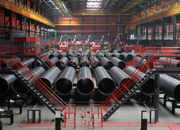 Threeway Steel is known as a professional supplier engaged in manufacturing and distributing a wide range of steel pipe, and our headquarter located the central part of China – Hunan and six associated factories throughout China.
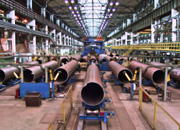 Threeway Steel is known as a professional supplier engaged in designing, manufacturing and distribution of a wide range of steel products with the headquarter located the central part of China – Hunan and six associated factories throughout China.
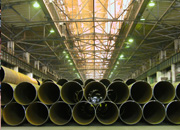 Threeway Steel is known as a professional supplier engaged in designing, manufacturing and distribution of a wide range of steel products with the headquarter located the central part of China – Hunan and six associated factories throughout China.
 Threeway Steel is known as a professional supplier engaged in designing, manufacturing and distribution of a wide range of steel products with the headquarter located the central part of China – Hunan and six associated factories throughout China.
 Threeway Steel is known as a professional supplier engaged in designing, manufacturing and distribution of a wide range of steel products with the headquarter located the central part of China – Hunan and six associated factories throughout China.