Line pipe and casing pipe are essential steel products in the oil and gas industry, but they serve distinct functions. Line pipe is designed for transporting fluids like crude oil and natural gas through pipeline systems, focusing on internal pressure resistance. In contrast, casing pipe is installed inside drilled wells to support the wellbore, isolate geological formations, and ensure structural integrity during drilling and production.
Because they face different mechanical loads and operating conditions, these two pipes are not interchangeable. Selecting the correct product requires careful evaluation of specific application requirements, including diameter, wall thickness, steel grade, and applicable industry standards. Using the wrong type of pipe can lead to severe operational failures and costly specification errors.
What Is Line Pipe?
Line pipe is a type of steel pipe primarily designed to transport fluids over distances. It is widely used in oil and gas pipelines, water transmission systems, gathering networks, and other industrial applications where liquids or gases need to be moved safely and efficiently.
Key Characteristics
|
Aspect
|
Description
|
|
Primary function
|
Transport fluids over distances
|
|
Main applications
|
Oil and gas pipelines, water transmission, gathering networks, industrial process pipelines
|
|
Design focus
|
Internal pressure handling, structural integrity, long-term reliability
|
|
Manufacturing
|
Seamless (no weld seam) or welded (formed strip/plate joined by welding)
|
Common Applications
|
Application
|
Description
|
|
Oil and gas transmission
|
Long-distance pipelines for crude oil, natural gas
|
|
Gathering pipelines
|
Collection from production areas
|
|
Water transportation
|
Water transmission systems
|
|
Refined product pipelines
|
Petroleum products
|
|
Industrial process pipelines
|
Process fluids
|
|
Infrastructure and energy projects
|
Supporting systems
|
Seamless vs. Welded Line Pipe
Key Specifications
Material and Grade Selection
Wall Thickness Importance
Key Takeaway
Line pipe is a critical component of modern fluid transportation infrastructure. Choosing the correct:
-
Grade
-
Diameter
-
Wall thickness
-
Manufacturing method
-
Corrosion protection
-
Applicable standard
Helps ensure safe and reliable pipeline operation.
What Is Casing Pipe?
Casing pipe is a steel pipe used in oil and gas wells to support the wellbore, isolate geological formations, and protect the well during drilling and production. Unlike line pipe, which is primarily designed to transport fluids between locations, casing is installed inside a drilled well and becomes an important part of the well structure.
Key Characteristics
|
Aspect
|
Description
|
|
Primary function
|
Support wellbore, isolate formations, protect well during drilling and production
|
|
Installation
|
Installed inside a drilled well—becomes part of the well structure
|
|
Key role
|
Creates a controlled, stable pathway for drilling and production operations
|
Main Functions of Casing Pipe
Common Types of Casing
Key Specifications
Common Standard
Casing Pipe vs. Line Pipe
Key Takeaway
Casing pipe supports and protects the wellbore, while line pipe transports fluids. Their standards, connections, mechanical requirements, and design considerations are different.
Using the correct casing specification is essential for maintaining well integrity and safe drilling operations. A suitable product should be selected according to the complete well design and applicable industry requirements.
Line Pipe vs Casing Pipe: Key Differences
Line pipe and casing pipe are both important steel pipe products used in the oil and gas industry, but they are designed for very different purposes. Understanding their differences helps buyers, engineers, and contractors select the correct pipe for a specific project and avoid costly specification errors.
Quick Comparison
Detailed Differences
Can Line Pipe and Casing Pipe Be Interchanged?
Key Takeaway
The difference between line pipe and casing pipe is primarily determined by function and operating conditions:
Selecting the correct product requires consideration of:
-
Application – transportation vs. well construction
-
Dimensions – diameter, wall thickness
-
Material grade – mechanical properties
-
Loads – pressure, collapse, tension
-
Connection type – welded vs. threaded/coupled
-
Applicable standards – API 5L vs. API 5CT
How to Choose Between Line Pipe and Casing Pipe
Choosing between line pipe and casing pipe begins with identifying the application. Line pipe is designed for transporting fluids like oil and gas, while casing pipe provides structural support and isolates geological formations inside drilled wells.
Selecting the correct product requires evaluating specific engineering requirements, including diameter, wall thickness, steel grade, and operating environment. It is crucial to note that these pipes are not interchangeable; they must meet distinct standards, with API 5L typically used for line pipe and API 5CT for casing. Additionally, connection types differ, as line pipe is often welded, whereas casing relies on threaded connections.
Never substitute one for the other without proper technical verification. To ensure optimal performance and reliability, provide complete project details to an experienced supplier. They can help confirm the correct specifications, arrange necessary inspections, and manage secure shipping to meet your exact operational needs.
Our Line Pipe & Casing Pipe Products, Customization & Shipping
We supply premium line pipe and casing pipe engineered for safety and efficiency in oil and gas projects. Our line pipe is designed for fluid transportation, while our casing pipe provides structural wellbore support. Available in seamless and welded configurations, our products meet strict industry standards like API 5L and API 5CT.
Quality and customization are at the core of our services. We manufacture pipes to exact specifications, including custom diameters, wall thicknesses, and thread connections. Rigorous quality inspections and comprehensive documentation are provided to guarantee compliance with your project standards.
Beyond manufacturing, we provide end-to-end global shipping solutions. We understand that timely delivery is critical to maintaining project schedules. Our logistics team manages secure packaging and flexible transportation options to prevent transit damage and ensure your pipes arrive safely and on time.
From technical consultation to final delivery, we provide a complete, reliable supply chain. To receive a customized product and shipping quotation, please contact us today with your required application, pipe size, steel grade, and delivery destination. Our expert team will recommend the optimal configuration tailored to your project's exact requirements.
Installation and Maintenance Considerations
Proper installation and regular maintenance are important for ensuring the safe and reliable performance of both line pipe and casing pipe. Although these products serve different purposes, both can be affected by improper handling, incorrect connections, corrosion, excessive loads, and inadequate inspection. Installation procedures should always follow applicable standards, project specifications, and qualified engineering practices.
Line Pipe – Installation
Casing Pipe – Installation
Maintenance – Line Pipe
Maintenance – Casing Pipe
Storage & Handling – Both Types
Key Takeaway
Installation and maintenance requirements differ because applications and operating environments are different:
-
Line pipe – alignment, welding, corrosion protection, pressure testing, pipeline inspection
-
Casing pipe – thread handling, controlled installation, cementing, well integrity monitoring
Following the correct procedures reduces the risk of leakage, connection failure, corrosion, and mechanical damage. For critical applications, installation and maintenance should always be carried out by qualified professionals according to relevant standards and project requirements.
Conclusion
Line pipe and casing pipe serve distinct functions in the oil and gas industry and are not interchangeable. Line pipe is designed for fluid transportation, focusing on internal pressure and pipeline standards like API 5L. In contrast, casing pipe provides wellbore support and formation isolation, requiring high tensile and collapse resistance per API 5CT.
Selecting the correct product depends entirely on the specific application, operating conditions, and required standards. Proper installation and maintenance are equally critical to ensuring long-term safety and reliability.
FAQ:
1. What is the main difference between line pipe and casing pipe?
Line pipe is mainly used to transport oil, gas, water, and other fluids, while casing pipe supports the wellbore and isolates geological formations.
2. Can line pipe be used as casing pipe?
Not normally. They are designed for different applications, loads, connections, and standards. Any substitution should be technically verified.
3. What standard is commonly used for line pipe?
API 5L is widely used for line pipe in oil and gas pipeline applications.
4. What standard is commonly used for casing pipe?
API 5CT is widely used for casing and tubing in oil and gas wells.
5. Which is stronger, line pipe or casing pipe?
Neither is universally stronger. Their strength requirements are designed for different loads and operating conditions, so selection should be based on the specific application.
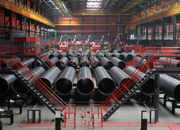 Threeway Steel is known as a professional supplier engaged in manufacturing and distributing a wide range of steel pipe, and our headquarter located the central part of China – Hunan and six associated factories throughout China.
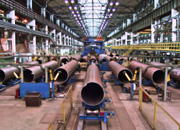 Threeway Steel is known as a professional supplier engaged in designing, manufacturing and distribution of a wide range of steel products with the headquarter located the central part of China – Hunan and six associated factories throughout China.
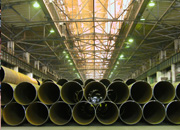 Threeway Steel is known as a professional supplier engaged in designing, manufacturing and distribution of a wide range of steel products with the headquarter located the central part of China – Hunan and six associated factories throughout China.
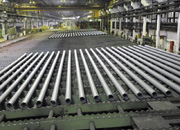 Threeway Steel is known as a professional supplier engaged in designing, manufacturing and distribution of a wide range of steel products with the headquarter located the central part of China – Hunan and six associated factories throughout China.
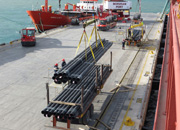 Threeway Steel is known as a professional supplier engaged in designing, manufacturing and distribution of a wide range of steel products with the headquarter located the central part of China – Hunan and six associated factories throughout China.