In industrial piping, selecting the right welding method is crucial for safety and reliability. This article compares
Socket Welding (SW) and Butt Welding (BW), two primary connection techniques.
Socket Welding involves inserting a pipe into a fitting and applying an external fillet weld. It is highly efficient for small-diameter piping and space-limited areas. Conversely, Butt Welding aligns pipe ends directly to create a continuous, smooth-bore joint. It offers superior strength, corrosion resistance, and seamless flow, making it ideal for large-diameter, high-pressure, and critical industrial systems.
Choosing between SW and BW depends on factors like pipe size, operating pressure, temperature, and maintenance needs. Selecting the wrong method can compromise pipeline integrity and increase costs.
What Are Socket Welding (SW) and Butt Welding (BW)?
Socket Welding (SW) and Butt Welding (BW) are two widely used methods for joining pipes and fittings in industrial piping systems. They differ in connection structure, application, and performance.
Comparison Overview
|
Aspect
|
Socket Welding (SW)
|
Butt Welding (BW)
|
|
Connection Method
|
Pipe inserted into fitting socket; fillet weld applied outside
|
Pipe ends beveled, aligned, and joined with groove weld
|
|
Common Components
|
Socket weld elbows, tees, couplings, flanges
|
Butt weld elbows, tees, reducers, caps
|
|
Typical Pipe Size
|
Small-diameter systems
|
Large-diameter and critical systems
|
|
Installation
|
Simpler, less preparation required
|
More preparation, skilled welding, stricter inspection
|
|
Internal Surface
|
Small crevice at socket may trap corrosion or buildup
|
Smooth internal passage—reduces turbulence and pressure loss
|
|
Strength & Reliability
|
Good for moderate-pressure, compact systems
|
Excellent structural integrity; strong pressure/temperature resistance
|
Applications
Differences Between Socket Welding (SW) and Butt Welding (BW)
Socket Welding (SW) and Butt Welding (BW) differ in connection structure, strength, application, and installation requirements. Understanding these differences helps engineers select the right method for each project.
Comparison Overview
|
Aspect
|
Socket Welding (SW)
|
Butt Welding (BW)
|
|
Connection Structure
|
Pipe inserted into fitting socket; fillet weld outside
|
Pipe ends beveled, aligned directly; groove weld forms continuous joint
|
|
Strength & Performance
|
Reliable for low/medium pressure—internal gap may cause stress or corrosion
|
Higher structural integrity; smooth internal surface reduces turbulence; handles high pressure, temperature, and cyclic loading
|
|
Applications
|
Small-diameter systems, instrumentation, hydraulic, low/medium pressure, limited space
|
Oil/gas pipelines, chemical plants, power generation, large-diameter, high-pressure/high-temp systems
|
|
Installation & Cost
|
Less preparation; faster installation; lower labor cost for small projects
|
Requires beveling, precise alignment, skilled welding, stricter inspection (RT/UT)—higher cost, better performance
|
Selection Guide
How to Choose Between Socket Welding (SW) and Butt Welding (BW)
Selecting the right welding method ensures pipeline safety, efficiency, and longevity. The choice depends on pipe size, pressure, temperature, medium, installation, and industry standards.
Selection Guide
|
Factor
|
Socket Welding (SW)
|
Butt Welding (BW)
|
|
Pipe Size
|
Small-diameter systems (instrumentation, hydraulic, compact networks)
|
Medium to large-diameter pipelines
|
|
Pressure & Temperature
|
Low to medium pressure—may create stress/corrosion at socket area
|
High pressure and temperature—stronger structural integrity
|
|
Transported Medium
|
Clean, non-corrosive fluids in smaller systems
|
Corrosive chemicals, hazardous materials, high-purity fluids—smoother internal surface reduces buildup
|
|
Installation
|
Faster, easier—less pipe preparation; good for limited space
|
More preparation (beveling, alignment, skilled welding); higher labor but better durability
|
|
Maintenance
|
Suitable for less demanding systems
|
Better long-term reliability for critical systems
|
|
Industry Standards
|
Follow applicable codes and specifications
|
Requires stricter inspection (RT, UT) for critical applications
|
Recommended Pipe Products and Shipping Information
Build safe and efficient industrial piping systems with our premium steel pipes and fittings. We supply high-quality Seamless, ERW, LSAW, and SSAW steel pipes, alongside specialized Socket Weld (SW) and Butt Weld (BW) fittings for diverse industrial applications.
Manufactured to strict international standards, our products undergo rigorous testing and support custom specifications to ensure reliable performance in demanding environments. We provide competitive factory-direct pricing and expert technical support to help you select the ideal materials for your project.
To serve global clients, we offer flexible shipping via sea, air, or rail, with export-standard packaging to protect your cargo. Supporting FOB, CIF, CFR, and EXW trade terms, our experienced team handles all documentation for seamless customs clearance. Partner with us for dependable pipe solutions and efficient global delivery. Contact us today for a customized quote!
Conclusion
Socket Welding (SW) and Butt Welding (BW) are both reliable pipe connection methods—but they suit different applications. SW is ideal for small-diameter, compact systems (instrumentation, hydraulic, general industrial) with simpler installation and lower labor. BW is preferred for large-scale, critical pipelines (oil/gas, chemical, power generation) offering continuous joints, superior strength, and smooth flow—but requires more preparation, skilled welding, and stricter inspection (RT, UT).
Selection Summary
FAQ:
FAQ 1: What is the main difference between socket welding (SW) and butt welding (BW)?
Socket welding connects a pipe by inserting it into a fitting socket and welding around the outside, while butt welding joins two pipe ends directly with a groove weld. SW is commonly used for smaller pipes, while BW is preferred for larger and more demanding pipeline systems.
FAQ 2: Is butt welding stronger than socket welding?
In many high-pressure and high-temperature applications, butt welding provides better overall strength and smoother internal flow because it creates a continuous welded joint. However, socket welding is suitable and reliable for many small-diameter piping systems when properly installed.
FAQ 3: When should socket welding be used?
Socket welding is commonly used for small-diameter pipes, instrumentation systems, hydraulic lines, and applications where installation space is limited and quick assembly is required.
FAQ 4: Which welding method is better for industrial pipelines?
The best choice depends on pipe size, operating conditions, pressure, temperature, and project requirements. Butt welding is often preferred for large industrial pipelines, while socket welding is practical for smaller piping systems.
 Threeway Steel is known as a professional supplier engaged in manufacturing and distributing a wide range of steel pipe, and our headquarter located the central part of China – Hunan and six associated factories throughout China.
 Threeway Steel is known as a professional supplier engaged in designing, manufacturing and distribution of a wide range of steel products with the headquarter located the central part of China – Hunan and six associated factories throughout China.
 Threeway Steel is known as a professional supplier engaged in designing, manufacturing and distribution of a wide range of steel products with the headquarter located the central part of China – Hunan and six associated factories throughout China.
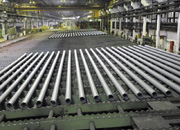 Threeway Steel is known as a professional supplier engaged in designing, manufacturing and distribution of a wide range of steel products with the headquarter located the central part of China – Hunan and six associated factories throughout China.
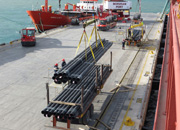 Threeway Steel is known as a professional supplier engaged in designing, manufacturing and distribution of a wide range of steel products with the headquarter located the central part of China – Hunan and six associated factories throughout China.