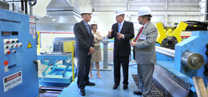
Wall thickness accuracy is a critical quality indicator for seamless steel pipes, directly impacting their strength, pressure resistance, and operational safety. Excessive deviations can compromise structural integrity or lead to unnecessary material costs. Achieving high precision requires strict control over the entire manufacturing process, including optimized billet heating, advanced rolling parameters, and modern non-destructive inspection technologies. For buyers, selecting a reliable supplier with advanced production equipment and rigorous quality management is essential to ensure consistent performance and compliance with industry standards.
Factors Affecting Wall Thickness Accuracy of Seamless Steel Pipes
Wall thickness accuracy is influenced by multiple factors—from raw material preparation to final inspection. Understanding these factors helps manufacturers improve process control and produce reliable pipes.
Key Factors Overview
Key Takeaway: Consistent wall thickness requires strict control of raw materials, heating, piercing/rolling, equipment, cooling, and inspection. Advanced monitoring and process optimization reduce defects and ensure compliance with international standards.
Effective Measures to Improve Wall Thickness Accuracy
Improving the wall thickness accuracy of seamless steel pipes requires comprehensive control across the entire manufacturing process. Since variations can stem from raw materials, production parameters, equipment conditions, and inspection methods, manufacturers must apply targeted measures at every stage. Through process optimization and strict quality management, seamless steel pipes can achieve superior dimensional accuracy, stable performance, and higher reliability.
|
Improvement Measure
|
Action Required
|
Best Practices & Considerations
|
|
Raw Material Control
|
Select and inspect qualified steel billets before production.
|
Ensure consistent chemical composition and uniform internal structure. Conduct strict dimensional checks and defect testing to prevent early-stage deviations.
|
|
Optimize Heating & Parameters
|
Control heating and rolling processes for uniform deformation.
|
Maintain stable furnace temperatures and adjust key parameters like rolling speed and reduction ratio to minimize uneven deformation.
|
|
Improve Piercing & Rolling
|
Ensure precise alignment of piercing and rolling equipment.
|
Utilize advanced automatic control systems and real-time monitoring to maintain stable operating conditions and adjust for equipment fluctuations.
|
|
Strengthen Equipment Mgmt
|
Maintain high precision through regular maintenance.
|
Routinely inspect, calibrate, and promptly replace worn components like rolls, guides, and mandrels to prevent dimension inaccuracies.
|
|
Advanced Inspection Tech
|
Implement continuous and accurate dimension monitoring.
|
Utilize ultrasonic testing, laser measurement, and online monitoring systems to quickly detect variations and adjust production conditions in real time.
|
|
Quality Management Systems
|
Establish comprehensive procedures across all stages.
|
Combine clear operating standards, employee training, and strict inspection protocols to ensure consistent quality from raw materials to final delivery.
|
Our Seamless Steel Pipe Solutions and Global Shipping
We supply high-quality seamless steel pipes for oil and gas, machinery, construction, and precision engineering—backed by strict wall thickness control and reliable logistics.
Product Range: Carbon steel, alloy steel, precision, hot-rolled, cold-drawn, thick-wall, and custom seamless pipes. Available in various grades, diameters, wall thicknesses, and lengths.
Quality Advantages: Precise wall thickness control, high dimensional accuracy, smooth surfaces, excellent mechanical properties, and compliance with international standards (ASTM, API, DIN, EN, JIS). Each batch undergoes chemical analysis, dimensional checks, mechanical testing, and NDT.
Customization: Tailored materials, dimensions, and specifications per project requirements—for oil/gas, machinery, construction, and precision applications.
Packaging: Steel bundling, end caps, waterproof wrapping, anti-rust treatment, and wooden cases to prevent damage during transit.
Global Shipping: Sea, air, rail, and multimodal options with full documentation (invoices, packing lists, certificates of origin) for smooth delivery worldwide.
From selection to delivery, our team provides technical support. Choose us for reliable seamless pipes, competitive pricing, and dependable global logistics.
Practical Tips for Maintaining Seamless Steel Pipe Accuracy During Use and Storage
|
Maintenance Practice
|
Action Required
|
Best Practices & Considerations
|
|
Proper Storage
|
Store pipes in a clean, dry, and well-ventilated environment.
|
Keep pipes elevated on supports to prevent ground moisture and rust. Apply anti-rust protection and waterproof covers for long-term storage, while maintaining airflow to prevent condensation.
|
|
Careful Handling
|
Prevent physical damage during loading, unloading, and transport.
|
Use appropriate lifting equipment and avoid dragging pipes on rough surfaces. Apply extra protective measures for precision tubes to prevent bending, dents, or deformation.
|
|
Correct Installation
|
Install pipes according to recommended procedures.
|
Inspect dimensions before installation. Avoid forced alignment or excessive external forces that can cause bending, stress concentration, and structural compromise.
|
|
Corrosion Prevention
|
Protect the pipe surface from environmental degradation.
|
Apply anti-corrosion coatings, protective wrapping, or regular cleaning to prevent wall thickness reduction caused by moisture, chemicals, or high temperatures.
|
|
Routine Inspections
|
Conduct regular checks to detect issues early.
|
Monitor wall thickness, straightness, surface condition, and connections. Utilize periodic non-destructive testing (NDT) for critical pressure pipelines and industrial equipment.
|
|
Systematic Management
|
Establish a comprehensive maintenance program.
|
Combine proper storage, careful handling, correct installation, and regular inspections to maintain dimensional stability and maximize the return on industrial piping investments.
|
Conclusion
Wall thickness accuracy is critical for the performance, safety, and service life of seamless steel pipes in oil and gas, construction, power generation, chemical, and machinery applications. Inconsistent thickness reduces pressure resistance, increases material waste, and compromises system reliability.
Key Influencing Factors: Raw material quality, heating uniformity, piercing/rolling precision, equipment condition, cooling methods, and inspection procedures. Each stage requires strict control.
Prevention Measures: High-quality billets, optimized heating and rolling, regular equipment maintenance, and advanced measurement technologies (UT, laser systems) ensure dimensional accuracy. A robust quality management system reduces deviations and ensures compliance with ASTM, API, DIN, and EN standards.
Customer Considerations: Evaluate specifications, material grades, dimensional accuracy, supplier capabilities, and technical support. Proper storage and handling preserve quality after delivery.
FAQ:
Q 1: Why is wall thickness accuracy important for seamless steel tubes?
Explain how accurate wall thickness affects pressure resistance, safety, durability, and application performance.
Q 2: What factors affect the wall thickness accuracy of seamless steel pipes?
Discuss raw materials, heating processes, piercing, rolling, equipment condition, and inspection methods.
Q 3: How can manufacturers improve seamless steel pipe wall thickness accuracy?
Explain production optimization, equipment upgrades, process control, and advanced testing technologies.
Q 4: What tolerance standards are used for seamless steel pipe wall thickness?
Introduce common international standards such as ASTM, API, EN, DIN, and JIS.
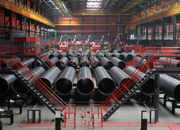 Threeway Steel is known as a professional supplier engaged in manufacturing and distributing a wide range of steel pipe, and our headquarter located the central part of China – Hunan and six associated factories throughout China.
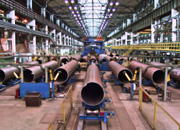 Threeway Steel is known as a professional supplier engaged in designing, manufacturing and distribution of a wide range of steel products with the headquarter located the central part of China – Hunan and six associated factories throughout China.
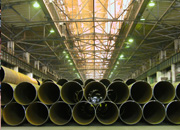 Threeway Steel is known as a professional supplier engaged in designing, manufacturing and distribution of a wide range of steel products with the headquarter located the central part of China – Hunan and six associated factories throughout China.
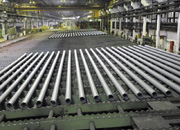 Threeway Steel is known as a professional supplier engaged in designing, manufacturing and distribution of a wide range of steel products with the headquarter located the central part of China – Hunan and six associated factories throughout China.
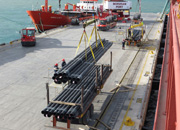 Threeway Steel is known as a professional supplier engaged in designing, manufacturing and distribution of a wide range of steel products with the headquarter located the central part of China – Hunan and six associated factories throughout China.