High-pressure pipeline flanges are critical connection components in industrial piping systems, facilitating the assembly and maintenance of valves, pumps, and equipment. Because they operate under extreme pressure and temperature, the integrity of these flanges is directly tied to overall system safety and reliability.
Despite their simple design, high-pressure flanges are susceptible to issues like leakage, bolt loosening, flange deformation, and corrosion. These problems often stem from improper installation, incorrect bolt tightening, damaged gaskets, poor alignment, or harsh operational conditions such as thermal expansion and vibration. If left unaddressed, these issues can lead to fluid leaks, equipment damage, and costly unplanned shutdowns.
What Are High-Pressure Pipeline Flanges?
High-pressure pipeline flanges are mechanical components used to connect pipes with valves, pumps, equipment, and other piping sections. They provide a detachable connection for assembly, inspection, maintenance, and replacement without cutting the pipe. In high-pressure systems, proper flange selection and installation are critical for withstanding internal pressure, temperature, vibration, and mechanical loads.
Flange Connection Components
Common Types of High-Pressure Flanges
Key Selection Factors
Quality Inspection
Common Problems with High-Pressure Pipeline Flanges and Solutions
High-pressure pipeline flanges must maintain reliable seals under pressure, temperature, vibration, and mechanical loads. Problems can develop during installation or long-term operation. Early identification helps prevent leakage, equipment damage, and shutdowns.
Common Problems & Solutions
Quick Troubleshooting Guide
Preventive Maintenance Checklist
Key Takeaway
High-pressure flange problems are often related to:
-
Leakage – gasket, bolts, or sealing face issues
-
Bolt problems – loosening or uneven torque
-
Deformation – over-tightening or thermal stress
-
Corrosion – environmental attack
-
Misalignment – poor installation
-
Incorrect selection – wrong specification
How to Prevent High-Pressure Flange Problems
Prevention Measures
Bolt Tightening – Do's & Don'ts
Pre-Installation Checklist
Key Takeaway
Preventing high-pressure flange problems requires attention throughout the product's service life:
-
Correct selection – flange, gasket, bolts
-
Proper installation – alignment, bolt tightening
-
Corrosion protection – materials, coatings, inspection
-
Regular inspection – detect issues early
-
Maintain operating conditions – reduce stress on connections
Our High-Pressure Pipeline Flange Recommendations & Shipping Information
We supply premium high-pressure pipeline flanges tailored for safe and reliable industrial piping systems. Our comprehensive product range includes weld neck, slip-on, blind, socket weld, and threaded flanges, as well as customized solutions. Available in carbon steel, alloy steel, and stainless steel, our flanges are engineered to meet exact pressure ratings, temperature requirements, and international standards.
Quality and dimensional accuracy are paramount. Every flange undergoes rigorous inspections, including mechanical testing and material verification, and is accompanied by comprehensive certificates to ensure compliance. For projects requiring non-standard sizes, special materials, or custom machining, our team provides tailored manufacturing solutions based on your technical drawings.
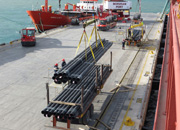
To guarantee safe transit, we provide secure, professional packaging that protects sealing surfaces and bolt holes from impact and moisture. Beyond manufacturing, we offer end-to-end global shipping solutions. Whether you require containerized or alternative transport, our logistics team manages export documentation and delivery coordination to meet your project deadlines.
From product selection to final delivery, we provide a complete, reliable supply chain for your high-pressure pipeline needs. Contact us today with your required pipe size, pressure rating, material, flange type, quantity, and destination for a customized quote and efficient shipping solution.
Maintenance and Inspection of High-Pressure Pipeline Flanges
Regular maintenance and inspection are essential for ensuring the safety and reliability of high-pressure
pipeline flanges. Operating under extreme pressure, temperature fluctuations, and vibration, these connections can quickly develop serious issues if minor problems are ignored.
A proactive maintenance program should focus on several key areas:
-
Leakage and Bolts: Routinely inspect for visible leaks or moisture. Check bolts for loosening or corrosion, and always use the specified torque and tightening sequence to maintain even gasket compression.
-
Gaskets and Surfaces: Monitor gaskets for deterioration and inspect sealing surfaces for scratches or wear. Replace damaged components promptly to ensure a proper seal.
-
Corrosion and Structural Integrity: Inspect the flange body and fasteners for rust, pitting, cracks, or deformation. For critical systems, utilize non-destructive testing (NDT) to detect hidden defects.
-
Operating Conditions: Continuously monitor system pressure and temperature to ensure they remain within design limits, reducing unnecessary stress on the flange.
-
Record Keeping: Maintain detailed logs of all inspections, repairs, and replacements to track component history and identify recurring issues.
FAQ:
FAQ 1: What causes high-pressure flange leakage?
Common causes include damaged gaskets, incorrect bolt tightening, flange misalignment, and damaged sealing surfaces.
FAQ 2: How can flange leakage be prevented?
Use suitable gaskets, align the flanges correctly, tighten bolts evenly according to specifications, and inspect connections regularly.
FAQ 3: How do I choose the right high-pressure flange?
Consider pressure rating, temperature, pipe size, material, transported medium, flange type, and applicable standards.
FAQ 4: How often should high-pressure flanges be inspected?
Inspection frequency depends on operating conditions, pressure, temperature, vibration, corrosion risk, and applicable maintenance requirements.

 Threeway Steel is known as a professional supplier engaged in manufacturing and distributing a wide range of steel pipe, and our headquarter located the central part of China – Hunan and six associated factories throughout China.
 Threeway Steel is known as a professional supplier engaged in designing, manufacturing and distribution of a wide range of steel products with the headquarter located the central part of China – Hunan and six associated factories throughout China.
 Threeway Steel is known as a professional supplier engaged in designing, manufacturing and distribution of a wide range of steel products with the headquarter located the central part of China – Hunan and six associated factories throughout China.
 Threeway Steel is known as a professional supplier engaged in designing, manufacturing and distribution of a wide range of steel products with the headquarter located the central part of China – Hunan and six associated factories throughout China.
 Threeway Steel is known as a professional supplier engaged in designing, manufacturing and distribution of a wide range of steel products with the headquarter located the central part of China – Hunan and six associated factories throughout China.