In
precision steel pipe processing, grinding is a key process for achieving high-precision surfaces and dimensions. The "economic precision grade," simply put, is the precision selection with the "highest cost-effectiveness"—meeting usage requirements without wasting costs. Many people are unclear about the different precision grades of grinding and don't know how to maintain precision while controlling costs.
First, what are the grades of precision steel pipe grinding?
The core of precision steel pipe grinding is "balancing precision and cost." Different grades correspond to different application scenarios; higher precision is not always better.
1. Economic precision grade for precision steel pipe grinding: IT7. IT7 is the most commonly used and cost-effective grade. This grinding precision grade can accurately control the outer diameter, inner diameter, and wall thickness errors of the precision steel pipe, with an error range of approximately 0.015-0.035mm. The surface roughness is typically Ra0.16-Ra0.63μm, with a smooth surface and no obvious scratches, meeting the needs of most industrial scenarios. It is suitable for ordinary precision steel pipes, such as hydraulic system pipelines and automotive oil pipes. It does not require extremely high fitting precision but ensures stable use. The processing cost is moderate, making it the most widely used grade in industrial production.
2. Economical Precision Grade for Precision Steel Pipe Grinding: IT6. IT6 offers higher precision and a slightly higher cost, but its cost-effectiveness remains outstanding. This grade reduces the error range to 0.008-0.015mm, and the surface roughness can reach Ra0.04-Ra0.16μm. The surface of the precision steel pipe is almost free of tool marks, with a smoothness approaching a mirror finish, meeting the requirements for high-precision fitting. It is suitable for precision steel pipes with high fitting precision requirements, such as machine tool spindles and precision instrument guides. Slight improvements in processing are needed, but the cost will not increase significantly, achieving "precision upgrade without a price premium."
3. Economical Precision Grade for Precision Steel Pipe Grinding: IT5. IT5 offers extremely high precision but a relatively high cost, suitable for special high-end applications. With an error range of only 0.005-0.008mm and a surface roughness of Ra0.01-Ra0.04μm, the surface is as smooth as a mirror, meeting the needs of high-end fields such as precision instruments and aerospace. It is suitable for a few special precision steel pipes, such as aerospace delivery pipes and medical implant catheters. Although the cost is high, it meets stringent precision requirements, representing an economical precision option that is "selected on demand," rather than blindly pursuing high-end performance.
Second, mastering the control methods for precision steel pipe grinding is crucial.
To achieve the corresponding level, the right techniques must be found. The core of controlling grinding precision is "stability, accuracy, and cleanliness." These three key methods can be broken down into simple analogies for easy operation.
1. Choosing the right "grinding tool" for precision steel pipe grinding is like choosing the right sandpaper for home renovation. The grinding tool is the core of grinding, just like the grit of sandpaper; if the grit is incorrect, the wall surface will not be smooth. For grinding precision steel pipes, the grinding wheel must be selected according to the precision grade: IT7 grade uses ordinary corundum grinding wheels, which offer high cost-effectiveness; IT6 grade uses silicon carbide grinding wheels, which have finer abrasive grains and produce a smoother grind; IT5 grade uses diamond grinding wheels, which offer even higher precision and slower wear. At the same time, the grinding wheel must be regularly dressed to prevent the abrasive grains from becoming dull, just like sandpaper needs to be replaced after prolonged use. Otherwise, scratches will be left on the surface of the steel pipe, affecting precision.
2. Adjusting the "grinding parameters" for precision steel pipe grinding is like controlling the force and speed of sanding in interior decoration. Grinding parameters (grinding speed, feed rate, and depth of cut) directly affect precision and cost: the smaller the feed rate and the more uniform the grinding speed, the smoother the surface and the higher the precision; the depth of cut should be increased gradually, not too deeply at once, otherwise it will cause deformation of the precision steel pipe, just like sanding a wall, which requires light, multiple passes to avoid creating pits. For example, in IT7 grade grinding, the feed rate is controlled at 0.01-0.02 mm/r, which ensures accuracy while improving efficiency and controlling costs.
3. Proper clamping and cooling are crucial for precision steel pipe grinding, much like securing a wall before grinding and promptly cleaning dust. Precision steel pipes have thin walls and are easily deformed. During clamping, even force should be applied, and auxiliary supports should be added to prevent shaking during grinding, just as a scraper needs to be securely fixed when grinding a wall to prevent scratches. Simultaneously, sufficient coolant must be ensured. Coolant removes grinding heat, preventing the precision steel pipe from deforming due to heat, and also washes away grinding debris, preventing it from scratching the surface, just as dust needs to be cleaned promptly when grinding a wall to prevent dust from affecting the flatness.
In summary, the economic precision grade for precision steel pipe grinding is "select precision according to need, prioritizing cost-effectiveness." IT7 grade is the most commonly used, IT6 grade is suitable for higher requirements, and IT5 grade is for high-end scenarios. The control method is also very simple: select the right grinding wheel, adjust the parameters, and ensure proper clamping and cooling. This will allow you to achieve the target accuracy while controlling costs, thus avoiding wasting resources and meeting usage requirements. This is the core logic of "economical accuracy" in grinding.
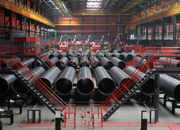 Threeway Steel is known as a professional supplier engaged in manufacturing and distributing a wide range of steel pipe, and our headquarter located the central part of China – Hunan and six associated factories throughout China.
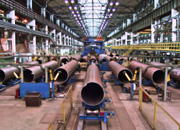 Threeway Steel is known as a professional supplier engaged in designing, manufacturing and distribution of a wide range of steel products with the headquarter located the central part of China – Hunan and six associated factories throughout China.
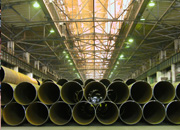 Threeway Steel is known as a professional supplier engaged in designing, manufacturing and distribution of a wide range of steel products with the headquarter located the central part of China – Hunan and six associated factories throughout China.
 Threeway Steel is known as a professional supplier engaged in designing, manufacturing and distribution of a wide range of steel products with the headquarter located the central part of China – Hunan and six associated factories throughout China.
 Threeway Steel is known as a professional supplier engaged in designing, manufacturing and distribution of a wide range of steel products with the headquarter located the central part of China – Hunan and six associated factories throughout China.