If we compare a chemical plant to a person, the equipment is the "heart," and the process
steel pipes that transport raw materials, water, gas, and finished products are the "arteries"—extremely important! Therefore, strict quality control of the process of steel pipe installation is crucial from the very beginning of construction. Poor quality will significantly impact future normal production. For our chemical construction unit, controlling the quality of process steel pipe installation is key to our survival and a guarantee for the "safe production" of future production units. Quality control of process steel pipe construction should be implemented throughout the entire process, from construction preparation to the completion of purging and airtightness testing. We can divide the project into the following three stages:
First, the preparation stage for steel pipe welding
To understand the characteristics of the project's process construction, identify the construction difficulties and the main areas prone to quality problems, we should generally start from the following aspects:
1. Organizational structure: Establish a quality assurance system, organizational structure, and quality management system; clarify the quality responsibilities of each management department and assign responsible persons; once the project team personnel are determined, they should not be changed arbitrarily before project completion unless necessary.
2. Technical Aspects: Carefully review the construction drawings, understand the main function of each piece of equipment in the construction process from the flowcharts, and, in conjunction with the steel pipe characteristics list, familiarize yourself with the media, pressure, material, and temperature of each process pipeline connecting the equipment. For pipelines involving high temperature, high pressure, special materials, or special media, clearly define the main content of quality control and formulate the main quality control objectives for the process steel pipe construction of this project. When reviewing the construction plan, clearly and reasonably specify the quality standards, construction methods for major items, and quality assurance measures.
3. Personnel Training: Based on the steel pipe design materials for this project, develop welding process specifications, conduct qualified welding process qualification assessments that meet the specifications, and provide relevant training to welders to obtain the corresponding welding qualifications for this project.
4. Material Procurement: Based on the material, specifications, and standards required by the material preparation plan, select qualified material suppliers with processing and manufacturing capabilities and qualifications. Material acceptance must meet relevant requirements; the quality certificate should be original, its contents should match the actual product, and the data should be accurate and meet standard requirements; valves must undergo a water pressure test upon arrival on site, and all alloy steel pipes, steel fittings, valves, etc., must undergo re-testing of chemical composition (spectral analysis); high-pressure steel pipes, steel fittings, and valves must undergo 100% re-testing;
5. Welding material acceptance: The outer packaging should not be damaged or damp, and the markings on the packaging (model, brand, specifications, production date, production batch number) should be consistent with the attached quality certificate. If inconsistent, a re-inspection is required.
Second, the installation process of steel pipe welding
Before construction, engineering technicians must provide technical instructions to the construction personnel. The instructions mainly cover construction methods, quality assurance measures, and quality standards; this ensures prefabrication quality and avoids the impact of weather and environment on construction, which is beneficial for quality control. The following key aspects should be emphasized during installation:
1. Material Cutting: This mainly involves controlling the length of the cut steel pipe, the straightness of the cut, the removal of burrs and flash, and the beveling. For steel pipes under DN100mm, abrasive wheel cutting machines are generally used. For large-diameter, low-pressure steel pipes, gas cutting or plasma cutting is generally used, and beveling can be done with a hand-held abrasive wheel. For high-pressure steel pipes, cutting and beveling are generally done using a steel pipe bed or beveling machine. Excessive straightness of the cut will affect the uniformity of the gap between the steel pipe ends. Beveling should also be done according to the specified angle. An excessively large beveling will waste labor, materials, and machinery, increasing installation costs. An excessively small beveling is prone to incomplete penetration, slag inclusions, and other welding defects. Therefore, the ultimate goal of controlling the quality of the material cutting process is to ensure welding quality and installation dimensions.
2. Marking: Each weld joint of the prefabricated steel pipe must be clearly marked, especially for alloy steel and special material steel pipes. Mark the welding date, welder number, and weld joint number. Mark each steel pipe section with paint according to the single-line diagram to avoid confusion during installation, untraceable weld joints, discrepancies between delivery documents and the actual product, and incorrect placement of special material steel pipes. All prefabricated steel pipe sections must have their ends sealed.
3. Welding: Welding quality control is the most crucial aspect of the process of steel pipe construction. Welders must strictly adhere to the welding operation instructions. Many factors influence welding quality, including pipe end assembly and beveling, welder skill, welding materials, and weather conditions. Since welding work is conducted in the workshop or on the ground, environmental factors are less significant, making quality control relatively easier. The main focus is on controlling the quality of welding material baking, strictly adhering to baking and distribution procedures, controlling the amount of welding rods used by welders each time, and supervising the proper use of welding rod containers. If the process requires preheating and heat treatment of the weld joints, the preheating and heat treatment temperatures for each joint must be strictly controlled. For high-pressure steel pipe welding, non-destructive testing of the root pass quality is also essential.
4. Installation: On-site installation of process steel pipes is a challenging aspect of quality control, affected by. Due to constraints imposed by on-site installation conditions and environmental factors, appropriate quality assurance measures should be taken when necessary. On-site welds are generally fixed joints, making quality control difficult. Therefore, the following aspects must be carefully controlled: During the prefabrication stage, the pass rate of each welder should be observed and recorded, as personnel are the primary element in quality control; the on-site assembly quality of steel pipe joints must also be carried out according to requirements; in case of wind, snow, rain, or high humidity, effective protective measures must be taken before welding is permitted; purging alloy steel pipes with argon gas is very difficult, making it the weakest link in on-site quality control and also the most important link in quality inspection. Strokes with flux-cored or coated welding wire can be used, but this process must be approved through welding procedure qualification, and the welder must pass an examination.
Third, Construction Inspection of Steel Pipe Welding.
The quality of a project depends to a certain extent on inspection. Non-destructive testing, pressure testing, and purging are necessary components of the welding and installation of process steel pipes, serving as a means of process completion and, more importantly, an inspection of construction quality. This requires a well-planned schedule and strict adherence to specifications.
1. Non-destructive Testing (NDT): NDT must be conducted strictly according to specifications. Each weld joint of every pipeline by every welder must be randomly inspected. Any substandard welds must be repaired and double-checked in the sampling until they pass inspection. Otherwise, 100% of the welds of that welder must be inspected. For alloy steel pipes, hardness measurements should also be taken after heat treatment.
2. Pressure Testing:
A. Before Pressure Testing: The installation of steel pipes within the testing area, except for painting and insulation, must be completed according to the design drawings, and the installation quality must meet relevant regulations. The pressure gauges used for testing must be calibrated and within their periodic inspection period, with an accuracy of no less than 1.5 grades. The full-scale value of the gauge should be 1.5-2 times the maximum pressure to be measured, and at least two pressure gauges must be used. The steel pipes to be tested must be isolated from unrelated systems using blind flanges, and safety valves, rupture plates, and instrument components on the steel pipes must be removed. Before pressure testing, air must be purged during liquid injection.
B. All steel pipes requiring NDT must pass inspection and be approved by relevant departments and units before pressure testing can proceed.
C. The ambient temperature during the hydrostatic test should not be lower than 5℃. If the ambient temperature is lower than 5℃, antifreeze measures should be taken.
D. During the pressure test: The hydraulic test should be performed by slowly increasing the pressure. After reaching the test pressure, stabilize the pressure for 10 minutes, then reduce the pressure to the design pressure and hold the pressure for 30 minutes. The test is considered合格 (qualified) if the pressure does not drop and there is no leakage. For steel pipes with large elevation differences, the static pressure of the test medium should be included in the test pressure.
E. After the pressure test: The blind flange should be removed promptly, and the liquid drained. Negative pressure should be prevented during draining, and the liquid should not be discharged indiscriminately.
3. Purging:
A. A purging plan must be prepared before purging. The specific purging method should be determined based on the usage requirements of the steel pipe, the working medium, and the degree of contamination on the inner surface of the steel pipe. Steam steel pipes should be purged with steam; non-thermal steel pipes should not be purged with steam.
B. For steel pipes with special requirements, appropriate purging methods must be adopted. Equipment and steel pipes not permitted to be purged should be isolated from the purging system; the purging sequence should be main pipe, branch pipe, and drain pipe in that order, and the purged contaminants must not enter the already-cleaned steel pipes.
C. During flushing, the maximum flow rate should be used, and the flow velocity should not be lower than 1.5 m/s; water flushing should be continuous, and it is considered qualified when the color and transparency of the water at the outlet are visually consistent with the water at the inlet.
D. Before steam purging of steel pipes, the pipes should be warmed up, drained promptly, and the thermal displacement of the steel pipes should be checked; the purging sequence should be heating-cooling-reheating, cyclically. Simultaneously, the flow velocity should not be lower than 3 m/s.
E. After the steel pipes have been purged and reset, no other work that may affect the cleanliness of the inside of the steel pipes should be carried out.
Fourth, Conclusion
The quality of a project determines its service life. A good owner's evaluation can establish a good image for the construction unit in the market, and a good image can bring good development opportunities. In the increasingly fierce market competition, quality will be a crucial factor among many considerations. Only by strictly controlling quality can we achieve greater development.
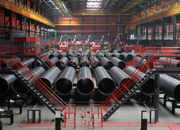 Threeway Steel is known as a professional supplier engaged in manufacturing and distributing a wide range of steel pipe, and our headquarter located the central part of China – Hunan and six associated factories throughout China.
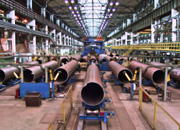 Threeway Steel is known as a professional supplier engaged in designing, manufacturing and distribution of a wide range of steel products with the headquarter located the central part of China – Hunan and six associated factories throughout China.
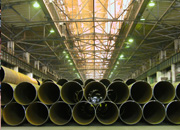 Threeway Steel is known as a professional supplier engaged in designing, manufacturing and distribution of a wide range of steel products with the headquarter located the central part of China – Hunan and six associated factories throughout China.
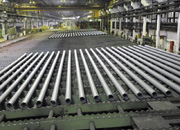 Threeway Steel is known as a professional supplier engaged in designing, manufacturing and distribution of a wide range of steel products with the headquarter located the central part of China – Hunan and six associated factories throughout China.
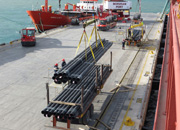 Threeway Steel is known as a professional supplier engaged in designing, manufacturing and distribution of a wide range of steel products with the headquarter located the central part of China – Hunan and six associated factories throughout China.