In oil, gas, and water well engineering, drilling and casing are two critical but distinct processes. Drilling is the initial stage of creating a borehole to reach underground resources, though the wellbore remains temporarily unstable. Casing involves inserting steel pipes into the wellbore to stabilize the structure, prevent collapse, and isolate geological layers.
While drilling creates the path, casing secures it for safe, long-term production. Proper coordination between these processes is essential to reduce operational risks and improve well integrity. Understanding their distinct roles helps engineers and procurement teams make informed decisions, ensuring safe and efficient subsurface development.
What Is Drilling?
Drilling is the critical first stage in well construction for oil, gas, geothermal, and water projects. It is the mechanical process of using specialized equipment to create a controlled borehole, providing access to underground resources and evaluating geological conditions.
The operation relies on a coordinated system including a drilling rig, drill bits, drill pipes, and a drilling mud system. The drilling fluid is particularly vital, as it cools the bit, removes rock cuttings, and maintains pressure balance to stabilize the wellbore.
Despite modern technological advancements, drilling faces significant challenges such as borehole instability, fluid loss, and complex pressure differentials. Overcoming these requires careful planning and real-time monitoring. Ultimately, drilling creates the essential pathway for resource extraction and sets the foundation for subsequent casing installation and well completion.
What Is Casing?
Well casing is a permanent system of high-strength steel pipes installed inside a drilled wellbore to stabilize the structure and ensure safe, long-term operation. Once lowered, the casing is cemented in place to lock it securely and seal the annular space, creating a robust barrier against geological pressures.
Casing serves multiple critical functions: it prevents wellbore collapse, controls formation pressures, isolates different underground layers, and protects freshwater aquifers from contamination. It also provides a secure conduit for production tubing and downhole tools.
Various casing types, including surface, intermediate, production, and liner casings, are strategically deployed based on depth and geological complexity. Ultimately, casing acts as the structural backbone of a well, maintaining integrity, safety, and isolation throughout its entire operational lifecycle.
Key Differences Between Casing and Drilling
|
Comparison Factor
|
Drilling
|
Casing
|
|
Primary Function
|
Excavates rock to create the initial wellbore pathway.
|
Reinforces and stabilizes the wellbore, preventing collapse and isolating layers.
|
|
Equipment & Materials
|
Uses temporary mechanical tools (bits, drill pipes, rigs) and drilling fluids.
|
Uses permanent high-strength steel pipes (API 5CT) cemented in place.
|
|
Timing & Sequence
|
The active, preliminary phase that progresses section by section.
|
Installed sequentially after each drilling phase to secure the newly formed hole.
|
|
Structural Role
|
Temporary process; equipment is removed or repositioned as the well deepens.
|
Permanent structural backbone that remains in the well for its entire lifecycle.
|
|
Risk & Control
|
Manages dynamic, active risks like pressure changes and borehole instability.
|
Mitigates long-term operational risks by ensuring structural integrity and fluid isolation.
|
Our Recommended Casing Products and Global Shipping Services
We supply premium API 5CT casing pipes (J55 to P110), including seamless and threaded options, designed for safe and efficient oil, gas, and water well construction.
Quality is guaranteed through rigorous inspections (hydrostatic, UT/RT testing) and Mill Test Certificates (MTC). Third-party inspections (SGS, BV, TÜV) are also available. To ensure safe transit, all pipes feature export-standard packaging, including thread protectors, anti-corrosion oil, and reinforced bundling.
We provide comprehensive global logistics, supporting FCL, LCL, and bulk cargo shipments. Our team handles all export documentation and offers flexible port-to-site delivery services. Choose us for reliable, high-quality casing pipes and efficient worldwide shipping to ensure your well construction projects are completed safely and on schedule.
Common Mistakes When Using Casing and Drilling Systems
|
Common Mistake
|
Key Risks & Preventive Measures
|
|
Improper Casing Grade Selection
|
Using low-grade casing (e.g., J55) in high-pressure/deep wells causes collapse. Always match API 5CT grades to specific well conditions.
|
|
Poor Drilling Fluid Management
|
Incorrect mud weight leads to well instability or blowouts. Continuously monitor and adjust drilling fluid properties to control formation pressure.
|
|
Inaccurate Wellbore Design
|
Poor trajectory planning prevents proper casing fit. Ensure precise wellpath and casing program design to avoid installation delays.
|
|
Improper Installation & Cementing
|
Poor centralization or incomplete cement coverage causes fluid migration. Maintain strict cementing procedures to ensure wellbore integrity.
|
|
Ignoring Thread Quality
|
Damaged threads or incorrect torque cause leaks. Always inspect connections and adhere to standard make-up torque specifications.
|
|
Insufficient Wellbore Stability
|
Failing to manage formation pressure leads to borehole collapse. Utilize real-time monitoring and adjustments to maintain a stable drilling environment.
|
|
Inadequate Quality Inspection
|
Skipping tests allows hidden defects to cause field failures. Conduct mandatory hydrostatic and non-destructive testing (NDT) before deployment.
|
Conclusion
Drilling and casing are inseparable processes in well construction. Drilling creates the initial borehole to access underground resources, while casing provides permanent structural support to stabilize the wellbore, isolate geological layers, and ensure long-term safety.
The success of both systems relies on precise design, correct material selection, and strict execution. Utilizing certified API-standard materials and conducting thorough quality inspections are essential to prevent operational risks like well instability or leakage.
Furthermore, efficient coordination between drilling and casing minimizes downtime and enhances overall project economics. Ultimately, understanding the distinct yet complementary roles of drilling and casing is crucial for achieving safe, stable, and productive subsurface engineering projects.
FAQ:
(1) What is the main difference between casing and drilling?
Drilling creates the wellbore, casing stabilizes and supports it
(2) Is casing installed during or after drilling?
Casing is installed after drilling sections of the wellbore
(3) Why is casing important in oil wells?
It prevents collapse, controls pressure, and protects groundwater
(4) Can a well be drilled without casing?
Only in very shallow or temporary wells; most oil and gas wells require casing
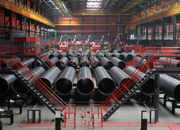 Threeway Steel is known as a professional supplier engaged in manufacturing and distributing a wide range of steel pipe, and our headquarter located the central part of China – Hunan and six associated factories throughout China.
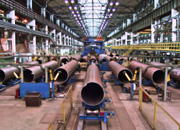 Threeway Steel is known as a professional supplier engaged in designing, manufacturing and distribution of a wide range of steel products with the headquarter located the central part of China – Hunan and six associated factories throughout China.
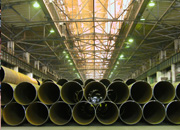 Threeway Steel is known as a professional supplier engaged in designing, manufacturing and distribution of a wide range of steel products with the headquarter located the central part of China – Hunan and six associated factories throughout China.
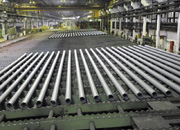 Threeway Steel is known as a professional supplier engaged in designing, manufacturing and distribution of a wide range of steel products with the headquarter located the central part of China – Hunan and six associated factories throughout China.
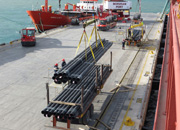 Threeway Steel is known as a professional supplier engaged in designing, manufacturing and distribution of a wide range of steel products with the headquarter located the central part of China – Hunan and six associated factories throughout China.