In modern power generation, oil refining, and petrochemical processing, equipment frequently faces extreme high-temperature and high-pressure conditions. Ordinary carbon steel cannot maintain stability in these environments, making chromium-molybdenum (Cr-Mo) alloy steel essential.
Cr-Mo steels are purpose-engineered to resist critical degradation mechanisms like creep, oxidation, and thermal fatigue. Chromium enhances corrosion protection by forming a stable oxide layer, while molybdenum significantly boosts strength at elevated temperatures. Widely used grades such as P5, P11, P22, and P91 are standard in ASME and ASTM systems for boiler tubes, steam pipelines, heat exchangers, and refinery process piping.
Because safety and long-term reliability are non-negotiable in these industries, selecting the correct Cr-Mo grade is vital. These alloys ensure operational efficiency and extended service life where standard steels would rapidly fail under continuous heat and stress.
Temperature Range Comparison: P5 vs P11 vs P22 vs P91
|
ASTM Grade
|
Typical Operating Temperature
|
Key Characteristics & Applications
|
|
P5 (5Cr-0.5Mo)
|
Up to approx. 500–550°C
|
Offers good oxidation resistance and moderate creep strength; ideal for refinery heaters, process piping, and moderate-temperature heat exchangers.
|
|
P11 (1.25Cr-0.5Mo)
|
Up to approx. 540–565°C
|
A reliable "workhorse" material with improved toughness; widely used in conventional boiler tubing, steam pipelines, and pressure vessels.
|
|
P22 (2.25Cr-1Mo)
|
Up to approx. 565–600°C
|
Features stronger creep resistance and long-term stability due to higher Cr-Mo content; suited for high-pressure steam lines and superheater tubes.
|
|
P91 (9Cr-1Mo-V-Nb)
|
Up to approx. 600–650°C+
|
Delivers excellent creep strength and superior thermal fatigue resistance; designed for ultra-supercritical power plants and critical steam headers.
|
Mechanical Properties and Performance Differences: P5 vs P11 vs P22 vs P91
The real performance of chromium-molybdenum alloy steels (P5, P11, P22, and P91) is determined by their mechanical properties under long-term high-temperature service. These materials must resist slow deformation, oxidation, and fatigue in demanding environments like high-pressure boilers and steam pipelines.
Creep resistance is a primary indicator. P5 and P11 offer basic resistance suitable for moderate conditions but may deform under prolonged stress. P22 provides significantly improved creep strength due to higher chromium and molybdenum content. P91 delivers the highest creep resistance, with vanadium and niobium additions ensuring superior structural stability under extreme heat.
As temperatures rise, strength retention becomes critical. While P5 and P11 maintain moderate strength, P22 performs better under continuous pressure. P91 offers excellent strength retention even in ultra-supercritical conditions, making it ideal for modern high-efficiency power plants. Additionally, oxidation resistance improves progressively with chromium content, where P91 forms the most stable protective oxide layer to minimize wall thinning.
Practical weldability varies significantly across grades. P5 and P11 are relatively easy to weld using standard procedures. P22 requires controlled welding and strict post-weld heat treatment (PWHT), while P91 is highly sensitive and demands rigorous fabrication discipline. Ultimately, selecting the correct grade ensures maximum reliability and extended service life tailored to specific industrial requirements.
Application Selection Guide: P5 vs P11 vs P22 vs P91
|
ASTM Grade
|
Typical Applications
|
Recommended Use Case
|
|
P5 (5Cr-0.5Mo)
|
Refinery heater tubes, moderate-temperature process piping, and industrial heat exchangers.
|
Best for moderate high-temperature environments where basic creep strength and cost efficiency are prioritized.
|
|
P11 (1.25Cr-0.5Mo)
|
Boiler tubes, steam pipelines, pressure vessels, and medium-temperature heat exchangers.
|
Ideal "workhorse" material for stable, continuous operation under standard boiler and steam conditions.
|
|
P22 (2.25Cr-1Mo)
|
High-pressure steam lines, superheater/reheater tubing, and petrochemical cracking units.
|
Designed for demanding systems requiring improved creep resistance and oxidation protection at higher pressures.
|
|
P91 (9Cr-1Mo-V-Nb)
|
Ultra-supercritical power plants, main steam headers, hot reheat lines, and critical high-pressure piping.
|
Essential for extreme service conditions demanding maximum strength retention, creep resistance, and long-term reliability.
|
Our Recommended Cr-Mo Alloy Tube Solutions & Global Shipping Services
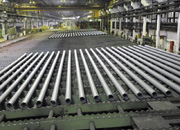
We supply a comprehensive range of chromium-molybdenum alloy steel tubes, including grades P5, P11, P22, and P91, tailored for power generation, petrochemical refining, and boiler manufacturing. Our P5 and P11 seamless tubes deliver stable performance and cost efficiency for standard industrial systems, while our high-performance P22 and P91 tubes offer superior creep resistance and strength retention for critical ultra-supercritical power plants and refinery applications.
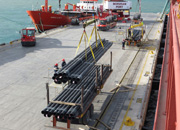
Every product strictly meets ASTM/ASME standards and comes with full Mill Test Certificates (MTC), chemical verification, and non-destructive testing (UT). We also provide reliable global logistics, including bulk vessel shipments and containerized transport with export-standard anti-corrosion packaging. Serving clients across the Middle East, Asia, Europe, and the Americas, we ensure safe, timely delivery to support your high-temperature engineering projects.
Common Mistakes When Selecting Cr-Mo Alloy Tubes
Selecting the correct chromium-molybdenum alloy steel tubes (P5, P11, P22, and P91) for high-temperature service requires precise engineering judgment. However, several common mistakes often lead to performance issues or premature failure in real projects.
A frequent error is choosing grades based solely on price. Opting for lower-cost materials like P11 instead of P22 or P91 in demanding systems significantly reduces service life. In high-temperature environments, the true expense is the total lifecycle cost, where early failures from cheaper materials result in higher maintenance and downtime expenses. Additionally, many engineers ignore actual operating conditions, confusing design temperatures with peak limits or using P5 and P11 beyond their intended ranges. Even minor mismatches between assumptions and reality can accelerate dangerous creep deformation.
Conversely, overusing high-performance P91 in moderate applications creates unnecessary material costs and complex welding requirements. Fabrication errors also pose major risks; P22 and P91 demand strict preheating and post-weld heat treatment (PWHT), and skipping these steps severely compromises structural integrity. Furthermore, evaluating alloys based solely on chromium content overlooks the critical roles of molybdenum, vanadium, and niobium in determining long-term creep resistance. Proper selection requires balancing temperature, pressure, fabrication needs, and lifecycle reliability to ensure safe, efficient industrial operations.
Conclusion
Selecting the right chromium-molybdenum alloy steel tubes (P5, P11, P22, and P91) is a critical engineering decision driven by temperature, pressure, and long-term reliability. These grades are not interchangeable; each serves a specific operational window in high-temperature industrial systems.
P5 and P11 offer cost-effective performance for moderate conditions like standard boilers and heat exchangers. P22 provides enhanced creep resistance and oxidation stability, making it ideal for higher-pressure steam and petrochemical applications. At the top tier, P91 delivers superior strength for ultra-supercritical power plants but demands strict welding and fabrication controls.
Ultimately, successful material selection isn't about choosing the strongest alloy, but matching the right grade to actual operating demands. Properly aligning material properties with system requirements ensures maximum safety, efficiency, and extended service life in demanding environments.
FAQ:
(1) What is the difference between P11 and P22 tubes?
Explanation of chromium content and temperature capability
(2) Can P91 replace P22 in all high-temperature applications?
Not always; depends on design and cost considerations
(3) What is the maximum operating temperature of Cr-Mo steel tubes?
General comparison across P5, P11, P22, P91
(4) Why is P91 more expensive than other Cr-Mo grades?
Alloy complexity, heat treatment, and performance advantages
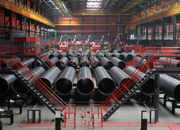 Threeway Steel is known as a professional supplier engaged in manufacturing and distributing a wide range of steel pipe, and our headquarter located the central part of China – Hunan and six associated factories throughout China.
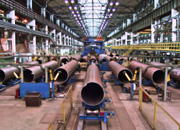 Threeway Steel is known as a professional supplier engaged in designing, manufacturing and distribution of a wide range of steel products with the headquarter located the central part of China – Hunan and six associated factories throughout China.
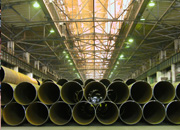 Threeway Steel is known as a professional supplier engaged in designing, manufacturing and distribution of a wide range of steel products with the headquarter located the central part of China – Hunan and six associated factories throughout China.
 Threeway Steel is known as a professional supplier engaged in designing, manufacturing and distribution of a wide range of steel products with the headquarter located the central part of China – Hunan and six associated factories throughout China.
 Threeway Steel is known as a professional supplier engaged in designing, manufacturing and distribution of a wide range of steel products with the headquarter located the central part of China – Hunan and six associated factories throughout China.