In modern industrial pipeline systems, welded steel pipes are essential for transporting high-pressure fluids like oil, natural gas, and chemical media. Among the common manufacturing methods, high-frequency welding (HFW) and low-frequency welding (LFW) may appear nearly identical externally, with smooth surfaces and continuous seams. However, their internal weld structures and formation mechanisms differ fundamentally.
HFW utilizes concentrated high-frequency electrical energy for rapid, precise edge fusion, while LFW relies on lower-frequency currents with broader heat input. These differences directly impact weld zone integrity, residual stress, and defect formation. In high-pressure systems, even minor hidden imperfections, such as micro-cracks or incomplete fusion, can lead to severe safety risks over time.
What Is High-Frequency Welding (HFW)?
High-frequency welding (HFW) is a modern, highly efficient manufacturing process widely used for producing longitudinal welded steel pipes in oil and gas transmission, water supply, and structural engineering. Unlike traditional methods, HFW utilizes high-frequency alternating electrical current to rapidly heat the edges of a forming steel strip. The concentrated energy brings the material to a plastic state almost instantly, where squeeze rollers apply pressure to create a solid-state weld without the need for filler materials.
A defining characteristic of HFW pipes is the exceptionally narrow heat-affected zone (HAZ). Because the heat input is highly concentrated and brief, the surrounding base metal retains its original mechanical properties. This results in a smooth, uniform, and consistent weld seam that offers excellent strength and reliability.
However, the superior performance of HFW pipes relies heavily on strict process control. Precise regulation of edge preparation, welding temperature, and pressure is essential to prevent hidden defects like incomplete fusion. When manufactured under rigorous quality standards, HFW pipes deliver outstanding tensile strength and pressure resistance, making them an ideal choice for medium-pressure oil and gas gathering systems, fluid transmission pipelines, and various industrial projects.
What Is Low-Frequency Welding (LFW)?
Low-frequency welding (LFW) is an earlier form of electric resistance welding used in the production of longitudinal welded steel pipes. While less common in modern high-performance pipeline manufacturing, it still exists in certain legacy systems and specific low-demand applications. LFW utilizes lower-frequency alternating current to generate heat along the edges of a forming steel strip. Compared to high-frequency welding (HFW), this heating process is significantly slower and less concentrated, distributing thermal energy over a wider area before mechanical pressure forges the seam together.
A defining characteristic of LFW pipes is the wider heat-affected zone (HAZ). Because the broader heating pattern exposes more of the surrounding steel to thermal influence, it leads to greater microstructural changes and a higher potential for residual stress accumulation compared to HFW pipes. Consequently, while LFW pipes can achieve acceptable strength for non-critical systems, they generally exhibit lower precision in weld formation and reduced uniformity.
Due to these structural limitations, LFW pipes are primarily found in older pipeline systems, low-pressure water transport, and non-critical structural applications. They are rarely used in modern high-pressure oil and gas transmission projects, where stricter safety standards and superior performance requirements favor advanced welding technologies.
Key Differences Between HFW and LFW Pipes
|
Comparison Dimension
|
High-Frequency Welded (HFW) Pipes
|
Low-Frequency Welded (LFW) Pipes
|
|
Energy & Heat Distribution
|
• Rapid, concentrated high-frequency heating
• Highly controlled, localized weld zone
|
• Slower, broader low-frequency heat spread
• Longer cycle with less precise thermal control
|
|
Heat-Affected Zone (HAZ)
|
• Narrow HAZ preserves base metal properties
|
• Wider HAZ alters microstructure
• Higher residual stress accumulation
|
|
Weld Quality & Defect Risk
|
• Uniform quality with minimal defect risk
|
• Higher potential for inconsistencies
• Requires strict process control
|
|
Mechanical Strength
|
• Superior pressure resistance and reliability
|
• Lower structural reliability
• Vulnerable under dynamic loads
|
|
Application Suitability
|
• Oil/gas transmission, medium-pressure systems
|
• Legacy pipelines, low-pressure uses
|
Why Weld Quality Is Critical in High-Pressure Applications
In high-pressure fluid transport systems like oil and gas pipelines, weld quality is a core safety factor that directly determines long-term operational reliability. Even when welded steel pipes appear structurally identical externally, the weld seam remains the most sensitive point under pressure. As the typically weakest area of a longitudinal pipe, it is where stress concentration is most likely to occur.
Under continuous internal force, minor imperfections such as incomplete fusion or microscopic voids can quickly become stress concentration points, increasing the risk of crack initiation. Furthermore, pipelines often face cyclic loading from pressure fluctuations and temperature changes. Over time, these stresses can lead to fatigue failure, causing seemingly acceptable welds to gradually degrade and eventually rupture. Additionally, weld zones possess different metallurgical properties than the base metal, making them highly vulnerable to localized corrosion in environments containing moisture, CO₂, or H₂S.
To mitigate these risks, strict inspection methods—including ultrasonic testing (UT), radiographic testing (RT), and hydrostatic pressure testing—are essential to detect hidden internal defects. In high-pressure environments, even small weld flaws can rapidly escalate into major safety hazards, making comprehensive process control and rigorous testing indispensable for ensuring pipeline integrity.
Our Recommended Welded Steel Pipe Products and Global Shipping Services
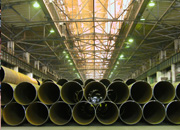
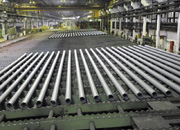
We provide a comprehensive range of high-quality welded steel pipes designed for modern oil and gas transmission, water supply, and industrial fluid transport. Our product lineup includes High-Frequency Welded (HFW) pipes, API 5L line pipes (Grades B to X70), and 3PE/FBE anti-corrosion coated pipes. Every pipe is manufactured under strict process control to ensure exceptional weld integrity, dimensional accuracy, and superior pressure resistance in compliance with API 5L, ASTM, and ISO standards.
To guarantee safety in high-pressure applications, all products undergo rigorous quality testing, including ultrasonic weld inspection (UT) and hydrostatic pressure testing. We also offer fully customized solutions tailored to your specific diameter and wall thickness requirements.
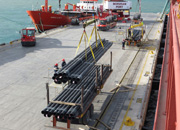
Backed by professional global logistics, we deliver efficient sea freight, bulk shipments, and containerized transport worldwide. With protective packaging, complete export documentation (MTC), and seamless customs clearance support, we ensure your pipeline materials arrive safely and on time at any international project site.
Conclusion
Although high-frequency welded (HFW) and low-frequency welded (LFW) pipes may look identical externally, their internal welding processes differ fundamentally. This distinction is critical in high-pressure fluid transport systems, where weld integrity directly determines pipeline safety and service life. HFW pipes feature a narrow heat-affected zone and stable weld formation, making them far superior for modern, demanding applications compared to the broader heat distribution and higher residual stress of LFW pipes.
However, even with advanced HFW technology, weld quality relies on strict process control and comprehensive inspections like ultrasonic testing (UT) and hydrostatic pressure testing. In high-pressure environments, minor hidden defects can rapidly escalate into serious risks due to cyclic loading and corrosion. Ultimately, ensuring safe pipeline operation requires more than just basic specifications—it demands the right combination of advanced welding technology, rigorous quality control, and proper material selection tailored to specific working conditions.
FAQ:
(1) Are high-frequency welded pipes safe for high-pressure use?
Depends on material grade, weld quality, and testing standards
(2) What is the main risk of low-frequency welded pipes?
Higher probability of weld defects under cyclic pressure
(3) How is weld quality tested in welded steel pipes?
NDT methods such as UT, RT, and hydrostatic testing
(4) Which is better for oil and gas pipelines, HFW or LFW?
HFW is generally preferred for modern engineered systems
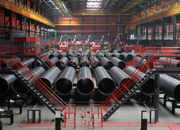 Threeway Steel is known as a professional supplier engaged in manufacturing and distributing a wide range of steel pipe, and our headquarter located the central part of China – Hunan and six associated factories throughout China.
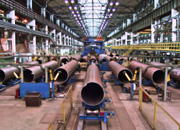 Threeway Steel is known as a professional supplier engaged in designing, manufacturing and distribution of a wide range of steel products with the headquarter located the central part of China – Hunan and six associated factories throughout China.
 Threeway Steel is known as a professional supplier engaged in designing, manufacturing and distribution of a wide range of steel products with the headquarter located the central part of China – Hunan and six associated factories throughout China.
 Threeway Steel is known as a professional supplier engaged in designing, manufacturing and distribution of a wide range of steel products with the headquarter located the central part of China – Hunan and six associated factories throughout China.
 Threeway Steel is known as a professional supplier engaged in designing, manufacturing and distribution of a wide range of steel products with the headquarter located the central part of China – Hunan and six associated factories throughout China.